

E-Financial
MasterCard @ World Bank Summit, Showcases Cashless Nigeria


MasterCard, global payments and Technology Company has presented the Central Bank of Nigeria’s (CBN) Cashless Policy as a best practice case study at the Africa investor-World Bank Group Africa CEO Investment Climate Summit.
The event which held in Tokyo, Japan earlier in October included a panel discussion led by MasterCard Worldwide executives on its work across Africa, with specific attention placed on its strategy to support Cashless Nigeria.
The presentation was part of a series of events convened for influential global business and government leaders to assess the factors influencing Africa’s investment climate at the World Bank Annual Meetings.
Delegates at the Summit included the vice presidents of the World Bank and the International Finance Corporation, along with African business leaders, Ministers of Finance, Central Bank governors and international investors. These dignitaries were gathered in Tokyo for the World Bank Annual Meetings, which served to discuss international economic and financial developments and policies to strengthen inclusive economic growth and help countries overcome poverty.
Panel members from MasterCard included Daniel Monehin, division president, Sub-Saharan Africa; OmokehindeOjumuyide, country manager, West Africa; and Shaun Rashid, head of Public Policy, Middle East and Africa.
They were joined by Folashodun Adebisi Shonubi, managing director of Nigeria Inter-Bank Settlement Systems (NIBBS) and Tim Tuner, director, Private Sector and Microfinance, African Development Bank, who chaired the panel discussion.
“It gave us the chance to show the world how Nigeria is taking the lead in moving towards a cash-less economy,” said Ojomuyide.
“The Summit gave MasterCard the opportunity to highlight the synergies between its vision of a world beyond cash, and the CBN’s goal of leading the Nigerian economy towards the benefits of cashless electronic payments.” She added
The CBN’s Cashless Policy was introduced to drive development and modernization of Nigeria’s payment system, because an efficient and modern payment system is positively correlated with economic growth, and best able to avoid the pitfalls of cash. Cash facilitates inefficiency, corruption, money laundering and fraud, noted Monehin during the panel discussion.
Cashless Nigeria seeks to reduce the cost of banking services, and to drive financial inclusion by providing more efficient transaction options for all Nigerians. Reducing the amount of cash in the economy will also limit the money that is circulated in the informal economy, a fact that negatively impacts the effectiveness of monetary policy in managing inflation and encouraging economic growth.
The importance of public-private collaborations in driving growth in Africa was highlighted in the panel by Shaun Rashid, head of public policy, Middle East and Africa, MasterCard Worldwide,
“Our close collaboration with the CBN, and with other stakeholders in Nigeria, has truly proved that collaboration between public and private sector organizations are the key to changing consumer behavior in any market.”
Rashid continued, “Initially we advised the CBN during its policy formation phase, offering insights and sharing information that would help create the smoothest possible transition to creating a cash-liteeconomy. As the policy has matured, MasterCard has engaged with stakeholders across the economy, including financial institutions and merchants, to increase awareness of the benefits of the CBN’s goals.
“Globally, we have noticed that there is a significant alignment in priorities between MasterCard and global policy makers on making payments safer, more efficient and reliable,” adds Rashid. “This was particularly evident in the discussions at the African investor Summit, where delegates resoundingly endorsed the need for payment technology service providers, like MasterCard, to partner with and educate governments and policy makers to ensure that the desired benefits do ultimately emerge in a particular market.”
Omokehinde Ojomuyide provided tangible examples of the MasterCard strategy in action in Nigeria. She highlighted the need of working closely with all stakeholders including banks, retailers and businesses to achieve the countries cashless goals. “Our business strategy in Nigeria is multi-faceted.We are working closely with the financial institutions and the business sector to better understand challenges facing the country in order for tailor-made payment solutions to be introduced. We also realize the importance of working more closely with retailers and businesses to promote acceptance and to communicate the benefits of electronic payments directly to Nigerian citizens.
“It was a proud moment for the entire MasterCard team to be in a position to highlight the successes of our local Nigeria strategy in supporting Cashless Nigeria,” she said.“Our long standing relationship with the Central Bank of Nigeria and other key stakeholders has solidified our position in the local market. We look forward to continuing our work in Nigeria and mirroring our successes across Africa to drive innovation in the payments industry and making Africa a more financially inclusive economy.”



Central Bank of Nigeria (CBN) has directed all International Money Transfer Operators (IMTOs) operating in the country to open and maintain naira settlement accounts with authorised dealer banks, as part of efforts to tighten oversight of diaspora remittances and improve transparency in the foreign exchange market.

The directive was contained in a circular dated March 24, 2026, signed by Dr Musa Nakorji, director of the Trade and Exchange Department, and addressed to IMTOs, authorised dealer banks and the general public.
The circular was published on the apex bank’s website on Tuesday.
The CBN said the measure is aimed at “enhancing diaspora remittances, strengthening transparency, traceability, and effective monitoring of all transactions.”
It stated that “all IMTOs are hereby directed to open naira settlement accounts and ensure that all transactions are routed strictly through their designated settlement accounts, maintained with Authorised Dealer Banks in Nigeria.”
Under the new rule, all inflows, beneficiary payments and related settlements linked to international money transfers are to be processed solely through these accounts.
IMTOs may, however, operate multiple settlement accounts across different banks in line with their operational needs.
The circular also introduced tighter controls on how the accounts can be funded, stating that they “shall only be credited with remittance flows and proceeds of foreign exchange conversions by licensed IMTOs (or their agents)” within the Nigerian foreign exchange market.
Operators are required to clearly designate the accounts and submit the details to the CBN, with updates provided periodically where necessary.
To improve market operations, authorised dealer banks are permitted to process foreign currency transfers from IMTO settlement accounts to other banks and approved participants, including licensed Bureau De Change operators.
The apex bank further directed IMTOs to adopt market-reflective pricing by referencing the Bloomberg BMatch system. It said IMTOs “shall observe real-time market prices from the Bloomberg BMATCH and utilise this as guidance for pricing transactions with their customers and Authorised Dealers.”
According to the CBN, this approach is expected to “improve price discovery, reduce information asymmetry between IMTOs and banks, and encourage increased participation in the official FX market.”
The bank added that all operators must maintain proper transaction records for regulatory checks and comply fully with anti-money laundering, counter-terrorism financing and counter-proliferation financing rules.
“This directive takes effect from May 1, 2026. Please note and ensure compliance,” the circular stated.
The move shows the CBN’s push to channel remittance inflows through formal banking channels, boost liquidity in the official foreign exchange market and strengthen regulatory oversight of cross-border transactions.
E-Financial
DLM Capital Group’s AAA-Rated Sovereign Bond-Backed Composite Notes (“SBCNS”) Strengthens Investor Confidence with Successful First Principal & Interest Payment

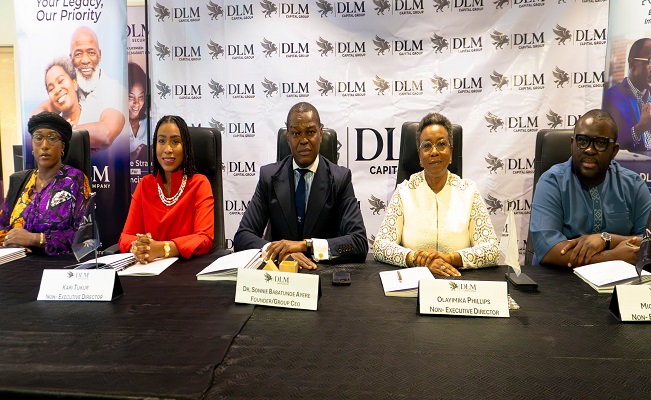
Foremost Development Investment Bank, DLM Capital Group has reinforced its position as a leader in innovative fixed income solutions with the successful payment of the first principal and interest (coupon) to investors under its Sovereign Bond-Backed Composite Notes (“SBCNs”) issuance.

This milestone, alongside the consistent delivery of quarterly performance reports, underscores the Group’s commitment to transparency, capital preservation, and investor confidence.
DLM SPV PLC’s 40.62% Hold-to-Maturity return ₦7.30 billion (Tranche A) and 19.07% ₦1.70 billion (Tranche B) Plain Vanilla Series 1 Notes, issued under its ₦30.00 billion Medium-Term Notes Programme and developed by Sonnie Babatunde Ayere, Group CEO of DLM Capital, was recently listed on the FMDQ Exchange with the Tranche A bond becoming the most valuable AAA-rated corporate bond on the market.
This represents a new class of structured debt instruments designed to meet both issuer funding needs and investor expectations. As a platform widely recognised for supporting innovative debt structures, FMDQ provides an enabling environment for instruments like DLM’s SBCNs to thrive.
At launch in July 2025, DLM SBCNs, which achieved a 9-notch upgrade from BBB- (GCR Sponsor ratings at issuance) without securitisation, entered the market with a healthy degree of skepticism, as is typical with pioneering financial instruments. However, after six months of post-issuance, DLM Funding SPV Plc has delivered on its promise by comfortably and successfully meeting its first principal and coupon obligations to its investors.
This performance milestone has significantly strengthened market confidence and validated the robustness of the structure. The notes are rated AAA by Global Credit Rating and AAA by DataPro Limited, reflecting their strong credit fundamentals and low-risk profile. Designed to prioritise capital preservation, liquidity, and above competitive market returns, the instrument stands out as one of the most compelling corporate fixed income offerings for institutional investors currently available in the market.
Investor response has been notably strong and institutional investors who are beginning to recognize the value of a well-structured de-risked, high-return and, high-quality fixed income investment backed by a credible issuer with a proven track record. The combination of timely coupon payments, high credit ratings, and ongoing transparency has positioned SBCNs as a preferred option for investors seeking stability and performance in today’s evolving financial landscape.
As investor interest continues to build towards Series 2, DLM SBCNs are not only demonstrating resilience but also setting a benchmark for innovation in Nigeria’s debt capital markets. In its role as a Development Investment Bank (“DIB”), DLM Capital Group remains committed to delivering structured solutions that align with investor needs whilst maintaining the highest standards of governance and execution.
Securities and Exchange Commission (SEC) said it has handed a six-week deadline to capital market operators to submit board-approved recapitalisation or license downgrade plans.

The directive was disclosed in the revised minimum capital guidelines issued by the Commission on March 18, 2026.
The Commission stated that all capital market operators must submit their board-approved and comprehensive implementation plans within six weeks of the June 30, 2027, compliance deadline.
“All CMOs are required to submit their recapitalization or downgrade plans within six weeks, with clear timelines and execution strategies.”
“Each plan must detail current capital position, minimum requirements, funding strategy, risk considerations, and governance structure.”
“Operators that fail to provide credible plans risk sanctions, including licence restrictions and regulatory delays under the ISA 2025 framework.”
“Pending applicants are not exempt, and applications older than 12 months will lapse and require fresh filings.”
The Commission added that this directive applies across all categories, including brokers, dealers, fund managers, custodians, exchanges, and digital asset operators, reinforcing the urgency of compliance.
The latest development followed its recent announcement on a sharp increase in minimum capital requirements across the capital market ecosystem, signaling one of the most significant regulatory adjustments in recent years.
Broker-dealers are now required to hold N2 billion, up from N300 million, while dealers must meet N1 billion, compared to the previous N100 million threshold.
On the other hand, Registrars face a new requirement of N2.5 billion, rising from N150 million, and Underwriters and clearing firms are benchmarked at N5 billion, while composite exchanges must now have N10 billion.
The Commission emphasised that the recapitalisation is not a one-time exercise but a long-term structural reform aimed at strengthening market resilience and aligning Nigeria with global standards.
A key feature of the new guidelines is the tightening of what qualifies as regulatory capital, which could significantly impact operators’ effective capital base.
The SEC has narrowed the definition to ensure only high-quality, loss-absorbing capital is recognised.
Recognized capital includes fully paid-up ordinary shares, qualifying irredeemable preference shares, share premium, and retained earnings from audited profits.
Unrealised gains are excluded, ensuring capital reflects actual financial strength.
Disallowed items include revaluation reserves, borrowed funds, shareholder loans, client funds, deferred tax assets, and encumbered capital, while Non-cash capital injections are permitted but must meet strict valuation criteria, including quoted equities, CIS units, government bonds, and eligible OTC-traded securities.
The Commission added that exclusion of debt and quasi-debt instruments underscores the regulator’s focus on enforcing genuine capital adequacy rather than leveraged compliance.

Court Remands Hacker for Allegedly Stealing N3.09Bn from FCMB

CBN Directs IMTOs to Open Naira Settlement Accounts

Nigerians Lose N12.5Bn to AI-Driven Scams- PwC

SEDC Launches SEVCP to Expand Access to Capital for Startups

Kaspersky, AFRIPOL Conduct Joint Cybersecurity Training for African law Enforcement

Kaspersky Discovers New Phishing Campaign Exploiting Google Tasks Notifications to Steal Corporate Credentials

esentry 2025 Report Shows Healthcare, Financial Services and Telecoms as Staging Grounds for Increased Cyberattacks in Africa

AfDB, UNDP Launch $10Bn AI Initiative for Africa

MultiChoice Suspends Yearly DStv Price Hike as Canal+ Pushes Growth

MTN Nigeria Posts Record N1.70 Trillion Pre‑Tax Profit, Declares N20 Dividend for 2025




 E-Financial1 day ago
DLM SPV PLC Lists ₦9.00bn AAA-Rated Medium-Term Notes on FMDQ Exchange, Sets Benchmark in Corporate Bond Market

 E-Financial2 days ago
CBN Wins Central Bank of the Year Title @13th Global Awards

 General News2 days ago
Tech Firms Sack over 45,000 so Far in 2026

 News2 days ago
Morney Launches in Nigeria as E-invoicing Drives Finance Digitisation

 General News2 days ago
Jury Finds Elon Musk Liable for Misleading Twitter Investors

 Telecom2 days ago
FG Taps Quest Merchant Bank for Advisory on 90,000km Fibre Project

 General News2 days ago
Rockefeller, Global Energy Alliance Cross $100 million Mark in Africa Electrification Push

 News2 days ago
Dr Krishnan Ranganath to Lead UniCloud Africa in Continental Digital Infrastructure Push