

E-Financial
Moniepoint Strengthens Efforts to Broaden Financial Access Through Collaborative Initiatives

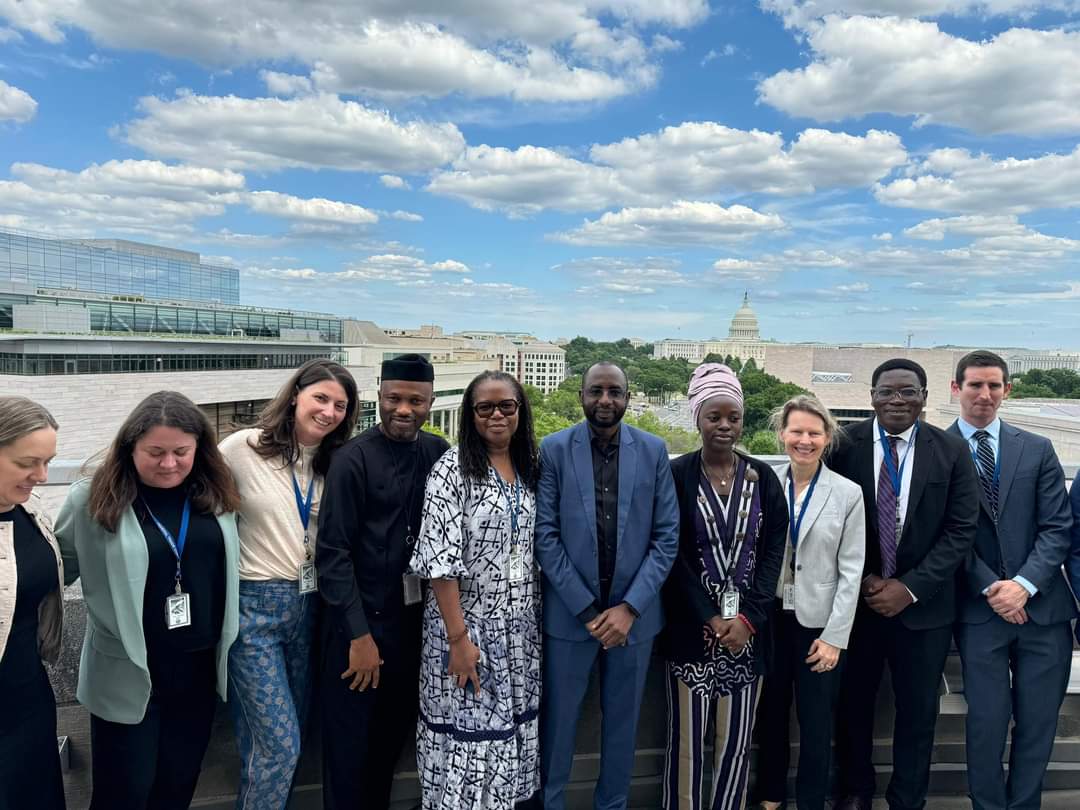
Moniepoint Inc, Africa’s fastest growing financial institution according to the Financial Times has underscored the importance of a collaborative and holistic stakeholder approach in advancing the future of financial and economic inclusion in Nigeria.
In a recent high-level policy dialogue between the Nigerian government and private sector stakeholders held in Washington DC, Moniepoint Inc’s Group CEO and Co-Founder, Tosin Eniolorunda emphasized the importance of public-private collaborations in addressing trust issues that have slowed down the adoption of innovative fintech solutions for economic and financial inclusion.
“Moniepoint has long championed the importance of financial inclusion and financial happiness. Building trust with the public and government, improving business and consumer access to the financial system are critical issues that are aligned to our philosophy.
“As testament to our commitment, we recently launched a landmark report investigating Nigeria’s informal economy, highlighting opportunities to widen financial inclusion to historically underserved communities.
“The outputs from this strategic gathering will go a long way in bolstering Nigeria’s economy even as closer linkages are formed from public-private collaboration which will be a huge boost to the overall development and competitiveness of the larger financial services industry,” Eniolorunda said.
The event, which brought together government officials, regulators, law enforcement agencies, and fintech industry leaders at George Washington University, aimed to leverage innovative approaches to drive a sustainable and inclusive financial system in Nigeria.
Vice President Kashim Shettima, addressing the gathering via video conference, highlighted the urgent need for financial innovation to drive Nigeria’s economic and financial inclusion agenda. This aligns with President Bola Ahmed Tinubu’s administration’s commitment to bringing over 30 million unbanked Nigerians into the formal financial sector as part of the Renewed Hope Agenda.
“We must develop a sustainable collaboration approach that will facilitate the adoption of inclusive payment to achieve our objective of economic and financial inclusion,” Vice President Shettima stated.
The dialogue focused on addressing critical challenges in Nigeria’s fintech ecosystem, including regulatory oversight, security concerns, and trust issues that have hindered the widespread adoption of innovative financial solutions. Participants explored strategies to enhance interagency collaboration and strengthen the overall effectiveness of the financial services sector.
Philip Ikeazor, Deputy Governor of the Central Bank of Nigeria responsible for Financial System Stability, emphasized the need for ongoing collaboration among all stakeholders to meet the goals of the Aso Accord on Economic and Financial Inclusion.
Kashifu Inuwa Abdullahi, Director General of the National Information Technology Development Agency (NITDA), advocated for “a digital-first approach and the fusion of digital literacy with financial literacy to address trust issues affecting the inclusive payment ecosystem.”
Dr. Nurudeen Zauro, Technical Advisor to the President on Economic and Financial Inclusion, explained that the gathering aims to evolve into a mechanism providing relevant information to the Office of the Vice President, facilitating effective decision-making for economic and financial inclusion.
The event resulted in various recommendations covering rules, infrastructure, and coordination, with a focus on implementable actions and clear accountabilities. As discussions continue, Moniepoint remains dedicated to leveraging its expertise and technology to support the government’s financial inclusion goals and create a more financially inclusive society for all Nigerians.
Other notable speakers included Inspector General of Police Mr. Kayode Egbetokun, Executive Director of the Center for Curriculum Development and Learning (CCDL) at George Washington University Professor Pape Cisse, Assistant Vice President at Merrill Lynch Wealth Management Mr. Reginald Emordi, Regional Director for Africa at the Center for International Private Enterprise (CIPE) Mr. Lars Benson, and United States Congresswoman representing Florida’s 20th congressional district, The Honorable Sheila Cherfilus-McCormick, Prof Olayinka David-West from the Lagos Business School among others.


Central Bank of Nigeria (CBN) has released an exposure draft proposing the establishment of a 30-member Mediation and Dispute Resolution Panel (MDRP) aimed at strengthening consumer protection and boosting confidence in Nigeria’s financial system.

Pic credit….aequitasjuris.com
According to a circular signed by Paul Oluikpe, acting director of the Development Finance Advisory Department of the CBN, the establishment of the MDRP, is in furtherance of efforts to strengthen the financial ecosystem, ensure compliance with extant legislation, and enhance the efficiency of financial intermediation.
The draft guidelines and modalities for the operation of the MDRP are in line with the Secured Transactions in Movable Assets (STMA) Act, 2017, which established a MDRP as the first recourse for mediation and settlement over any civil dispute which may arise between the creditor and the grantor in the course of implementing the Act.
The act also mandates the Governor of the Bank to issue guidelines that will set out the modalities and regulate the Panel’s functioning, among others. The circular further noted that the “MDRP is intended to provide a specialised, cost-effective platform for resolving disputes arising from creation, perfection and enforcement of security interests in movable assets.
“The key objective of the MDRP guidelines is to establish a clear and standardised procedure for managing STMA-related disputes, while ensuring transparency, fairness and efficiency to bolster confidence in the secured transactions in movable assets system.”
According to the draft guideline, the CBN will “appoint 30 persons from whom panels shall be constituted, with each panel comprising 3 members.
The members shall serve on a rotational basis for an initial term of four years.
“Upon satisfactory performance, determined through an evaluation by the CBN, members may be reappointed for an additional term of four years. The tenure of members shall not exceed two terms of four years each, which need not be consecutive.
“Members shall be professionals with a minimum of 10 years of relevant experience in any of law, banking, finance, mediation, arbitration, alternative dispute resolution, or financial regulation. Members shall be persons of proven integrity, professional competence and sound judgement.”
Nigeria Deposit Insurance Corporation (NDIC) said that it has commenced the process of liquidating 89 closed Microfinance Banks (MFBs) and Primary Mortgage Banks (PMBs).

This followed their successful acquisition by new owners under the Purchase and Assumption (P&A) resolution model executed by the Corporation.
The corporation disclosed this in a statement on Wednesday, signed by Hawwau Gambo, head of Communication and Public Affairs.
It explained that the affected institutions were part of the 179 MFBs and four PMBs whose licences were revoked by the Central Bank of Nigeria (CBN), on May 22 and 23, 2023.
According to the corporation, under the P&A arrangement, 89 new eligible institutions were subsequently licensed by the CBN to assume the assets and liabilities of the defunct banks.
It noted that the new banks had since commenced operations under different names.
“To legally conclude the liquidation process, the NDIC, in its capacity as liquidator, will file applications at various divisions of the Federal High Court for orders of dissolution of the closed banks and its discharge as liquidator,” the statement said.
NDIC added that the move was in line with provisions of its enabling Act and other relevant laws guiding bank resolution in the country.
The corporation said the exercise would ensure proper closure of the defunct institutions while safeguarding financial system stability.
It reiterated its commitment to protecting depositors and sustaining public confidence in the banking sector.
The affected banks were located across several states, including Lagos, Anambra, Oyo, Kaduna, Kano and the Federal Capital Territory.

Nigeria’s economy is projected to grow at 4.1 per cent in 2026 and strengthen slightly to 4.3 per cent in 2027, even as the International Monetary Fund (IMF) warned that the ongoing Middle East conflict is clouding the global outlook.

The projections, contained in the IMF’s April 2026 World Economic Outlook released at the ongoing IMF/World Bank Spring Meetings in Washington DC, the United States, show a relatively stable trajectory for Nigeria despite rising external risks, particularly from energy market disruptions triggered by the war.
The IMF had earlier projected stronger growth of about 4.4 per cent in early January before the latest global shock, reflecting the impact of domestic reforms and improving macroeconomic conditions.
While Nigeria’s growth outlook remains steady, the IMF warned that countries like Nigeria face growing vulnerability from higher global energy prices, inflation pressures and tighter financial conditions.
The war, which has disrupted oil supply routes and pushed up fuel costs, is already feeding into domestic inflation and cost-of-living pressures.
Recent data show petrol and diesel prices have surged sharply since the conflict began, straining households and businesses.
Although higher crude prices may support government revenues, the broader macroeconomic impact remains mixed, with inflation and exchange rate pressures posing downside risks.
The IMF also cut global growth to 3.1 per cent in 2026, with only a modest recovery to 3.2 per cent in 2027 as the Middle East conflict disrupts trade and energy markets.
Emerging markets and developing economies, including Nigeria, are expected to grow at 3.9 per cent this year before recovering to 4.2 per cent in 2027, reflecting the uneven impact of the shock across regions.
Sub-Saharan Africa is projected to expand by 4.3 per cent in 2026 and 4.4 per cent in 2027, placing Nigeria slightly below the regional average but still among the stronger performers.
South Africa, the continent’s largest economy, continues to lag with growth forecast at one per cent in 2026, rising modestly to 1.3 per cent in 2027.
Among major economies, the U.S. is projected to grow by 2.3 per cent in 2026 before easing to 2.1 per cent in 2027, while China is projected to grow by 4.4 per cent and four per cent respectively.
India remains the fastest-growing major economy at 6.5 per cent through 2027, while the Euro Area continues to struggle with weak growth, particularly in Germany and France.
The IMF warned that many developing economies, particularly energy importers, remain vulnerable to rising costs and external shocks.
The IMF urged central banks to prioritise price stability, warning against easing policy prematurely in response to supply shocks. It stressed the need for clear communication and strong institutional independence.
On fiscal policy, the Fund cautioned against broad-based energy subsidies, describing them as costly and inefficient. It recommended a targeted and temporary support for vulnerable households, funded within existing budgets.
The IMF also warned against the use of trade restrictions to address external imbalances, noting that such measures tend to weaken output without resolving underlying issues. It called instead for coordinated global action to stabilise trade and restore energy supply chains.

Lagos Targets Vulnerable Residents in Expanded Social Register

CBN Proposes 30-Member Mediation Panel for Loan Disputes

CAC Urges Users to Secure Accounts after Cyberattack Scare

NCDC Predicts Cholera Outbreak in 10 States as Heavy Rains Loom

NDIC Seeks Court Nods to Liquidate 89 Failed Banks

Kuda MFB Increases Kuda for Her Business Grants to ₦10 Million

Canal+ to Cut Jobs as Part Sweeping Restructuring

Nigeria tops global rankings for USDT, USDC ownership

NBC Boss Urges Content Ceators to Participate in DSO

NITDA Takes Over National Digital Architecture System




 E-Financial2 days ago
Fidelity Surges Ahead in Recapitalisation Drive with ₦564bn Capital

 General News1 day ago
Guinness Nigeria Surpasses ₦1Trillion Market Capitalisation, Signalling Strong Investor Confidence and Sustained Value Creation

 Telecom2 days ago
Qualcomm Unveils Startup Selection for Qualcomm Make in Africa 2026

 Telecom2 days ago
AfDB Grants Project BRIDGE $200m Facility for Nationwide Internet Access

 E-Financial2 days ago
Digital “Pickpockets” Compromise Over a Million Banking Accounts – Kaspersky

 Telecom2 days ago
Nigeria Seeks Stronger Digital Sovereignty, National Software Infrastructure

 E-Financial2 days ago
EFCC Warns Banks against Loans without Credible Collateral

 E-Business2 days ago
Nigeria Needs Some 480,000 Local DPOs for Data Protection