

E-Financial
N22Bn Capital Market Bailout Draws Jabs from Expert


The decision to bail out 84 failing stock broking firms with a princely sum of N22.6 Billion (approximately US $144.9 million) by President Goodluck Jonathan’s administration has come under fierce opposition from Olu Akanmu, chief marketing officer, Airtel Nigeria who described the government offering as “rewarding bad behaviour and excessive risk-taking at public expense.
Akanmu, a seasoned marketing expert with considerable years of experience in the banking and telecom sectors, said government had no business bailing out private investor who took risk expecting to make their kill in the capital market, sharing profits at public expense.
The Airtel CMO noted that it was a moral burden and exactly what killed ‘Wall Street’ and other global financial hubs recently. “This moral hazard problem was at the heart of the misbehaviour of investment bankers in the recent global financial crisis, when they could made huge bonuses if their bets worked out but pass the loss to shareholders if it didn’t.”
“By setting this precedent, the government has further ossified the moral hazard problem in our financial system. If an investor taking an investment risk knows that he can appropriate his gains but can pass his losses to another party, he will take excessive unreasonable risk as he has nothing to lose,” said Akanmu.
He reasoned that in bailing out ‘errant’ investors, the government was encouraging more ‘bad behaviour’ as they would continue to play “roulette and casino at public expense, made initial huge gains which they pocketed until their financial derivative instruments fell like a pack of cards.”
He listed two critical tests to be passed by any sector to be bailed out with public funds as: too big to fail, the TBTF test or must be ‘too interconnected to fail’, the TICTF test.
The “TCITF test,” he reasoned “measures whether a group of institutions represent critical connected dependencies with no existing market alternative in size and function such that their failure will pull down the financial system.”
“It is difficult to see how the group of stock brokers who will enjoy these N23b public largesse could pass the “too big to fail” or the “too interconnected to fail” test. Their collective size does not pose significant systemic risk to the financial system. In the last three years, since these firms have had to deal with their margin loan challenges, the financial system has carried on. The capital market measured by the Nigeria Stock Exchange All Share Index has witnessed a year to date gain of more than 25 percent. This is because there are alternative market transaction agents whose collective size moderate any potential “too interconnected to fail” effect of the stock broking firms being bailed-out by government. Whither then is the logic of government action?”
Although the sum released by the government’s Asset Management Corporation of Nigeria (AMCON), falls short of the N500 billion demanded by industry stakeholders, Akanmu insisted that the ailing firms pose no grave danger to Nigeria’s economic buoyancy.
“Capital market operators specifically stock broking firms are no banks. They are capital market transaction agents. They do not warehouse public assets or owe public liability like the banks that hold public deposits that could create a collapse of the financial system if a critical number of them fail. The stock asset that the public buy is not warehoused by the stockbroker but by the public themselves directly and the company from whom the stock was bought with a clearing system maintained by the independent Central Security Clearing System (CSCS),” Akanmu maintained.
But in sharp reaction, Mike Itegboje, immediate past president of Chartered Institute of Stockbrokers (CIS), said the bailout fund from AMCON does not involve public risk.
“The stimulus package does not involve tax payers’ money, what is required is for the government to borrow the money with a guarantee. There are people willing to put money.”
He maintained that if the government could bail out other sectors like aviation and textile, there was nothing unholy about extending similar gesture to the capital market. “If the federal government provided huge funds as bail out for other sectors considered as critical to economic development, what is wrong with it pumping money to bail out the capital market?,” said Itegboje.



GCR Ratings (GCR) has affirmed African Export-Import Bank (Afreximbank) international scale long and short-term issuer ratings of A and A2 respectively. The outlook was revised to “Stable” from “Rating Watch Evolving”.

GCR has also affirmed the international scale long term programme rating on the $5 billion Global Medium Term Note (GMTN) Programme of A.
The improved rating reflects GCR’s assessment of a “robust counter-cyclical mandate, underpinned by a strong track record and ongoing preferential creditor treatment (PCT) from shareholders.”
South Africa became the latest country to affirm the Bank’s Establishment Treaty and Preferred Creditor Status when it recently signed the Instrument of Accession to become a full sovereign member of the Bank.
The report continued: “The Bank’s solid capitalisation and diversified funding profile provide significant buffers against emerging credit risks.” The report also acknowledged the Bank’s diverse shareholding base.
The outlook change from “Rating Watch Evolving” to “Stable”, according to GCR, indicates that there is immaterial downside risk related to sovereign debt restructurings.
Commenting on the Rating action, Chandi Mwenebungu, Managing Director and Group Treasurer, Treasury and Markets at Afreximbank said: “We are delighted that GCR has affirmed its credit rating on the Bank and resolved the outlook to ‘stable’, particularly in the light of recent positive credit developments.
“We continue to assert that the Bank’s preferred creditor treatment is enshrined in the Bank’s Establishment Agreement, ratified by all member states. It is not a matter of opinion or convention; it is fact”.
Mwenebungu continued, “It is also pleasing to note that GCR acknowledges the Afreximbank’s strong liquidity and capitalisation, and resilient risk profile. This is testament to the Bank’s financial and operational strength and that it has been able to demonstrate firm resolve in the face of continued macro-economic pressures and a challenging environment.”
Smartcash Payment Service Bank (PSB), the Airtel-owned digital financial services platform, has unveiled a nationwide marketing campaign titled “No Be Cho Cho Cho”, signalling a strategic shift toward proof-led messaging in Nigeria’s fast-evolving fintech sector.

Launched at a media event in Lagos, the campaign represents a new chapter for Smartcash, following its earlier “Money Matter Na Sense” positioning, reflecting the company’s rapid growth and increasing role in Nigeria’s digital financial ecosystem. The platform now serves nearly three million active wallets, with users spanning students, traders, households and small businesses across the country.
The phrase “Cho Cho Cho,” a popular expression in Nigerian street parlance meaning “talking without action,” is used deliberately by the company to challenge the hype-driven marketing culture that has often characterised the fintech sector. Instead, Smartcash says the campaign will focus on demonstrable performance and measurable value for customers, which means “Smartcash dey show workings”.
The initiative centres on the three pillars of reliability, transparency and demonstrable service delivery and addresses what the company describes as a widening trust gap in Nigeria’s digital payments market.
Speaking at the launch, Ayotunde Kuponiyi, Managing Director and Chief Executive Officer of Smartcash PSB, outlined the strategic philosophy behind the campaign, linking the company’s mission to broader global and national economic priorities.
“Financial inclusion is a critical pillar of the United Nations Sustainable Development Goals, and with the launch of ‘No Be Cho Cho Cho’, we are proving our commitment to this vision,” Kuponiyi said.
“We have built an accessible banking service that breaks barriers for everyone, from corporate executives to the previously unbanked, pulling them from the sidelines to centre stage. Through our flagship zero-charge service, we promise no fees on P2P transfers or bill payments. Furthermore, our savings account offers 15 percent per annum compounded interest, paid daily without penalties. Unlike conventional banks, we charge you nothing, ensuring your money truly works for you.”
Smartcash’s zero-charge model, which eliminates fees on transfers and bill payments, has become one of the platform’s defining features., alongside instant transfers and everyday payments for utilities, airtime, data and cable TV.
Kuponiyi noted that the campaign reflects a broader philosophy of accountability in digital finance.
“Nigerians have experienced inconsistency and unclear charges across various platforms in the past,” he said. “With No Be Cho Cho Cho, we are saying clearly: don’t just listen to what we say; experience the proof.”
Smartcash operates as a Payment Service Bank licensed by the Central Bank of Nigeria and is wholly owned by Airtel Nigeria, a part of the Airtel Africa Group, which operates across 14 countries. This backbone allows the platform to serve customers through both smartphone applications and USSD channels, enabling access for users without smartphones or traditional bank accounts.
Beyond consumer banking, the platform is also expanding its footprint through a nationwide network of agents that facilitate transactions and financial services in underserved communities.
Providing further insight into the bank’s financial architecture and long-term roadmap, Kuponiyi, emphasised that the campaign reflects the strength of the institution’s operational foundation.
“At Smartcash, we have matched our ambitious growth targets with disciplined investment in secure, high-volume processing capabilities. The No Be Cho Cho Cho initiative is a testament to our financial health and our unwavering focus on driving financial inclusion through sustainable incentives that provide real value to the Nigerian economy,” he said.
As part of the rollout, the No Be Cho Cho Cho” campaign will run nationwide across television, radio, outdoor advertising and digital platforms, targeting young, mobile-first consumers while also reaching traders and small businesses through agent networks and USSD channels.
For Smartcash, the campaign marks more than a marketing refresh; it signals an attempt to redefine how financial technology companies communicate with Nigerian consumers in an increasingly competitive sector.
As Kuponiyi concluded at the launch: “The evidence is plenty. Nigerians can see it for themselves.”

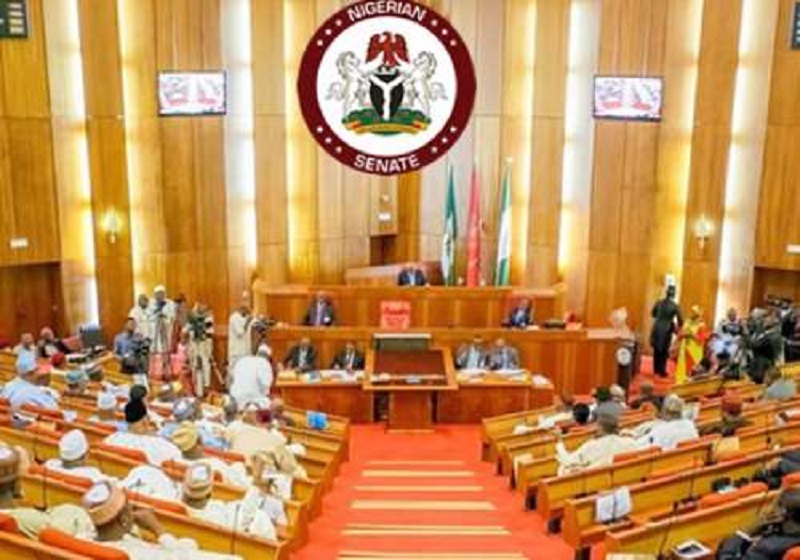
Nigerian Senate has launched a public hearing to amend the Banks and Other Financial Institutions Act (BOFIA) 2020 while investigating rampant ponzi schemes, spotlighting the Crypto Bridge Exchange (CBEX) collapse that defrauded 1,200 victims of ₦1.3 trillion.

Senate President Godswill Akpabio, represented by Senate Leader Opeyemi Bamidele, opened Tuesday’s session jointly organised by committees on Banking, ICT/Cybersecurity, Capital Market, and Anti-Corruption. The bill (SB959) aims to bolster Central Bank of Nigeria (CBN) oversight of fintechs and systemically important digital institutions without creating a duplicate regulator.
Akpabio stressed: “Enhanced supervision is not a constraint on growth; it is a safeguard for sustainable growth,” rejecting a standalone fintech commission to avoid fragmented oversight. Crypto licensing falls under SEC, but transaction stability remains CBN’s domain.
Senate Banking Committee Chairman Mukhail Abiru highlighted a national registry for transparency and risk-based fintech supervision, backed by CBN Deputy Governor Philip Ikeazor, who noted some fintechs rival mid-sized banks in volume.
The probe targets regulatory gaps exposed by CBEX’s unrealistic returns amid economic hardship. EFCC’s Dein Whyte reported asset seizures from operators, with forfeiture proceedings underway.
CBN’s Orekia Opemi-Yusuf warned separate regulators could stunt Nigeria’s expanding fintech sector, while FCCPC’s Ondaje Ijagwu urged clear lines between prudential rules and consumer protection. The reforms seek to restore trust in a digital economy battered by fraud.

MultiChoice to Discontinue Showmax Streaming Platform

GCR Affirms Afreximbank’s International Scale Ratings of A, A2

SmartCash Launches ‘No Be Cho Cho Cho’ Campaign to Boost Digital Banking in Nigeria

MTN Nigeria Non-Executive Director Mazen Mroue Quits to Focus on Group Role

Google Adds Yorùbá, Hausa to AI Search, Boosting Access for Millions of Nigerians

Dr. Cairo Ojougboh Foundation Bolsters Nigeria’s Education Drive with ₦2.7m Student Support

Kaspersky Brings more Transparency to Threat Detection with New Hunt Hub

NDPC Commits to Balancing Data Privacy, Protection Information

PwC Reveals AI Scaling Gap Slows Africa’s Digital Transformation

Firm Reviews the Evolution of Phishing Threats in 2025




 E-Financial2 days ago
NRS Targets N40trillion in Tax, Royalty Revenue in 2026

 E-Financial2 days ago
SEC Revokes Registration of Kensington Agro Trading Limited

 General News2 days ago
Purple Woman 3.0 Is Back, to Empower Women in Tech this IWD 2026

 News2 days ago
EFCC Arraigns Two FSDH Bank Officials Over $307k, €50k Fraud

 Telecom2 days ago
Konga Launches ‘Berekete Sales’ with Up to 50% Discounts Across Major Categories
 E-Business2 days ago
NDPC, 60 DPAs Collaborate on Enforcing Privacy Rights in the Use of Al

 General News2 days ago
NCDC Raises Alarm over Lassa Fever Ravaging 18 States in Nigeria

 E-Financial2 days ago
Nigeria’s Net Reserves Surge 50% to $34.8bn in 2025 – CBN Governor