

General News
NAFDAC Reaffirms Ban on Alcohol in Sachets and Small Bottles


National Agency for Food and Drug Administration and Control (NAFDAC) has reaffirmed its commitment to fully enforce the ban on the production and sale of alcoholic beverages in sachets and small-volume bottles (below 200ml) by December 2025.

Prof. Mojisola Christianah Adeyeye, Director-General of NAFDAC, made this known in a statement issued in Abuja on Monday, following a recent directive by the Senate of the Federal Republic of Nigeria.
Adeyeye said the ban, which targets spirit drinks packaged in sachets and small PET/glass bottles, is aimed at curbing the harmful use of alcohol among vulnerable groups, especially children, adolescents, and commercial drivers.
“This ban is not punitive; it is protective. It is aimed at safeguarding the health and future of our children and youth,” she said. “We cannot continue to sacrifice the well-being of Nigerians for short-term economic gain. The health of a nation is its true wealth.”
The agency noted that the proliferation of high-alcohol-content beverages in small containers has contributed to rising cases of domestic violence, road accidents, school dropouts, and other social vices.
NAFDAC recalled that in 2018, it signed a five-year Memorandum of Understanding with industry stakeholders to phase out such packaging by January 2024. The deadline was later extended to December 2025 to allow manufacturers to exhaust old stock and reconfigure production lines.
Adeyeye emphasized that no further extension would be granted beyond the new deadline and urged manufacturers, distributors, and retailers to comply fully.
She said the decision aligns with Nigeria’s commitment to the World Health Organization’s Global Strategy to Reduce the Harmful Use of Alcohol.
NAFDAC said it would continue working with the Federal Ministry of Health and Social Welfare, the Federal Competition and Consumer Protection Commission (FCCPC), and the National Orientation Agency (NOA) to sensitize the public on the dangers of alcohol misuse.



Ola Olukoyede, chairman, Economic and Financial Crimes Commission (EFCC), has raised concerns over the growing threat of cryptocurrency-related crimes in the country.

Olukoyede made this known at the inauguration of the United Nations Office on Drugs and Crime (UNODC) Country Programme for Nigeria 2026–2030, on Friday in Abuja.
The EFCC boss revealed that the world lost more than 160 billion dollars to illicit transactions involving digital currencies in 2025.
Olukoyede highlighted the risks posed by cryptocurrencies such as Bitcoin.
He noted that criminal networks were increasingly exploiting technological advancements, global financial systems, and governance gaps to facilitate illicit activities.
“Last year, the world lost over 160 billion dollars to illicit transactions in cryptocurrencies.
”Tackling these challenges requires coordinated national responses, strong institutions and sustained intelligence-driven strategies,” he said.
He said that the UNODC programme came at a time when Nigeria and the global community were grappling with evolving threats from transnational organised crime, financial crimes, illicit financial flows, and cyber-enabled offences.
Olukoyede said the programme represented a strategic foundation for collective efforts to strengthen the rule of law.
This, he said, included enhancing the criminal justice system and protecting institutions and communities from violence, crime, and financial corruption.
He noted that the programme’s focus on combating corruption and illicit financial flows was particularly significant to the EFCC, given the enormous economic and social costs of such crimes on Nigeria.
“The imperative of sustained action to turn the tide cannot be overstated,” he said.
The EFCC chairman expressed pride in the commission’s longstanding partnership with UNODC, stating that the collaboration had strengthened institutional capacity and improved Nigeria’s response to economic and financial crimes.
He said the partnership had supported reforms and operational frameworks that enhanced the agency’s effectiveness in tackling corruption and related offences.
Olukoyede expressed optimism that the programme would further improve national security and safeguard the future of Nigerians through strengthened collaboration and shared operational experiences.
He stressed the need to continuously refine frameworks and ensure that Nigeria’s institutions and citizens remain at the centre of all collaborative efforts.
The EFCC boss commended UNODC for initiating the programme and reaffirmed the commission’s commitment to supporting its implementation to achieve measurable outcomes for Nigeria and the wider region.
Dr Musa Aliyu, SAN, chairman, Independent Corrupt Practices and Other Related Offences Commission (ICPC), in his remarks, called for stronger collaboration among institutions to address Nigeria’s growing security and corruption challenges.
Aliyu said Nigerian society was currently grappling with multiple social ills, stressing that no single agency could effectively tackle the challenges alone.
According to him, the country faces complex and interconnected threats, including violent extremism, organised crime, illicit financial flows, smuggling, and other serious offences.
“There is a common point of truth, Nigerian society is entangled with many ills, and no agency can fight them alone,” he said.
The ICPC boss noted that these challenges also posed significant threats to the nation’s criminal justice system, warning that no society could remain secure under such conditions.
He, however, expressed optimism that through strategic partnerships and collective efforts, Nigeria could overcome the challenges.
Aliyu described the UNODC Country Programme as timely and appropriate, given the scale and urgency of the issues confronting the nation.
He emphasised the importance of international support, noting that Nigeria’s progress in tackling crime and corruption had been strengthened by its collaboration with global partners, particularly the United Nations.
The ICPC chairman said the partnership between the commission and UNODC had been beneficial to Nigerian society, contributing to efforts aimed at strengthening institutions and improving governance.
He congratulated UNODC on what he described as a significant milestone and a “grand stride” in supporting Nigeria’s fight against crime and corruption.
Aliyu reaffirmed ICPC’s commitment to continued collaboration, assuring stakeholders of the commission’s readiness to work with UNODC and other partners toward national development.
“I assure you of our continued support and willingness to work together for the growth and betterment of Nigeria,” he said.
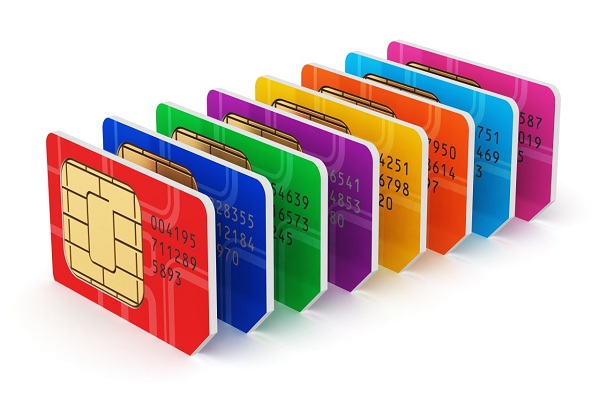
Nigerian Communications Commission (NCC) has unveiled plans to introduce a Telecoms Identity Risk Management System (TIRMS) platform to tackle SIM-related fraud, strengthen digital security and boost confidence in Nigeria’s digital economy.

Aminu Maida, executive vice chairman of the commission, disclosed this on Thursday in Abuja at a stakeholders’ consultative forum on the proposed platform and planned regulatory changes.
Maida, represented by Rimini Makama, executive commissioner, Stakeholder Management, said the Mobile Station International Subscriber Directory Number (MSISDN), commonly known as SIM or mobile phone number, had become central to financial transactions, digital identity and access to services, but warned that its widespread use had also created vulnerabilities.
He noted that fraudulent activities linked to recycled, swapped, churned and barred SIMs had emerged as a major channel for identity theft and financial crimes, weakening trust in digital platforms.
He said, “The Mobile Station International Subscriber Directory Number commonly known as the SIM or mobile phone number has evolved into a critical identifier underpinning financial transactions, digital authentication, and access to essential services across all sectors of our economy.
“This evolution, however, has created new and challenging vulnerabilities. The fraudulent use of churned, recycled, swapped, and barred MISISDN’s has become a significant vector for financial fraud and identity theft, eroding public trust in our digital platforms and undermining the identity of systems we have worked hard to build.
“It is in direct response to these challenges that the Commission has initiated the Telecoms Identity Risk Management System Platform.”
According to him, the platform will enable service providers to verify mobile numbers flagged for suspicious or fraudulent activities before granting access, a move expected to reduce exposure to fraud and improve accountability.
He added that the system would enhance coordination among regulators, financial institutions and security agencies to build a more resilient digital ecosystem.
To support the rollout, the commission has proposed amendments to its Quality of Service Business Rules and the Registration of Communications Subscribers framework.
The proposed changes will require telecom operators to notify subscribers at least 14 days before recycling their lines and to upload details of churned numbers to the platform within seven days.
The amendments also introduce stricter provisions for blocking fraudulently registered or misused SIMs, aimed at improving transparency and protecting consumers.
Maida said the initiative reflects the commission’s commitment to collaboration and a whole-of-government approach to addressing digital risks, urging stakeholders to actively contribute to shaping the framework.
Also speaking, Olatokunbo Oyeleye, director of Cybersecurity and Internet Governance at the commission, emphasised the importance of trust in the digital economy.
“As rightly noted, digital trust is the operating licence of modern economy. Without it, nothing scales and with it everything accelerates. For our sector, this trust must be embedded across the entire value chain,” she said.
It was reported earlier that the NCC proposed that telecom operators must give subscribers a minimum of 14 days’ notice before deactivating their SIM cards over inactivity or post-paid churn.
The proposal was contained in a consultation paper titled Stakeholders Consultation Process for the Telecoms Identity Risks Management Platform, dated February 2026 and published on the Commission’s website.
Under the proposed amendments to the Quality-of-Service Business Rules, the NCC stated that “prior to churning of a post-paid line, the Operator shall send a notification to the affected subscriber through an alternative line or an email on the pending churning of his line.”
It added, “This notification shall be sent at least 14 days before the final date for the churn of the number.”
A similar provision was proposed for prepaid subscribers. The commission said, “prior to churning of a pre-paid line, the Operator shall send a notification to the affected subscriber through an alternative line or an email on the pending churning of his line,” stressing again that the notice “shall be sent at least 14 days before the final date for the churn of the number.”
Dr. Kabir Adamu, a security expert, has raised concern that kidnappers in Nigeria are now using banks to collect ransom payments.

Pix… CNBC
Adamu explained that in the past, kidnappers typically demanded cash payments for ransom.
However, there has been a noticeable shift to using mainstream banks for transactions.
Speaking on Arise News, Adamu, who is the CEO of Beacon Security and Intelligence Ltd, said this trend is worrying. In the past, kidnappers usually demanded cash, but now they are asking victims’ families to pay money through bank accounts.
He revealed that his team has tracked cases where ransom money was paid into bank accounts and successfully withdrawn.
Although he did not mention the banks involved, he said some progress is being made to address the issue.
Adamu explained that criminals previously used fintech platforms, but have now moved to traditional banks. This shift raises serious concerns about how well banks are monitoring transactions and following regulations.
He said Nigeria has improved its financial intelligence systems, especially after being removed from the Financial Action Task Force (FATF) gray list.
However, he noted that there are still weaknesses in how rules are enforced.
According to him, “A lot has been done in terms of policy, but there are still major gaps in operations and compliance.”
“We’ve monitored kidnapping for ransom cases where the ransom is being collected by formal banks,” Adamu said.
“My team and I were shocked when the ransom demand was made in a formal bank. It was paid and collected. I don’t want to mention the names of the two banks that were extremely guilty, but even for those two, progress is being made,” he said.
The security expert noted that although fintech platforms had previously been linked to ransom payments, criminals have now shifted their operations to traditional banking channels, raising significant concerns about compliance and oversight in the banking industry.
Adamu emphasized that this shift in tactics underscores the urgent need for stronger accountability measures and compliance standards within Nigeria’s financial institutions.
He also pointed out the challenges faced by regulatory bodies in fully addressing the issue, despite recent advancements in financial intelligence efforts.
“From the point of view of policy, a lot has been done, but from the point of view of operations, there is still a lot that remains to be done,” Adamu stated.
According to a report by SBM Intelligence, Nigeria’s kidnap-for-ransom crisis generated at least N2.57 billion for criminal groups between July 2024 and June 2025.
The report, titled “The Year Ahead at an Inflexion Point,” highlighted that despite kidnappers’ demands totaling N48 billion during the year, they only received N2.57 billion in actual payments.

Anti Graft Agencies Raise Alarm over Rising Crypto-Linked Financial Crimes

NITDA Takes Over National Digital Architecture System

NDIC Insures 99 Percent of Bank Customers

FG Shifting Focus to “Meaningful Connectivity” to Drive Inclusion – Minister

CBN Bars Chronic Loan Defaulters from Accessing Loans

Spotify’s Loud & Clear Report Reveals Over ₦60Bn Revenue for Nigerian Artists in 2025

Madonna University Taps Tech Guru Adote for Strategic Board Role

MTN Nigeria Posts Record N1.70 Trillion Pre‑Tax Profit, Declares N20 Dividend for 2025

China Threatens to Shut Nigeria’s Satellite Over $11.44m Unpaid Debt

Jumia Tech Week 2026 Begins with Tech Deals on Smartphones, Electronics, and Everyday Technology




 General News2 days ago
NCC to Curb SIM Fraud, Strengthen Digital Security with New Platform

 Broadcasting2 days ago
NBC Boss Urges Content Ceators to Participate in DSO

 General News2 days ago
Kidnappers Now Use Banks to Collect Ransoms — Expert

 E-Financial2 days ago
CBN Says Bank Customers Won’t Lose Deposits because of Recapitalisation

 E-Business2 days ago
Jury Finds Meta, Google Liable for Woman’s Social Media Addiction

 News2 days ago
Francis Okafor Stuns China, Emerges Second-Place Winner @ Tencent OpenClaw Hackathon

 E-Financial1 day ago
Breaking…..Kuda Lays Off Many Employees in Broad Restructuring

 Telecom2 days ago
IFC Invests $45m to Green African Telecom Sites