

Broadcasting
NBC to Improve Access to Digital TV

Emeka Mba, director general, National Broadcasting Commission (NBC), has said that about 22million households in the country does not have access to digital television as the country look forward to a new deadline of June 20, 2017 migration to digital broadcasting.
He added that there are 37.3million households in the country out of which 26million has television and 4million with digital television subscription.
He further explained that the Commission has acquired 500,000 set-top boxes for its digital broadcasting pilot in Jos, Plateau state.
“Nigeria will require about 30million set-up boxes in the next 3 year in covering the country, we have now coordinated another agreement with our West African neighbours and have agreed on a new deadline of June 20, 2017 to complete the digital switchover and achieve analogue switch off.
When it became obvious that government could not spare the money, and in order to avoid missing another deadline, we began to consider other options. Our broadcast frequency, which is to eventually form part of the digital dividend after the DSO, had portions of it laying fallow while our broadcasters were still using parts of it. We therefore proposed and got proper permission from government to license part of our spectrum laying fallow and to use the proceeds to finance the DSO.”
“We have successfully licensed MTN Nigeria Ltd to use a part of the 700 MHz to provide digital pay TV broadcasting services. We have thus raised 34 Billion Naira, slightly less than 50% of our budget. Through this singular move, Nigeria has once again pointed the way for other African countries struggling with the effort of finding financing for their own digital switchover programmes,” he said.
He noted that, the use of the band 470 – 862MHz solely for UHF Television Broadcasting Service on a primary basis in Nigeria predates both the National Broadcasting Commission (NBC) and the Nigerian Communications Commission (NCC). “As a matter of fact most administrations in ITU region 1 use the entire 470 – 862 MHz for UHF Television Broadcasting prior to ITU WRC-2007 conference.
“In 2006, ITU planned the entire 470 – 862MHz frequency band for Digital UHF Television Broadcasting for ITU Region 1 to which the Nigerian Administration belongs. As a matter of fact, the planning of 470 – 862MHz frequency band for Digital UHF Television is referred to in the ITU circle as GE-06 Plan and after the Signing of the Agreements resulting from this Plan it is now referred to as the GE-06 Agreement.
This should clear any doubts as to where these frequencies belong until after the completion of the digital switch over.
He highlighted the Commission’s plans for the switch over to include off-shore mass production and delivery of initial subvented set-top boxes for Jos pilot project is envisaged to be completed by end of October, while the local manufacture of the set top boxes is expected to begin in April 2016.
On the Signal Transmission Infrastructure, he said that, the critical activities for this segment include publishing the RFP, concluding the National Signal Mapping, awarding the transmission MDAs, designating the ITS for Jos and beginning live digital transmission; and we plan to be done with these by the end of December, 2015.



National Broadcasting Commission (NBC) is set to launch so-called FreeTV, with over 100 channels for news, sports, education, entertainment and children’s programming in multiple Nigerian languages.

The launch is scheduled for May 15.
Charles Ebuebu, director-general, NBC, who disclosed this, said the new platform will offer free-to-air access with no carriage fees, leveraging hybrid satellite and internet delivery via NigComSat-1R.
The new plan is not an upgrade, the NBC stressed. This is a rebuild, according to Ebuebu .
FreeTV will be true free-to-air – no encryption, no set-top box barrier.
Any DVB-T2/S2 television will work. A mobile app will extend reach to phones and tablets.
The platform will launch with over 100 national, regional and state channels across sports, news, children’s programming, education, entertainment and cultural content in Hausa, Yoruba, Igbo, Tiv, Ijaw, Edo, Fulfulde, Ibibio, Efik and Nupe – all in HD.
Crucially, the NBC has partnered with a Bulgarian firm, GARB (operating since 2006 and recognised by the European Broadcast Union), to deliver a 94 per cent-accurate audience measurement system using return-path data, app analytics, demographic panels, and Artificial Intelligence (AI).
To qualify broadcasters, must commit their channels, produce a minimum of 60 per cent local content, and promote FreeTV until January 2029.
After that, a regulated tiered rate card takes effect.
According to NBC, the strategic rationale is simple: build viewers first, monetise later.
The document further revealed that six regional production hubs in Lagos, Abuja, Port Harcourt, Enugu, Kano and Benin would function as local content factories, expected to generate 500 to 1,000 jobs per zone within two years.

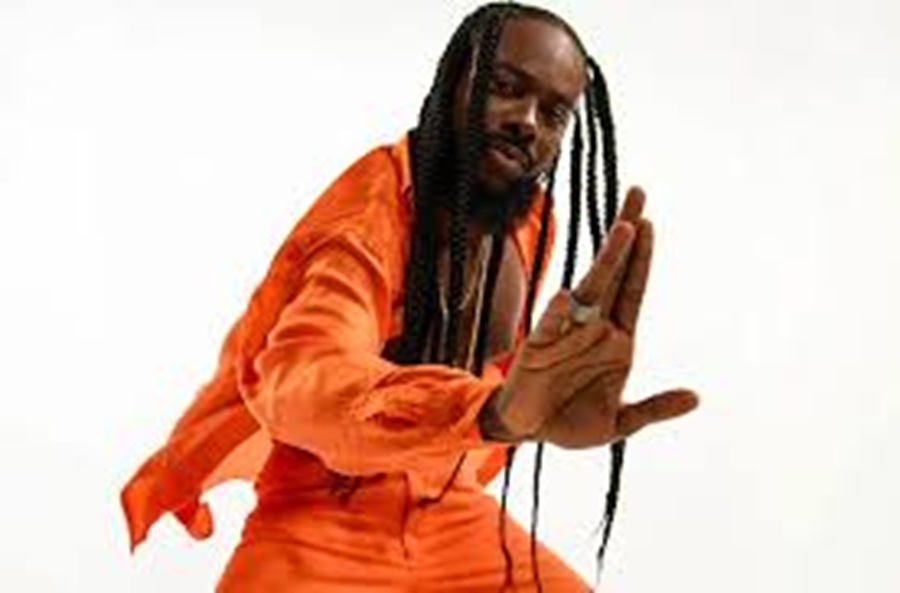
Popular Nigerian artist Adekunle Gold has lent his support to the growing youth-driven movement behind The Gathering on 100, further amplifying conversations around what is fast becoming one of the most talked-about upcoming experiences among young Nigerians.

Adekunle Gold
Known for his music and his strong connection with youth culture and evolving creative expression, Adekunle Gold’s involvement signals a deeper alignment between the event and the kind of audience it is attracting, a generation that is bold, expressive, and constantly redefining what community looks like.
While details of his involvement remain understated, his visible support adds a new layer of support and cultural relevance to the movement. In a landscape where attention is currency, endorsements from artists of his stature often act as a signal, drawing more eyes, more curiosity, and ultimately, more participation, but beyond visibility, the significance lies in what it represents.
The new father has, over the years, built a reputation for embracing creativity in its many forms, from music to visual storytelling, fashion, and digital engagement. His brand has consistently resonated with young Nigerians navigating similar spaces of self-expression and identity.
From interactive experiences like live music sessions and open performance moments to fashion runways and content creation spaces, the event is designed to blur the lines between audience and participant. It invites attendees to move beyond observation and become part of the moment.
This is a concept that closely mirrors the kind of cultural shift Adekunle Gold has been part of, one where boundaries between creator and consumer continue to dissolve.
His support also reflects a broader trend within Nigeria’s entertainment industry, where artists are increasingly engaging with youth-led initiatives that go beyond traditional performances. Rather than simply appearing on stage, they are aligning with movements that foster community, creativity, and shared experience.
For fans and attendees, this adds another dimension to what The Gathering on 100 represents.
As registrations increase and conversations expand across social platforms, the movement is gradually taking shape through the collective interest of those drawn to it.
Head to gathering.com to register.
Prof. Joash Amupitan, chairman, Independent National Electoral Commission (INEC), has urged broadcast organisations in Nigeria to exercise greater responsibility in the dissemination of information as the country prepares for the 2027 general elections.

Amupitan made the call on Wednesday, while addressing participants at the 81st General Assembly of the Broadcasting Organisations of Nigeria (BON), where he highlighted the growing influence of the media in shaping electoral processes.
He noted that the information environment has become increasingly significant in modern elections, warning that the spread of false or misleading information through broadcast channels could undermine public confidence in the electoral system.
According to the INEC chairman, media organisations must ensure strict compliance with the provisions of the Electoral Act 2026, particularly those relating to political broadcasting. Politics
He explained that the law requires equitable access to broadcast platforms for all registered political parties, stressing that fairness in media coverage is essential to maintaining a level playing field during elections.
“With 22 registered political parties, fairness in airtime allocation and coverage is a legal obligation,” Amupitan said.
The INEC chairman also cautioned broadcasters against airing content that contains abusive, inflammatory, or divisive language capable of inciting ethnic, religious, or sectional tensions.
Such broadcasts, he said, could threaten national unity and disrupt the electoral process if not properly managed.
Amupitan further reminded media organisations about the 24-hour cooling-off period mandated by law before election day, during which all political campaigns and advertisements must cease.
He explained that the measure is intended to provide voters with time to reflect on their choices without being influenced by last-minute campaign messaging.
While acknowledging the constitutional guarantee of freedom of expression, Amupitan emphasised that the right must be exercised within the limits of the law.
He noted that the airwaves are a public resource and must therefore be used responsibly to ensure fairness, balance, and equal access for all political actors.
The INEC chairman also pointed to the collaborative roles of INEC and the National Broadcasting Commission (NBC) in regulating political broadcasting, although he acknowledged that certain challenges persist.
These challenges, he said, include regulatory overlaps, gaps in enforcement, and the increasing convergence of traditional broadcast media with digital platforms, which has made monitoring political communication more complex.
Amupitan also expressed concern over perceived incumbency advantages in state-owned broadcast stations and the growing commercialisation of political airtime, warning that these practices could disadvantage smaller political parties. Politics
To address these concerns, he called for stronger collaboration between regulatory agencies, clearer guidelines on equal access to media platforms, and improved systems for fact-checking and verification.
He also advocated increased transparency in political advertising, including the disclosure of sponsorship and pricing structures.
Amupitan urged broadcasters to prioritise accuracy and professionalism in their operations, encouraging them to verify information before dissemination and play an active role in combating fake news.
He also called on the media to contribute to voter education and civic mobilisation, noting that public participation is vital to strengthening Nigeria’s democratic process.
Reaffirming the commission’s commitment to transparency, the INEC chairman advised media organisations to rely on official INEC communication channels for verified electoral information.
He added that the credibility of the 2027 general elections would depend not only on electoral logistics and technology but also on the integrity of the country’s information environment.

FG to Gift Nigerians over 100 Free TV Channels from May 15

FG New Approves Biometric Passenger Verification System for Airports Security

STBMAN, NBC Bicker over Alleged Due Process Breaches

CBN Dismisses Polaris Bank Liquidation Claim

AfDB Okays $200m for Nigeria’s Digital Backbone, Others

Spotify’s Loud & Clear Report Reveals Over ₦60Bn Revenue for Nigerian Artists in 2025

Kuda MFB Increases Kuda for Her Business Grants to ₦10 Million

Why JustMarkets Is a Strong Choice for Gold Trading

Canal+ to Cut Jobs as Part Sweeping Restructuring

Nigeria tops global rankings for USDT, USDC ownership




 E-Business2 days ago
Nigeria Demands Cloud Sovereignty to Anchor Africa’s Digital Independence

 Telecom2 days ago
Digital Encode Sponsors PAFON 3.0 as CVO Prof. Adewale Set to Deliver Keynote on Cybersecurity and Trust

 Telecom2 days ago
NITDA Boss Warns of AI Threat Shift @ GITEX Africa

 E-Business2 days ago
As Nigerians Struggle to Save, Mutual Benefits Highlights Power of Structured Financial Planning

 E-Financial2 days ago
Polaris Bank Targets Youth with Financial Literacy Drive

 Broadcasting2 days ago
What Adekunle Gold’s Support Means for ‘The Gathering on 100
 Broadcasting1 day ago
FG to Gift Nigerians over 100 Free TV Channels from May 15
 E-Financial1 day ago
AfDB Okays $200m for Nigeria’s Digital Backbone, Others