

News
NBS Inflation Report: Analyst Says 2017 Is Nigeria First Major Test


Report by the National Bureau of Statistics (NBS) shows Consumer Price Index (CPI) which measure inflation declined by 0.02 per cent in April.
According to the NBS in its new report, the inflation rate, put at 17.24 percent, declined a little further from the 17.26 percent recorded in March .
However, an economic and financial research analyst has tipped the figures and other indicators are presenting the year 2017 as first test for the economy in the.
The NBS’s report represents the third consecutive month of a decline in the headline CPI rate, indicating some easing in high food and non-food prices.
According to the report, the top items to have recorded the highest increases between April 2016 and 2017 across all the divisions were Solid Fuels, Bread and Cereals, Meat, Liquid Fuels, Clothing materials, other articles of clothing and clothing accessories, and Fish.
Between March and April 2017, however, the headline index increased by 1.60 per cent in April 2017, 0.12 per cent points lower than the rate recorded in March. Similarly, between March and April 2017, the highest rise in prices were dominated by food items including coffee, tea and cocoa, potatoes, yam and tubers, bread and cereals, milk cheese and eggs and meat and fish.
The headline index, the report noted, is made up of the core index and farm produce items. Similarly, the urban index rose by 1.61 per cent in April from 1.76 percent recorded in March, while the rural index rose by 1.59 percent in April from 1.69 percent in March.
The Composite Food Index rose by 19.30 per cent in April 2017. Meanwhile, the food sub-index increased by 2.04 per cent in April, down by 0.17 per cent points from 2.21 per cent recorded in March.
The rise in the index was caused by increases in prices of bread, cereals, meat, fish, potatoes, yams and other tubers, coffee, tea and cocoa, milk cheese and eggs and oils and fats.
The average annual rate of change of the Food sub-index for the twelve-month period ending in April 2017 over the previous twelve-month average was 17.11 percent, 0.51 percent points from the average annual rate of change recorded in March (16.60) percent.
The ‘’All Items Less Farm Produce’’ or Core sub-index, which excludes the prices of volatile agricultural produce eased by 14.80 percent during the month, 0.60 percent points from 15.40 percent recorded in March as all key divisions which contributes to the index increased.
Commenting on the report, Lukman Otunuga, FXTM Research Analyst said that the improving sentiment towards the Nigerian economy boosted further on Tuesday following reports of the nation’s inflation declining for a third consecutive month in April at 17.24%.
“This visible display of price stability has boosted investor confidence towards the nation with the Nigerian Stock Market marching into gains and becoming a champion among its emerging market peers.
“With the Nigerian parliament recently approving the government’s seven trillion naira budget to revive the economy, the overall outlook is starting to look quite encouraging in the longer term with 2017 acting as the first major test. A vulnerable Dollar continues to offer some support to the Nigerian Naira with the local currency set to gain further ground if the Dollar continues to weaken. Investors may direct their attention towards Nigeria’s pending GDP report issued this Thursday which could boost confidence towards the nation’s economic recovery if Q1 growth exceeds estimates”.


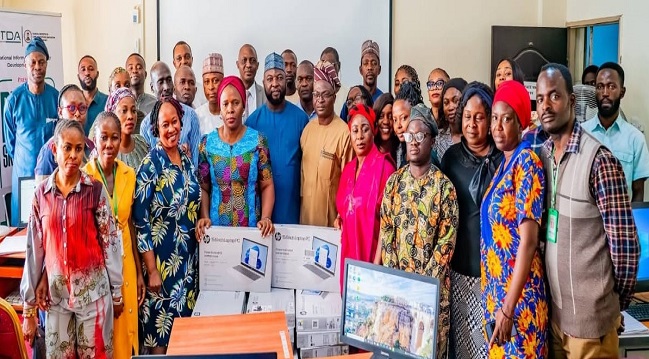
In a strategic move to modernise Nigeria’s public service, the National Information Technology Development Agency (NITDA) has concluded a specialised digital capacity-building programme for the Federal Character Commission (FCC).

The initiative, which included the donation of 35 laptops, aims to transition the Commission from manual processes to a data-driven oversight model, ensuring more transparent and equitable representation across all government MDAs.
In alignment with President Bola Ahmed Tinubu’s key priority area of reforming the economy for sustained and inclusive growth, as well as improving governance for effective service delivery, it forms part of NITDA’s Digital Literacy for All (DL4All) programme aimed at strengthening digital capacity across public sector institutions and building a workforce equipped to drive Nigeria’s digital transformation agenda.
The training, held at the Commission’s headquarters, focused on enhancing participants’ competencies in critical areas such as data analysis and data management, skills considered essential to improving institutional performance and service delivery.
Representing the Director General of NITDA, Kashifu Inuwa CCIE, the Acting Director of Digital Literacy and Capacity Building, Dr Ahmed Yusuf Tambour, explained the purpose of the intervention.
“We are here at the Federal Character Commission to carry out a training for staff of the Commission in the area of digital literacy to enhance their proficiency,” he stated.
He noted that the training was deliberately tailored to align with the Commission’s statutory responsibilities.
“We are particularly focusing on data analysis and data management, because this really aligns with the core mandate of the Commission,” he said.
The Federal Character Commission, which is responsible for monitoring and ensuring equitable representation in public service across Ministries, Departments and Agencies (MDAs), relies heavily on accurate and well-managed data to carry out its oversight functions.
By strengthening staff capacity in data handling and digital tools, NITDA aims to enhance the Commission’s ability to manage nationwide datasets efficiently and transparently.
Describing the programme as impactful and well-received by participants, Inuwa said, “So it’s been a great journey. We’ve trained 35 participants here, and the training has been very well received.”
As part of the intervention, NITDA donated 35 laptops to the Commission to facilitate continuous learning and enable staff to seamlessly integrate digital tools into their daily operations.
The gesture is expected to reinforce the sustainability of the training outcomes and improve workflow efficiency within the Commission.
Expressing optimism about the long-term benefits of the initiative, Inuwa added, “We are hoping that this will help the Commission to manage the very, very important data that they collect across all MDAs.”
The intervention reflects NITDA’s sustained commitment to deepening digital inclusion within government institutions under the Renewed Hope Agenda. By equipping public servants with practical digital skills and the necessary tools, the Agency is advancing institutional efficiency, strengthening data-driven decision-making, and supporting the Federal Government’s vision of a modern public service capable of driving inclusive national development and economic reform.

Nigeria and the European Union have inked a scientific and technology deal that grants access to about €100 billion in research and innovation funding for scientists, start-ups, and public institutions.

The agreement is a significant boost to the country’s tech environment, providing new prospects for research, innovation, and start-up growth.
The arrangement was signed in Abuja by Gautier Mignot, head of the EU delegation to Nigeria and ECOWAS, and Kingsley Udeh, Nigeria’s minister of innovation, research, and technology.
After more than two decades without a formal framework, the agreement transfers cooperation from informal to structured, large-scale collaboration.
The European Commission’s Horizon Europe programme, the world’s largest public research budget, is at the heart of the deal, which will bring together Nigerian researchers and firms to work on cross-border projects in health, agriculture, climate, food systems, and new technologies.
Udeh stated that the relationship puts Nigeria as a continental powerhouse for science and enterprise, with an emphasis on translating research into commercially viable products and assisting startups in scaling into global players.
Gautier Mignot noted that Nigerian organisations are already active in several Horizon-backed and global health research projects, but the new pact provides a legal and political framework to significantly expand participation, funding access and visibility.
To ensure delivery, both parties created a Joint Science and Technical Cooperation Committee to drive implementation and track measurable outcomes.
Beyond academia, the agreement aims to support innovators, boost university–industry collaboration, and help more Nigerian tech firms compete globally, strengthening Nigeria’s position as a leading startup hub in Africa.

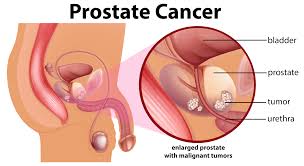
Microplastics have now been found inside most prostate cancer tumors — and at strikingly higher levels than in healthy tissue.

A new study reports that tiny plastic particles were present in nine out of 10 men diagnosed with prostate cancer.
Researchers also found that these fragments appeared in greater amounts inside cancerous tumors than in nearby noncancerous prostate tissue.
The investigation was conducted at NYU Langone Health, including its Perlmutter Cancer Center and Center for the Investigation of Environmental Hazards.
Scientists set out to examine whether exposure to microplastics could play a role in the development of prostate cancer, which the American Cancer Society identifies as the most common cancer affecting American men.
Plastic used in food containers, packaging, cosmetics, and other everyday products can break down into microscopic pieces when heated, worn down, or chemically altered.
These particles can be swallowed, inhaled from the air, or absorbed through the skin. Previous research has detected microplastics throughout the human body, including in major organs, bodily fluids, and even the placenta.
Despite their widespread presence, scientists still do not fully understand their health effects.
For this study, researchers analyzed prostate tissue samples from 10 patients undergoing surgery to remove the prostate gland. Microplastic particles were identified in 90% of tumor samples and in 70% of noncancerous samples.
Notably, tumor tissue contained significantly more plastic.
On average, cancerous samples had about 2.5 times the concentration found in healthy prostate tissue (about 40 micrograms of plastic per gram of tissue compared with 16 micrograms per gram).
“Our pilot study provides important evidence that microplastic exposure may be a risk factor for prostate cancer,” said study lead author Stacy Loeb, MD, a professor in the NYU Grossman School of Medicine’s Departments of Urology and Population Health.
Loeb explained that while earlier studies had hinted at links between microplastics and conditions such as heart disease and dementia, there had been little direct research connecting them to prostate cancer.
The findings will be presented on February 26 at the American Society of Clinical Oncology’s Genitourinary Cancers Symposium.
According to Loeb, this is the first study conducted in the West to measure microplastic levels in prostate tumors and directly compare them with levels in noncancerous prostate tissue.
To carry out the analysis, scientists first examined the tissue visually. They then used specialized instruments to measure the quantity, chemical makeup, and structural characteristics of microplastic particles. The team focused on 12 of the most commonly produced plastic molecules.
Because plastic is widely used in medical and laboratory tools, the researchers took extra precautions to prevent contamination. They replaced plastic equipment with alternatives made from aluminum, cotton, and other nonplastic materials. All testing took place in controlled, clean rooms specifically designed for microplastic analysis.
“By uncovering yet another potential health concern posed by plastic, our findings highlight the need for stricter regulatory measures to limit the public’s exposure to these substances, which are everywhere in the environment,” said study senior author Vittorio Albergamo, PhD.
Albergamo, an assistant professor in the NYU Grossman School of Medicine’s Department of Pediatrics, said the next step is to determine how microplastics behave inside the body and whether they contribute directly to cancer development. One theory the team plans to investigate is whether these particles trigger a persistent immune response (inflammation) in prostate tissue.
Over time, chronic inflammation can damage cells and lead to genetic changes that allow cancer to form.
Albergamo emphasized that the study involved a small number of patients and that larger studies will be necessary to confirm the results.
According to the Centers for Disease Control and Prevention, about one in eight men in the U.S. will be diagnosed with prostate cancer during their lifetime.
Meeting: American Society of Clinical Oncology’s Genitourinary Cancers Symposium
The research was funded by the U.S. Department of Defense.
In addition to Loeb and Albergamo, the NYU Langone research team included Leonardo Trasande, MD, MPP; Trevor Johnson, PhD; Fang-Ming Deng, MD, PhD; Mark Strong, DO; David Wise, MD, PhD; José Alemán, MD, PhD; Zixuan Mo, BS; Mariana Rangel Camacho, BS; Nataliya Byrne, BA; Tatiana Sanchez Nolasco, MPH; Adrian Rivera, MPH; William Huang, MD; Herbert Lepor, MD; Wei Phin Tan, MD; and James Wysock, MD.
Samir Taneja, MD, of Northwell Health in New York City also contributed to the study.
Loeb has consulted for pharmaceutical company Astellas, digital health company Savor Health, and men’s health organization Movember, and has received research support from Endo USA Inc. She also participated in advisory boards for Endo USA, Blue Earth Diagnostics, Pfizer, Sumitomo Pharma, and Doceree. Wysock has consulted for medical equipment manufacturers Edap — Focal One, and URO-1 Medical. Wise is a paid consultant for Pfizer, Bayer, K36, OncoC4, AstraZeneca, and Janssen Pharmaceuticals, and is an expert witness for Exxon Mobil. None of these activities are related to the current study. NYU Langone Health is managing the terms and conditions of these relationships in accordance with its policies and procedures.
Credit…..scitechdaily.com

Kaspersky Discovers New Phishing Campaign Exploiting Google Tasks Notifications to Steal Corporate Credentials

NITDA Equips Federal Character Commission with Data Tools to Drive Public Sector Reform

Telecom Giant MTN Injects N1.0 Trillion CAPEX into Network Expansion

History is Watching: Tinubu’s Moment to Rescue Nigeria’s Stolen Future

Samsung Unveils Galaxy S26 Series, Powered by Smarter, Background AI

Kaspersky Launches OT Calculator to Align Cybersecurity Investments with Business Goals

Accidental Billionaire Opts for Jail Instead of Returning Money Credited Him by Mistake

Why the Future of PR Depends on Healthier Client–Agency Partnerships

New Horizons Nigeria Breaks Ground: First to Fuse Mandarin into ICT Curriculum

Kaspersky Brings more Transparency to Threat Detection with New Hunt Hub




 E-Business2 days ago
AfDB, UNDP Launch $10Bn AI Initiative for Africa

 Telecom2 days ago
Grey Expands Cross-Border Banking with USD Accounts, USDC Support

 General News1 day ago
KPMG Strengthens Africa Leadership to Support Long‑term Growth Across the Continent

 News3 days ago
Obasanjo, Vanguard’s Amuka Lead Prayers for Zinox Chief Leo Stan Ekeh @70

 News2 days ago
Lotus Bank, REA Seal N100Bn Deal to Power Rural Nigeria

 News2 days ago
DG NITDA Reaffirms FG Commitment to Responsible, Inclusive AI

 E-Financial2 days ago
CBN Cuts MPR by 50bps to 26.50% as Inflation Eases for 11th Month

 E-Financial2 days ago
Kuda Bank Teams Up with Lovers & Frnds for Inclusive Valentine’s R&B Bash