

Broadcasting
NCC @ 30 Pledges to Change Copyright Narrative for Wealth Creation

As the Federal regulatory and enforcement agency charged with all copyright matters under the Copyright Act, the Nigerian Copyright Commission (NCC), this year, commemorates its 30th Anniversary.
The three-month celebration, flagged off on 19 August, 2019 has as its theme: “Changing the Copyright Narrative for Wealth Creation”.
Inaugurated as the Nigerian Copyright Council on 19 August 1989 and upgraded to the status of a Commission in 1996, the mandate of the Commission has since been enlarged over the years to include the promotion, regulation, protection, and enforcement of copyright in Nigeria.
All over the world, intellectual property, including copyright, is increasingly playing a prominent role in national development and most nations in today’s knowledge-driven economy are leveraging on the development potentials of their copyright industries.
In the last three decades, the creative industries in Nigeria have grown exponentially and the Commission has also introduced various initiatives aimed at building a copyright system that would support them and guarantee return on their investment to ensure they contribute maximally to national development.
While acknowledging that a lot still needs to be done to fully integrate the copyright system into the nation’s development plan, there is much about the creative industries in Nigeria to celebrate.
The essence of the Commission’s 30th Anniversary, therefore, goes beyond the Commission. It is an opportunity to draw attention to the strength, resilience and indefatigable spirit of the Nigerian creative sector. We are not only talented as a people; we are also a nation that is endowed with immense human resource.
The Nigerian creative industry is currently estimated to contribute about ten per cent (10%) of the nation’s GDP, a feat we hope would increase significantly in the next decade.
Against this backdrop, the 30th Anniversary of NCC, marked in collaboration with core stakeholders in the creative industry, was an avenue for the Commission to appreciate their contributions over the years and reaffirm its commitment to building a copyright system that serves their interests.
With the partnerships that have been built, there is no doubt that together, we have begun to change the copyright narrative with the objective of growing the nation’s creative wealth.
The Federal Government, under the present administration of President Muhammadu Buhari, GCFR, has introduced various policies and programmes aimed at tapping into the soft power of the creative sector.
Taking a cue from the Economic Recovery and Growth Plan (ERGP) and the Policy on Ease of Doing Business, the NCC has continued to provide the enabling legal and regulatory environment to grow the sector and guarantee return on investment.
As the agency of Government responsible for all copyright matters in Nigeria, NCC remains committed to a strong, balanced and efficient copyright system that is able to grow the creative industries and sustain today’s knowledge ecosystem. To this end, our primary goals remain:
– Strengthening human and institutional capacity for better service delivery;
– Improving the policy and legal framework for a functional copyright system;
– Embarking on a well-coordinated strategic enforcement plan to significantly reduce piracy;
– Initiating appropriate and effective schemes for better rights management and regulation;
– Promoting respect for copyright through awareness and education amongst right owners, users, policy makers and officials;
– Supporting national and international processes to build a more balanced, development-oriented copyright system;
– Compliance with the rules of probity and good governance to ensure that Nigeria gets premium value for its copyright system.
As we celebrate the relevance of the creative industry to national development, the Commission renews its commitment to proactive implementation of its mandates under the Copyright Act; it recommits to intensifying collaboration with national and international development partners to engender enhanced copyright awareness, protection and enforcement interventions nationwide.
In the years ahead, the Commission counts on the continued support of all stakeholders towards creating an enabling environment for the wellbeing and development of the creative industry and the sustenance of the rising profile of Nigeria as a country committed to the protection of creative enterprise.
Once again, the Commission expresses its profound appreciation to all stakeholders and partners at national and international levels for their support in the implementation of its statutory functions over the years and looks forward to more fruitful collaboration in the years ahead.


Mr. Charles Ebuebu, director General of the National Broadcasting Commission (NBC), has called on Nigerian content creators to actively participate in the country’s Digital Switchover (DSO), describing the transition as a major opportunity for visibility, revenue growth, and industry collaboration.

Mr. Charles Ebuebu, DG, NBC
Speaking as Special Guest of Honour at the induction ceremony of the Electronic Media Content Owners Association of Nigeria (EMCOAN) in Lagos, Ebuebu stressed that the success of the DSO depends on engaging content to populate the nation’s new digital channels.
“Without content, the DSO’s success would be incomplete. We are urging content owners to collaborate with the Commission to ensure Nigeria’s digital future is rich, diverse, and sustainable,” he said.
The NBC boss highlighted that the upcoming FreeTV Direct-to-Home (DTH) platform, along with its mobile applications, would provide content creators with nationwide reach, advanced analytics, and brand partnership opportunities.
Nigeria’s DSO, which marks the shift from analogue to digital broadcasting, is being implemented by the NBC using the Nigcomsat satellite infrastructure. The programme aims to deliver over 100 nationwide channels and expand access to Nigerians in remote areas via hybrid decoders, addressing long-standing infrastructure and funding challenges. The project, which has experienced delays since 2012, now has strong government backing and is scheduled for launch in April 2026.
Ebuebu commended EMCOAN members for their contributions to strengthening Nigeria’s creative economy and encouraged them to leverage the opportunities offered by the DSO to promote local stories, culture, and creativity on both national and global stages.
During the ceremony, EMCOAN honoured its distinguished members, naming Wale Adenuga, MFR, as Grand Patron and Mr. Yinka Adebayo as Patron.
Prominent figures in the broadcasting content industry, including Wale Adenuga, Opa Williams, Agatha Amata, Jibe Ologeh, High Chief Emeka Ossai, Debbie Odetayo, Amina Mohammed, and Frank Elaboya, attended the event.
Representing the NBC at the event was Mr. Ralph Akpan, director of the Lagos Zone, while EMCOAN president, Mr. Adeniji Omirin, MD of ADNOM Media, urged members to fully engage in the digital switchover.
Canal+ is to cut jobs at MultiChoice as part of a sweeping restructuring plan aimed at stabilising the African pay-TV operator, following years of operational and financial pressure.

The move comes alongside a planned $115 million capital injection, underscoring the urgency of efforts to revive the business after the French media group took control.
The planned layoffs are expected to form a core element of a broader cost-cutting and efficiency drive, as Canal+ seeks to streamline MultiChoice’s operations and improve profitability.
The restructuring signals a shift toward leaner operations, with a focus on eliminating redundancies and optimising the company’s cost base.
MultiChoice has struggled in recent years with declining subscriber numbers across key African markets, weighed down by macroeconomic pressures, currency volatility, and changing consumer behaviour.
The rise of global streaming platforms has intensified competition, chipping away at the company’s traditional pay-TV dominance.
Canal+’s intervention marks a pivotal moment for MultiChoice, reflecting a more aggressive approach to repositioning the business.
By combining fresh capital with structural reforms, the new owners are aiming to both stabilise short-term performance and lay the groundwork for longer-term growth.
The $115 million injection is expected to provide immediate financial relief, supporting operations and potential strategic initiatives.
However, the accompanying job cuts highlight the depth of the challenges facing the company and the scale of transformation required to restore competitiveness.

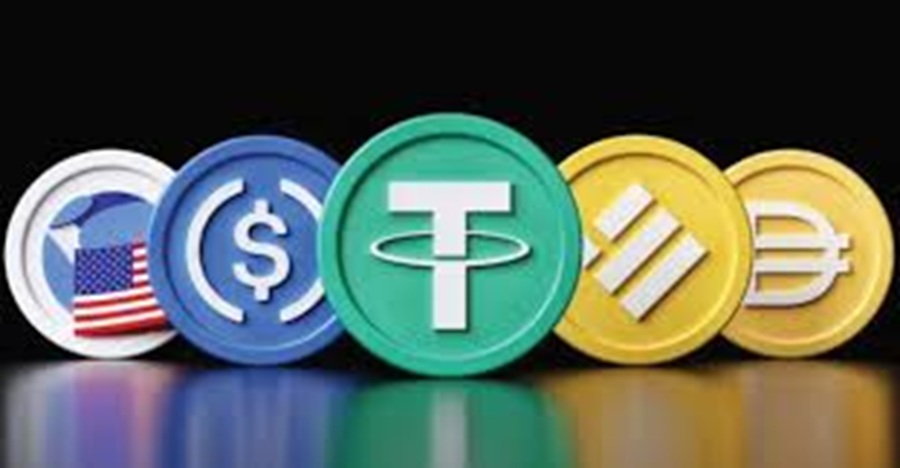
Nigeria has ranked first globally in the ownership of the two largest stablecoins, Tether (USDT) and USD Coin (USDC), reflecting the country’s growing reliance on dollar-linked digital assets.

USDT, USDC
Stablecoins such as USDT and USDC are designed to maintain a fixed value against the U.S. dollar, allowing users to store money digitally while avoiding the price volatility associated with cryptocurrencies like Bitcoin.
According to the 2026 Stablecoin Utility Report released by BVNK, about 59 percent of Nigerian crypto users hold USDT, while 48 percent own USDC, giving the country the highest combined ownership rate among all nations surveyed.
The report placed Nigeria ahead of several major economies, including Australia and India, highlighting the country’s strong adoption of dollar-denominated digital assets. Australia ranked second with 34 percent USDT ownership and 29 percent USDC, while India placed third with 30 percent USDT and 27 percent USDC holdings.
The study also examined adoption levels across other regions. Countries such as Colombia and Singapore showed strong usage of both stablecoins, while adoption levels were also notable in South Africa and the United States.
Other markets included in the analysis were Philippines, Thailand and Argentina, where stablecoin ownership has also increased significantly. Among European economies, the report said France and Germany showed moderate levels of adoption, while Latin American markets such as Mexico and Brazil recorded smaller but growing usage rates.
The United Kingdom also appeared in the ranking with modest levels of stablecoin ownership. The report noted that USDT ownership exceeds USDC in many countries, including Nigeria, Australia, India, Singapore, the Philippines, Thailand, Argentina and France.
However, USDC is often viewed as a more compliance-focused stablecoin because of its stronger transparency and regulatory alignment. In some markets, including South Africa, Colombia, Germany and Brazil, the report found that USDC adoption slightly exceeds USDT.
More broadly, the data suggests that stablecoin adoption is being driven largely by emerging economies rather than advanced financial markets. According to the report, countries such as Nigeria, Argentina and the Philippines are among the biggest users of stablecoins, where people increasingly rely on dollar-pegged digital assets to protect savings from currency volatility and facilitate cross-border payments.

Anti Graft Agencies Raise Alarm over Rising Crypto-Linked Financial Crimes

NITDA Takes Over National Digital Architecture System

NDIC Insures 99 Percent of Bank Customers

FG Shifting Focus to “Meaningful Connectivity” to Drive Inclusion – Minister

CBN Bars Chronic Loan Defaulters from Accessing Loans

Kaspersky Discovers New Phishing Campaign Exploiting Google Tasks Notifications to Steal Corporate Credentials

Spotify’s Loud & Clear Report Reveals Over ₦60Bn Revenue for Nigerian Artists in 2025

China Threatens to Shut Nigeria’s Satellite Over $11.44m Unpaid Debt

MTN Nigeria Posts Record N1.70 Trillion Pre‑Tax Profit, Declares N20 Dividend for 2025

Madonna University Taps Tech Guru Adote for Strategic Board Role




 Telecom3 days ago
US Jury Finds Meta, Google Liable in Landmark Social Media Addiction Case

 News3 days ago
EU Pumps €290m into Nigeria’s Digital, Health, Agri Sectors

 E-Business3 days ago
5 Wealth-Building Strategies for Nigerian Women-led Businesses

 News3 days ago
Firm Shares Tips for Updating Your Digital Habits for an AI-driven World

 E-Business3 days ago
Nigeria, Finland Sign Cybersecurity Pact

 Telecom3 days ago
Mobile Money Transactions Accounted for $2 trillion in 2025

 General News2 days ago
NCC to Curb SIM Fraud, Strengthen Digital Security with New Platform

 E-Financial3 days ago
MoneyMaster Enhances App, Rewards Users with Data and Airtime Bonuses