

Telecom
NCC Backs eBusinessLife on Girls in ICT Campaign 2021


The Nigerian communications Commission (NCC) has put its weight behind eBusiness Life Communication Limited in the campaign to sensitize young girls on the imperatives of pursuing ICT-related careers.

The nod will see the regulator partnering with the media organisation in its upcoming event, eBusinesslife International Girls in ICT Day Celebration, scheduled for April 22, 2021 at the Oriental Hotel in Lagos.
In a discussion with the organisers, the NCC noted its willingness to partner with eBusinesslife is to ensure that the gender disparity in ICT-related careers is addressed to motivate young girls contribute their quota in the industry.
The International Girls’ in ICT Day Celebration is an initiative launched through the International Telecommunications Commission (ITU) Resolution 70 with the idea of creating a global environment that will empower and encourage girls and young women to consider careers in the field of information and communication technologies (ICTs).
In the past nine years, eBusiness Life had organised the event annually in Nigeria, gathering young girls from different schools, to educate and sensitize them on the opportunities inherent in professions in ICT, and providing a platform for organisations to synergise on complementary ways to further the cause.
Also the girls had been made to go through hands-on training on various aspects of ICT and gone on facility visits to ICT companies to get first-hand experience of the intricacies of these ICT firms. However, the 2020 edition was botched by the COVID-19 pandemic.
Speaking on the partnership, Mrs. Ufuoma Emuophedaro, chief executive officer of eBusiness Life Communication and convener of the event, said the need to sensitise young girls is premised on the fact that the society has unconsciously relegated the female gender and delegated careers in technical fields, especially in ICT, to their male counterparts, and that the support from NCC will further lend credence to the campaign.
She called on corporate bodies and the society at large to recommit to supporting every girl to develop her skills, enter the workforce on equal terms and reach her full potential.
“We need to equip the girls with transferable and lifelong skills such as critical thinking, creativity and digital awareness. Having role models will also be critical, especially in the sciences and other fields where the presence of women is sparse.”
She further noted that efforts should be made to introduce young girls to career opportunities in technical fields in both the public and private sectors to help them have a wide range of options and contribute their quota in the industry.
Mrs Emuophedaro stated that pursuant of the International Girls in ICT Day celebration and subsequent campaign will further open up opportunities for girls in the ICT sector.
Speaking further, Mrs. Emuophedaro noted that supporting the global Girls in ICT movement empowers girls and young women, giving them the confidence to pursue ICT studies and careers. “Girls and young women have the potential not only to become ICT users, but also to become ICT creators. “
As part of this year’s edition of the event, students from select secondary schools will receive practical training on an aspect of ICT and compete on same on the D-Day.
Also a roundtable discussion, interactive and motivational talk from renowned women ICT professionals, will be part of the events lined up for the day.
The campaign, which continues after the D-Day, will see young girls take part in facility tours to ICT facilities; participate in seminars that promote ICT development and undergo trainings in ICT.
At the end of the event, it is expected that young girls and students should be able to introspect and pursue any desired career path in ICT without bias, or gender consciousness.
Awards will also be given to deserving female ICT practitioners and institutions as part of the celebration.
Severe COVID-19 safety protocols will be observed at the venue.
e-Business Life Magazine is a monthly Information and Communications Technology (ICT) Magazine incorporated to bring better information that would link users and service providers as well as enable Nigeria take its pride of place among the comity of nations in the new global economy.
The mission at e-Business Life Magazine is to inform and educate ICT users on trends and developments both locally and internationally; to provide a platform on which to build ICTs in a Nigeria and also to be a voice for ICT consumers in the country. In addition we are poised to create a world where Nigerian youths have a better understanding of modern technologies and can easily deploy these technologies in developing their communities.


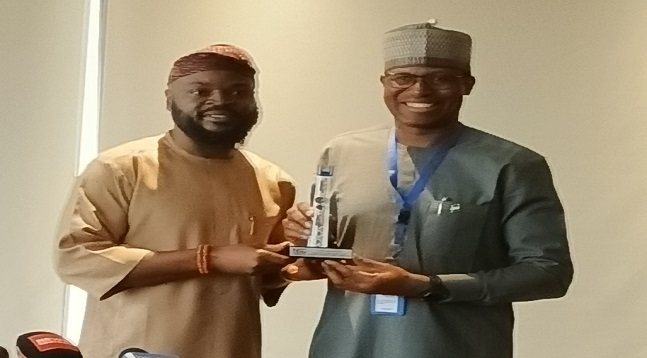
Nigerian Communications Commission (NCC) is considering imposing sanction on any road contractor that destroys telecommunications metro fibre across the country.

Idris Olorunnimbe, chairman, Board of Commissioners, NCC, stated this at congratulatory visit to the Chairman by members of Association of Licensed Telecommunications Operators of Nigeria (ALTON) in Lagos yesterday.
According to him, “I think what we need to do to address the damage of metro fibre by government contractors is simply. He who cuts It must fix it, and we’ll take this message to our state governments.
If any contractor knows that if they damage that critical national infrastructure, their work is going to stop and they are going to be the ones to fix it, they will not destroy it.
Responding, Engr. Gbenga Adebayo, chairman, Association of Licensed Telecommunications Operators of Nigeria (ALTON), said up until now, there are no consequences for those infractions, and if there are no consequences, the tendency to continue to do bad is very high.
“Contractors of government carrying out roadworks, whether road maintenance or road expansion, and their machines destroy communications super highway at will, if there are consequences, or if there were consequences some of those actions will not have escalated to the level that we are in.
“What the chairman has said today is very important, if you destroy it you fix it. What we are expecting now is that the consequence of managing those problems will be a lot more, and there will be legal deterrent for people from destroying operators’ fibre. I must emphasize the communication super highway. That’s the highway by which all the signals are carried.
“When this highway is broken, it’s like you have a major bridge that’s broken. You can’t reach east, neither can you reach west. And until we take it as the major super communications highway and so protective, we will continue to be where we are.
“That’s actually what it is. When this highway is broken, we are all affected. So, it’s no longer an infrastructure that is for operators, but it belongs to all of us. If I don’t have service on my phone, some of these are the consequence of this violation that we are seeing.
Earlier in his welcome address, Engr. Adebayo highlighted some of the key challenges in the sector which includes: Daily fibre cuts — often caused by federal and state road construction contractors — are creating enormous economic losses.
- Nationwide service disruptions
- Destruction of critical digital infrastructure
- Loss of assets without compensation
- Banking, education, and security interruptions
There is currently insufficient institutional recourse for operators when these damages occur. A structured pre-construction fibre mapping and mandatory coordination framework is urgently required.
Key Regulatory Priorities for Sector Stability
- Independence of the Regulator
He said regulatory independence ensures:
- Credible oversight
- Investor confidence
- Transparent decision-making
- Long-term sector stability
Independence must not only exist in law — it must be visible in practice.
“We recommend: Legislative reinforcement explicitly affirming NCC independence
- Clear codification of interaction boundaries between the regulator and supervising authorities
- Operational safeguards insulating regulatory processes from undue influence
Multiple Regulation
Overlapping regulatory interventions by various MDAs on matters already within NCC jurisdiction create:
- Duplicative investigations
- Conflicting directives
- Increased compliance costs
- Regulatory uncertainty
“We recommend structured inter-agency coordination frameworks and legislative clarification reaffirming NCC’s exclusive jurisdiction over telecommunications matters.
Multiple Taxation
Adebayo stated that operators continue to face excessive sub-national taxes and levies.
Enforcement tactics such as site shutdowns directly affect Quality of Service and national connectivity.
A harmonized national telecom taxation framework is essential for broadband expansion and digital inclusion.

Google has launched Lyria 3, its advanced generative music model, in the Gemini app, enabling users to create 30-second tracks from text prompts or images.

Lyria 3 Model
Senior Product Managers Joël Yawili and Myriam Hamed Torres announced the feature, which generates lyrics, styles, vocals, and tempos based on descriptions like “a fun afrobeat track about childhood memories of home-cooked plantains.”
Key upgrades include auto-generated lyrics, user control over elements, and more realistic, complex audio.
Usage Options
Text-to-track: Prompt genres, moods, or memories, e.g., “nostalgic afrobeat for my mother’s plantain meals with African vibe.”
Image/video-to-track: Upload photos/videos for mood-matched songs, e.g., “track about my dog on a hike.”
Tracks include custom Nano Banana cover art for easy sharing. Available for users 18+ in English, German, Spanish, French, Hindi, Japanese, Korean, Portuguese; Google AI subscribers get higher limits.
Verification and Responsibility
All outputs embed SynthID watermark; users can verify uploaded audio for Google AI origin.
Developed with music community input since 2023, Lyria 3 avoids mimicking artists—prompts inspire style only—with filters, reporting, and policy enforcement against IP violations.
Also enhances YouTube Shorts soundtracks via Dream Track for creators.
Access at gemini.google.com.

Kashifu Inuwa, Director General of the National Information Technology Development Agency (NITDA), has called for a bold transformation of Nigeria’s public service from traditional bureaucracy to digital excellence, as he participated in the official flag-off of the Civil Service Technology Empowerment for Capacity and High Performance (CIVTECH) Programme in Cross River State.

Group photo of the HOS, Mr Orok Okon (middle), Rep of DG NITDA, Dr Aristotle Onuma (3rd left), DG CRS MEDA, Mr Great Ogban other state government officials
The programme, hosted by the Cross River State Government and organised by the Cross River State Microfinance and Enterprise Development Agency (CRS MEDA), is designed to equip 2,000 civil servants with critical digital skills required to drive efficient and technology-enabled service delivery.
In his keynote address titled “From Bureaucracy to Digital Excellence: Leveraging Technology for a High-Performing Public Service,” the NITDA DG who was represented by the Director of the Stakeholders Management and Partnership department, Dr Aristotle Onumo, emphasised that the future of governance depends on the ability of public institutions to embrace digital transformation.
“For decades, the public service has been the engine room of national development but in an era defined by speed, data, and innovation, traditional bureaucratic processes are no longer sufficient to meet the expectations of citizens and businesses,” he stated.
He noted that citizens today expect government services to reflect the efficiency and convenience they experience in digital banking, e-commerce, and mobile platforms.
Highlighting the economic imperative of digitalisation, the DG pointed out that Nigeria’s ICT sector contributed nearly 20 percent to the nation’s real GDP in 2024, underscoring the growing role of technology as a driver of economic growth and competitiveness.
While noting that digital transformation is no longer just a technology agenda, he said, “It is an economic agenda, it is a governance agenda, and it is a national competitiveness agenda.”
According to him, the cost of maintaining outdated bureaucratic systems includes delayed decision-making, inefficiencies, limited transparency, and declining public trust.
However, he emphasised that digital excellence provides a pathway to faster service delivery, improved accountability, increased productivity, and enhanced citizen satisfaction.
“This is the shift from paperwork to performance, from process-driven governance to outcome-driven governance,” he added.
Inuwa further emphasised that while infrastructure and systems are important, people remain central to institutional transformation.
“Technology alone does not transform institutions. People do, and digital excellence requires public servants who are digitally skilled, innovation-driven, solution-oriented, performance-focused, and citizen-centric,” he asserted.
Assuring participants that technology is not designed to replace public servants but to empower them, he said, “Technology frees you from repetitive administrative tasks so you can focus on strategic thinking, policy innovation, and national development.”
Outlining NITDA’s strategic priorities, he referenced ongoing efforts to promote digital literacy and skills development, strengthen digital public infrastructure, automate government processes, enhance cybersecurity and data protection, and encourage the adoption of emerging technologies such as Artificial Intelligence across public institutions.
He commended Cross River State for embracing reform and positioning itself at the forefront of sub-national digital transformation, noting that initiatives like CIVTECH align with the Federal Government’s broader vision of building an efficient, transparent, and citizen-centric public service.
“The future of governance is digital. Together, we can transform governance. Together, we can transform Nigeria. And together, we can build a public service worthy of the digital age,” he concluded.
Declaring the flag-ff open, the state’s Head of Service, Mr Orok Okon, reaffirmed the government’s unwavering commitment to strengthening the capacity of its workforce.
He emphasised that, in an era defined by rapid technological advancement, public institutions must equip their personnel with the skills and competencies necessary to deliver efficient, technology-enabled services.
According to him, investing in human capital is essential not only for improving internal administrative processes but also for ensuring that citizens receive timely, transparent and high-quality service across all sectors.
Earlier in his welcome address, the Director General of CRS MEDA, Mr Great Ogban, expressed appreciation to the Governor and the Head of Service of the state for their consistent commitment to technology-driven workforce development.
He encouraged all shortlisted trainees to show full dedication, emphasising that their participation aligns with the state’s goal of transitioning toward a fully paperless civil service.
He expressed strong optimism about the state’s growing partnership with NITDA, noting that such collaboration will play a pivotal role in accelerating the digital transformation of Cross River State.
According to him, the joint efforts between the state government and NITDA will not only enhance the quality of digital training provided to civil servants, but also to help fast-track the transition toward a more efficient and technology-driven civil service.

NCC Mulls Sanction on Road Contractors Destroying Metro Fibre of Telcos

NITDA, HORSA Empower Lawmakers’ Spouses with Digital Skill

FirstCap MD says Payment Security Remains Biggest Barrier to Bankable Gas and Power Projects

PalmPay Unveils First Batch of Winners in #LoveWithPalmPay Campaign

Gemini App Rolls Out AI Music Creation with Lyria 3 Model
Nigeria’s 9 Top FinTech Firms Valued at $10.6Bn in January 2026

Firm Detected a Fivefold Surge in QR Code Phishing Attacks in the Second Half of 2025

DG NCC Tasks University Dons on Research Commercialization, IP Management to Build Global Competitive Ecosystems

Kaspersky Launches OT Calculator to Align Cybersecurity Investments with Business Goals

Firm Detected a Scam Exploiting OpenAI’s Teamwork Features




 Telecom2 days ago
Terra Moves to Expand in African Drone Sector, Secures $22m Funding

 Telecom2 days ago
Temu Assures Compliance Amid Nigeria Data Privacy Probe

 E-Financial2 days ago
DMO Offers ₦800bn FGN Bonds in February Auction Surge

 E-Financial2 days ago
Danjuma, Taj Bank Staff Jailed for 5 Years over N22m Fraud

 E-Financial2 days ago
KPMG Outlook Reveals Financial Services CEOs Double down on AI, Resilience and Growth in 2026

 Telecom2 days ago
MTN Group Announces Proposed Full Acquisition of IHS Towers

 News2 days ago
Chianugo, Nigerian $150m suit Against Google, GoDaddy.com Stalled due Judge’s Absence

 General News2 days ago
FG to Review MTN’s $6.2Bn IHS Acquisition — Tijani