

Telecom
NCC Collaborates with NSA to Stop Call Masking

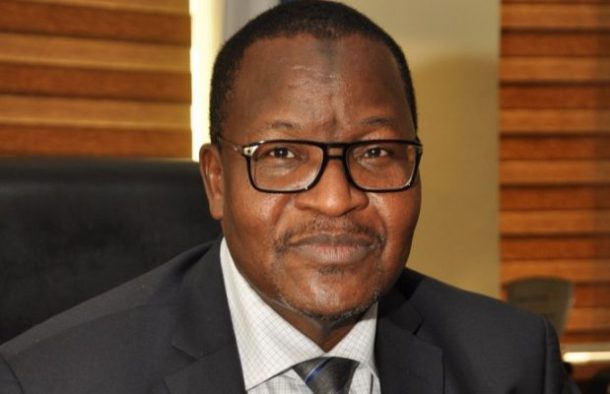
The Nigerian Communications Commission, NCC says it is collaborating with the Office of the National Security Adviser, NSA to address the issue of call masking.
Speaking at the Consumer Conversation programme in Bida Niger state, the Executive Vice Chairman of the Commission, Prof. Umar Danbatta, who was represented by the Head of zonal operations Helen Obi said the collaboration became necessary because the continued masking of calls by some people pose serious security threat to the nation.
According to the Obi, the Commission is poised at nipping the menace in the bud because Call masking apart from constituting security threat, it equally deprives revenue for the government.
She said the NCC is also working on deploying technological solutions that would arrest the culprits that are bent on caring out such nefarious activities.
‘‘Call masking is a technology used by some people to mask calls that should come in as International calls with local numbers, they pose as security threat.
‘‘We are in collaboration with the office of The National Security Adviser. Recently also the National Assembly mandated the Consumer Protection Council to look into issues concerning that, so as not to put consumers at a disadvantage and NCC also is working on deploying technological solutions to finding out and arresting culprits that are bent on caring out such nefarious activities.
‘‘NCC is against call making because it poses security threat and also deprives revenue for the government.’’
On double registration of Sim cards, she said NCC’s team recently that went to Nassarawa state on surveillance activity as regards to illegal SIM card registration, we got findings that such activities are going on and NCC in collaboration with the Police and NSCDC and some arrests were made and handed over to Police.
‘‘NCC is following up to ensure that the prosecution that is needed is done to bring to the act to barest minimal.
‘‘The issue of pre-registered SIM card knowing the security threat it brings in the society, NCC is constantly doing something about it,’’ she added.
On the consumer conversation, charged consumers to take advantage of sending “STOP” to the 2442 code to stop all unsolicited text messages, or “HELP” to the same code to be availed with options of interest, stressing that when issues are not resolved by their telecom operators or if still not satisfied they should make complaints to the Commission via its toll-free line 622.
The NCC zonal head said the program was aimed at protecting, educating, and empowering telecom consumers to know their rights as they play a strategic role towards ensuring sustainable growth and development in the telecom sector adding that the Commission is not leaving any stone unturned in enduring the consumer gets satisfaction from the services rendered by their telecom operators.
‘“We have come to do here is Consumer centric take sure that Consumers are well-informed, and make informed choices in using ICT and also to know that they have tights and privileges from the service providers, if they are not getting satisfactory services we have opened up platforms for them make complaints to NCC after they would have complained to their service providers and they are not getting any satisfactory solution we have the DND and we have our 622 which the Consumer can call the and the NCC is ready to follow the complaints to logical conclusion.’’
She appealed to consumers to stop the vandalization of telecom infrastructures, explaining that the Commission had set up key performance indicators aimed at accessing how compliant telecom operators are complying with the extant laws to ensure high quality of service across the country.
Also speaking at the event, the chairman traditional rulers in Niger state, Esu Nupe Alh. Yahaya Abubakar, n who was represented by Phamarsist Yahaya Mai Yaki applauded the Commission’s efforts in ensuring the consumer enjoys quality service and called on the service providers to ensure that consumers’ satisfaction.


In the wake of increasing geopolitical tension, Cassava Technologies has unveiled its National Sovereign Cloud offering for African governments.

The solution, the company claims, will help the continent’s governments ensure data is kept on infrastructure that remains under local legal and operational jurisdiction.
According to the official announcement, made yesterday, the solution provides “secure, locally-governed digital infrastructure that enables the deployment of AI-enabled public services”.
The overarching solution encompasses cloud, cyber security, AI computing infrastructure, as well as local language AI models and skills support for governments.
The announcement comes amid increasing uncertainty over the hosting of sensitive national data on cloud services operated by foreign hyperscalers, which are subject to legal frameworks, such as the U.S. CLOUD Act. The CLOUD Act opens the door to allow American authorities to access data stored on the servers of US hyperscalers, wherever those servers are physically located.
Cassava has claimed separately that currently, “approximately 33% to 45% of the world’s data is hosted in the USA”.
The company added: “A sovereign cloud reduces exposure to extraterritorial laws, improves cyber resilience, and ensures that model weights and training data for public AI remain under national custody.”
The Africa Data Centres Association’s 2026 Economic Report states that “data sovereignty has evolved from a legal aspiration into a strategic policy lever”.
Ahmed El Beheiry, Group COO and Group Chief Technology and AI Officer, Cassava Technologies said: “Across Africa, governments are accelerating their digital transformation agendas and are increasingly focused on ensuring that data and digital infrastructure remain secure and sovereign.”
Announced at the Mobile Word Congress in Barcelona, this week, the Sovereign Cloud offering launch accompanied the launch of Cassava’s Cloud Partner programme.
The partner programme targets mobile network operators and system integrators across Africa to resell and distribute AI, cloud, and other digital services using Cassava’s infrastructure and technology platforms.
El Beheiry added: “We are expanding Africa’s sovereign AI ecosystem to build solutions that address the continent’s unique challenges while creating new opportunities for growth and digital inclusion.”
The programme offers partners access to NVIDIA Cloud Partner solutions, Cassava’s AI Factory, its own native AI solutions and its AI Multi-Model Exchange, which supports both Anthropic’s Claude and Google’s Gemini models.


Mazen Mroue, a non-executive director at MTN Nigeria Communications Plc, has resigned effective February 27, 2026, to prioritise other responsibilities within the MTN Group, the company announced in a Nigerian Exchange Limited (NGX) filing.

MTN Nigeria
The notice, signed by company secretary Uto Ukpanah, stated: “This is to enable Mr. Mroue to focus on other priorities within MTN Group Limited. The Board wishes to express its appreciation to Mr. Mroue for his immense service to MTN Nigeria and wishes him success in his future endeavours.”
Mroue joined MTN Nigeria’s board on June 1, 2022, bringing over 28 years of telecom experience. A veteran MTN executive, he previously served as CEO of MTN Uganda and MTN Liberia, non-executive director at MTN Cyprus, and held leadership roles at MTN Ghana.
Since February 2022, he has been MTN Group’s Chief Technology and Information Officer, overseeing technology strategy and governance. Earlier, as MTN Nigeria’s COO from August 2018 to January 2022, he also sat on the MTN Nigeria Foundation board.
The exit follows MTN Nigeria’s stellar 2025 results, posting a ₦1.70 trillion profit before tax—reversing a ₦550.3 billion loss in 2024 driven by forex woes—marking one of the telco’s strongest rebounds.

Google has rolled out support for Yorùbá and Hausa languages in its AI-powered Search features—AI Overviews and AI Mode—enabling millions of Nigerians to get quick answers, summaries, and conversational web exploration in their mother tongues.

The update forms part of Google’s push to cover 13 African languages, including Afrikaans, Akan, Amharic, Kinyarwanda, Afaan Oromoo, Somali, Sesotho, Kiswahili, Setswana, Wolof, and isiZulu, selected based on high search activity across the continent.
Now, a Kano student can ask complex questions in Hausa, while an Ibadan trader seeks business tips in Yorùbá—both receiving culturally nuanced AI responses via text or voice on Android, iOS, or web.
Taiwo Kola-Ogunlade, Google’s West Africa Communications Manager, said: “Building truly global Search requires nuanced local understanding. With Gemini-powered AI, we’ve made advanced capabilities relevant in Yorùbá and Hausa, so Nigerians converse naturally with Search in their mother tongues.”
To use: Open the Google app, tap AI Mode, and query in Hausa or Yorùbá for personalised guidance—breaking language barriers and making technology reflect Nigeria’s diverse identity.

Police Says Victims Enable Cyber Attacks Out of Ignorance

Bank Accuses Magistrate, Lawyer of Using Fake Order to Steal N3.5m from Account

FG Launches NERD to Combat Certificate Fraud

NCDC Issues Public Advisory on Cerebrospinal Meningitis

Goodnews Naija Launches ‘Building in Nigeria’ Series on Entrepreneurs, Real Sector Builders

Dr. Cairo Ojougboh Foundation Bolsters Nigeria’s Education Drive with ₦2.7m Student Support

Kaspersky Brings more Transparency to Threat Detection with New Hunt Hub

PwC Reveals AI Scaling Gap Slows Africa’s Digital Transformation

Kaspersky Discovers New Phishing Campaign Exploiting Google Tasks Notifications to Steal Corporate Credentials

esentry 2025 Report Shows Healthcare, Financial Services and Telecoms as Staging Grounds for Increased Cyberattacks in Africa




 E-Financial2 days ago
Senate Targets Fintech Overreach, Vows Ponzi Crackdown After ₦1.3trn CBEX Scam

 General News2 days ago
FCCPC Bans Lagos ‘No Refund’ Policy, Vows Fines and Shutdowns for Traders

 Telecom2 days ago
Google Adds Yorùbá, Hausa to AI Search, Boosting Access for Millions of Nigerians

 E-Financial2 days ago
SmartCash Launches ‘No Be Cho Cho Cho’ Campaign to Boost Digital Banking in Nigeria

 Telecom2 days ago
MTN Nigeria Non-Executive Director Mazen Mroue Quits to Focus on Group Role
 E-Business1 day ago
Police Says Victims Enable Cyber Attacks Out of Ignorance

 E-Financial1 day ago
Quest Merchant Bank Achieves CBN Regulatory Recapitalisation Milestone

 Telecom2 days ago
NativeID Launches Free Digital Identity Platform to Shield Nigerian SMEs from Scammers