

News
NCC Conference on EMF Exposure Begins Tomorrow

Nigerian Communications Commission (NCC) is set to host the Second West African Conference on EMF Exposure and Health on December 17-18, in Lagos, Nigeria with the theme: “EMF in a Highly Connected Society: understanding the myths and realities”.
This second conference, according to Tony Ojobo, director, Public Affairs at NCC, will provide a platform for Policy Makers, Regulators, Legislators, Operators, Mobile Equipment Manufacturers, Consumer Groups and other stakeholders to raise the level of understanding about potential adverse health effects, if any, of mobile communication aimed at establishing a harmonised EMF policy in the West African sub-region.
This is in line with the political effort to adopt WHO Model Legislation and ICNIRP exposure limits in Nigeria. “It is expected that this will function as a role model for other sub-regions”.
Dr. (Mrs) Omobola Johnson, minister of Communication Technology, will deliver the Keynote Address at the conference, while Ministers from other concerned jurisdictions such as the Science and Technology; Health; and Environment will also participate at the event. Other participants are the Chairmen of the Senate and House of Representatives Committees on Science and Technology; Communication and Environment.
Other speakers are from the World Health Organization, International Commission on Non-Ionizing Radiation Protection (ICNIPR), Economic Community of West African States (ECOWAS), West African Telecommunications Regulators Assembly (WATRA); Mobile Manufacturers Forum (MMF), Academia as well as relevant stakeholders from across the country.


Enhancing Financial Inclusion and Advancement (EFInA) has selected three fellows for its inaugural EFInA Research Fellowship Programme, an eight-month initiative aimed at strengthening evidence on how financial inclusion policies, products, and services translate into real improvements in people’s lives and livelihoods.

The Fellowship marks a strategic shift in Nigeria’s financial inclusion agenda—from a longstanding focus on access and uptake to a deeper examination of impact and outcomes, including financial health, household resilience, livelihood sustainability, and women’s economic empowerment.
While Nigeria has recorded steady gains in expanding access to formal financial services, EFInA said questions remain about whether this access is delivering tangible benefits for households, small businesses, and underserved populations.
Launched under the theme “Evaluating the Impact of Financial Services on the Lives and Livelihoods of Nigerians,” the programme is designed to support applied, policy-relevant research examining how financial services function in practice across formal, informal, and digital channels, and the conditions under which they generate meaningful economic and social outcomes.
Speaking at the launch, Foyinsolami Akinjayeju, EFInA’s chief executive officer, said Nigeria’s financial inclusion journey has reached a critical inflection point.
“Financial inclusion must deliver real outcomes—better financial health, resilience, livelihoods, and women’s economic empowerment—not just access,” she said. “The EFInA Research Fellowship will generate rigorous, Nigeria-specific evidence on what truly works, what needs to change, and what can be expanded to deliver outcomes at scale.”
She added that the programme is deliberately structured to bridge the persistent gap between research and decision-making in the financial sector.
“By examining how policies, programmes, and financial products work in practice, the fellowship will produce insights that directly inform better policy choices and product design,” Akinjayeju said.
Each Fellow will receive a N4 million research grant to support fieldwork, travel, and research tools, alongside structured monthly mentorship from senior researchers, policymakers, and industry professionals. Fellows will also gain access to EFInA’s data assets, including its Access to Finance (A2F) survey reports, one of Nigeria’s most comprehensive demand-side datasets on financial inclusion.
Beyond funding, the programme places strong emphasis on research quality, relevance, and uptake. Fellows will participate in monthly capacity-building workshops covering research design, impact evaluation, gender-responsive analysis, and policy engagement. These sessions will be delivered in collaboration with institutions including Innovations for Poverty Action (IPA), J-PAL, Lagos Business School, the Central Bank of Nigeria, and international development partners.
According to Oluwatomi Eromosele, EFInA’s research lead, the fellowship responds to a long-standing evidence gap in Nigeria’s financial inclusion ecosystem.
“Access alone is no longer sufficient,” she said. “The critical question is whether financial inclusion is translating into better financial health, greater resilience to shocks, improved livelihoods, and meaningful economic opportunities for women and underserved groups.”
She noted that EFInA is prioritising research that is both credible and usable. “We are investing in rigorous, Nigeria-specific evidence and translating findings into practical, decision-oriented outputs that directly inform policy, regulation, and product design,” Eromosele said.
The Fellows will explore research questions across priority themes, including financial health and household resilience amid economic and climate shocks; the role of financial tools in supporting MSME growth and informal livelihoods; women’s economic empowerment through digital and group-based savings mechanisms; and trust, service experience, and satisfaction across financial channels.
The 2025 EFInA Research Fellows are Sarah Edewor, an agricultural economist and development researcher; Abdulmumin Usman, a policy and political economy researcher; and Abdullahi Ibrahim, a measurement, evaluation, research, and learning practitioner.
A core objective of the Fellowship is to reduce Nigeria’s reliance on financial inclusion evidence drawn from other developing contexts such as India and Bangladesh, which EFInA says do not fully reflect Nigeria’s institutional, cultural, and market realities. By generating locally grounded evidence, the organisation aims to equip policymakers, regulators, financial service providers, and development partners with insights tailored to Nigeria’s context.
Fellows will present interim findings during the programme and showcase their final research outputs at EFInA’s Annual Research Symposium in May 2026. Final outputs will include peer-reviewed research papers, policy briefs, and practitioner-focused knowledge products disseminated to key stakeholders.
The EFInA Research Fellowship aligns with Nigeria’s National Financial Inclusion Strategy (NFIS) 2024–2027, which places renewed emphasis on trust, innovation, consumer outcomes, and inclusive growth, and reflects EFInA’s broader mandate to strengthen evidence and support decision-making across Nigeria’s financial ecosystem.

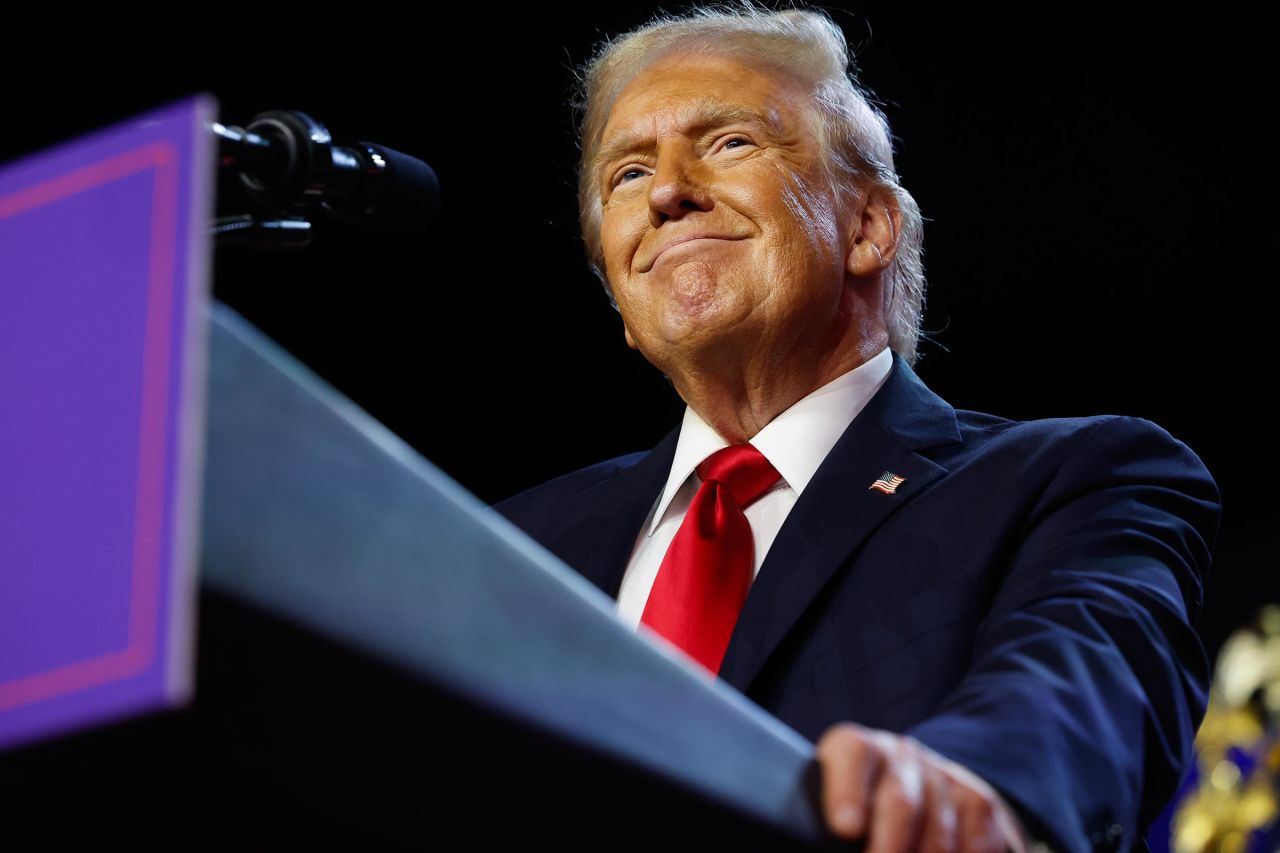
United States President Donald Trump has said he made no mistake for a video briefly shared on his official Truth Social account that depicted former President Barack Obama and former First Lady Michelle Obama as apes.

Former President Barack Obama
Speaking late Friday to reporters accompanying him aboard Air Force One, Trump insisted he made no mistake by sharing the video and does not need to apologise.
“I didn’t make a mistake,” he said.
Trump explained that he did not watch the entire clip before it was posted.
“I didn’t see the whole thing. I looked at the first part, and it was really about voter fraud in the machines, how crooked it is, how disgusting it is.
“Then I gave it to the people. Generally, they look at the whole thing. But I guess somebody didn’t,” he said.
When asked directly whether he condemned the video’s content, Trump replied, “Of course I do.”
The video, which was posted late Thursday, pushed a conspiracy theory about voting machines used during the 2020 election and included a racist depiction of the Obamas.
It remained on Trump’s Truth Social account for about 12 hours before being deleted on Friday morning, following widespread bipartisan calls for its removal.
The White House initially defended the post in an emailed statement to reporters on Friday morning by Karoline Leavitt, Press Secretary,.
She said, “This is from an internet meme video depicting President Trump as the King of the Jungle and Democrats as characters from The Lion King.”
Leavitt added, “Please stop the fake outrage and report on something today that actually matters to the American public.”
Hours after the statement was issued, the video was removed from Trump’s official Truth Social account.
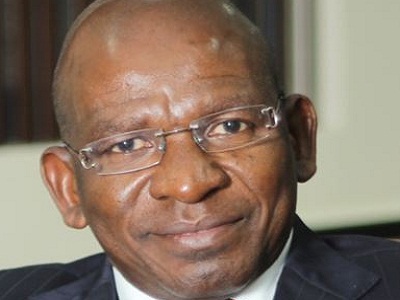
Robert Orya, former managing director, Nigerian Export-Import Bank, (NEXIM), has been sentenced to a cumulative 490 years’ imprisonment over a N2.4 billion fraud, following his conviction by a Federal Capital Territory (FCT) High Court in Abuja.

The conviction was secured by the Economic and Financial Crimes Commission (EFCC). Justice F. E. Messiri sentenced Orya to 10 years’ imprisonment on each of the 49 counts brought against him, with the sentences running cumulatively.
Orya, who headed NEXIM Bank between 2011 and 2016, was prosecuted by Samuel Ugwuegbulam, EFCC counsel.
The anti-graft agency accused him of fraudulently diverting funds belonging to the bank—charges the court held were proven beyond reasonable doubt.
Delivering judgment, Justice Messiri ruled that the prosecution successfully established its case, finding the former bank chief guilty on all 49 counts of fraud.
The conviction has been widely linked to the renewed momentum within the EFCC under Mr. Ola Olukoyede, its Chairman, whose leadership has seen a reinvigoration of the agency’s resolve to pursue high-profile corruption cases to their logical conclusion.
Since assuming office, Olukoyede has repeatedly vowed that no individual, regardless of status or past influence, would be shielded from accountability.
Under his stewardship, the EFCC has intensified the prosecution of complex financial crimes, particularly cases involving public institutions and large-scale diversion of funds.
Observers say the sentencing of a former chief executive of a government-owned bank underscores the EFCC’s determination to restore public confidence in the anti-corruption fight and sends a strong signal that financial misconduct will attract severe consequences.
The judgment is regarded as one of the most significant convictions secured against a former banking chief in recent years, reinforcing the agency’s resolve to clamp down on economic crimes within Nigeria’s financial sector.
During his tenure at NEXIM Bank, Orya was initially credited with efforts to reposition the institution to support non-oil exports and improve its financial standing after earlier setbacks.
However, his administration later became enmeshed in controversies, including allegations of loan disbursement irregularities and procedural abuses.
The case, which culminated in Thursday’s judgment, centred on findings that Orya diverted public funds estimated at N2.4 billion—offences that ultimately led to his conviction and lengthy prison sentence.

EFInA Unveils Research Fellowship Programme to Deepen Financial Inclusion Impact

Indigenous Firm Deploys 400,000 Smart Electricity Meters in 2025

CBN Expresses Concern Over Foreign Investments in Nigeria Fintechs

UBA’s Easy and Instant Account Opening Thrills Returnee

NCC Committed to Regional Digital Integration – Maida

Firm Detected a Fivefold Surge in QR Code Phishing Attacks in the Second Half of 2025

US invests $115m in counter-drone tech for World Cup security

Nigerian Terra Industries Secures $11.8m for Expansion

Firm Detected a Scam Exploiting OpenAI’s Teamwork Features

Nigeria Targeted with 4,622 Cyber-attacks Per Week in December 2025




 General News3 days ago
Globacom Donates ₦1Bn to Lagos State Security Trust Fund

 Telecom3 days ago
Airtel Nigeria Commits to Upgrade of its Network Infrastructure for Improved Quality of Service

 E-Business3 days ago
PwC Reveals AI Scaling Gap Slows Africa’s Digital Transformation

 E-Financial3 days ago
Ecobank Profit Jumps 29 Percent to N950Bn

 News3 days ago
CIoD, NIPSS Partner to Deepen Governance, Leadership Standards

 News3 days ago
NRS Chairman Outlines Ways Nigeria can Move from Potential to Economic Prosperity

 General News3 days ago
WIEG to host Nigeria’s first International Investment Summit in Lagos

 News3 days ago
Orya, Ex-NEXIM MD Jailed 490 Years for N2.4Bn Fraud