

E-Financial
NCC, Others to Meet over USSD Charges

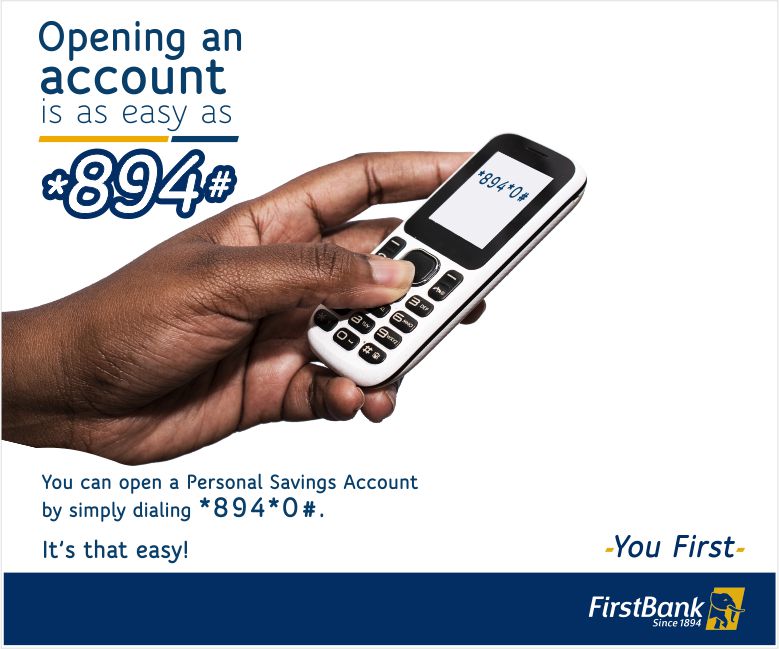
Nigerian Communications Commission (NCC), Central Bank of Nigeria (CBN), and Body of Bank CEOs are to meet to resolve the dispute surrounding charges for use of Unstructured Supplementary Service Data (USSD), the Nation reported.

First Bank USSD Account Opening
According to Wikipedia, ‘USSD, sometimes referred to as “Quick Codes” or “Feature codes”, is a communications protocol used by GSM (global service for mobile communications) cellular telephones to communicate with the mobile network operator’s computers. But it is now used for transferring cash and transacting other banking services by customers in line with the cashless policy of the CBN.
According to the Nation. the USSD services of the lenders include GTB’s *737#; First Bank’s *894#; Fidelity Bank’s *770#; Access Bank’s *901#; and UBA’s *919#. They all run on telecoms infrastructure.
While there is an initial charge of N50 by the bank, which will be retained, customers who use the USSD will be made to pay additional N4, which would have automatically translated to double billing.
The meeting, which would hold early in the new year, would be at the instance of the NCC and the CBN. It is expected, among other things, to end the bickering by the telcos over their denial to charge customers for using the platform for banking transactions.
The telcos had threatened to invoke the relevant sections of the Nigeria Communications Act 2003 by disallowing the banks further access to the USSD link over the conspiracy of silence by the relevant stakeholders after Dr Isa Pantami, Communications and Digital Economy minister, had ‘directe’ the NCC to bar the telcos from collecting charges for use of the infrastructure they built with their cash.
But a source in the NCC said the regulator had not abandoned the telcos.
“We are on top of the situation. We have not abandoned the telcos as alleged. You know the issue concerns multiple stakeholders. You will agree with me that it is not so easy to iron the matter because of this. But let me assure you that as a responsive regulator, we will collaborate with the CBN as we did during the 9mobile crisis to prevent any problem. You should also remember that this issue at stake touches that heart of the policy of the Federal Government,” the source said.
Gbenga Adebayo, chairman, Association of Licensed Telecoms Companies of Nigeria (ATCON), said the USSD channel has evolved from a telco exclusive channel used for only telco services, such as balance inquiry and recharges, to a channel being utilised for the deployment of financial, insurance, agricultural and government services, etc. The USSD channel is delivered using the Standalone Dedicated Control Channel (SDCCH) which is also used for call set-up, SMS set-up, and delivery.
Similar to the other telco services such as SMS, voice and data, network resources are utilised in the provisions of USSD services and as such there are significant costs associated with deploying and maintaining the service.
“The banks, however, identifying the convenience of delivering services to its customers over the USSD channel applied to the NCC for USSD codes to deliver these services. USSD Shortcodes were thereafter issued to the banks and as is expected, they became fully responsible for the charges associated with delivering services to their customer through these shortcodes.
“To accelerate the adoption of financial services on USSD, the banks partnered our members to zero-rate the USSD access to end-users, while the banks bore the cost for the provision of service,” he said.
Based on this arrangement, the banks took on the responsibility of billing customers and paid our members for use of the USSD infrastructure from the service fees deducted from the customer’s bank account.
These service fees charged by the banks were however far over the costs remitted to our members by the banks for providing the USSD platform and have since remained so.
“Following the issuance of the USSD Pricing Determination by the N CC which resulted in a price review of USSD service by our members, the banks stated that they would no longer pay for USSD service delivered to their customers and requested our members to charge customers directly for use of the USSD channel. This billing methodology where the Banks customer is directly charged USSD access fees by our members irrespective of the service charges that the bank may subsequently apply to the customers’ bank account is called “End-User Billing” which the banks specifically demanded that all our members implement. The banks, however, provided no assurances to our members that such service fees charged to customers’ bank accounts for access to bank services through the USSD channel will be discontinued post-implementation of end-user billing by our members,” Adebayo said.
He said the removal of these service fees by the banks would have meant that if bank customers were charged only the USSD costs communicated by our members per USSD session, bank customers will be paying far less than what they are currently being charged by the banks which in some instances are as high as N50.
“Our members were however concerned that the banks were unlikely to discontinue the USSD service fees charged by the banks when customers utilise the USSD channel thereby resulting in double and overbilling, whereby our members charge consumers for the USSD access from their airtime and the Banks still proceed to charge the same consumers a service charge from their bank accounts. In the interest of the consumers, our members challenged the implementation of end-user billing until a formal request for its implementation was received from the Body of Bankers Chief Executive Officers and several banks specifically demanding that end-user billing be implemented.
“In view of the opposition to the implementation of end-user billing by customers, our members, as responsible and responsive corporate citizens are committed to safeguarding consumer interests, and in this regard, we are willing to explore mutually beneficial solutions which ensure that costs associated with the provision of USSD services as determined by the NCC are fully recovered by our members and customers are not billed twice for the same service and by different institutions which is what end-user billing advocat


Union Bank of Nigeria has reaffirmed its status as a going concern with stable operations, responding to media queries sparked by Central Bank Governor Olayemi Cardoso’s remarks at the 304th Monetary Policy Committee (MPC) briefing.

Union Bank
Cardoso clarified that banks under regulatory intervention face unique recapitalisation timelines due to their circumstances, distinct from others with more preparation time.
Union Bank’s Chief Brand and Marketing Officer, Mrs. Olufunmilola Aluko, said the Governor’s comments align with the bank’s messaging.
“The Governor’s remarks reinforce what has consistently been our position. Union Bank remains under strong regulatory oversight with a resilient franchise, stable operations, and uninterrupted service delivery,” Aluko stated.
She stressed that all customer deposits remain safe and secure, with the bank operating transparently within the regulatory framework and collaborating with the CBN on recapitalisation.
Union Bank pledged updates as engagements progress, prioritising customer protection, financial stability, and service continuity amid the system-wide strengthening programme.
Flutterwave has transformed from a modest Lagos venture into one of Africa’s most valuable fintech firms, processing billions in transactions yearly across 30+ countries and 150+ currencies.

Flutterwave
Founded in 2016 by Iyinoluwa Aboyeji, Olugbenga “GB” Agboola, and Adeleke Adekoya, it tackled Africa’s fragmented payments—siloed banks, mobile money gaps, and unreliable cross-border flows—with a unified API for seamless collections, payouts, and settlements.
Founding Vision
The trio spotted the pain: Aboyeji’s Andela faced border delays; Agboola drew from PayPal/Google; Adekoya handled compliance. Early wins included Uber Nigeria payouts from a Lekki co-working space, proving scalability amid lean ops.
Growth Milestones
2017–2020: $10M seed/Series A fueled West Africa push; Agboola took CEO helm post-Aboyeji; COVID boosted e-commerce volumes.
2021–2022: Unicorn at $1B+ (Series C, $170M); $3B+ valuation (Series D, $250M); partnerships with Microsoft, Uber; Send App for US diaspora.
2025–2026: Profitability focus yields better margins; 34 US licenses; Mono acquisition ($25–40M) bolsters open banking.
Challenges Overcome
Regulatory hurdles hit: Kenya 2022 freeze (cleared); Nigeria fraud claims (resolved, controls enhanced); culture probes led to reforms with ex-Mastercard/Stripe hires. These underscore multi-jurisdiction risks like FX curbs and cyber threats.
Nigeria’s Fintech Role
Flutterwave anchors alongside Paystack (Stripe-owned), Moniepoint, amid CBN cash curbs and AfCFTA trade boosts. Dual HQ in Lagos/SF eyes IPO post-profitability, cementing it as Africa’s payments backbone.
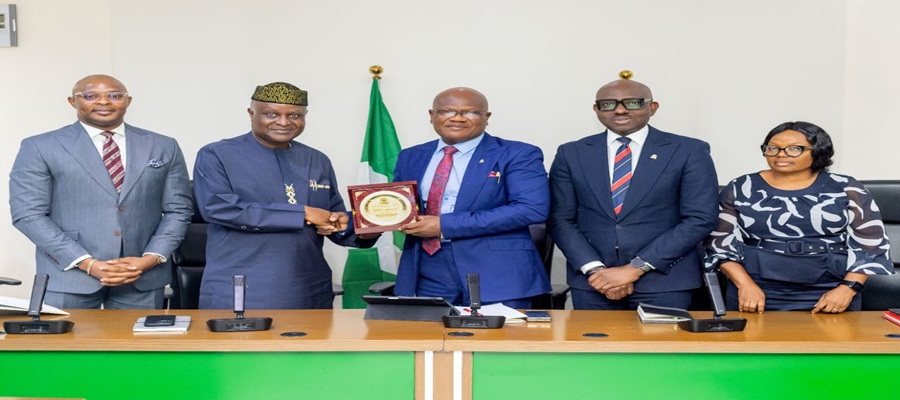
Chartered Institute of Bankers of Nigeria (CIBN) has pledged its full support to the Association of Corporate and Marketing Professionals in Banks (ACAMB) following a high-level strategic meeting between the leadership of both bodies.

New ACAMB Leadership
The high profile meeting, which took place on Tuesday at the CIBN Building, Lagos, served as a formal introduction of the new ACAMB Executive Committee to the CIBN leadership and marked the beginning of a renewed collaborative alliance.
Leading a delegation of the newly inaugurated ACAMB EXCO and Board of Trustees, the President, Jide Sipe, described the visit as a crucial first step in his tenure, aimed at contributing significantly in giving flight to his vision and that of ACAMB.”
“When we assumed office, one of the first things we agreed on was the need to visit key stakeholders”
“However, before reaching out more broadly, we felt it was important to begin with our primary constituency and core stakeholders. We want them to understand the direction we are taking and to support the work we are doing, so that ACAMB can achieve greater success than it has in the past”
“We couldn’t have properly started our tenure without this very important meeting with the CIBN,” Sipe stated
Sipe introduced the newly constituted ACAMB Exco, which includes, the 2nd Vice President, Morolake Phillip-Ladipo; General Secretary, Olugbenga Owootomo, Assistant General Secretary, Ademola Adeshola; Publicity Secretary, Abiodun Coker, and Executive Secretary, Fadekemi Ajakaiye
During his address, Sipe unveiled an ambitious roadmap for the association, highlighting a new direction focused on youth engagement, professional development, and industry advocacy.
Responding, the CIBN President, Professor Pius Deji Olanrewaju, who warmly received the ACAMB team, commended their forward-thinking vision as he noted that, the association would be focusing on critical areas such as reputational management, sustainable corporate practices, and governance reforms
Olarenwaju also commended ACAMB’s collaboration with CIBN in information management, saying it had raised standards across Nigeria’s banking sector.
“ACAMB’s support has given CIBN and the banking sector brand equity,” he said, praising the association’s record in reputation management.
He recalled ACAMB’s role in addressing crises within the sector, describing the partnership as strategic and beneficial.
He further pledged support for ACAMB’s 30th anniversary in September 2026, its AGM, and other programmes, including fundraising initiatives.
Olarenwaju also promised backing for ACAMB’s capability development and undergraduate mentorship schemes.
“I want to assure you that everything you have presented today has been clearly noted and will be acted upon”
“We are fully committed to working closely with you so as to translate these discussions and vision into measurable progress. Our shared goal is to strengthen the sector, protect its reputation, and enhance its public image in a meaningful and lasting way”
“This meeting discussed various initiatives and reforms crucial for the future of our industry, including the need for continuous training and adaptation to new programs,” Prof. Olanrewaju said.
The meeting concluded on a high note, with both parties expressing gratitude and a firm commitment to deepening their collaboration for the advancement of the banking industry in Nigeria.

Kaspersky Discovers New Phishing Campaign Exploiting Google Tasks Notifications to Steal Corporate Credentials

NITDA Equips Federal Character Commission with Data Tools to Drive Public Sector Reform

Samsung Unveils Galaxy S26 Series, Powered by Smarter, Background AI

Union Bank Assures Safety of Deposits Post-Cardoso MPC Remarks

Conoil Bonanza Winners Emerge

Kaspersky Launches OT Calculator to Align Cybersecurity Investments with Business Goals

Accidental Billionaire Opts for Jail Instead of Returning Money Credited Him by Mistake

Why the Future of PR Depends on Healthier Client–Agency Partnerships

Kaspersky Brings more Transparency to Threat Detection with New Hunt Hub

New Horizons Nigeria Breaks Ground: First to Fuse Mandarin into ICT Curriculum




 E-Business2 days ago
AfDB, UNDP Launch $10Bn AI Initiative for Africa

 Telecom2 days ago
Grey Expands Cross-Border Banking with USD Accounts, USDC Support

 News3 days ago
Obasanjo, Vanguard’s Amuka Lead Prayers for Zinox Chief Leo Stan Ekeh @70

 News2 days ago
Lotus Bank, REA Seal N100Bn Deal to Power Rural Nigeria

 News2 days ago
DG NITDA Reaffirms FG Commitment to Responsible, Inclusive AI

 E-Financial2 days ago
CBN Cuts MPR by 50bps to 26.50% as Inflation Eases for 11th Month
 General News2 days ago
Kaspersky Enhances Network Detection and Response Capabilities with KATA 8.0 Release

 E-Financial2 days ago
Kuda Bank Teams Up with Lovers & Frnds for Inclusive Valentine’s R&B Bash