

Telecom
NCC Seeks Judiciary’s Interest in ICT Trends


The Nigerian Communications Commission (NCC) is seeking the nation’s judiciary to be part of Information Communications Technology (ICT) trends, whose impact has now affected ways that justice is delivered across the world.

L-R: Josephine Amuwa, Director, Legal and Regulatory Services, Nigerian Communications Commission (NCC); Prof. Umar Garba Danbatta, Executive Vice Chairman/Chief Executive Officer, NCC; Hon. Justice Salisu Garba, Administrator, National Judicial Institute; Hon. Justice Kudirat Kekere-Ekun, Justice of the Supreme Court of Nigeria; Prof. Adeolu Akande, Chairman, Board of Commissioners, NCC; Adeleke Adewolu, Executive Commissioner, Stakeholder Management, NCC at the 18th Edition of the Judges Workshop on Legal Issues in Telecommunications in Lagos this week.
The leadership of the Commission made the call during a workshop organized for Nigerian judges which started in Lagos on Tuesday with the theme: “The digital world and the future of adjudication,” with judges from the federal and state high courts, and appeal courts in attendance.
Speaking at the 18th annual capacity-building workshop, the Chairman, NCC Board of Commissioners, Prof. Adeolu Akande, urged the legal luminaries to make greater contributions towards Information and Communication Technology (ICT) development in Nigeria.
While stating the centrality of a functional adjudicatory system as a bedrock for any civilised society, Akande said there was the need to constantly equip judicial officers with the requisite skills for effectual adjudication, especially in the digitized world, where the rate if technology development t is fast ahead of laws.
Prof. Garba Danbatta, Executive Vice Chairman/Chief Executive Officer (EVC/CEO) of the NCC, in his address, said the Internet comes with several challenges, hence the need for judges to be exposed to the benefits as well as the challenges associated with new technologies.
The EVC said through the workshop, judges will be exposed to disruptive technologies, the rights of data subjects, and jurisdictional issues in the digital age, which have continued to make the ICT industry a dynamic one.
“The increased reliance on telecommunications, as well as the growth experienced in the sector, has introduced some issues of legal connotation which will be deliberated upon by various experts during this workshop. One of such issues is the ownership of online content and materials.
“So, it is envisaged that with the increase in the amount of online content, as well as the economic value attached to it, there will be a rise in conflicts as to ownership of online content and materials.
“It is necessary that your lordships are well prepared for the imminent increase in litigation in this area. Furthermore, with an increase in the number of transactions and businesses taking place in the online space, it is also expedient for your lordships to be exposed to the peculiarities of adjudicating conflicts in this era of digital presence and online identity,” he said.
He stated that the Commission conceived the idea of the forum, as part of its strategic partnership and collaboration, as a forum to further build the capacity of the distinguished judges with practical insights on these emerging issues in the field of telecommunications.
“Hopefully, this workshop will illuminate these challenges and proffer ways to meet the dynamics of the changing times. I, therefore, enjoin you to freely make contributions and raise issues that would assist the commission in coming up with adequate regulatory measures that would enhance development in the communications sector of the economy. We assure you that every view expressed would be respected and considered in this regard,” he said.
On his part, the Chief Justice of Nigeria (CJN), Olukayode Ariwoola, commended the Commission for the annual forum while assuring the telecom regulatory of the commitment of the judiciary to using technology for justice dispensation as well as support a more robust legal ecosystem for sustaining socio-economic growth of Nigeria through telecoms sector.
Represented by Justice of the Supreme Court of Nigeria, Kudirat Kekere-Ekun, Ariwoola said, through the use of ICT, the judiciary has improved, not just in judicial administration and services, but also in infrastructural development.
Ariwoola said regardless of the benefits of digitalisation there are bound to be liabilities and risks involved with its introduction and usage as she highlighted such risks to include Cyber Crime, data piracy, and hacking among several other vices.
“Our judicial system has been challenged with delays in dispensing justice. However, with the introduction of ICT into the judicial space, many of the difficulties associated with the conventional methods are gradually being dispensed with,” he said.
The Chief Justice said the path to effective and efficient justice delivery in Nigeria lies in the collective ability to continuously improve the nation’s justice sector with the use of ICT tools. “The Nigerian judiciary is committed to achieving lasting structural and ethical reforms that would reposition it to adequately meet the aspirations of court users and the public for the reliable, effective and efficient administration of justice through the use of ICT,” he said.


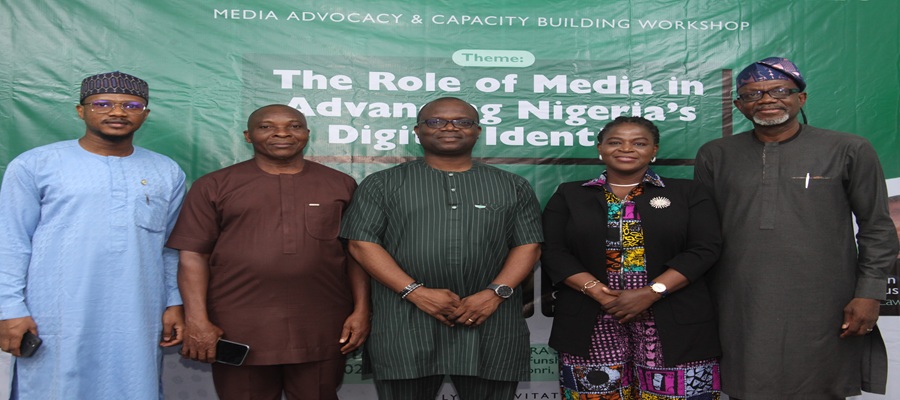
Nigeria Internet Registration Association (NiRA) has outlined five strategic pathways to accelerate the adoption of the .ng domain and position it as a critical driver of Nigeria’s digital economy.

NiRA
Oluwaseyi Onasanya, Chief Operating Officer of NiRA, presented the framework at a Media Advocacy and Capacity Building Workshop held on April 16.
Onasanya described the .ng domain as a key component of Nigeria’s digital sovereignty, noting that the country has about 65 per cent internet penetration and over 35.6 million Micro, Small and Medium Enterprises (MSMEs) contributing nearly 48 per cent to the Gross Domestic Product (GDP).
She said the first pathway involves mandating the use of .ng domains across all Ministries, Departments and Agencies (MDAs), as well as subnational entities, government vendors and tax remitters.
According to her, this would ensure that all official digital communications with government institutions are conducted through .ng platforms, while also linking domain usage to Corporate Affairs Commission (CAC) registration and procurement processes.
The second strategy focuses on a nationwide awareness campaign tagged “Own Your .ng, Own Your Future,” aimed at promoting the domain as a symbol of national identity, trust and economic value.
Onasanya said the third pathway calls for leadership from the private sector, urging banks, telecommunications companies, startups and SMEs to adopt .ng domains and integrate them into onboarding processes.
She added that the fourth strategy seeks to position .ng as a secure and regulated alternative to foreign domains, enhancing consumer confidence, improving local search visibility and strengthening jurisdictional control.
The fifth pathway centres on expanding the digital ecosystem by strengthening registrar networks, simplifying user experience and integrating .ng domains into internet service providers, digital platforms and national performance metrics.
Onasanya warned that Nigeria’s domain adoption rate remains low compared to global peers, noting that the country has approximately one domain per 855 citizens, far behind countries like Germany, the United Kingdom and China.
She cautioned that low adoption could lead to capital flight, as businesses continue to rely on foreign domain platforms in an increasingly digital global economy.
She also called on the media to drive awareness, shape public perception and promote adoption by highlighting the economic value of .ng domains across sectors.
“Without media, .ng stays technical. With media, it becomes economic,” he said.
NiRA said that over 240,000 .ng domains have been registered so far, with projections indicating continued growth as Nigeria targets a $1 trillion economy by 2030.

Snap Inc., the parent company of Snapchat, has announced the layoff of about 1,000 employees as part of efforts to improve efficiency through artificial intelligence.

Evan Spiegel, chief executive officer, disclosed this in a memo on Wednesday, noting that the cuts represent about 16 per cent of the company’s full-time workforce and include the elimination of more than 300 unfilled roles.
Spiegel said advancements in artificial intelligence were enabling teams to reduce repetitive tasks, increase productivity and accelerate project execution.
“We believe that rapid advancements in artificial intelligence enable our teams to reduce repetitive work, increase velocity and better support our community, partners and advertisers,” he said.
He added that smaller teams using AI tools had already delivered meaningful progress across key initiatives.
The California-based firm said the restructuring would help cut over $500 million in annual costs by the second half of the year, providing a clearer path to profitability.
Spiegel described the decision as difficult, expressing regret over the impact on affected employees.
“This is an incredibly difficult decision, and I am deeply sorry to the colleagues who will be leaving us,” he said.
Snap joins a growing number of technology companies downsizing their workforce while citing productivity gains from artificial intelligence.
The company has undergone multiple rounds of layoffs in recent years amid stiff competition from rivals such as Instagram, TikTok and YouTube.
Meanwhile, activist investor Irenic Capital Management recently disclosed a 2.5 per cent stake in Snap, calling for cost-cutting measures, including a review of its Spectacles smart glasses unit.
Shares of Snap rose by more than 7.5 per cent following the announcement, although the stock remains down compared to earlier in the year.
Data from Layoffs.fyi shows that more than 72,000 employees have been laid off by nearly 90 tech companies globally so far in 2026.
National Broadcasting Commission (NBC) has cautioned broadcast presenters against bullying guests during live interviews or presenting personal opinions as facts, warning that such actions will attract sanctions.

NBC
In a statement issued on Friday, the commission said it had observed a rise in violations of the sixth edition of the Nigeria Broadcasting Code across news, current affairs and political programmes.
“Broadcast platforms are increasingly being deployed in ways that depart from their core obligation to inform the public with accuracy, balance and professionalism,” the NBC said.
The commission noted that some anchors and presenters were deviating from professional standards by denying fair hearing to opposing views and compromising neutrality during broadcasts.
It stressed that such conduct violates provisions of the broadcasting code, which require impartiality and fair representation of all sides on issues of public interest.
“Henceforth, any anchor or presenter found to have expressed personal opinion as fact, bullied or intimidated a guest, denied fair hearing to opposing views, or otherwise compromised neutrality, shall be deemed to have committed a Class B breach,” the statement added.
The NBC also raised concerns over the growing use of broadcast platforms by political actors to promote divisive, inflammatory and unverified content.
It emphasised that broadcasters bear full editorial responsibility for all material aired, including live programmes, and cannot transfer that responsibility to guests.
The commission reiterated its commitment to enforcing strict compliance with the broadcasting code, warning that violations involving hate speech, incitement and imbalance would attract appropriate sanctions.

FG Carpets W/Bank, Denies Alleged Diversion of Federation Revenue

Lagos Unveils Cybersecurity Guidelines to Tackle Rising Digital Threats

FG Borrows N100Bn from Unclaimed Dividends, Dormant Bank Accounts

CitiTrust Heads to Appeal Court over Alleged Ponzi Scheme

IHS Nigeria, Ilorin Innovation Hub Showcase 19 High Growth Startups

NBC Boss Urges Content Ceators to Participate in DSO

NITDA Takes Over National Digital Architecture System

DLM SPV PLC Lists ₦9.00bn AAA-Rated Medium-Term Notes on FMDQ Exchange, Sets Benchmark in Corporate Bond Market

FG Shifting Focus to “Meaningful Connectivity” to Drive Inclusion – Minister

Jury Finds Meta, Google Liable for Woman’s Social Media Addiction




 Telecom2 days ago
Airtel Nigeria Suspends Airtime and Data Credit Services

 E-Financial2 days ago
Court Suspends Enforcement of FCCPC’s Reform on Loan Apps

 Telecom2 days ago
FCCPC Denies Banning Airtime Borrowing, Blames Cartel for Misinformation

 E-Financial2 days ago
FG Rules Out Borrowing from IMF’s $50Bn Support Fund

 E-Financial2 days ago
CBN Introduces Overnight Financing Rate to Compete with US, EU

 General News2 days ago
AfriStakes Unveils Platform to Connect SMEs with Investors

 News2 days ago
NITDA, CAC Activate Cybersecurity Measures Amid System Concerns

 General News2 days ago
Nigeria’s Human Capital Key to Global Competitiveness – NITDA DG