

E-Financial
Nigeria Loses $10Bn to Illicit Financial Flows – ICPC


Independent Corrupt Practices and Other Related Offences Commission (ICPC) said Nigeria accounts for 20 per cent or 10 billion dollars (N3.8 trillion) of the estimated 50 billion dollars that Africa loses to Illicit Financial Flows (IFFs).

Mrs Azuka Ogugua, spokesperson for ICPC, in a statement released in Abuja on Friday, quoted the Prof. Bolaji Owasanoye, chairman of ICPC, as stating this during a virtual meeting to review a report on IFFs in relation to tax.
The ICPC Chairman said, “the African Union Illicit Financial Flow Report estimated that Africa is losing nearly 50 billion dollars through profit shifting by multinational corporations and about 20 per cent of this figure is from Nigeria alone.”
The ICPC boss explained that taxes played “very strategic role in the nation’s political economy.”
He said the objective of the meeting was to improve on the awareness on IFFs, especially in the areas of taxation.
The ICPC boss added that the meeting would give participants the opportunity to openly discuss how to effectively use the instrumentality of taxation to curb IFFs through risk-based approach.
“Risk-based approach, that is: monitoring and audit; due process in tax collection; structured tax amnesty framework skewed in public interest; data privacy; timely resolution of audits and payment of tax refunds and intelligence sharing among revenue-generating, regulatory and law enforcement agencies,” he said.
Owasanoye also stated that for the contemporary tax man to remain relevant, he must build his capacity in areas of technology management, solution architects and an astute relationship manager.
Mr Muhammad Nani, executive chairman of Federal Inland Revenue Service (FIRS), expressed concerns that IFFs posed a serious threat to the Nigerian economy as the act robbed the nation of resources that were needed for development.
Nani declared that tackling IFFs would expand the country’s tax base and improve revenue generation, which was required for development.
He consequently pushed for policy reforms that would make it difficult for “capital flights” from occurring so that the country would be placed on the path of growth.
Other discussants at the event identified weak regulatory framework, opacity of financial system and lack of capacity amongst others as some of the factors that fuelled IFFs.
The discussants emphasised the need for capacity building of relevant stakeholders as one of the ways to stamp out illicit financial flows.
They commended ICPC for leveraging its corruption prevention mandate to open a new vista in IFFs discourse in Nigeria.



GCR Ratings (GCR) has affirmed African Export-Import Bank (Afreximbank) international scale long and short-term issuer ratings of A and A2 respectively. The outlook was revised to “Stable” from “Rating Watch Evolving”.

GCR has also affirmed the international scale long term programme rating on the $5 billion Global Medium Term Note (GMTN) Programme of A.
The improved rating reflects GCR’s assessment of a “robust counter-cyclical mandate, underpinned by a strong track record and ongoing preferential creditor treatment (PCT) from shareholders.”
South Africa became the latest country to affirm the Bank’s Establishment Treaty and Preferred Creditor Status when it recently signed the Instrument of Accession to become a full sovereign member of the Bank.
The report continued: “The Bank’s solid capitalisation and diversified funding profile provide significant buffers against emerging credit risks.” The report also acknowledged the Bank’s diverse shareholding base.
The outlook change from “Rating Watch Evolving” to “Stable”, according to GCR, indicates that there is immaterial downside risk related to sovereign debt restructurings.
Commenting on the Rating action, Chandi Mwenebungu, Managing Director and Group Treasurer, Treasury and Markets at Afreximbank said: “We are delighted that GCR has affirmed its credit rating on the Bank and resolved the outlook to ‘stable’, particularly in the light of recent positive credit developments.
“We continue to assert that the Bank’s preferred creditor treatment is enshrined in the Bank’s Establishment Agreement, ratified by all member states. It is not a matter of opinion or convention; it is fact”.
Mwenebungu continued, “It is also pleasing to note that GCR acknowledges the Afreximbank’s strong liquidity and capitalisation, and resilient risk profile. This is testament to the Bank’s financial and operational strength and that it has been able to demonstrate firm resolve in the face of continued macro-economic pressures and a challenging environment.”
Smartcash Payment Service Bank (PSB), the Airtel-owned digital financial services platform, has unveiled a nationwide marketing campaign titled “No Be Cho Cho Cho”, signalling a strategic shift toward proof-led messaging in Nigeria’s fast-evolving fintech sector.

Launched at a media event in Lagos, the campaign represents a new chapter for Smartcash, following its earlier “Money Matter Na Sense” positioning, reflecting the company’s rapid growth and increasing role in Nigeria’s digital financial ecosystem. The platform now serves nearly three million active wallets, with users spanning students, traders, households and small businesses across the country.
The phrase “Cho Cho Cho,” a popular expression in Nigerian street parlance meaning “talking without action,” is used deliberately by the company to challenge the hype-driven marketing culture that has often characterised the fintech sector. Instead, Smartcash says the campaign will focus on demonstrable performance and measurable value for customers, which means “Smartcash dey show workings”.
The initiative centres on the three pillars of reliability, transparency and demonstrable service delivery and addresses what the company describes as a widening trust gap in Nigeria’s digital payments market.
Speaking at the launch, Ayotunde Kuponiyi, Managing Director and Chief Executive Officer of Smartcash PSB, outlined the strategic philosophy behind the campaign, linking the company’s mission to broader global and national economic priorities.
“Financial inclusion is a critical pillar of the United Nations Sustainable Development Goals, and with the launch of ‘No Be Cho Cho Cho’, we are proving our commitment to this vision,” Kuponiyi said.
“We have built an accessible banking service that breaks barriers for everyone, from corporate executives to the previously unbanked, pulling them from the sidelines to centre stage. Through our flagship zero-charge service, we promise no fees on P2P transfers or bill payments. Furthermore, our savings account offers 15 percent per annum compounded interest, paid daily without penalties. Unlike conventional banks, we charge you nothing, ensuring your money truly works for you.”
Smartcash’s zero-charge model, which eliminates fees on transfers and bill payments, has become one of the platform’s defining features., alongside instant transfers and everyday payments for utilities, airtime, data and cable TV.
Kuponiyi noted that the campaign reflects a broader philosophy of accountability in digital finance.
“Nigerians have experienced inconsistency and unclear charges across various platforms in the past,” he said. “With No Be Cho Cho Cho, we are saying clearly: don’t just listen to what we say; experience the proof.”
Smartcash operates as a Payment Service Bank licensed by the Central Bank of Nigeria and is wholly owned by Airtel Nigeria, a part of the Airtel Africa Group, which operates across 14 countries. This backbone allows the platform to serve customers through both smartphone applications and USSD channels, enabling access for users without smartphones or traditional bank accounts.
Beyond consumer banking, the platform is also expanding its footprint through a nationwide network of agents that facilitate transactions and financial services in underserved communities.
Providing further insight into the bank’s financial architecture and long-term roadmap, Kuponiyi, emphasised that the campaign reflects the strength of the institution’s operational foundation.
“At Smartcash, we have matched our ambitious growth targets with disciplined investment in secure, high-volume processing capabilities. The No Be Cho Cho Cho initiative is a testament to our financial health and our unwavering focus on driving financial inclusion through sustainable incentives that provide real value to the Nigerian economy,” he said.
As part of the rollout, the No Be Cho Cho Cho” campaign will run nationwide across television, radio, outdoor advertising and digital platforms, targeting young, mobile-first consumers while also reaching traders and small businesses through agent networks and USSD channels.
For Smartcash, the campaign marks more than a marketing refresh; it signals an attempt to redefine how financial technology companies communicate with Nigerian consumers in an increasingly competitive sector.
As Kuponiyi concluded at the launch: “The evidence is plenty. Nigerians can see it for themselves.”

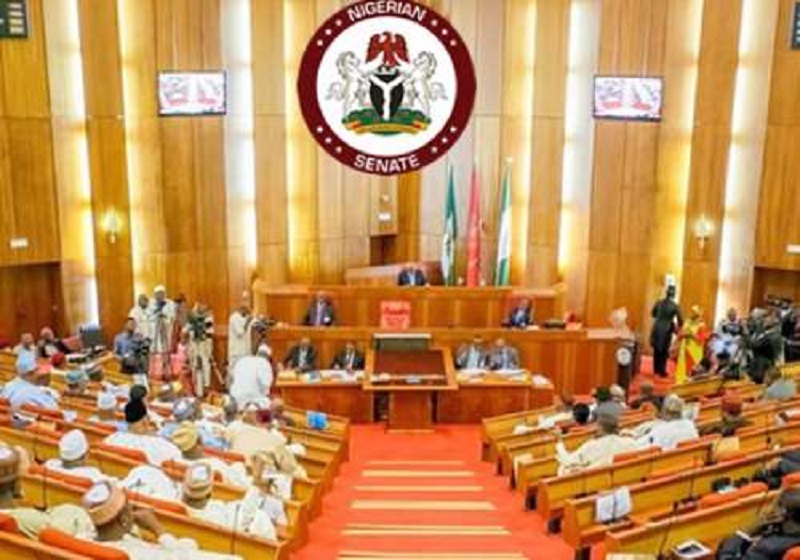
Nigerian Senate has launched a public hearing to amend the Banks and Other Financial Institutions Act (BOFIA) 2020 while investigating rampant ponzi schemes, spotlighting the Crypto Bridge Exchange (CBEX) collapse that defrauded 1,200 victims of ₦1.3 trillion.

Senate President Godswill Akpabio, represented by Senate Leader Opeyemi Bamidele, opened Tuesday’s session jointly organised by committees on Banking, ICT/Cybersecurity, Capital Market, and Anti-Corruption. The bill (SB959) aims to bolster Central Bank of Nigeria (CBN) oversight of fintechs and systemically important digital institutions without creating a duplicate regulator.
Akpabio stressed: “Enhanced supervision is not a constraint on growth; it is a safeguard for sustainable growth,” rejecting a standalone fintech commission to avoid fragmented oversight. Crypto licensing falls under SEC, but transaction stability remains CBN’s domain.
Senate Banking Committee Chairman Mukhail Abiru highlighted a national registry for transparency and risk-based fintech supervision, backed by CBN Deputy Governor Philip Ikeazor, who noted some fintechs rival mid-sized banks in volume.
The probe targets regulatory gaps exposed by CBEX’s unrealistic returns amid economic hardship. EFCC’s Dein Whyte reported asset seizures from operators, with forfeiture proceedings underway.
CBN’s Orekia Opemi-Yusuf warned separate regulators could stunt Nigeria’s expanding fintech sector, while FCCPC’s Ondaje Ijagwu urged clear lines between prudential rules and consumer protection. The reforms seek to restore trust in a digital economy battered by fraud.

GCR Affirms Afreximbank’s International Scale Ratings of A, A2

SmartCash Launches ‘No Be Cho Cho Cho’ Campaign to Boost Digital Banking in Nigeria

MTN Nigeria Non-Executive Director Mazen Mroue Quits to Focus on Group Role

Google Adds Yorùbá, Hausa to AI Search, Boosting Access for Millions of Nigerians

MultiChoice Shuts Down Showmax After 11 Years Amid Streaming Wars

Dr. Cairo Ojougboh Foundation Bolsters Nigeria’s Education Drive with ₦2.7m Student Support

Kaspersky Brings more Transparency to Threat Detection with New Hunt Hub

NDPC Commits to Balancing Data Privacy, Protection Information

PwC Reveals AI Scaling Gap Slows Africa’s Digital Transformation

Firm Reviews the Evolution of Phishing Threats in 2025




 E-Financial3 days ago
NRS Targets N40trillion in Tax, Royalty Revenue in 2026

 General News3 days ago
Purple Woman 3.0 Is Back, to Empower Women in Tech this IWD 2026

 E-Financial3 days ago
SEC Revokes Registration of Kensington Agro Trading Limited

 News3 days ago
EFCC Arraigns Two FSDH Bank Officials Over $307k, €50k Fraud

 E-Financial2 days ago
Nigeria’s VAT Jumps 34%, CIT Soars 48% to ₦14trn in 9M’25 – NBS
 E-Business3 days ago
NDPC, 60 DPAs Collaborate on Enforcing Privacy Rights in the Use of Al

 Telecom2 days ago
FG Approves GIS-enabled Digital Postcode to Tackle Logistics Gaps, Boost E-commerce

 Telecom3 days ago
Konga Launches ‘Berekete Sales’ with Up to 50% Discounts Across Major Categories