

News
Nigeria, Turkey Others Build Online Presence for Technology Transfer

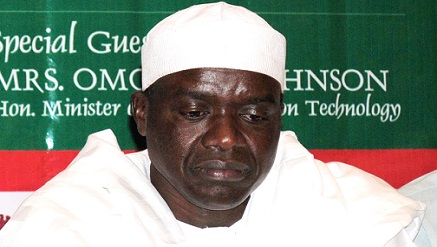
Nigeria, Turkey and six other nations operating under the auspices of the D-8 have established a web presence that will make it easier for members to share or transfer technology.
Dr. Umar Bindr, director general of the National Office for Technology Acquisition and Promotion (NOTAP), disclosed this at the opening of D-8 Technology Transfer & Exchange Network in Abuja yesterday.
Bindr said with the web presence, it would be easier for any entity both in the private and public sectors to make enquiry on any technological development and get response from nations within the members of the group without waste of time.
He said for many years, Nigeria and other developing nations had been looking up to Europe and the Western world for technology transfer without any success, adding that it was time for D-8 members to collaborate on technology evolution and sharing.
He stated: “The whole idea is that members of D-8 can collaborate in technology matters. Some of the members have highly developed technologies. They are manufacturing automobile; they are manufacturing aircraft; they have high-tech in information technology and so on.
“Therefore, these eight countries have decided to move technology between them to enhance development, to ensure that we can develop together. So, this meeting in Nigeria brings together the eight focal point transfer networks so that we can start discussion.”
He added, “For over a hundred years we have looked to the western countries for technology and it has not done us a lot of good. We have not succeeded in learning the technologies that are in the West. Now we have the platform to share what we have among these nations.
“In Nigeria we have perfected technology at the bottom of the pyramid level. This has been recognised in South Africa. We have technology that you can roll to your farm and process your cassava for instance. What we have not learnt is how to protect and transfer technology. We must learn how to push technology to the highest level.”
Dr. Adbu Bulama, minister of Science and Technology, said the need and desire to synergize, cooperate and exchange technology information among the D-8 member countries led to the formation of the Technology Transfer and Exchange Network.
Bulama said, “The network is expected among others to generate opportunities for introducing technology based products and services into the global markets and commercialization of research results for sustainable growth and development of member states.
“This meeting is therefore aimed at consolidating on the resolutions of the first meeting and facilitating easy access to information by member countries from the network.”
He charged the network to identify and consider appropriate technologies and projects that would strategically enhance local production capacity and national development especially in energy, food and agriculture, health delivery and infrastructure development.
D-8 is a grouping of countries classified as developing nations that meet to share ideas on development across different sectors of the economy. Apart from Nigeria and Turkey, other members of the group include Bangladesh, Egypt, Indonesia, Iran, Malaysia and Pakistan.


Meta Platforms, Inc., global technology company, has filed an appeal against the judgment of the Lagos State High Court delivered in favour of Femi Falana, human rights lawyer, setting the stage for a potentially significant legal battle over digital rights, platform liability, and the enforcement of fundamental rights in Nigeria.

Femi Falana
The appeal, dated April 10, 2026, follows the ruling in Suit No. LD/18843MFHR/2025: Falana v. Meta Platforms, Inc., in which Justice O. A. Oresanya ruled in favour of Falana and awarded damages of $25,000 over a video publication alleged to have violated his rights.
Meta’s legal team, led by Mofesomo Tayo-Oyetibo, SAN, filed a Notice of Appeal containing eight grounds challenging both the procedural and substantive basis of the High Court’s decision.
At the centre of the appeal is a jurisdictional dispute over whether the case should have been treated as a fundamental rights enforcement matter.
Meta argued that the trial court erred by entertaining the suit under the Fundamental Rights (Enforcement Procedure) Rules, maintaining that the claims were essentially based on alleged false publication and reputational damage.
According to the company, such claims properly fall within the scope of defamation law, rather than constitutional rights enforcement.
Meta contended that by allowing the case to proceed as a fundamental rights action, the trial court assumed jurisdiction it did not possess.
The company also challenged the court’s finding of liability based on the doctrine of undisclosed principal.
Meta argued that there was no evidence establishing a principal-agent relationship between the company and the publisher of the disputed video, identified as AfriCare Health Centre.
The technology firm maintained that the video was created and uploaded by an independent third party and not by Meta itself.
It further emphasised that as a digital intermediary platform, it neither originated nor exercised editorial control over the material.
In addition, the appeal questioned the trial court’s conclusion that Meta violated Section 24(1)(a) and (e) of the Nigeria Data Protection Act.
Meta insisted that it was wrongly classified as a data controller in the case.
According to the company, there was no evidence showing that it determined the purpose or the means of processing the personal data involved in the disputed publication.
Meta also faulted the High Court’s decision to award $25,000 in damages to Falana.
The company described the award as unwarranted and urged the appellate court to set aside both the damages and the entire judgment delivered by the lower court.
Raising concerns about the conduct of the proceedings, Meta alleged that it was denied a fair hearing during the trial.
The company claimed that the trial court raised and decided certain issues suo motu without inviting submissions from the parties involved.
Meta further alleged that the court failed to properly consider key arguments presented in its defence before reaching its decision.


The West Africa Telecommunications Regulators Assembly (WATRA) has reaffirmed its commitment to advancing a secure, inclusive, and resilient digital ecosystem in West Africa following the successful conclusion of its 4th Working Groups Meeting in Ouagadougou, Burkina Faso—at a time when the region’s digital economy is expanding rapidly and reshaping growth prospects.

The meeting, hosted by the Autorité de Régulation des Communications Électroniques et des Postes du Burkina Faso (ARCEP), brought together regulators, technical experts, and stakeholders from across the region under the theme: “Building a Secure, Inclusive, and Resilient Digital Ecosystem for West Africa.”
In his opening and closing remarks, the Executive Secretary of WATRA, Mr Aliyu Yusuf Aboki, described the meeting as a significant milestone in the organisation’s evolution, marking the transition from dialogue to the delivery of practical regulatory tools.
Aboki is a telecommunications engineer and policy specialist with over two decades of experience across the ICT sector, including work with global telecommunications firms such as Ericsson and MTN in Nigeria and other markets.
He has played an active role in cross-border regulatory coordination, spectrum policy, and digital transformation initiatives, contributing to policy harmonisation efforts across West Africa and representing regional perspectives in international telecommunications and digital economy engagements.
As Executive Secretary of WATRA, he leads the organisation’s strategic engagement with regional and global stakeholders, helping to shape coherent regulatory frameworks and strengthen Africa’s voice in global discussions on digital policy and telecommunications development.
“Nearly two years after the establishment of the Working Groups, we can take pride in the progress achieved. What began as a vision has evolved into a dynamic mechanism for peer learning, coordination, and knowledge exchange,” Aboki said.
Over the course of the meeting, the Working Groups finalised a set of technical reports covering key areas critical to the region’s digital transformation, including 5G deployment, submarine cable resilience, cybersecurity frameworks, consumer protection, and non-geostationary satellite (NGSO) regulation.
Aboki emphasised that the outputs are intended to serve as practical instruments to guide policy and regulatory action across WATRA’s 16 member states.
“These reports are not merely formalities. They will inform policy, guide regulatory action, and strengthen regional harmonisation,” he stated.
The meeting comes at a time when West Africa’s telecommunications sector is undergoing rapid transformation, driven by emerging technologies such as digital financial services, artificial intelligence, and the Internet of Things (IoT). Aboki noted that this shift requires more adaptive and forward-looking regulatory frameworks, particularly in areas such as data protection, cybersecurity, and digital governance.
He further highlighted that the outcomes of the Working Groups will contribute to the evaluation of WATRA’s 2022–2025 Strategic Plan and inform the development of its 2026–2030 strategy.
“The reports produced here represent concrete evidence of the value generated through this collaborative approach and reaffirm the importance of coordinated regulation in bridging the digital divide in West Africa,” he said.
Economic Context: A Large and Fast-Growing Digital Opportunity
The importance of WATRA’s work is underscored by the scale of the West African economy and the accelerating contribution of digital technologies.
The ECOWAS region, comprising over 400 million people, has a combined GDP estimated at approximately $700–800 billion in nominal terms, with Nigeria accounting for more than two-thirds of economic output. This makes West Africa one of the most economically significant regions on the African continent.
Digital technologies are playing an increasingly central role in this growth. According to industry and multilateral estimates, the digital economy contributes between 4% and 6% of GDP across many African markets, with mobile technologies alone accounting for roughly 4–5% of GDP in West Africa, and rising steadily as connectivity improves.
Within this context, the West African digital market—spanning e-commerce, digital payments, connectivity services, and platforms—has been estimated at over $200 billion, with recent projections placing it above $216 billion in 2024, reflecting rapid expansion in mobile penetration, fintech adoption, and platform-based services.
Beyond scale, the digital economy is increasingly recognised as a critical driver of:
- Economic growth, through productivity gains and new enterprise creation
- Welfare improvements, by expanding access to financial services, education, and healthcare
- Inclusion, particularly by connecting rural and underserved populations
Across the region, a number of leading markets are shaping this transformation:
- Nigeria, the region’s largest digital economy and home to major telecom and fintech players
- Ghana, a fast-growing hub for digital payments and financial innovation
- Côte d’Ivoire and Senegal, which are emerging as key digital and infrastructure growth centres
These dynamics reinforce the importance of coordinated regulatory frameworks—such as those being developed through WATRA—to ensure that digital growth translates into broad-based economic and social gains.
The Executive Secretary also confirmed that the recommendations arising from the meeting will be presented to the WATRA General Assembly for consideration and adoption.
WATRA expressed its appreciation to the Government of Burkina Faso and ARCEP Burkina Faso for hosting the meeting, commending their support and commitment to regional cooperation. Special recognition was given to the Chairman of the Regulatory Council of ARCEP, Dr Pasteur Poda, and the Executive Secretary, Mr Patrice Compaoré, for their leadership.
Aboki also acknowledged the contributions of the Working Group members, Co-Chairs, Rapporteurs, and the WATRA Secretariat, noting that their voluntary efforts have been instrumental in strengthening the organisation’s technical capacity and relevance.
“As we transition into the next strategic cycle, we expect even greater impact from WATRA’s work. This will depend on sustained collaboration and the continued engagement of our experts across the region,” he added.
He concluded by reaffirming WATRA’s commitment to deepening regional cooperation and supporting the implementation of harmonised regulatory frameworks to enable digital growth and inclusion across West Africa.

According to the ‘Anatomy of a Cyber World: Global Report by Kaspersky Security Services’, there has been a noticeable decline in the percentage of high-severity incidents over the past few years.

While 2021 recorded the highest proportion at 14.3%, 2025 experienced the lowest in six years at just 3.8%. This trend indicates that many attack attempts were quickly detected and effectively mitigated by Kaspersky MDR experts, preventing their severity from escalating beyond medium levels.
High-severity incidents are defined as attacks involving direct human involvement that result in a significant impact on the customer’s IT infrastructure. In 2025, the number of such incidents detected by Kaspersky MDR decreased by 19% compared to 2024, highlighting improvements in early detection capabilities and more effective remediation efforts among Kaspersky MDR clients.
A detailed analysis of the root causes of these incidents in 2025 reveals the following insights:
Human-driven attacks accounted for approximately 23% of high-severity incidents. Although this represents a slight decrease from 2024, they continue to be the primary cause of serious breaches.
Kaspersky detected such attacks in nearly 21% of customers, demonstrating that motivated adversaries persist in bypassing automated defences. Despite advancements in automated detection tools, these highly skilled attackers still find ways to evade security measures.
Confirmed cyber exercises like Red Teaming made up over 23% of incidents. When activity is verified as part of security testing, it’s often classified as infrastructure false positives, though customers frequently report them as incidents.
Social engineering ranked third, responsible for over 15% of high-severity attacks and affecting nearly 18% of organisations. These are classified as high-severity when successful and not automatically remediated, often leading to security awareness recommendations.
Security policy violations constituted just under 14% of all cases, involving legitimate accounts performing suspicious actions like data exfiltration. Malware incidents represented less than 12%, while artifacts from past attacks, or APT traces, were found in over 7% of cases. Vulnerability detection, though not core focus for Kaspersky MDR, was reported in fewer than 5% of incidents.
“The decline in high-severity incidents highlights the critical importance of adopting a proactive cybersecurity strategy. Human-led solutions such as Managed Detection and Response (MDR) and Incident Response remain essential in combating sophisticated, human-driven threats.
To further enhance the effectiveness and efficiency of in-house security teams, organisations should incorporate advanced, automated solutions like Extended Detection and Response (XDR), which provide improved visibility and enable faster responses.
Additionally, leveraging SOC consulting services can assist in building a robust Security Operations Center from the ground up or optimising an existing one for maximum performance.
An integrated approach to hybrid security operations empowers organisations to detect threats early, contain them swiftly, and ultimately prevent severe breaches from occurring,” comments Sergey Soldatov, Head of Security Operations at Kaspersky.

Meta Files Appeal over $25,000 Damages Awarded to Falana

Teenager Hacks Celebrities Whatsapps, Sells Adult Content in Delta

FG Unveils ePharmacy Platform to Regulate Digital Pharmaceutical Services

Elon Musk Accuses South Africa of Racism over Starlink Licence Block

SERAP Asks Tinubu to Probe Alleged N2.9Bn Fraud In NIGCOMSAT, NNRA

Spotify’s Loud & Clear Report Reveals Over ₦60Bn Revenue for Nigerian Artists in 2025

Kuda MFB Increases Kuda for Her Business Grants to ₦10 Million

Canal+ to Cut Jobs as Part Sweeping Restructuring

Nigeria tops global rankings for USDT, USDC ownership

NBC Boss Urges Content Ceators to Participate in DSO




 Broadcasting3 days ago
FG to Gift Nigerians over 100 Free TV Channels from May 15

 E-Financial3 days ago
CBN Dismisses Polaris Bank Liquidation Claim

 E-Financial3 days ago
AfDB Okays $200m for Nigeria’s Digital Backbone, Others

 General News3 days ago
FG New Approves Biometric Passenger Verification System for Airports Security

 E-Financial3 days ago
Nigeria’s Growth under Threat as Poverty Deepens, World Bank Warns

 General News3 days ago
Breaking Barriers: Cassava Technologies Expands Digital Access Across Africa

 E-Business3 days ago
NESREA, ACMTI, Others Launch Carbon Utilisation Initiative in Nigeria

 News3 days ago
Experts Reveal a Steady Decline of High-severity Incidents Over the Years