

News
Nigerian Diplomats, Politicians Involved in Organ Sales- French Police


Reports by international bodies made available to Nigeria’s security agencies now suggest that top Nigerian politicians and diplomats have been major players in the illicit businesses of human trafficking and organ sales.
Going by the Independent findings, the businesses involve Nigerian victims and others from the West African sub-region.
The reports – mainly from Italian, French, and International Police (Interpol) – detail how diplomatic channels are used to integrate illegal immigrants into countries like Italy, France, and Spain.
Independent investigations revealed a highly cohesive network where politically exposed persons (PEPs) are involved in ambassadorial/diplomatic appointments solely with a view to promoting the criminal cross-border trade.
Informers have also disclosed that the uncanny practice involving human organ trafficking – with emphasis on warehousing needed human parts – may have berthed in Nigeria.
The intelligence, in addition to the gorier details concerning the sale of human organs, fingered well-connected politicians and diplomats.
As gathered, the operation begins with ambassadorial appointments/lobbying.
This, according to presidency sources, explains President Muhammadu Buhari’s choice of ambassadorial nominees.
There had been misgivings over the ages of some Nigerian ambassadors, with some being over 80 years old.
In the Senate, too, lawmakers have decided in favour of career diplomats ahead of politically exposed persons.
“The effort is meant to stem these clandestine and illegal cross-border operations,” a presidency source explained.
An Italian secret police source from Rome hinted that reports detailing Nigerians’ involvement in this criminal enterprise have been made available to Nigeria’s security agencies and government in several instances.
“We have made our findings open to them after much interrogation of some Nigerian suspects in the operations upon request from your country, as I am aware of, and there was also a joint security report by my country, Spain, and France at some point, too,” the foreign source said.
The source said the matter is difficult to handle because it involved highly powerful PEPs not only in Nigeria but also in the countries of destination of these trades.
“Powerful people are involved on all sides and, honestly speaking, the trade sustains some sectors of the economies in these countries,” the source added.
Currently, there is a global outrage after the death of twenty-six Italy bound Nigerian women, believed to be illegal immigrants on the high seas, recently.
The matter almost sparked a diplomatic row after Italy buried the women without duly notifying Nigeria and properly identifying the corpses.
Even more, the United Nations reacted recently to reports and horrifying footages from Libya of slave trading of blacks by Arabs believed to be Libyans.
Intelligence reports suggest that most of these victims are targets of organ theft or sex trade.
Some of the victims are sold outright as slaves to out of the way labour camps.
Antonio Guterres, UN Secretary-General, called on all stakeholders in the global community to act fast on the matter, describing the trend as “horrifying” and “a heinous crime against humanity”.
But the bigger worries stem from the more sinister harvesting and trafficking of human organs across borders.
Only recently, too, Isaac Adewole, Minister of Health, warned Nigerians who were in the habit of travelling abroad for health tourism to be careful of organ harvesters.
What the minister, however, failed to explain was that the operation was highly organised and involved the casing/profiling of would-be victims right from the Nigerian shores.
As learnt, personal and health details filed at mission houses were somehow obtained and sent ahead to their accomplices in foreign countries.
“Some organs are stolen right in the hospitals where the victims are being treated while they are under sedation,” explained a medical doctor based in Abuja.
According to the physician, one of these victims who returned from one of the big Asian countries reported to his hospital a few days later after arrival, complaining of health complications.
Upon examination, it was discovered that one of his kidneys was missing.
There are fears, too, that the menace may have started proliferating in the country.
As learnt, a French police report indicting Nigerian diplomats and politicians show that the syndicates may have devised new ways of luring unsuspecting victims to countries where their organs are harvested.
“It is a very lucrative trade that involves not only kidneys,” explained an intelligence officer in the country who was privy to the report.
According to him, a single human lung sells for as much as $10,000 to $20,000.
Human organs remain viable for between four and eight hours, depending on the conditions in which they are kept.
But with technological breakthrough designed to ‘deceive’ the organs into believing it is still encased in a human body, organs like kidney, lungs, heart, reportedly can now be warehoused for more than forty-eight hours.
“What this simply means is that you can have organ warehouse in countries with poor regulations and supervision,” explained the Abuja based physician.
The European Union (EU) figures further buttresses that Nigerians are the biggest traffickers in persons and the biggest victims of the trade.
There are suggestions, too, that not a few Nigerians are victims of organ-harvesting.
For instance, Nigerians accounted for an estimated 8,700 out of 283,532 irregular migrants entering the EU borders, many of whom risked their lives crossing the Mediterranean in 2014.
In the first half of 2015, Nigerians ranked 9th of all persons granted international protection in EUs 28-member states.
EU further states that Nigerian nationals are the most numerous among non-European victims of trafficking in humans, and they are also the most numerous traffickers.


News
NITDA Urges Stronger State Partnerships as Key to Digital Economy Goals @ South-South Stakeholders Forum

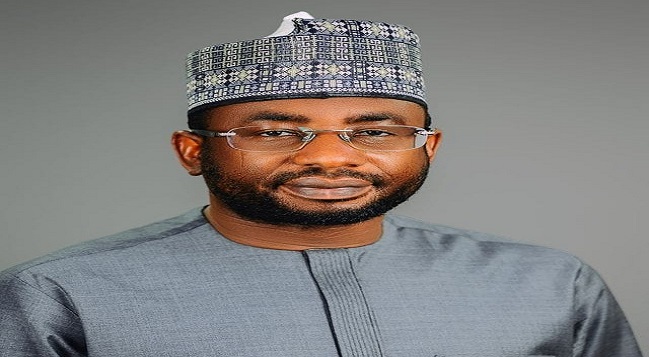
Kashifu Inuwa, Director General of the National Information Technology Development Agency (NITDA), has underscored the importance of deeper collaboration with state governments, saying sub-national alignment is essential to achieving Nigeria’s digital economy objectives.

He spoke online at the South-South Regional ICT Stakeholders Forum, which brought together policymakers, technology leaders, civil society organisations and ecosystem players to chart a path for accelerated digital development across the region.
The NITDA boss noted that while the Agency has made notable progress at the federal level, the real measure of success lies in how effectively national policies are translated into actionable programmes within states. According to him, digital transformation can only be sustained when states domesticate policies and establish clear implementation structures.
He referenced key frameworks, including the Nigerian Startup Act and the National Digital Literacy Framework, observing that although several states have created ICT-focused ministries and agencies, some still lack comprehensive enabling laws and structured governance mechanisms. NITDA, he assured, remains ready to provide technical guidance to states seeking to strengthen their digital ecosystems.
Digital literacy, he stressed, remains central to inclusive growth. Under the National Digital Literacy Framework, NITDA aims to achieve 95 per cent digital literacy nationwide by 2030. Working with the Federal Ministry of Education, digital skills have been embedded in school curricula, with teachers across the country undergoing capacity-building programmes to support technology-driven learning. States in the South-South were encouraged to ensure that educators in both public and private schools fully participate in the initiative.
The DG also highlighted ongoing efforts to upskill public servants. In collaboration with the Office of the Head of the Civil Service of the Federation, more than 54,000 federal civil servants have enrolled in structured digital skills training. Similar programmes, he said, are being considered for rollout across South-South states to enhance governance efficiency and public service delivery.
On partnerships, Inuwa pointed to collaborations with Cisco, which provide access to self-paced digital courses, and the National Youth Service Corps (NYSC), whose digital champions conduct community-based sensitisation in markets, worship centres, motor parks and among senior citizens. He urged stakeholders in the zone to strengthen coordination and co-create practical initiatives to expand digital inclusion.
In his contribution, the Commissioner for Science, Technology and Innovation in Cross River State, Dr Justin Atiang Beshel, reaffirmed the state’s resolve to leverage technology for sustainable development.
He said Cross River is prioritising broadband expansion and digital infrastructure as the backbone of e-government services, skills development, innovation and job creation. Improved connectivity, he noted, would unlock economic opportunities and enhance service delivery statewide.
Despite challenges such as limited rural connectivity and funding constraints for large-scale ICT projects, the Commissioner expressed optimism about strategic partnerships. He described collaboration with NITDA and private sector players as critical to narrowing the digital divide, boosting cybersecurity resilience and ensuring inclusive participation in the digital economy.
Beshel maintained that sustained investment and coordinated action would position Cross River as a competitive digital hub within Nigeria’s growing technology landscape.


Board and management of Communication Week Media Limited, publishers of Nigeria CommunicationsWeek, at the weekend announced that this year’s Africa’s Beacon of ICT Merit and Leadership lecture will focus on Impact of AI and IoT on business operational efficiency.

Africa’s Beacon of ICT Merit and Leadership lecture, widely regarded as the most prestigious annual event available in the ICT industry in Nigeria is in its 17th year.
The lecture holds on May 30, 2026 at Oriental Hotel Lekki, Lagos, according Ken Nwogbo, editor-in-chief of
Nigeria CommunicationsWeek the organizers of the event.
He said that this year’s event “is digital transformation edition” to recognise and celebrate organizations and individuals in the ICT industry that have impacted in digital transformation of the economy.
“Most of these organizations and individuals have consistently being voted by our readers as leaders in their areas of operations and we have decided to reward them in this special edition, tag: ‘Digital Transformation Edition 2026’ he said,”.
He added that, Digital transformation, driven by AI and IoT, will fundamentally boosts business operational efficiency by automating complex tasks, enabling real-time data analysis, and reducing costs.
“IoT technology optimizes resources, predict maintenance needs, and enhance decision- making, allowing companies to streamline workflows and improve productivity across sectors like manufacturing and logistics.
“It is an emerging technology that has impacted lifestyles and has changed the way we think and act, and the way we interact with each other.
It has also changed the way we work as it enables very large-scale monitoring, control, and automation, and has impacted the digital transformation of organizations in different industries”, he said.
According to him, “the transformative power of Artificial Intelligence exists as a bringing force in organizational communication. AI tools perform repetitive jobs, deliver simultaneous translations, and register team communication patterns, which lead to better understanding of group interactions. AI chatbots help manage customer support inquiries thus enabling staff members to dedicate their efforts toward complex work activities”.
The Africa’s Beacon of ICT Merit and Leadership Distinguished (ABoICT Lecture 2026) is designed to explore efforts to put Nigeria on the global Information and Communications Technologies map.
The lecture series however is reserved for distinguished achievers in the ICT sector.
Past lecturers included Dr. Ernest Ndukwe, then executive vice chairman, Nigeria Communications Commission (NCC); Uche Orji, managing director/chief executive officer, Nigeria Sovereign Investment Authority (NSIA); Biodu Omoniyi, Managing Director/CEO, VDT Communications; Ayotunde Coker, former Managing Director, Rack Centre Limited; Prof. Adewale Obadare, chief visionary officer, Digital Encode; Dr. Oluseyi Akindeinde, founder,
Hyperspace & NeuraL AI and John Obaro, CEO and founder of Systemspecs; Prof. Isa Pantanmi, former minister of Communications and Digital Economy; among others.

Global technology markets are entering a new phase of strain as surging memory chip prices intensify the ongoing semiconductor shortage. For Nigeria, the ripple effects could translate into a 15 – 20 per cent increase in phone price levels if supply pressures persist into the next quarter.

While attention has largely focused on advanced AI processors, the sharpest escalation is occurring in memory chips, specifically DRAM (Dynamic Random Access Memory) and NAND (Flash Memory), which are essential to smartphones, PCs, and vehicles.
According to Bloomberg data, spot prices for DRAM have surged more than 600 percent in recent months. NAND prices have also climbed as artificial intelligence infrastructure expands global storage demand.
This shift reflects a structural realignment rather than a short-term disruption.
Massive AI infrastructure investments led by hyperscalers such as Amazon have redirected fabrication capacity toward high-bandwidth memory (HBM), a critical component for AI accelerators. This shift has tightened supply for conventional memory used in consumer devices.
Market analysts now describe the situation as a memory “supercycle,” breaking the industry’s traditional boom-and-bust pattern. Historically, memory cycles lasted three to four years. According to Jian Shi Cortesi of GAM Investment Management, the current cycle has already exceeded previous ones “both in length and magnitude,” with little evidence of demand momentum softening.
Financial markets reflect the divide. A Bloomberg gauge of global consumer electronics makers has fallen roughly 10 per cent since late September, while a basket of memory manufacturers has surged about 160 per cent over the same period. Shares of SK Hynix, a key high-bandwidth memory supplier to Nvidia, have climbed more than 150 per cent.
By contrast, downstream manufacturers reliant on affordable memory supplies are under pressure. Nintendo has warned of margin compression linked to shortages. Qualcomm shares declined after signaling memory constraints that could limit phone production. PC makers such as Lenovo and Dell have also retreated from recent peaks amid concerns that rising chip costs could dampen demand.
The divergence underscores a widening gap between component producers and device assemblers.
Memory is central to modern smartphone performance. Higher DRAM and NAND capacities power AI-enabled features, high-resolution imaging, and multitasking capabilities. Rising memory costs, therefore, feed directly into the bill of materials.
Even in a moderate demand environment, a constrained memory supply can limit production volumes. Qualcomm’s recent indication that memory shortages may restrict handset output highlights the risk of scarcity extending beyond price increases into availability challenges.
Compounding the issue, a foundry such as TSMC is prioritising higher-margin AI-related contracts at advanced nodes. Combined with the reallocation of capacity toward high-bandwidth memory, this limits flexibility in supplying traditional mobile processors and storage components.
For Nigeria, the likely outcome is not immediate widespread stockouts, but gradual upward revisions in retail pricing.
Nigeria’s electronics market remains heavily import-dependent, with minimal semiconductor manufacturing capacity. Retailers are therefore exposed to global cost shifts and supply volatility.
Distributors in major commercial hubs such as Lagos’ Computer Village are closely monitoring global trends. Some are securing inventory ahead of anticipated adjustments, while others are maintaining leaner procurement cycles to manage uncertainty.
Duration risk remains a key concern. Fidelity International’s Vivian Pai recently observed that while markets may be pricing in normalization within one to two quarters, industry tightness could persist through the rest of the year. If that proves accurate, manufacturers will have limited room to absorb higher component costs without passing them through to consumers.
Mid-tier smartphones, especially those balancing affordability with competitive performance, are likely to face the greatest pressure. Manufacturers may respond by offering lower base storage variants, delaying feature upgrades, or raising prices incrementally across product lines.
Parallel imports could increase if global scarcity intensifies, potentially raising concerns about warranty coverage and after-sales support.
Globally, firms are attempting to mitigate exposure by locking in long-term supply contracts, raising product prices, or redesigning devices to use less memory. However, semiconductor fabrication is capital-intensive and slow to scale. New fabrication plants require years to build, and expanding high-bandwidth memory output involves complex processes that cannot be rapidly accelerated.
For Nigeria, the episode underscores the importance of strengthening digital resilience. While domestic chip fabrication remains unlikely in the near term, expanding local device assembly, promoting repair ecosystems, and supporting component recycling could help cushion future supply shocks.
If projections hold, Nigerian buyers may begin seeing incremental price adjustments within weeks. Mid-range Android devices are likely to record the most noticeable changes, while premium models, already positioned at higher price points, may see more measured increases.
As it stands, AI’s explosive growth is reshaping semiconductor allocation patterns, and memory, once viewed as a product with prices that rise and fall in cycles, is behaving like a sustained constraint.
The widening gap between stock market winners and losers reflects the magnitude of this transition. As AI infrastructure spending accelerates globally, consumer electronics markets, including Nigeria’s, must adjust to a new cost environment.
Whether the squeeze proves temporary or evolves into a prolonged recalibration will depend on how quickly semiconductor capacity expands. For now, the trajectory suggests continued upward pressure on global electronics pricing, and Nigeria’s phone price expectations may have to adjust accordingly.

Retiree Slams N50m Suit against over Alleged Privacy Breach, Unauthorized Accounts

Court Fines Lafarge Africa N2m for Using Ex-Employee’s Name, Details Online after Dismissal

GSMA Launches Innovation Fund to Accelerate Green Transition Through Mobile Technology

NITDA Urges Stronger State Partnerships as Key to Digital Economy Goals @ South-South Stakeholders Forum

TAJBank Secures A1 Ratings from Agusto, Datapro
Nigeria’s 9 Top FinTech Firms Valued at $10.6Bn in January 2026

CBN Upgrades Licences of Opay, Moniepoint, Kuda, Palmpay, Paga to National Status

Kaspersky Launches OT Calculator to Align Cybersecurity Investments with Business Goals

NITDA, NBC Explore Strategic Collaboration on Digital Transformation, Media Regulation

Accidental Billionaire Opts for Jail Instead of Returning Money Credited Him by Mistake




 News3 days ago
ABoICT Lecture 2026 to Focus on Impact of AI, IoT on Business Operational Efficiency

 General News3 days ago
Leo Stan @ 70: Blessed and Bruised by Country, Eyes Next Disruption

 General News2 days ago
Zinox Technologies and TD Africa Forge Strategic Partnership to Revolutionize African Tech Ecosystem

 Telecom2 days ago
Uwaje Pays Tribute to Leo Stan Ekeh @70

 Telecom2 days ago
Cyber Immunity Emerges as Shield for Nigerians Amid Rising Scams

 E-Financial2 days ago
$214Bn Missing, Institutions Silent: Is Accountability Dead in Nigeria?

 General News2 days ago
NITDA, Abia Partner on Enterprise Architecture Reform

 E-Business2 days ago
Interswitch Partners Abia to Digitise Public Hospitals