

General News
Nigerian Leaders Stole $150Bn in 10 Years- Buhari


President Muhammadu Buhari, on Monday, said he was in the United States (US) to seek President Barack Obama’s help to locate and return $150 billion stolen in the past decade and held in foreign bank accounts on behalf of former Nigerian officials.
He said the nation had been badly run in the past, devoid of a governance framework and real checks and balances, a development, he said, had allowed past leaders to plunder the country.
“The fact that I now seek Obama’s assistance in locating and returning $150 billion in funds stolen in the past decade and held in foreign bank accounts on behalf of former corrupt officials is testament to how badly Nigeria has been run. This way of conducting our affairs cannot continue,” he said.
Buhari, who is currently on a presidential visit to the United States, in an opinion article in Washington Post, on Monday, also said his cabinet members would be appointed in September, four months after inauguration into office.
“When cabinet ministers are appointed in September, it will be some months after I took the oath of office.
“There are too few examples in the history of Nigeria since independence where it can be said that good management and governance were instituted at a national level.
Justifying what Nigerians have perceived as being slow, the president said “it is worth noting that Obama himself did not have his full cabinet in place for several months after first taking office; the United States did not cease to function in the interim.
“In Nigeria’s case, it would neither be prudent nor serve the interests of sound government to have made these appointments immediately on my elevation to the presidency; instead, Nigeria must first put new rules of conduct and good governance in place.”
The president, in the article, entitled: “Nigeria committed to good governance and fighting terror,” acknowleged that “already, there are voices saying these changes are taking too long — even though only six weeks have passed since my inauguration. I hear such calls, but this task cannot and should not be rushed.
“As I meet with President Obama today — the first time a president of the United States will encounter a Nigerian counterpart, following the peaceful transfer of power in a contested election in our history — I will be discussing my plans for critical reforms. So, too, will I discuss why the formation of my administration is taking time and, crucially, why it must.”
The president also declared that all the new service chiefs would, henceforth, be based in Borno State, the major hot spot of the Boko Haram terrorist.
He told the world in the opinion article that “in one of my first acts since taking office as president six weeks ago, I have replaced the heads of Nigeria’s army, navy and air force. Our new military leadership has not been chosen because of their familiarity with those in government, as was too often the case in the past, but on their track records and qualifications alone.
“These new military leaders will be based in Borno State in northern Nigeria, where the headquarters of the armed services has been relocated. This shift of resources and command directly to the front line, in addition to the replacement of the head of the State Security Service, Nigeria’s intelligence organisation, and a new emphasis on working in partnership with our neighbours, has equipped us to take the fight directly to Boko Haram.”
Noting that the effects of all the actions taken so far against the terrorists had began to yield results, he said “this month, the world moved a step closer to the defeat of Boko Haram, the jihadist group that has terrorised hundreds of thousands in the northern states of Nigeria.
“Already we are beginning to see a degrading of Boko Haram’s capabilities as a fighting force. In recent weeks, it appears to have shifted away from confronting the military directly to an increase in attacks on civilian areas, as we saw only last week when an elderly woman and 10-year-old girl blew themselves up at a Muslim prayer gathering in north-eastern Nigeria.
“We should not be confused by this change, hateful as it is: It does not mean that Boko Haram is succeeding in its aims — it shows that it is losing.”
According to the president, “indeed, the failure of governance, it can be argued, has been as much a factor in Nigeria’s inability thus far to defeat Boko Haram as have been issues with the military campaign itself.
“So the path we must take is simple, even if it is not easy: First, instill rules and good governance; second, install officials who are experienced and capable of managing state agencies and ministries; and third, seek to recover funds stolen under previous regimes, so that this money can be invested in Nigeria for the benefit of all of our citizens.”
Through the opinion, President Buhari sought the support and partnership of the United States in these tasks.
According to him, “the importance of the fight against terrorism and corruption in Nigeria, Africa’s most powerful economy and largest populace, cannot be underestimated.
“Our allies can provide much-needed military training and intelligence as our soldiers take the war effort to Boko Haram. Similarly, we look to US businesses as well as the Obama administration to help develop governance initiatives that can ensure that Nigeria’s wealth benefits all its people, not just a few.
“By taking these steps, we will be positioned to benefit from increased investment — particularly in energy and electricity — from the United States,” he said.
He noted that “I was elected on a platform of change. I know this is what the people of Nigeria desire more than anything else. I know they are impatient for action. I realise the world waits to see evidence that my administration will be different from all those that came before. Yet reforming my country after so many years of abuse cannot be achieved overnight.
“In our campaigns against both Boko Haram and corruption, we should remain steadfast and remember, as it is said: ‘Have patience. All things become difficult before they become easy.’
“My determination should not be underestimated in other matters. This includes instilling good governance and tackling the scourge of corruption that has held Nigeria back for too long.”


General News
Nnaji, Former Minister Seeks Out-of-court Settlement over Certificate Forgery Allegations


Uche Nnaji
Uche Nnaji, former minister of Science, Innovation and Technology, has indicated interest to settle out of court with the University of Nigeria, Nsukka, and other parties in a certificate forgery dispute.
This was disclosed on Monday during proceedings before Justice Hauwa Yilwa of the Federal High Court Abuja, where the suit came up for hearing of pending applications.
Nnaji had approached the court in October 2025, following an investigation by Premium Times, alleging that the minister had forged his first degree and National Youth Service Corps certificates.
The report further faulted the minister for submitting the forged documents to President Bola Tinubu and the Senate during his ministerial screening.
Nnaji had subsequently resigned his position as minister following widespread controversy, stating that he did not want the issue to become a distraction from the activities of the administration.
The case has, however, stalled at the courts since it was instituted, due to procedural setbacks including issues relating to the service of court processes and multiple preliminary objections filed by the defendants.
When the matter was called on Monday, Ope Muritala, counsel to Nnaji, informed the court that although the case was slated for a hearing of pending applications, there was a fresh development, adding that parties were exploring an amicable resolution, requesting an adjournment to enable negotiations to continue.
“There is a new development as parties are exploring an out-of-court settlement,” he told the court.
P.C. Ike and N.H. Obah, lawyers representing the first (Minister of Education) and second (National Universities Commission) defendants, told the court they were not previously aware of the settlement discussions until they arrived at the court, but did not oppose the request for an adjournment to allow the talks to proceed.
Meanwhile, counsel to the third to seventh defendants, including the UNN and its principal officers, Chidubem Ugwueze, however, confirmed that the move towards settlement had been communicated earlier.
He told the court that a Senior Advocate of Nigeria, Chris Uche, who is leading the defence team, had informed him of the development.
According to him, the information originated from another Senior Advocate, Wole Olanipekun, representing Nnaji.
Although he did not object to the proposed settlement, Ugwueze urged the court to proceed with hearing the defendants’ pending motion for regularisation in the event that settlement talks collapse.
However, Justice Yilwa declined the request, stating that it would be more appropriate to consider such applications only if the out-of-court resolution efforts fail.
In view of the parties’ disposition, the court adjourned the matter to July 8, 2026, for report of settlement or continuation of proceedings.

In a bold step to deepen consumer voice and accountability across both private and public sectors, BrandXchange the organisers of the Consumers Value Awards have announced the official launch of the 5th edition with a groundbreaking theme: “Beyond Satisfaction: Redefining Consumer Value in a New Economy.”

Scheduled to hold on 23rd September 2026, this year’s edition introduces a Consumer & Citizen Value Scorecard, a nationwide voting platform that places the power of evaluation directly in the hands of consumers. Nigerians can nominate their brands through this link: https://consumervalue.vercel.app/nominate
Speaking on the theme, the Convener, Akonte Ekine, noted that the concept of consumer satisfaction is no longer sufficient in today’s economic climate.
“For too long, satisfaction has been the benchmark. But in reality, many consumers who are ‘satisfied’ still feel overcharged, underserved, or unheard. This year, we are going beyond satisfaction to focus on what truly matters—real value. Value in pricing, value in service, and value in trust,” he said.
He further explained that the introduction of the Consumer & Citizen Value Scorecard marks a significant evolution of the Awards into a data-driven, people-powered evaluation system.
“Through this Scorecard, Consumers will not just vote—they will assess. They will tell us which brands deliver fair value and which public institutions are truly serving the people. This is about giving consumers and citizens a structured voice that drives recognition and accountability,” Ekine added.
Unlike traditional award systems driven by panels or jury decisions, the Consumers Value Awards remain strictly based on consumer voting, ensuring that winners emerge from real-life experiences and public perception.
The 2026 edition expands its scope to include public sector institutions, reinforcing the idea that citizens are not only customers of brands but also consumers of government services.
“From banking halls to public hospitals, from telecom services to regulatory agencies, Nigerians interact with systems every day. This initiative ensures that both brands and institutions are held to the same standard—delivering value in a challenging economy,” he stated.
The voting process will measure key indicators such as:
- Value for money
- Trust and transparency
- Service delivery quality
- Responsiveness to consumer needs
- Accessibility and inclusiveness
Insights from the voting process will culminate in a Consumer & Citizen Value Index, offering one of the most comprehensive snapshots of consumer sentiment.
The organisers believe the initiative will not only celebrate excellence but also drive improved performance, strengthen consumer trust, and encourage responsible service delivery across sectors.
Voting is expected to commence in June 2026, with nominations open to the general public via www.consumersvalueawards.com.
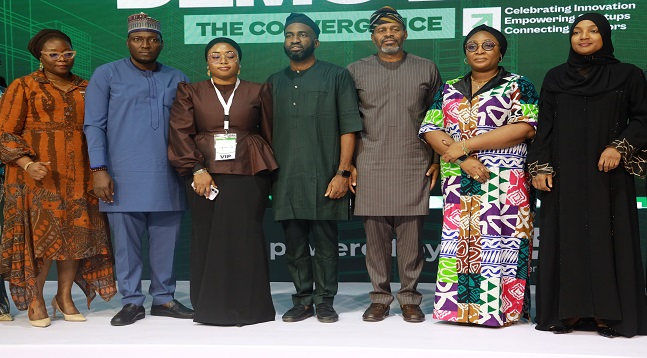
IHS Nigeria, part of the IHS Holding Limited (NYSE: IHS) (“IHS Towers”) group, one of the largest independent owners, operators, and developers of shared communications infrastructure in the world by tower count, has partnered with the Ilorin Innovation Hub to host the maiden edition of its Demo Day at the state-of-the-art facility in Ilorin, Kwara State.

The event, themed “The Convergence,” is designed to spotlight 19 emerging startups that have participated in the Hub’s accelerator and incubation programs, and invite them to pitch their solutions to investors, venture capital funds, corporate partners, and the media.
The Ilorin Innovation Hub, a partnership between the Kwara State Government and IHS Nigeria, began operations in February 2025 with programs managed by Co-creation Hub and Future Africa.
The Demo Day presents an opportunity to take stock and assess how the Ilorin Innovation Hub is helping to nurture and bring to life groundbreaking ideas and solutions supporting economic resilience and addressing real-world societal challenges. The event is expected to help unlock funding opportunities, foster strategic collaborations, and amplify visibility for these startups that are developing solutions across critical sectors including agriculture, health-tech, green energy, lifestyle, and digital services.
Beyond the startup showcase, the Demo Day highlights Kwara State’s continued commitment to driving digital innovation and entrepreneurship, and IHS Nigeria’s commitment to bridging the digital divide and deepening the digital economy in Nigeria.
Mohamad Darwish, CEO, IHS Nigeria, commented, “We believe innovation and digital technology are powerful drivers of economic growth and sustainable development. This is why we partnered with the Kwara State Government on the Ilorin Innovation Hub. It is impressive and very fulfilling to see the diverse portfolio of ideas and solutions showcased today from the hub within a year of the commencement of operations.
This speaks to the depth of creativity among Nigerians and what is possible when they are equipped and supported. Today’s event makes me proud of our investment in the space and underscores IHS Nigeria’s continued commitment to supporting technology, entrepreneurship, and digital innovation in Nigeria.”
Temi Kolawole, Managing Director, Ilorin Innovation Hub, commented, “Today, we showcase 19 startups that have shown that when you combine talent with the right support, the results speak for themselves. The Ilorin Innovation Hub exists to ensure that geography is never a barrier to building something extraordinary, and this Demo Day is proof that we are on the right track.”

Nnaji, Former Minister Seeks Out-of-court Settlement over Certificate Forgery Allegations

Nigeria @ Risks Losing Digital Control- NiRA

CIBN Allegedly Hit by 250GB Data Breach

NUJ Accuses NBC of Attempting to Gag Media, Demands Dialogue

BOI, RMRDC Seal MoU to Address Agric Value Chain Challenges, Boost Nigeria’s GDP

NBC Boss Urges Content Ceators to Participate in DSO

NITDA Takes Over National Digital Architecture System

DLM SPV PLC Lists ₦9.00bn AAA-Rated Medium-Term Notes on FMDQ Exchange, Sets Benchmark in Corporate Bond Market

FG Shifting Focus to “Meaningful Connectivity” to Drive Inclusion – Minister

Jury Finds Meta, Google Liable for Woman’s Social Media Addiction




 E-Business2 days ago
Lagos Unveils Cybersecurity Guidelines to Tackle Rising Digital Threats

 Telecom2 days ago
NBC Warns Broadcasters Against Bullying Guests, Passing Opinions as Facts

 E-Financial2 days ago
CitiTrust Heads to Appeal Court over Alleged Ponzi Scheme

 Telecom2 days ago
WATRA Secretary sees Resilience as a Critical Link in West Africa’s Digital Economy

 News2 days ago
FG Borrows N100Bn from Unclaimed Dividends, Dormant Bank Accounts

 Telecom2 days ago
Tech Shake-Up: Snap Cuts Hundreds as AI Drives Efficiency Push

 Telecom2 days ago
Why Nigeria Must Embrace .ng Now – NiRA Reveals Five Critical Steps

 News2 days ago
FG Carpets W/Bank, Denies Alleged Diversion of Federation Revenue