

News
Nigeria’s ICT Market: Things to Cheer, Worry About- Okere


Austin Okere, founder and vice chairman, Computer Warehouse Group (CWG) has presented a score card of the Nigeria’s IT sector highlighting both cheering and worrying situations in the third largest sector of the economy.
The keynote speaker at the inaugural ICT Success Summit held in Lagos on Saturday, urged African IT entrepreneurs to think outside the box and broaden their horizon towards solving challenges peculiar to the emerging markets.
Okere who founded CWG, one of the Africa’s most successful IT companies with annual revenue of over $130m and staff strength above 650, said that the extension of GSM connected lines from 106m to 222million is worthy of celebration, even as the teledensity 91% to 107% in less than two decades of GSM introduction.
Today, CWG has direct operations in four African countries and indirect operations in 17 others, while Okere remains the entrepreneur in residence, CBS New York; WEF GAC on Innovation & Intrapreneurship; Advisory Board, GBSN; Advisory Council, ATCON and Governing Council, IoD Nigeria.
He also highlighted that Nigeria’s ICT sector should be celebrated as the first to connect REN in West Africa (NgREN), presently contributing 12.68% to GDP in 2Q2016 and has become the third largest sector after agric (22.55%) and trade (17.57%).
According to him, Nigeria has one of the most robust ICT Policy and Broadband plan on the Continent following the strong voice at ministerial level through the creation of Ministry of Communication Technology (now Ministry of Communications) in 2011.
He also said that the President Buhari’s administration resolve to set up technology hubs in all Geographical Zones is a welcome development and will stir innovation among the youths.
Okere who also presented a currency Matrix to describe the imbalances between matching revenue with cost in the present system where dollar tends to be the legal tender does not augur well for the economy, especially, as the market is skewed against the indigenous players.
“There are other things to worry about in the system. For instance, GDP growth in ICT has slowed from 4.07% to 1.35% in Q2; NgREN is now idle because of subscription fees whereas billions were spent to set it up; it this ever non-promotion of local software and services.
“The industry needs regulatory support, especially for NOTAP to enforce of 60/40 rule in ATS and why should there be dollar payments to VADs in a naira economy; also, we will discover that the indigenous player is meant to shoulder tax burden of OEMs and VADs. Simply put, the local companies are in a race to the bottom. No matter who wins a rat race, he is still a rat. Therefore, current structure of the industry kills the local players”, he decried.
The Keynote speaker however assured ICT entrepreneurs that all hope is not lost, stressing that they must focus on the larger results ahead them.
“The trade-offs I made: Exchanging Affirmation for Accomplishment – I stopped being a people pleaser; Exchanging security for significance – I changed my attitude towards uncertainty; Trading Immediate Victory for Long Term Sustainability – I stopped measuring my performance solely in terms of immediate results”, he said.



As part of a joint initiative with AFRIPOL, Kaspersky provided cybersecurity training courses for law enforcement representatives from 23 African countries, unfolding the fundamentals of Security Operations Center (SOC) activities and advanced threat hunting techniques.

As cyberthreats continue to grow in scale and complexity, strengthening the technical capabilities of law enforcement agencies has become an important priority worldwide. Through knowledge-sharing programmes, technology companies can contribute practical expertise gained from real-world cyber investigations and threat analysis.
Such collaboration helps equip law enforcement professionals with the skills and tools needed to investigate digital crimes more effectively and strengthen cybersecurity capabilities.
From November 2025 to March 2026, around 40 African officers from 23 countries* received “Security Operations and Threat Hunting” training, provided as part of the cooperation agreement between Kaspersky and AFRIPOL signed in 2024. During the training, African officers gained practical knowledge of Security Operations Center (SOC) activities and modern cyber-defence practices.
The programme covered key aspects of threat detection and incident investigation, including how to identify malicious activity in Windows and Linux environments, analyse attacker tactics, techniques and procedures (TTPs) and use threat intelligence to uncover advanced threats.
As part of the training, a series of online Q&A sessions were organised, providing participants with the opportunity to engage directly with experts and course authors from Kaspersky’s Security Services team. These sessions allowed attendees to clarify complex topics, discuss practical cases and receive additional insights, reinforcing the learning experience and ensuring a deeper understanding of key cybersecurity concepts.
“Cybercrime today is highly sophisticated, borderless and constantly evolving, which means no single organisation can tackle it alone. This is why cooperation and knowledge sharing between the private cybersecurity sector and law enforcement agencies are so critical. Our long-standing collaboration with AFRIPOL demonstrates the value of this approach.
“Over the years, Kaspersky and AFRIPOL have worked together to better understand the cyberthreat landscape across Africa and to support international efforts aimed at disrupting cybercrime. By continuing to invest in training and capacity building, we aim to support law enforcement professionals with the expertise they need to investigate digital crimes effectively and contribute to building a safer and more trusted digital environment for everyone,” says Yuliya Shlychkova, Vice President, Public Affairs, at Kaspersky.
“Strengthening the capabilities of law enforcement agencies is essential to effectively address the growing complexity of cybercrime across the African continent. Initiatives such as this training programme play an important role in equipping officers with the practical skills needed to investigate cyber incidents, analyse digital evidence and respond to emerging threats.
“Cooperation with partners from the private cybersecurity sector, such as Kaspersky, helps law enforcement agencies stay informed about the latest threat trends and investigative approaches.
“We highly value this collaboration and the opportunity it creates to further develop the cybercrime response capabilities of AFRIPOL member countries,” says Dr Mohammed Benaired, Head, Training and Capacity Building Division at AFRIPOL.
In 2024, to further enhance global efforts to combat cyber offenses, Kaspersky and AFRIPOL signed a cooperation agreement in preventing and fighting cybercrime.
Covering a period of five years, the document formalises and facilitates cooperation between the company and the law enforcement agency in sharing threat intelligence data on the latest cybercriminal activities and entails the provision of assistance and know-how in information security analysis.
Kaspersky Expert Training is used by numerous organisations and academic institutions to advance their skills in battling against cybercrime. Since the inception of this online training programme, Kaspersky experts have trained more than 3,000 specialists from 50 countries around the world.
Providing their expertise with 12 educational courses, they share their insights on advanced tactics and strategies in Reverse Engineering, Threat Hunting, Incident Response and more – each divided by the level of students’ experience.

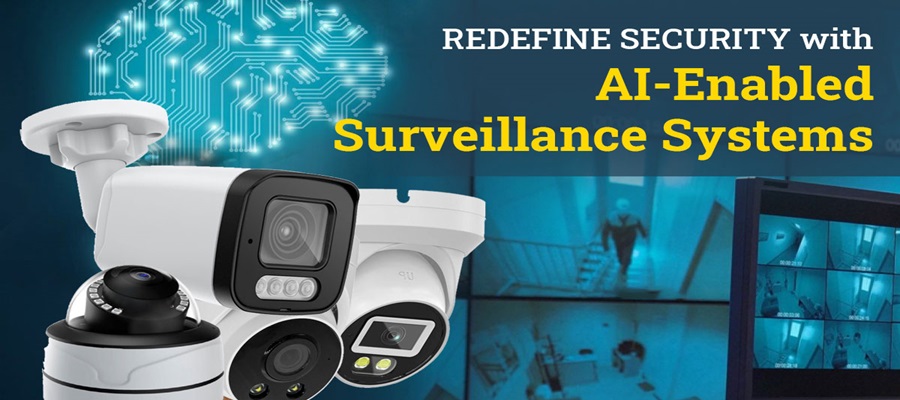
Nigeria has emerged as the largest investor in artificial intelligence-driven surveillance systems on the continent, committing over $470 million to advanced monitoring technologies, according to a new report.

Pic credit…bokysee.com
The study found that Nigeria, alongside 10 other African countries, has collectively spent no less than $2.1 billion on AI-powered surveillance infrastructure.
AI-powered surveillance devices represent a significant shift from passive recording to active, real-time monitoring and threat detection
The study, described as the most comprehensive account of smart city surveillance in Africa, examined deployments in Algeria, Egypt, Kenya, Mauritius, Mozambique, Nigeria, Rwanda, Senegal, Uganda, Zambia and Zimbabwe.
These investments include facial recognition systems and automatic number plate recognition tools aimed at strengthening security and urban monitoring.
The report, titled “Smart City Surveillance in Africa: Mapping Chinese AI Surveillance Across 11 Countries,” was produced by the Institute of Development Studies and released in March 2026.
It highlights Nigeria’s position at the forefront of adopting smart surveillance technologies, reflecting a broader trend across Africa where governments are increasingly turning to AI solutions to address security challenges and improve urban management.
“This level of expenditure translates into an average spend in the region of $240m per country.
“Nigeria alone has documented public expenditure of $470m AI-enabled facial recognition and ANPR, making it the continent’s largest buyer of smart city surveillance technologies,” the report stated.
“In all cases, we know that the real total is significantly higher because surveillance spending is often secret; no figures were available for two of the 11 countries studied; the public accounts for the other nine countries were incomplete; and this study included only 11 of Africa’s 55 countries,” the researchers noted.
The report said most of the surveillance infrastructure deployed across the countries was supplied by Chinese firms and financed through soft loans from Chinese banks.
“The Chinese safe city surveillance package is typically financed by soft loans from Chinese banks.
“A typical package involves a loan of $250m from Eximbank tied to the purchase of surveillance cameras from Hikvision and a command and control centre built and serviced by Huawei or ZTE,” it said.
The report explained that the packages usually include thousands of smart closed-circuit television cameras capable of transmitting geo-located facial recognition and vehicle number plate data in real time.
“The Chinese safe city package typically includes installing thousands of smart CCTV surveillance cameras, which transmit geo-located facial recognition and car number plate data in real time for analysis using artificial intelligence at dedicated data centres that serve as command and control facilities for police and security operatives,” the report added.
The study further revealed that China supplied smart city surveillance technologies to all 11 countries reviewed, while South Korea and Russia supplied three countries each, and the United Arab Emirates supplied two.
It added that the actual spending across the region could be significantly higher due to secrecy around surveillance budgets and incomplete public financial records.

The metaverse, championed by Meta (formerly Facebook) in 2021, has largely collapsed due to low user adoption, technical limitations, and massive financial losses exceeding $80 billion.

Mark Zuckerberg
Meta is shutting down its flagship VR platform, Horizon Worlds, in June 2026, marking a major shift toward AI and mobile-first strategies.
The app will be removed from the Quest store on March 31 and discontinued in VR by June 15, continuing only as a mobile service.
Horizon Worlds, launched in 2021, was central to Meta’s rebranding from Facebook and its vision of a fully immersive virtual environment.
Despite billions in investment and high-profile partnerships, the platform failed to attract a large user base and struggled with design limitations and weak engagement.
Reality Labs, the division behind the metaverse push, has accumulated nearly$80 billion in losses since 2020, including more than$6 billion in a single quarter.
Recent layoffs affecting around 10 percent of the VR workforce, along with the shutdown of related projects, underscore a broader pullback.
Competition and shifting priorities have accelerated the decline.
Rival platforms such as VRChat maintained stronger communities, while Meta increasingly redirected resources toward AI and hardware, including its Ray-Ban smart glasses.
Although Meta says it remains committed to VR, the closure of Horizon Worlds signals a strategic reset.
The company is repositioning its future around AI-driven products, marking a decisive shift away from its earlier metaverse vision.

Court Remands Hacker for Allegedly Stealing N3.09Bn from FCMB

CBN Directs IMTOs to Open Naira Settlement Accounts

Nigerians Lose N12.5Bn to AI-Driven Scams- PwC

SEDC Launches SEVCP to Expand Access to Capital for Startups

Kaspersky, AFRIPOL Conduct Joint Cybersecurity Training for African law Enforcement

Kaspersky Discovers New Phishing Campaign Exploiting Google Tasks Notifications to Steal Corporate Credentials

esentry 2025 Report Shows Healthcare, Financial Services and Telecoms as Staging Grounds for Increased Cyberattacks in Africa

AfDB, UNDP Launch $10Bn AI Initiative for Africa

MultiChoice Suspends Yearly DStv Price Hike as Canal+ Pushes Growth

MTN Nigeria Posts Record N1.70 Trillion Pre‑Tax Profit, Declares N20 Dividend for 2025




 E-Financial1 day ago
DLM SPV PLC Lists ₦9.00bn AAA-Rated Medium-Term Notes on FMDQ Exchange, Sets Benchmark in Corporate Bond Market

 E-Financial2 days ago
CBN Wins Central Bank of the Year Title @13th Global Awards

 General News2 days ago
Tech Firms Sack over 45,000 so Far in 2026

 News2 days ago
Morney Launches in Nigeria as E-invoicing Drives Finance Digitisation

 General News2 days ago
Jury Finds Elon Musk Liable for Misleading Twitter Investors

 Telecom2 days ago
FG Taps Quest Merchant Bank for Advisory on 90,000km Fibre Project

 General News2 days ago
Rockefeller, Global Energy Alliance Cross $100 million Mark in Africa Electrification Push

 News1 day ago
Metaverse Collapses, Horizon Worlds Shuts Down on Quest