

General News
Nigeria’s Luxury Car Market to Experience steady Growth Despite Risising Inflation

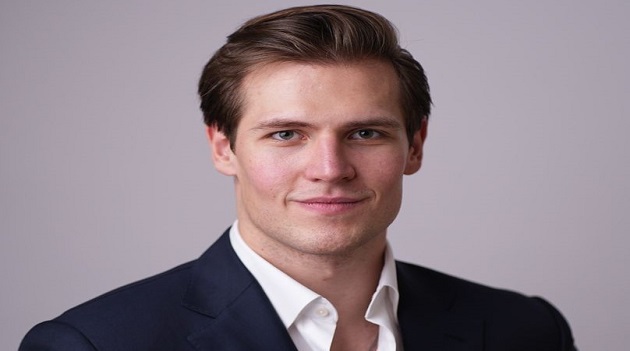
By Maxim Makarchuk
The Nigerian luxury car market is experiencing remarkable growth despite the challenges posed by rising inflation and economic turbulence. This is unsurprising as the industry stands as a symbol of elegance, prestige, and affluence in Nigeria’s dynamic economic landscape.

According to Statista, revenue in the Nigerian luxury car market is projected to reach USD 32 million by the end of 2024. The industry is expected to have an annual growth rate (CAGR 2024-2028) of 14.75%, resulting in a projected market value of USD 55 million by 2028.
This exponential industry growth is driven by a potent mix of different factors, including changing customer desires, emerging trends, infrastructure development, and a shifting preference for sustainable luxury cars.
Aspiration amidst adversity
There’s an insatiable appetite for luxury goods, especially amongst the growing Nigerian middle class, who aspire despite the difficulties and see cars as a significant luxury good.
The country’s economic fluctuations are no match for the allure of luxury brands such as Mercedes-Benz, Lexus, Toyota and Land Rover, currently the leading brands with over 60% contribution to the luxury cars ads on Jiji. Luxury goods consumers prioritise symbolic consumption to showcase their success.
Thus, luxury cars have become a statement of achievement, a tangible manifestation of one’s income power, and social standing in a competitive society where appearances matter.
Balance of performance, style, and affordability
In addition to the undiminishing desire for prestige and social distinction, Nigerians also want to balance style, comfort, performance, and budget. Consumers are increasingly looking for relatively affordable cars that provide a comfortable and luxurious driving experience while delivering durability, fuel efficiency, and high performance on the road.
For instance, the demand for SUVs in Nigeria is skyrocketing in recent years. This can be attributed to several factors, including customers’ desire for vehicles with more space and versatility, as well as options more suitable for the country’s challenging road conditions.
A diverse nation with varied tastes
The purchasing patterns in Nigeria have led to a rich diversity in the luxury car market, catering to a wide spectrum of demographics, tastes, lifestyles, and budgets. In response, luxury car dealers and other related businesses are continually emerging to meet the needs of their discerning clientele. Nigeria’s luxury car market is poised to continue its rising as a fast-growing, multi-diverse nation, meeting the specific expectations of its affluent customers.
Urbanisation
Infrastructure investment is also driving the growth of the luxury car market in Nigeria despite the rising inflation. Nigeria’s ambitious infrastructure projects are reshaping the automotive sector, creating an environment conducive to luxury car ownership.
Improved road networks and upscale residential developments are fueling the desire for high-end automobiles. A drive through the streets of Banana Island, Lagos, the upscale neighbourhood of Maitama, Abuja, and other upscale neighbourhoods exposes one to an array of luxury cars.
The need for sustainability
The country is embracing sustainable luxury just like the rest of the world, and it’s a driving force behind customer preferences. Luxury car buyers in Nigeria are increasingly drawn to eco-friendly and fuel-efficient models that offer performance without harming the climate.
For instance, Tesla’s electric vehicles and BMW’s i3 are gaining popularity in the Nigerian luxury car market due to their sustainability features.
Stakeholders must therefore hasten the process of infrastructural provisions for EV charging points in the country to accommodate the growing adoption of EVs. A few charging stations exist like the NADDC stations in Lagos and Sokoto, as well as privately owned stations in-office and in-home.
Demand for luxury goods undeterred by rising inflation or other macroeconomic factors
The luxury goods companies can be considered inflation-proof as the consumer is willing to pay the premium.
While this strong standing may be challenged in the future if the inflation rate continues its hike, the high-end luxury market and major luxury brands remain less affected by the rates compared to the rest of the market.
Despite the economic challenges posed by inflation, the luxury car market in Nigeria stands as a beacon of resilience and aspiration. It continues to defy gravity as consumers, undeterred by economic fluctuations, prioritise status, comfort, and performance on the road.
Available data shows that Nigerians’ love for luxury automobiles shows no signs of slowing down. It’s no wonder why the car upgrades business is also in its booming season – old model, upgraded body.
With platforms like Cars45, Carmart, and Jiji making access to affordable cars easier for the common man, the industry is poised to continue its upward trajectory, defying odds and charting a course of steady growth.
For car dealers, investors, car loan financiers, and other automotive industry players, this is a wake-up call to double up efforts to be better prepared to meet the economic and industry shakeup expected with such rapid growth.
Maxim Makarchuk isChief Operating Officer, Jiji and Cars45



House of Representatives Ad-Hoc Committee investigating the $460 million Closed Circuit Television (CCTV) surveillance project in the Federal Capital Territory has directed the Central Bank of Nigeria (CBN) to suspend further disbursements to ZTE Corporation pending clarification on the execution of the contract.

The resolution was reached on Tuesday following lawmakers’ concerns over inconsistencies, vague responses, and lack of transparency from ZTE officials regarding the project’s scope, deployment locations, and current operational status.
The committee also mandated the company to reappear with comprehensive and verifiable documentation, including a full inventory of all equipment supplied and installed, precise locations of infrastructure nationwide, and details of 456 Nigerians reportedly trained to operate and maintain the system.
The decision followed a motion moved by Ali Shettima representing Bursari/Geidam/Yunusari Federal Constituency and seconded by Kolawale Akinlayo during an investigative hearing at the National Assembly.
Donald Ojogo, chairman of the committee, said the exercise was not a witch-hunt but a fact-finding mission aimed at addressing public concerns over the project.
This is a constructive engagement, not an attempt to witch-hunt anyone. Nigerians deserve clear answers, and we expect ZTE to respond in line with the documents before us,” he stated.
Irene Momoh, representing the company, said ZTE supplied and installed CCTV infrastructure in Abuja and Lagos, noting that the project was completed between 2011 and 2012.
However, under questioning, he admitted uncertainty about the current functionality of the system.
“To the best of our knowledge, the equipment was delivered and installed within the project timeline, but I cannot confirm its present operational status,” Momoh said.
The response sparked strong reactions from lawmakers, who questioned how a project of such magnitude could lack a sustainable maintenance and continuity framework.
Momoh explained that ZTE had an initial three-month maintenance agreement, which it voluntarily extended to six months before handing over the system. He attributed the project’s decline to the government’s inability to sustain funding post-handover.
“There was no continued funding from the government to maintain and run the system after handover,” he added.
Despite this explanation, lawmakers challenged several of the company’s claims, particularly on the geographical spread of the installations.
General News
Guinness Nigeria Surpasses ₦1Trillion Market Capitalisation, Signalling Strong Investor Confidence and Sustained Value Creation
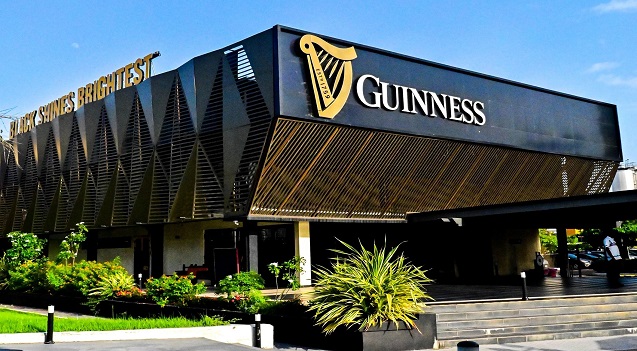
Guinness Nigeria PLC has achieved a landmark milestone, surpassing the ₦1 trillion mark in market capitalisation on the Nigerian Exchange (NGX), underscoring strong investor confidence and a sustained track record of value creation.

As of April 10, 2026, the company’s market capitalisation stood at approximately ₦1.01 trillion, with an enterprise value of ₦1.05 trillion. This milestone reflects a significant re-rating of the business by the market, driven by improved fundamentals and a renewed growth trajectory.
This achievement caps a remarkable 18-month period during which the company has delivered substantial improvements in shareholder value. As of April 12, 2026, Guinness Nigeria’s share price closed at ₦462.90, reflecting strong upward momentum and sustained investor confidence in the company’s strategic direction and performance outlook.
The company’s latest audited financial results for the 18-month period, ended 31 December 2025, further underscore this transformation. Guinness Nigeria delivered revenue of ₦730.80 billion, while gross profit rose by 152% to ₦230.48 billion, demonstrating strong margin expansion and improved operational efficiency.
In a significant turnaround, the company recorded a net profit after tax of ₦41.16 billion, recovering from a loss position in the prior period. This return to profitability highlights the success of ongoing transformation efforts and reinforces the company’s commitment to delivering sustainable, long-term value for shareholders.
The reporting period reflects a pivotal phase in the company’s evolution, including its transition to a new financial year-end of 31 December and its first full audited reporting cycle under its current ownership structure, laying a stronger foundation for future growth.
Commenting on the milestone, Prof. Fabian Ajogwu, SAN, Chairman of the Board said: “This is a defining moment for Guinness Nigeria and a strong validation of the strategic direction we are pursuing. Crossing the ₦1 trillion market capitalisation threshold reflects the resilience of our business, the strength of our brands, and the renewed confidence of the investment community in our long-term prospects. We remain committed to disciplined governance, sustainable growth, and long-term value creation for all stakeholders.”
Over the period, the company has driven performance through revenue growth, portfolio optimisation, cost discipline, and expanded route-to-market capabilities. These efforts have been complemented by a sharpened focus on innovation, premiumisation, and consumer-centric strategies, reinforcing its leadership in Nigeria’s beverage alcohol sector.
Guinness Nigeria has also continued to strengthen its balance sheet, embed sustainability into its operations, and uphold strong corporate governance standards, while maintaining its commitment to responsible consumption and positive community impact.
Looking ahead, the company remains focused on accelerating growth through consumer obsession, portfolio expansion, and continued innovation, while maintaining a disciplined approach to capital allocation and shareholder returns.

Nigeria is in the middle of one of the fastest digital infrastructure expansions on the continent. Microsoft, Google, and AWS are committing to African cloud regions. MTN and Airtel are at the forefront of advancing telecom infrastructure.

The Rural Electrification Agency is rewiring the country’s power base. And enterprise AI adoption is accelerating across banking, logistics, and public services.
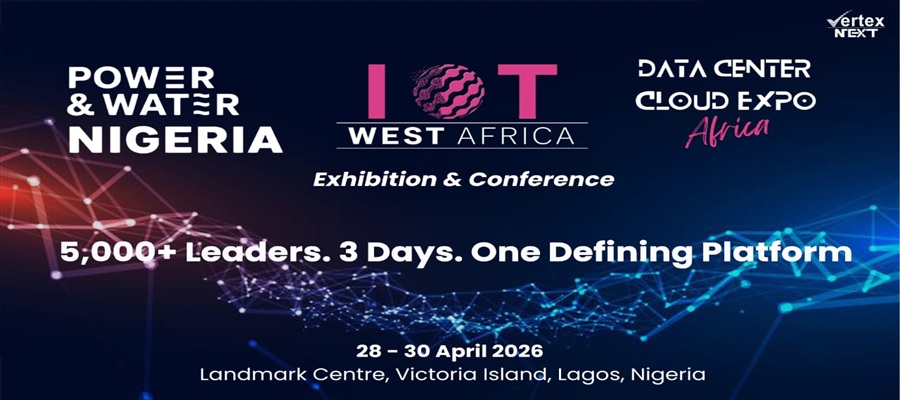
On 28–30 April 2026, that ecosystem converges at Landmark Centre, Victoria Island, Lagos, as IoT West Africa, Power & Water Nigeria, and Data Centre & Cloud Expo Africa co-locate for their fifth edition.
IoT West Africa holds its place as the longest-running IoT and digital infrastructure event on the continent, and the platform that has tracked, shaped, and accelerated West Africa’s technology story from its earliest chapters.
The three-day platform spans AI, cloud, telecoms, IoT, smart infrastructure, fintech, renewable energy, hyperscale data centres, and power generation. Critical infrastructure sits at the heart of this year’s agenda: from the security and resilience of national power grids, to the fibre networks, subsea cables, and edge computing nodes that underpin Nigeria’s digital economy. This is the event where that conversation happens at the highest level.
It is the only event in West Africa where a hyperscale operator, a rural electrification agency, a 5G network operator, and a sovereign AI policymaker share the same stage, and the same room.
The event announces a strategic partnership with Africa Data Centres Association (ADCA), bringing the continent’s foremost data centre industry body into the programme to shape conversations around investment, connectivity, and cross-border infrastructure development.
Confirmed speakers include Dr. Abba Aliyu, MD/CEO of the Rural Electrification Agency; Dr. Emomotimi John Agama, Director-General of Securities and Exchange Commission Nigeria; and Christopher Ezeafulukwe, MD/CEO of Transcorp Energy; Wole Abu, MD, Equinix; Ina Alogwu, Chief Digital & Information Officer, T2 Mobile; alongside dozens of global industry leaders.
The platform brings together 5,000+ decision-makers including CIOs, CTOs, investors, regulators, and hyperscale operators, with exhibitors including Itel Energy, Vertiv, and Jubaili Bros. An exclusive VIP lounge, a startup pitch session, and a live podcast series complete the programme.
Register: Power & Water Nigeria — pnwnigeria.com/visitor-registration
IoT West Africa — iotwestafrica.com/visitor-registration

FG Investigates ‘Sharp Sharp’ Loan Operators over Alleged Privacy Violations

CISA Asks NDPC, Police to Act on Alleged Data Breach by NIPSS

Fela Makes History as First African to be Inducted into Rock and Roll Hall of Fame

Lawmakers Ask CBN to Suspend Payment to ZTE for Failed $460m CCTV Project

Ecobank Delivers Strong Results, Posts $801m in Pre-Tax Profit for 2025

Spotify’s Loud & Clear Report Reveals Over ₦60Bn Revenue for Nigerian Artists in 2025

Kuda MFB Increases Kuda for Her Business Grants to ₦10 Million

Canal+ to Cut Jobs as Part Sweeping Restructuring

Nigeria tops global rankings for USDT, USDC ownership

NBC Boss Urges Content Ceators to Participate in DSO




 Telecom3 days ago
SpaceX Hints at Home‑Built Chip Module for Starlink Mobile

 E-Financial2 days ago
Fidelity Surges Ahead in Recapitalisation Drive with ₦564bn Capital

 General News3 days ago
Teenager Hacks Celebrities Whatsapps, Sells Adult Content in Delta

 Telecom3 days ago
Digital Realty, IXPN Expand Peering Network with New Internet Exchange Point of Presence in Nigeria

 Telecom3 days ago
Elon Musk Accuses South Africa of Racism over Starlink Licence Block

 E-Financial3 days ago
Lawyers Sue CBN over One-Time BVN Phone Number Change

 News3 days ago
Meta Files Appeal over $25,000 Damages Awarded to Falana

 E-Financial3 days ago
FG Slashes Import Duties on Cars, Rice, Palm Oil in 2026 Fiscal Policy