

Telecom
Nigeria’s Telecom Access Gaps Drop by 53%

The number of identified areas of clusters across Nigeria without access to the telecommunications services has been reduced by 53.1 per cent as at the end of 2022.

Prof. Umar Garba Danbatta, executive vice chairman and chief executive officer of the Commission, disclosed this at a recent telecoms industry stakeholders forum in Yenagoa, Bayelsa state.
Danbatta, who was represented at the forum by the Head, Pre-Licensing at the Commission, Usman Mamman, said from 207 clusters of access gaps in 2013, the industry has witnessed a reduction to 97 as of end 2022 by bridging 110 clusters of access gaps, representing a 53.1 per cent reduction.
He said by implication, the number of Nigerians who fell within the access gap which were estimated at 37 million in 2013 has been reduced to 27 million, following increased access to telecoms services by those hitherto not digitally included.
Access gaps refer to the cluster of communities or grouped areas in different parts of the country that are bereft of access to telecom services and till date, the NCC has reduced clusters of access gap by more than half.
Danbatta said, “We have worked tirelessly to ensure we bring telecom services to people living in rural, unserved, and underserved areas of this country, totalling 37 million people courtesy of the consultancy that was conducted in 2013.
“By 2019, we had succeeded in reducing the clusters of access gaps to 114 through the deployment of the necessary infrastructure needed to bring services to people living in rural, unserved and underserved areas of the country. The deployment of infrastructure is in terms of base transceiver stations, which resulted in the reduction of Nigerians in those clusters from 37 million to 31 million in 2019.
“By 2022, we have reduced the clusters of access gaps to 97 from 207 in 2013. The number of Nigerians again have come down from 37 million in 2013 to 27 million as we speak. We achieved this by deploying, from 2009 to 2011, a total of 79 new base transceiver stations,” he said
Danbatta stated that in 2013 to 2018, the telecom sector also witnessed the deployment of additional 124 base transceiver stations while from 2019 to 2022, a total of 364 base transceiver stations were deployed.
“So far, the total number of base transceiver stations we have deployed to date between the time the access gaps were identified till the end of 2022 are 567,” he said.
While describing the reduction in access gap so far as a landmark, Danbatta, however, said the Commission will not rest on its oars as it thrives to ensure that the remaining 27 million Nigerians, who currently lack access to telecoms services, are provided with services.
Meanwhile, the EVC said part the regulatory interventions of the Commission to bridge the remaining 97 access across the country to provide ubiquitous connectivity in all the nooks and crannies of Nigeria are the issuance of the Mobile Virtual Network Operator (MVNO) Licences and the deployment of Fifth Generation (5G) networks, among others.



Nigerian Communications Commission (NCC), yesterday ordered telecom operators to begin compensation of subscribers for poor network quality with airtime credits.

According to Dr Aminu Maida, executive vice chairman, NCC, the measure is part of renewed efforts to improve service delivery, protect consumers, and hold operators accountable for persistent lapses in network performance across the country.
Maida, also outlined his commission’s latest compliance and enforcement strategies.
He said the compensation directive followed verified failures by operators to meet established minimum quality of service standards in several locations.
“It is not a refund from the regulator but a compliance obligation placed on service providers,” he said, stressing operators must bear full responsibility.
He explained that the framework relies on detailed monitoring at local government level, enabling the commission to pinpoint exact areas and periods of poor service.
This granular approach, he said, allows regulators to move beyond general complaints and focus on measurable, location-specific service deficiencies affecting subscribers.
According to him, the compensation specifically covers service failures recorded between November 2025 and January 2026 across multiple network providers.
“Eligible subscribers will receive airtime credits with notifications explaining the cause and value of the compensation,” he said.
He added that notifications would improve transparency and help users understand why compensation was applied to their accounts.
Maida noted the commission has significantly strengthened its monitoring systems to capture real-time, location-specific service performance data.
“These systems ensure enforcement reflects actual user experience rather than generalised industry averages,” he said, highlighting improved regulatory precision.
He added that operators are required to implement the compensation directly, while the NCC provides oversight to ensure compliance.
“Independent checks will confirm that affected subscribers are properly credited,” he said, noting sanctions for non-compliance may follow.
Maida said the initiative formed part of broader reforms aimed at improving accountability and service standards within the telecommunications sector.
“Operators failing to meet obligations will face stricter enforcement measures,” he warned, signalling tougher regulatory action ahead.
He stressed that improving service quality required both sustained infrastructure investment and stronger operational discipline by network providers.
“Service providers must maintain performance standards consistently across all regions, including underserved and rural areas,” he said.
Maida reiterated the NCC’s commitment to balancing consumer protection with industry sustainability and long-term sector growth.
“Operators must take responsibility for the quality of experience delivered to subscribers,” he said, urging greater corporate accountability.
He added that the commission remained committed to ensuring Nigerians received value for money spent on telecom services nationwide.
“Persistent poor service quality is no longer acceptable under current regulatory direction,” he said, emphasising zero tolerance for continued lapses.

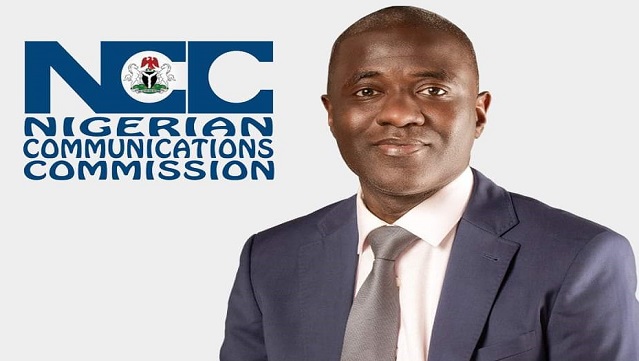
Dr. Aminu Maida, executive vice chairman, Nigerian Communications Commission – NCC has urged the newly inaugurated Nigeria IPv6 Council to develop a credible pathway to raise Nigeria’s IPv6 adoption from approximately 5% today to a level that places us among Africa’s leading nations within the next three years.

He stated this at the inauguration of Nigeria IPv6 Council in Lagos yesterday. Quoting APNIC’s 2026 global measurements, “Nigeria’s IPv6 adoption stands at approximately 5% while leading economies have surpassed 40%. Global IPv4 reserves are exhausted, while the rapid expansion of 5G networks, the Internet of Things, cloud services, and AI-driven applications has pushed the limits of legacy internet addressing.
“At the same time, the cyber-threat landscape continues to intensify. In this context, IPv6 is a strategic necessity for national competitiveness, security, and economic sovereignty.”
Dr. Maida urged the Council to drive collaboration between stakeholders to ensure alignment with the National IPv6 Deployment Strategy.
“To our operators, government colleagues, and enterprise partners, the time for the adoption of, and prioritisation of IPv6 deployment across your networks and platforms is now. Invest in training your technical teams,and ensure that your infrastructure and procurement pipelines are IPv6-ready by default. The investments you make today will determine Nigeria’s digital competitiveness tomorrow.”
The commission mandated the Council to establish a monitoring and reporting framework; Including providing quarterly progress updates to the Commission and an annual State of IPv6 Deployment report to the nation.
More so, drive capacity building and certification by partnering with AFRINIC, academic institutions, and professional bodies to train a critical mass of IPv6-certified engineers across Nigeria.
Champion public sector leadership by working with MDAs to migrate government networks, websites, and e-services to dual-stack or IPv6-native configurations, so that the public sector leads by example.
Engage industry players and the private sector, working with operators, ISPs, data centres, content providers, and financial institutions to remove deployment barriers and unlock private investment in IPv6 infrastructure.
They were also urged to advise on policy and regulation, recommending to the Commission the incentives, standards, and procurement guidelines required to accelerate nationwide adoption.
Mr. Muhammed Rudman, chairman of the Nigeria IPv6 Council in his presentation said that With IPv4 addresses exhausted worldwide, continued reliance on legacy resource creates scalability bottlenecks.
“Our growing digital economy is projected to reach $18.3 billion in revenue by 2026—requires modern addressing capabilities. Without urgent IPv6 transition, Nigeria risks being left behind as emerging technologies like 5G, IoT, and cloud services demand the expanded address space only IPv6 can provide
“IPv6 is essential for Nigeria’s digital transformation, providing the foundation for unlimited connectivity, enhanced security, and next-generation technologies that will drive economic growth and innovation.
“IPv6 provides 340 undecillion IP addresses, ensuring every device in Nigeria can connect directly to the internet without costly workarounds or address sharing.
“Built-in IPsec encryption improves network security. Enables IoT, cloud computing, AI, and smart city initiatives critical to Nigeria’s digital economy, he added.
As a catalyst for National Development, he said IPv6 enables expansion of digital services, e-commerce platforms, and fintech solutions, driving economic diversification and job creation across Nigeria.
“Expanded internet access reaches underserved communities while seamless device integration connects millions of Nigerians to the digital economy.
IPv6 provides the foundation for IoT deployments, smart city initiatives, and AI-powered services that will transform Nigeria’s technological landscape,” he stated.
Telecom
DG NITDA Calls for Urgent Action on AI-Driven Cyber Threats, Announces More Stakeholder Engagements

Kashifu Inuwa CCIE, Director General of the National Information Technology Development Agency (NITDA), has raised concerns over the rapidly evolving cybersecurity risks driven by artificial intelligence, urging immediate and coordinated national action.

Kashifu Inuwa CCIE, Director General of the National Information Technology Development Agency (NITDA).
Speaking ahead of the formal inauguration of a proposed cybersecurity advisory council, Inuwa disclosed that the Ministry of Communications, Innovation and Digital Economy plans to convene at least two additional stakeholder engagement sessions.
According to him, the move underscores a deliberate commitment to inclusivity and transparency, mirroring the collaborative framework adopted in developing Nigeria’s National AI Strategy.
He explained that the increasing integration of artificial intelligence into everyday systems has significantly altered the cybersecurity landscape, introducing more complex and unpredictable threats.
“AI is changing the game and elevating the threat landscape. The more we integrate AI into our lives, the more we need to change the way we look at cybersecurity. There are two fundamental issues we need to think about,” he said.
The NITDA boss highlighted the dual nature of emerging threats, noting that cyberattacks are now being carried out both on AI systems and through AI technologies, thereby expanding the scope and scale of vulnerabilities.
He further warned about the rise of advanced AI-driven social engineering tactics, particularly the growing use of deepfake technology.
“We are also witnessing increasingly sophisticated AI-driven social engineering. The emergence of deepfakes makes it difficult to distinguish between AI-generated audio or video and authentic content.
“There have even been instances where such technology is used during virtual calls,” he noted.
“This is the reality of the world we live in today, and it is not a challenge any single entity can address in isolation. The only way forward is to strengthen collaboration and deepen synergy between governments and the private sector,” he added.
Inuwa stressed that cybersecurity resilience depends heavily on collective responsibility, cautioning that weaknesses within any single organisation could expose entire networks to risk.
“We are only as strong as our weakest link. If one entity is compromised, it creates risks for others within the network,” he stated, referencing recent incidents in which financial institutions were exploited to gain access to broader payment systems and even government infrastructure.
Commending the Minister for initiating the cybersecurity advisory council, the NITDA DG described it as a crucial platform for enhancing cooperation, facilitating information sharing, and building a more resilient national digital ecosystem.
He reaffirmed the agency’s commitment to supporting the council and collaborating with stakeholders across sectors to strengthen Nigeria’s cybersecurity framework in the face of evolving AI-driven threats.

NCC Orders Telcos to Give Users Free Airtime for Poor Network Service

NCC Tasks Nigeria IPv6 Council to Drive Adoption Beyond 5% in 3 Years

UK–Nigeria Skills and Schools Trade Mission Concludes with Strong Foundations for Education Partnership

Airtel Africa Foundation Calls for Applications for “DigiLeap” Tech Training for Young Women

Survey Shows Gaps in Cybersecurity Policies and Employee Commitment Leave Organisations Vulnerable

NBC Boss Urges Content Ceators to Participate in DSO

NITDA Takes Over National Digital Architecture System

FG Shifting Focus to “Meaningful Connectivity” to Drive Inclusion – Minister

FG to Gift Nigerians over 100 Free TV Channels from May 15

Jury Finds Meta, Google Liable for Woman’s Social Media Addiction




 General News3 days ago
IshowSpeed’s African Tour was ‘Spy Job,’ for Elon Musk- Seun Kuti

 E-Business2 days ago
FCCPC Licenses 5 Firms for Airtime, Data Lending as Telcos Step Aside

 General News2 days ago
Breaking News…Hackers Allegedly Expose EFCC Data, Operatives’ Identities

 Telecom3 days ago
UniCloud Africa, Open Access Data Centres Announce Strategic Partnership to Strengthen Digital Sovereignty Across Africa

 E-Financial3 days ago
Police Arraign First Bank Manager over Alleged Forex Fraud

 E-Financial3 days ago
PalmPay Hits 35m Users’ Milestone

 News3 days ago
UK-Nigeria Trade Mission Builds on State Visit Momentum to Drive Commercial Outcomes

 News3 days ago
Court Affirms FCCPC Authority over Consumer Protection