

/home/kenneth/web/nigeriacommunicationsweek.com.ng/public_html/wp-content/themes/zox-news/parts/post-single.php on line 153
">
Warning: Undefined array key 0 in /home/kenneth/web/nigeriacommunicationsweek.com.ng/public_html/wp-content/themes/zox-news/parts/post-single.php on line 153
Warning: Attempt to read property "cat_name" on null in /home/kenneth/web/nigeriacommunicationsweek.com.ng/public_html/wp-content/themes/zox-news/parts/post-single.php on line 153
Nimasa Records 685 % Increase in Cabotage Fund

Nigerian Maritime Administration and Safety Agency (Nimasa) management led by Temisan Omatseye as director general and chief executive officer, last week celebrated its one year in office with a recorded increase of 685.7 per cent increase in the Cabotage Vessel Finance Fund (CVFF).
The Omatseye led management, which assumed office in July 10,2009, recorded a significant increase of the CVFF from less than seven million dollars in July 2009 to over 55 million dollars in June 2010, representing an increase of 685.7 per cent.
However, his management is in the fore front of driving the process for the establishment of the regional maritime development bank to further provide funding corridor for ship acquisition and infrastructural development.
According to him, “our vision statement is tied to our 10 years strategic agenda for transforming Nimasa into the number one maritime administration agency in Africa by the year 2020 and our mission statement is to achieve safe, secure, first class shipping services, cleaner oceans and enhanced maritime capacity utilization cutting edge expertise whilst impacting positively on the Nigerian economy.”
Furthermore, the agency recorded 1,318 vessels in its ship registry, representing 45 per cent increase from the previous figure at inception of the Omatseye led management.
Also, this management few months ago commenced the issuance of Biometric Identity Cards with security features to all dockworkers registered by the Agency. This exercise is to ensure that only authorized Dockworkers gain access to the nation’s Sea Ports/Terminal and Private Jetties.
Omatseye who handed out the first set of ID cards to the dockworkers noted that the exercise is to ensure that only authorized Dockworkers gain access to the nation’s Sea Ports/Terminals and Jetties.
He urged Terminal and Jetty Operators to register Dockworkers on their payroll with the Agency. “All Terminal and Private Jetty Operators who are yet to comply with the registration of Dockworkers engaged by them are hereby requested to register such dockworkers with NIMASA in order to forestall work stoppage at their Terminals and Jetties” he said.
The Nigerian Maritime Administration and Safety Agency, Nimasa, is a government agency committed to the enthronement of global best practices in the provision of maritime services in Nigeria.
The agency’s areas of focus include effective Maritime Safety Administration, Maritime Labour Regulation, Marine Pollution Prevention and Control, Search and Rescue, Cabotage enforcement, Shipping Development and Ship Registration, Training and Certification of Seafarers, and Maritime Capacity Development.


Warning: Undefined array key 0 in /home/kenneth/web/nigeriacommunicationsweek.com.ng/public_html/wp-content/themes/zox-news/parts/post-single.php on line 493
Warning: Attempt to read property "cat_ID" on null in /home/kenneth/web/nigeriacommunicationsweek.com.ng/public_html/wp-content/themes/zox-news/parts/post-single.php on line 493


Justice Mojisola Dada of the Lagos State Special Offences Court in Ikeja has remanded, Andrew Odekina, an alleged hacker, who is part of a fraud syndicate that stole N3.09 billion from First City Monument Bank (FCMB).

Justice Dada ordered that Odekina be kept behind bars after he was arraigned before her by the Economic and Financial Crimes Commission (EFCC).
The EFCC informed the judge that the defendant was among the suspects who allegedly carried out a major cyber-enabled fraud that resulted in over N3 billion being siphoned from the bank’s customer accounts.
The anti-graft agency also accused the defendant of retaining proceeds linked to the large-scale hacking operation that targeted some FCMB customers.
The Commission stated that its investigation found cybercriminals had unlawfully accessed the bank’s applications, allowing them to transfer N3.09 billion from various accounts.
Odekina was specifically charged with receiving and retaining N9.87 million, believed to be part of the stolen N3.09 billion, in his FCMB account in 2025.
The offence, according to the EFCC, contravenes the provisions of the EFCC (Establishment) Act, 2004.
The charge states that the defendant, alongside accomplices still at large, knowingly retained control of funds traced to fraudulent digital transactions carried out on the bank’s platform.
The defendant, however, pleaded not guilty to the charge.
Based on his plea, Babatunde Sonoiki, prosecutor, urged the court to fix a trial date and remand the defendant in the custody of the Nigerian Correctional Service pending the conclusion of the trial.
The defendant appeared in court without legal representation.
After listening to the lawyer, Justice Dada adjourned the case to May 11 for trial and ordered that Odekina be remanded to the Kirikiri Correctional Facility.
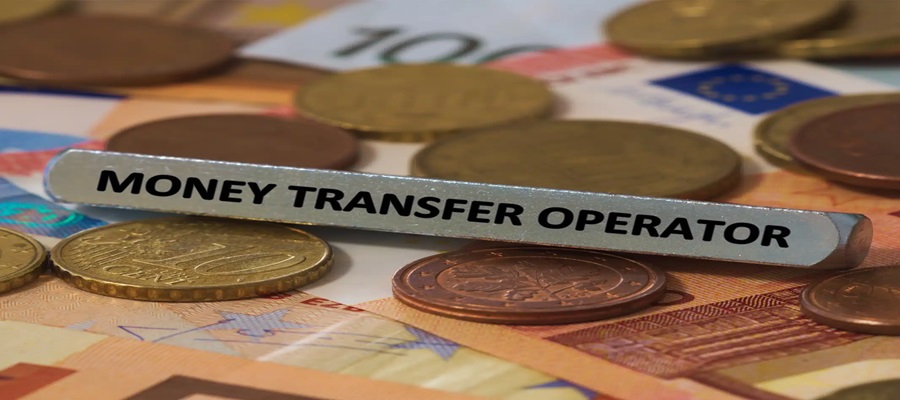
Central Bank of Nigeria (CBN) has directed all International Money Transfer Operators (IMTOs) operating in the country to open and maintain naira settlement accounts with authorised dealer banks, as part of efforts to tighten oversight of diaspora remittances and improve transparency in the foreign exchange market.

The directive was contained in a circular dated March 24, 2026, signed by Dr Musa Nakorji, director of the Trade and Exchange Department, and addressed to IMTOs, authorised dealer banks and the general public.
The circular was published on the apex bank’s website on Tuesday.
The CBN said the measure is aimed at “enhancing diaspora remittances, strengthening transparency, traceability, and effective monitoring of all transactions.”
It stated that “all IMTOs are hereby directed to open naira settlement accounts and ensure that all transactions are routed strictly through their designated settlement accounts, maintained with Authorised Dealer Banks in Nigeria.”
Under the new rule, all inflows, beneficiary payments and related settlements linked to international money transfers are to be processed solely through these accounts.
IMTOs may, however, operate multiple settlement accounts across different banks in line with their operational needs.
The circular also introduced tighter controls on how the accounts can be funded, stating that they “shall only be credited with remittance flows and proceeds of foreign exchange conversions by licensed IMTOs (or their agents)” within the Nigerian foreign exchange market.
Operators are required to clearly designate the accounts and submit the details to the CBN, with updates provided periodically where necessary.
To improve market operations, authorised dealer banks are permitted to process foreign currency transfers from IMTO settlement accounts to other banks and approved participants, including licensed Bureau De Change operators.
The apex bank further directed IMTOs to adopt market-reflective pricing by referencing the Bloomberg BMatch system. It said IMTOs “shall observe real-time market prices from the Bloomberg BMATCH and utilise this as guidance for pricing transactions with their customers and Authorised Dealers.”
According to the CBN, this approach is expected to “improve price discovery, reduce information asymmetry between IMTOs and banks, and encourage increased participation in the official FX market.”
The bank added that all operators must maintain proper transaction records for regulatory checks and comply fully with anti-money laundering, counter-terrorism financing and counter-proliferation financing rules.
“This directive takes effect from May 1, 2026. Please note and ensure compliance,” the circular stated.
The move shows the CBN’s push to channel remittance inflows through formal banking channels, boost liquidity in the official foreign exchange market and strengthen regulatory oversight of cross-border transactions.

PricewaterhouseCoopers (PwC), global professional services network, has reported that Nigerians lost about N12.5 billion from 2019 to 2023, through escalating digital fraud schemes.

AI-driven scams leverage artificial intelligence to create highly personalized and convincing fraudulent schemes, such as deepfake audio/video impersonations, automated phishing, and fake investment bots.
Globally, telecom fraud losses reached more than $38.95 billion during the same period, PwC said in its report titled “AI’s Dual Role in Telecom Fraud.”
The firm highlighted the dual nature of Artificial Intelligence (AI) in the telecom sector, warning that the technology is changing how fraud operates.
“AI has tremendous potential to drive positive change across sectors, but it also enables fraudsters to create and disseminate scams quickly and at scale,” PwC said in the report.
The report shows that telecom operators are no longer just communication providers but also critical infrastructure supporting digital banking and payments.
This shift has increased exposure to fraud. PwC noted that in Nigeria, 59 percent of e-banking customers have experienced scams, suggesting that telecom networks, which support mobile banking alerts, authentication messages, and digital payment links, are becoming attractive targets for criminals.
As telecom networks connect more closely with banks and fintech companies, fraud incidents in one sector can quickly spread to another, leading to regulatory scrutiny and loss of customer trust.
This growing overlap is creating a new risk layer in Africa’s digital economy, where mobile devices are often the main gateway to financial services.
PwC identified several common telecom fraud methods affecting operators and users, including SIM box fraud, SMS phishing, SIM swap fraud, subscription fraud, scam calls, and international revenue share fraud.
The report noted that AI could make these attacks even more sophisticated.
Criminal groups can now use AI tools to automate scam campaigns, generate convincing messages, and even create deepfake voices or identity impersonations to trick victims.
The firm warned that these capabilities could allow fraud schemes to spread across networks quickly, increasing financial losses if telecom companies fail to strengthen defenses.
Globally, the telecom, media, and technology sector already experiences the highest level of fraud, according to PwC’s 2022 Global Crime Survey. N
early two-thirds of companies in the sector reported fraud incidents, with about half involving cybercrime.
Despite the risks, PwC said telecom operators have a strong advantage in combating fraud because of the large amount of network and customer data they control.
By using AI and machine learning tools, companies can analyse network behaviour in real time and detect suspicious patterns early.
AI systems, for example, can identify unusual call patterns, abnormal message traffic, or activities occurring at odd hours that may signal fraudulent activity.
Some telecom operators have already introduced AI-powered spam detection tools that analyse hundreds of behavioural indicators before determining whether a message or call is likely to be fraudulent. According to PwC, real-time analysis could allow telecom companies to block scams before they cause significant financial losses.
However, PwC stressed that technology alone is not enough to tackle the problem.
The firm called for stronger collaboration between telecom operators, banks, and regulators to address fraud risks across the digital ecosystem.
“AI has tremendous potential to drive positive change across sectors, but it also enables fraudsters to create and disseminate scams quickly and at scale,” the report reiterated.
With millions of Nigerians relying on mobile networks for banking, payments, and identity verification, telecom companies are becoming frontline defenders against digital fraud.
PwC said a deeper understanding of how technology is changing fraud risks will be crucial for telecom operators seeking to protect customers and maintain trust in the country’s digital infrastructure.

Court Remands Hacker for Allegedly Stealing N3.09Bn from FCMB

CBN Directs IMTOs to Open Naira Settlement Accounts

Nigerians Lose N12.5Bn to AI-Driven Scams- PwC

SEDC Launches SEVCP to Expand Access to Capital for Startups

Kaspersky, AFRIPOL Conduct Joint Cybersecurity Training for African law Enforcement

Kaspersky Discovers New Phishing Campaign Exploiting Google Tasks Notifications to Steal Corporate Credentials

esentry 2025 Report Shows Healthcare, Financial Services and Telecoms as Staging Grounds for Increased Cyberattacks in Africa

AfDB, UNDP Launch $10Bn AI Initiative for Africa

MultiChoice Suspends Yearly DStv Price Hike as Canal+ Pushes Growth

MTN Nigeria Posts Record N1.70 Trillion Pre‑Tax Profit, Declares N20 Dividend for 2025




 E-Financial1 day ago
DLM SPV PLC Lists ₦9.00bn AAA-Rated Medium-Term Notes on FMDQ Exchange, Sets Benchmark in Corporate Bond Market

 E-Financial2 days ago
CBN Wins Central Bank of the Year Title @13th Global Awards

 General News2 days ago
Tech Firms Sack over 45,000 so Far in 2026

 News2 days ago
Morney Launches in Nigeria as E-invoicing Drives Finance Digitisation

 General News2 days ago
Jury Finds Elon Musk Liable for Misleading Twitter Investors

 Telecom2 days ago
FG Taps Quest Merchant Bank for Advisory on 90,000km Fibre Project

 News1 day ago
Metaverse Collapses, Horizon Worlds Shuts Down on Quest

 General News2 days ago
Rockefeller, Global Energy Alliance Cross $100 million Mark in Africa Electrification Push