

Telecom
NIN-SIM Linkage: SERAP Writes Buhari over ‘Unlawful Access To Subscribers Details’

Socio-Economic Rights and Accountability Project (SERAP) has urged President Muhammadu Buhari to use his good offices and leadership position to urgently review and rescind the reported approval for security agencies to access people’s personal details via NIN-SIM linkage without due process of law.

The appeal was contained in a letter dated February 5, 2022, and signed by Kolawole Oluwadare, deputy director, SERAP.
The organisation urged the President to “send executive bills to the National Assembly to repeal and reform all laws, which are inconsistent and incompatible with Nigerians’ rights to privacy, dignity and liberty.”
The development followed reports that some security agencies have received presidential approval to access people’s personal details via the database of the National Identity Management Commission in the course of carrying out their duties.
SERAP believes that the reported approval to allow security agencies to access people’s personal details via NIN-SIM linkage without due process of law directly interferes with the privacy, dignity and liberty of individuals.
It also believes that a failure to rescinded the reported approval may cause millions of law-abiding Nigerians to feel that their private lives are the subject of constant surveillance.
“The interference entailed by unlawfully or arbitrarily accessing people’s personal details is far-reaching and must be considered to be particularly serious,” the statement read in part, adding: “Interference with an individual’s right to privacy is not permissible if it is unlawful or arbitrary”.
“The power to access individual’s details raises serious concerns as to their arbitrary use by the authorities responsible for applying them in a manner that reduces human rights and democratic principles by the monitoring and surveillance of millions of Nigerians.
“It is crucial to rescind the approval, and respect the autonomy of individuals to receive and share information of a personal nature without interference from the authorities, if unintended adverse consequences are to be avoided.
“The risk of arbitrary or abusive interference shows the importance for your government to comply fully with the requirements of legality, necessity, and proportionality.
“The right to privacy allows Nigerians to hold opinions and exercise freedom of expression without arbitrary or illegal interference and attacks.
“Private conversations of individuals – which belong to their intimate sphere and contribute to their personal development – also enjoy strong legal protection and can only be limited based on the principles of legality, necessity and proportionality.
“The reported presidential approval to security agencies does not align with the principle that any restriction on human rights capable of limitation should be the least intrusive means possible, and shall be necessary and proportionate to the benefit sought.
“Violations or abuses of the right to privacy might affect the enjoyment of other human rights, including the right to freedom of expression and to hold opinions without interference.
“SERAP notes that the right to privacy can enable the enjoyment of other rights and the free development of an individual’s personality and identity, and an individual’s ability to participate in political, economic, social and cultural life.”
“In relation to the requirement of legality, any limitation must be expressly, exhaustively, precisely, and clearly provided for in a law in the formal and material sense. It is not enough that the restrictions be formally approved by the president or by any other competent body: they must also be sufficiently clear, accessible and predictable.
“Similarly, measures restricting enjoyment of the right to privacy must comply with the principle of proportionality, meaning that they must not unduly interfere with other rights of the persons targeted.
“In the digital age, protecting the right to privacy requires exceptional attention. While acknowledging the challenging issues that your approval may seek to address, SERAP is seriously concerned that this may be used as a pretext by security agencies to violate Nigerians’ right to privacy and other related human rights.
“The undermining of the universality of fundamental human rights, alongside the potential encroachment upon the enjoyment of the right to privacy raised by the presidential approval, suggests the urgent need to review the matter, and rescind your approval, consistent with constitutional and international standards.
“SERAP notes that the relationship between data principals and the authorities involves a power imbalance. Nigeria ought to provide the leadership in developing a data protection framework that is fully consistent and compatible with the protection of the fundamental and inalienable right to privacy.
“According to reports, some security agencies have received your approval to access people’s personal details via the database of the National Identity Management Commission in the course of carrying out their duties. The Minister of Communications and Digital Economy, Isa Pantami reportedly conveyed the approval to the relevant security agencies.
“Mr Pantami also reportedly stated that the approval would enhance security as it would help security operatives to go after kidnappers and other criminals.
“The approval would now allow security agencies to access the data of the over 73 million Nigerians who have linked their National Identity Number with their SIM, and other people who may do so.
“While the effectiveness of the fight against serious crime may depend to a great extent on the use of modern investigation techniques, such an objective of general interest, however fundamental it may be, cannot in itself justify the unlawful or arbitrary interference with the right to privacy.
“Unlawful or arbitrary access to people’s personal details would contravene section 37 of the Nigerian Constitution 1999 (as amended), article 17 of the International Covenant on Civil and Political Rights, and article 5 of the African Charter on Human and Peoples’ Rights, which protect against arbitrary or unlawful interference with one’s privacy.
“Any constraints upon the right to privacy must strictly comply with the principles of legality, necessity and proportionality. These requirements are included in the Nigerian Constitution and the human rights treaties to which Nigeria is a state party.
“We would be grateful if the recommended measures are taken within 7 days of the receipt and/or publication of this letter. If we have not heard from you by then, SERAP shall take all appropriate legal actions to compel your government to comply with our request in the public interest”.
The letter was copied to Mr Abubakar Malami, SAN, Attorney General of the Federation and Minister of Justice, and Mr Isa Pantami, Minister of Communications and Digital Economy.
d Digital Economy.



Legend Internet Plc, an internet service provider, plans to merge with Spectranet, Nigeria’s largest ISP by subscribers, in a deal that signals a new wave of consolidation as competition intensifies in the broadband space.

The proposed transaction, disclosed in a regulatory filing to the Nigerian Exchange (NGX) on Monday, will see both companies combine their businesses under a unified corporate structure.
The deal is pending approval from the Federal Competition and Consumer Protection Commission (FCCPC) and the Nigerian Communications Commission (NCC), with completion targeted for Q2 2026.
The merger brings together two players that have long competed for the same urban broadband customers and signals that Nigeria’s internet service provider market may be entering a consolidation phase.
With infrastructure costs rising, spectrum constraints tightening, and competition intensifying from MTN and Airtel’s home broadband arms, mid-tier ISPs face growing pressure to scale or get squeezed.
Legend’s board, which approved the transaction in October 2025 before shareholders ratified it in November, framed the deal in terms of network capacity and operational efficiency.
“The proposed merger aligns with Legend’s long-term strategy to expand broadband infrastructure and strengthen its position within Nigeria’s telecommunications sector,” Legend said in the filing.
“The Transaction is expected to deliver significant strategic and financial benefits, including enhanced network capacity through the integration of fibre and wireless infrastructure, improved operational efficiency, and expanded coverage across key urban markets.”
The combined entity would inherit Spectranet’s established brand recognition among home and SME broadband users alongside Legend’s listed status and infrastructure footprint.
The filing did not disclose the financial terms of the transaction, including the valuation or the structure of the share arrangement.
The deal also reflects broader shifts in Nigeria’s ISP market, where scale, network quality, and capital investment are becoming critical to survival. By merging with Spectranet,
Legend is betting that consolidation can deliver the scale needed to compete more aggressively.
Spectranet, once a dominant force in Nigeria’s fixed wireless segment, enters the merger from a position of relative weakness. In 2025, its active subscriber base fell below 100,000 for the first time since the NCC began publishing ISP data. The company lost 3,732 users in the second quarter alone, marking its second consecutive quarterly decline.
That drop came amid intensifying competition from newer entrants and alternative technologies. Satellite internet provider Starlink, for instance, has recorded rapid growth, increasing its subscriber base significantly over the same period. Fibre-focused players like FibreOne are also expanding, putting additional pressure on legacy wireless operators.
Despite these challenges, Spectranet remains a significant player. As of late 2024, it controlled about 47.3% of Nigeria’s wireless ISP market and remained the largest ISP by subscriber count as of mid-2025. However, its lead has been narrowing, underscoring the urgency of strategic repositioning.
For Legend Internet, the merger could provide a faster route to scale than organic growth alone. The company, which listed on the NGX in April 2025 through a listing by introduction, has seen a volatile stock performance.
After debuting at ₦5.64 per share and climbing to a high of ₦10.35 in May 2025, the stock fell to a low of ₦4.30 in September before beginning a recovery. As of March 23, 2026, Legend’s shares trade at around ₦6.00, giving it a market capitalisation of approximately ₦12 billion. The stock has gained about 13.4% year-to-date, suggesting a modest return of investor confidence following its post-listing swings.
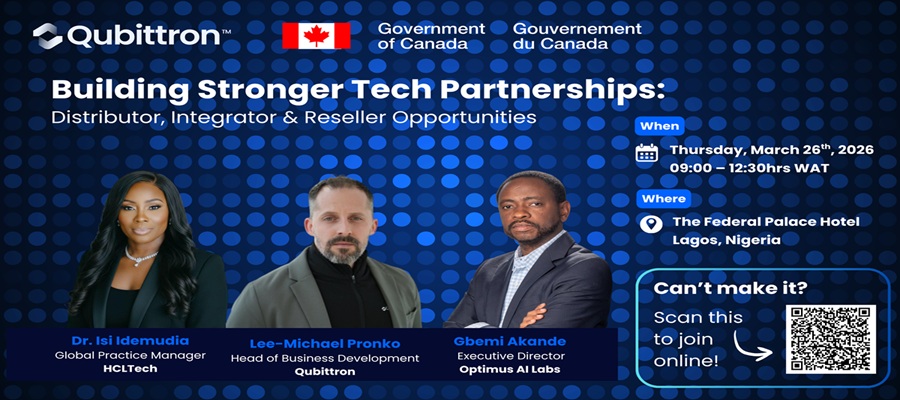

Canada–Nigeria
The forum will convene technology leaders, innovators, distributors, systems integrators, and policymakers from Canada and Nigeria to explore new commercial opportunities and deepen bilateral collaboration in the digital economy.
To participate, register here.
Designed as a strategic engagement platform, the event will showcase Canada’s advanced technology capabilities while connecting Canadian companies with Nigerian partners across key sectors including artificial intelligence, cybersecurity, telecommunications, enterprise solutions, and smart infrastructure.
Driving Cross-Border Innovation
The forum aims to strengthen innovation ties between both countries by facilitating partnerships that support digital transformation, business growth, and knowledge exchange.
Proceedings will begin at 8:30 AM with registration and introductions led by the Trade Commissioner, followed by official welcome remarks at 9:00 AM by the Head of Office at the Deputy High Commission of Canada in Lagos.
Keynote on Technology Transformation
A keynote address will be delivered from 9:10 AM to 9:30 AM by Mr. Olagoke Orija, representing the Country Manager of Microsoft Nigeria.
The keynote will highlight opportunities for technology-driven transformation and collaboration within Nigeria’s rapidly evolving digital landscape.
Panel Session: Strengthening Tech Partnerships
A key highlight of the forum will be a panel discussion scheduled from 10:00 AM to 10:45 AM, themed:
“Building Stronger Tech Partnerships: Distributor, Integrator & Reseller Opportunities.”
The session will explore practical models for collaboration between Canadian and Nigerian companies, with focus on:
- Expectations of Nigerian firms from international technology partners
- Success factors in joint ventures, distribution, and co-development
- Case studies of Canada–Nigeria technology collaboration
Panelists include:
- Lee-Michael J. Pronko (Canada)
- Dr. Isi Brennan (USA)
- Gbemi Akande – Optimus AI (Canada)
Sector-Focused Syndicate Sessions
From 10:45 AM to 12:00 PM, participants will engage in sector-specific syndicate sessions featuring presentations from leading Canadian technology firms:
- Agile Agilist – Artificial Intelligence
- Cetark – Cybersecurity
- Ethica Channel Enablement Inc – Telecommunications
- Telepin – Telecommunications
- SimplyCast – Enterprise Solutions
- Viion Systems – IoT and Smart Infrastructure
Each company will deliver focused 15-minute presentations, highlighting solutions and partnership opportunities.
Networking and Cultural Exchange
An interactive Q&A session will take place from 12:00 PM to 12:20 PM, allowing participants to engage directly with presenters.
This will be followed by a Wine Tasting Networking Session (12:20 PM – 12:50 PM), curated by Nicotawines, featuring premium selections from Canadian wineries and distilleries including Tawse Winery, Macaloney Distillery, Lakeview, and Reif Estate Winery.
Closing and Outlook
The forum will conclude at 1:00 PM with closing remarks from the Senior Trade Commissioner, reaffirming Canada’s commitment to building sustainable and mutually beneficial partnerships within Nigeria’s technology ecosystem.
Register here to participate.
About the Trade Commissioner Service (TCS)
The Trade Commissioner Service supports Canadian companies seeking international business opportunities and facilitates trade, investment, and innovation partnerships worldwide. Through its presence in Nigeria, the TCS works to strengthen bilateral economic ties and foster collaboration between Canadian and Nigerian businesses.

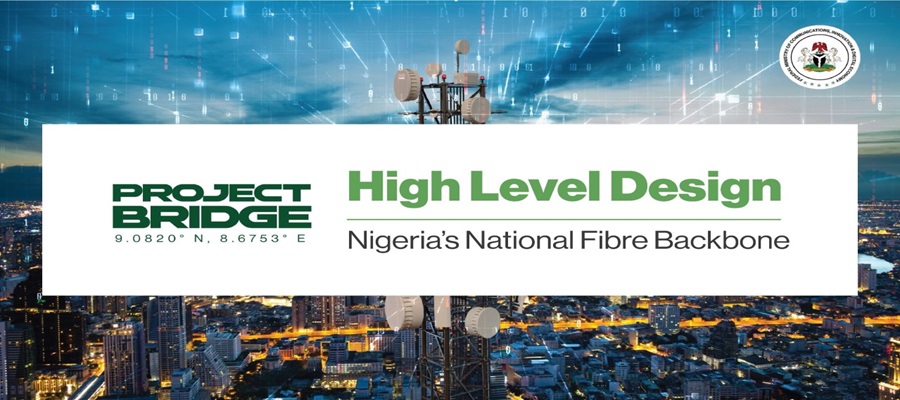
Quest Merchant Bank has been appointed as Transaction Advisor for Project BRIDGE, a broadband infrastructure initiative of the Federal Ministry of Communications, Innovation and Digital Economy (FMCIDE), led by Bosun Tijani, the minister.

Project BRIDGE, short for Broadband Infrastructure Development for Digital Economy, is designed to deepen Nigeria’s digital backbone through the deployment of about 90,000 kilometres of open-access fibre-optic cables nationwide.
The initiative is expected to boost broadband penetration, strengthen connectivity and drive inclusive economic growth.
Under the mandate, Quest Merchant Bank will work with the ministry and the Project Implementation Unit to structure the project’s financial and commercial framework.
This includes developing bankable investment models, engaging investors and designing a public-private partnership structure to ensure efficient execution and sustainability.
Afolabi Olorode, acting managing director, described the project as a critical intervention for Nigeria’s digital economy.
“Project BRIDGE represents a critical step in strengthening Nigeria’s digital backbone and unlocking the immense opportunities within the country’s digital economy. We are honoured to partner with the FMCIDE under the leadership of Honourable Minister, Dr Bosun Tijani on this important initiative,” he said.
He added that the bank would leverage its expertise in infrastructure finance to develop “a robust and investable framework that will attract private capital and support long-term national development.”
Also speaking, Yetunde Falore, head of Investment Banking at Quest Merchant Bank, said the project comes at a defining moment for Nigeria’s digital economy.
“Nigeria’s digital economy is entering a defining phase, and infrastructure initiatives such as Project BRIDGE will play a central role in expanding connectivity, deepening digital inclusion, and supporting sustainable economic growth,” she stated.
Falore noted that the bank would focus on ensuring the timely and efficient delivery of the project in its advisory role.
The initiative aligns with the Renewed Hope agenda of President Bola Ahmed Tinubu, which prioritises digital infrastructure expansion and private sector participation in critical national assets.

Nigeria Spends $470m on AI-powered Surveillance Devices- Report

Metaverse Collapses, Horizon Worlds Shuts Down on Quest

FG Plans New HIV Prevention Injection in 8 States, FCT

SEC Issues Six-Week Ultimatum to Market Operators to Submit Recapitalisation Plan

NIMC Disowns Fake NIN Portal

Kaspersky Discovers New Phishing Campaign Exploiting Google Tasks Notifications to Steal Corporate Credentials

esentry 2025 Report Shows Healthcare, Financial Services and Telecoms as Staging Grounds for Increased Cyberattacks in Africa

AfDB, UNDP Launch $10Bn AI Initiative for Africa

MultiChoice Suspends Yearly DStv Price Hike as Canal+ Pushes Growth

MTN Nigeria Posts Record N1.70 Trillion Pre‑Tax Profit, Declares N20 Dividend for 2025




 General News1 day ago
Tech Firms Sack over 45,000 so Far in 2026

 E-Financial1 day ago
CBN Wins Central Bank of the Year Title @13th Global Awards

 Telecom1 day ago
FG Taps Quest Merchant Bank for Advisory on 90,000km Fibre Project

 General News1 day ago
Rockefeller, Global Energy Alliance Cross $100 million Mark in Africa Electrification Push

 General News1 day ago
Jury Finds Elon Musk Liable for Misleading Twitter Investors

 News1 day ago
Dr Krishnan Ranganath to Lead UniCloud Africa in Continental Digital Infrastructure Push

 News1 day ago
Morney Launches in Nigeria as E-invoicing Drives Finance Digitisation

 General News1 day ago
SEC, NYSC Partner to Combat Ponzi Schemes