

General News
NITDA Calls for Comments, Inputs on the Draft Technical Standards For Digital Public Infrastructure

The National Information Technology Development Agency wishes to announce the release of the draft Technical Standards for Digital Public Infrastructure (DPI) for public consultation and is actively soliciting public comments and inputs on this pivotal document.

This landmark step underscores the government’s commitment to fostering an inclusive, secure, and interoperable digital ecosystem that will drive economic growth, enhance public service delivery, and empower citizens across the nation.
The Public may recall that on the 4th of March 2025, the Federal Government through the Federal Ministry of Communications, Innovations, and Digital Economy, released the Digital Public Infrastructure Framework. The DPI framework presents a platform for reforming public service delivery, utilising a whole-of-government approach, which includes the opportunity for the private sector to build and deliver cross-cutting services that will enhance citizens’ well-being and access to services.
The Framework also establishes the Nigerian Digital Public Infrastructure Centre (Ng-DPIC) as the program implementation office to coordinate the national effort to educate, support research and deliver appropriate knowledge management for developing Nigeria’s DPI. The aim is to engage meaningfully in developing a robust DPI-driven architecture that benefits society.
In furtherance of the above, this draft Technical Standards for DPI provides a structured approach for developing and deploying Nigeria’s Digital Public Infrastructure (DPI).
They define the essential technical requirements and proven techniques to ensure interoperability, security, and efficiency across digital services. By establishing clear guides, these standards support the seamless integration of DPI components, fostering a secure, scalable, and resilient digital ecosystem in Nigeria.
Furthermore, it outlines the structure for integrating sectorial DPIs, including but not limited to digital identity systems, payment platforms, and data exchange frameworks. It aims to establish clear guidelines for interoperability, data protection, cybersecurity, and the participation of both public and private sector stakeholders in building digital public goods (DPGs), utilising these critical digital foundations.
Extensive research, international best practices, and consultations with various stakeholders have guided the development of this draft technical standards. It reflects the government’s vision to leverage the power of digital technologies to achieve its national development objectives and improve the lives of all Nigerians.
Key objectives of the draft Digital Public Infrastructure Regulation include:
Enhance Interoperability: Ensure seamless communication across platforms, agencies, and services
Ensure Data Security and Privacy: Protect sensitive information while complying with local and international regulations
Promote Accessibility and Usability: Create inclusive systems that are easy to navigate and cater to all citizens, including marginalised groups.
Define Performance Benchmarks: Establish metrics to ensure systems are reliable, scalable, and efficient.
Foster Governance and Compliance: Provide clear accountability, transparency, and regulatory alignment rules
Encourage Innovation: Facilitate the adoption of open-source technologies while adhering to proper usage guidelines.
Standardise Testing Practices: Ensure consistent validation of systems to meet defined technical and user requirements.
The Federal Government recognises the crucial role of public input in shaping effective and impactful regulations. Therefore, it invites all stakeholders, including citizens, businesses, civil society organisations, academia, and international partners, to review the draft regulation and provide valuable feedback.
The draft Technical Standards for Digital Public Infrastructure Regulation is available for review on the website of [Insert]. Stakeholders are encouraged to submit their comments and suggestions in writing [email protected] by May 8, 2025.
Following the public consultation period, the Agency will carefully consider all feedback received before finalising and implementing the Digital Public Infrastructure Regulation.
This initiative represents a significant milestone in Nigeria’s digital transformation journey. The Federal Government believes that a well-defined and effectively implemented DPI framework will be instrumental in unlocking the full potential of the digital economy and achieving sustainable and inclusive development for all Nigerians.


General News
UBA Unveils Diaspora Platform to Connect Global Africans with Investment, Wealth Opportunities

United Bank for Africa (UBA) Plc, Africa’s Global Bank, has unveiled a diaspora banking and investment platform designed to serve Africans living and working across the world and within the continent.

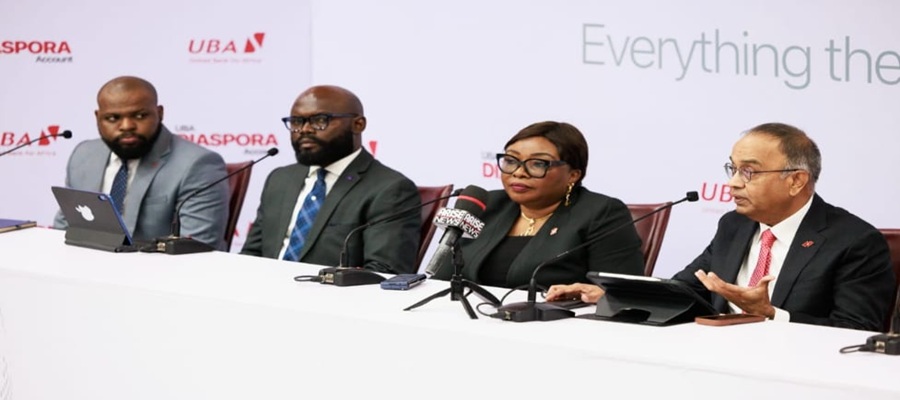
L-R: Head, Strategy, Research & Investor Relations, Africa Prudential, Joshua Omewah; Group Head, Sales, Retention and Growth, AVON, Ajibola Bakare; Managing Director, UBA Pension, Blessing Ogwu and Head, Diaspora Banking, Anant Rao, during UBA’s Panel session, themed: ’Beyond Banking: Powering the Diaspora Lifestyle,’ held at UBA House Marina, in Lagos on Thursday.
The platform, launched in collaboration with leading ecosystem partners including United Capital, Africa Prudential, UBA Pensions, Afriland Properties, Heirs Insurance Group, and Avon Healthcare Limited — represents a major step in redefining diaspora banking beyond remittances toward structured wealth creation and long-term investment.
At the unveiling, which took place at UBA’s global headquarters in Lagos under the theme: “Beyond Banking: Powering the Global African Lifestyle, all the company representatives were on hand to showcase a seamless platform that goes beyond remittances, wealth creation, protection, and long-term prosperity.
Speaking at the event, UBA’s Head of Diaspora Banking, Anant Rao, described the initiative as a strategic shift in how Africa engages its global citizens.
“For decades, Africa’s engagement with its diaspora has focused largely on remittances. Today, we are moving beyond that. This platform represents a transition from simple money transfers to a financial ecosystem where Africans globally can bank, make payments, invest, protect their families, and build long-term wealth seamlessly,” he said.
Rao noted that African diaspora remittance flows exceed $100 billion annually, making them one of the most resilient and consistent sources of capital into the continent.
“Diaspora capital is not just a flow of funds — it is a strategic growth partner for Africa.
Our role is to provide a trusted platform that converts capital into structured investment and shared prosperity across the continent.”
The objective is to provide a platform that brings together offerings across the numerous needs of the Global African, including Banking and payments, Investments, securities services, asset management, Insurance, Pensions, real estate and Pensions.
Through this coordinated ecosystem, diaspora customers can access financial solutions across multiple sectors through a single trusted platform, enabling them to manage their financial lives and family commitments across borders with ease and transparency.
UBA’s Group Head, Marketing and Corporate Communications, Alero Ladipo, emphasised the importance of collaboration in delivering a seamless diaspora experience.
“The modern African is a global citizen — mobile, ambitious, and deeply connected to home. Whether living in Africa, Europe, the Americas, or the Middle East, there must be a structured and secure financial connection back home. This platform ensures that Africans everywhere can remain economically connected to the continent with confidence and transparency.”
Partners within the ecosystem highlighted growing demand among diaspora Africans for structured investment opportunities, secure property ownership, insurance protection, and long-term financial planning.
United Capital showcased globally accessible investment products designed to deliver professionally managed and transparent wealth creation opportunities.
Afriland Properties emphasised structured and well-governed real estate investment pathways for diaspora clients.
Heirs Insurance highlighted protection solutions for life, and assets, while Avon Healthcare Limited demonstrated healthcare access and insurance solutions for families across borders.
Africa Prudential and UBA Pension reinforced digital investment management and long-term pension savings solutions designed to support diaspora participation in African capital markets.
Together, the partners underscored a shared commitment to providing diaspora Africans with credible, transparent, and professionally managed financial pathways.
Rao also reiterated the guiding philosophy of Africapitalism, championed by UBA’s Founder and Chairman, Mr. Tony O. Elumelu, CFR.
He explained that Africapitalism is the belief that Africa’s private sector must play a leading role in the continent’s development by making long-term investments that generate both economic returns and social impact.
As Africa continues to position itself as one of the world’s most dynamic growth frontiers, UBA believes mobilising diaspora capital through trusted financial institutions will be central to shaping the continent’s next phase of development.
“Africa will increasingly be financed by Africans themselves, including Africans abroad,” Rao added.
“Our responsibility is to build the trusted financial infrastructure that makes this possible.”
“When Africa’s global citizens invest back into Africa, growth becomes inevitable,” he concluded.


Bank of Industry (BoI) and the MTN Foundation have signed a memorandum of understanding to establish a N1bn Matching Fund to expand access to finance and capacity building for women-led micro enterprises across the country.

The institutions said the fund, under the Y’ellopreneur 3.0 programme, would operate as a pilot to reach women running viable businesses who remain excluded from formal credit due to collateral and documentation requirements.
Speaking at the signing ceremony held recently in Lagos, Dr Olasupo Olusi, managing director and chief executive officer of BOI, said the initiative goes beyond the continuation of an existing collaboration and targets women at the base of the economic pyramid.
Olusi said the intervention focuses on women who operate viable businesses but remain excluded from structured finance.
He said, “Across Nigeria, women sustain a large share of micro-businesses in the markets and communities, while processing and providing services that support household income and local economic activity.”
Olusi added that despite their contributions, many women cannot access affordable capital because traditional lending models demand documentation, collateral, and financial histories that do not reflect how their businesses operate.
The BoI CEO noted that the partnership aims to bridge that financing gap through a model tailored to women entrepreneurs who need funding the most.
He said, “This partnership is designed to specifically bridge that gap. The programme is structured as a pilot to test, learn and refine the model that works for women entrepreneurs who need financing the most, while building a framework that can be sustainably expanded over time.”
Olusi explained that beyond credit provision, the programme embeds capacity building, business development support, and mentorship. He disclosed that the partners plan to train about 1,000 women entrepreneurs in record-keeping, growth management, and competitiveness.
He stressed that an expanding opportunity at the microenterprise level strengthens productivity, stabilises income, and contributes to broader economic resilience.
“BOI remains committed to working closely with MTN Foundation and all stakeholders to ensure the effective implementation of this programme,” he explained. “Our focus will be on transparency, on sustainability and measuring outcomes so the programme delivers real value and provides a model that can be replicated under other programmes.”
On her part, Odunayo Sanya, executive director of MTN Foundation, said the renewed partnership builds on earlier pilot phases that helped both institutions refine their approach and scale impact in women-led businesses.
Sanya said the new phase seeks to deliver faster and more measurable outcomes for women-owned enterprises. She explained that the foundation aims to build capacity for 30,000 female-led businesses by 2030, up from nearly 6,000 reached so far, while unlocking access to capital for 10,000 women-owned enterprises through the renewed partnership with BOI.
Sanya stated, “This partnership will deepen support for women entrepreneurs, improve business survival rates, and attract additional partners to scale funding for the segment.”
She added that the initiative would combine training, mentorship, and financing and serve as a blueprint for broader public–private cooperation in unlocking new pools of capital for enterprise development and inclusive growth in Nigeria.

Pan-African e-commerce giant Jumia says it has moved decisively beyond survival mode after posting robust fourth-quarter 2025 earnings, with CEO Francis Dufay declaring the company is now entering a phase of high growth after years of restructuring.

The firm, founded in Lagos, Nigeria, in 2012, reported a sharp acceleration in core marketplace activity, reinforcing what management describes as a successful turnaround built on tighter execution, cost discipline and smarter geographic focus.
Gross Merchandise Value (GMV) jumped 36% year-on-year to $279.5 million in Q4, while adjusted EBITDA losses nearly halved to $7.3 million. Revenue rose 34% to $61.4 million, and cash burn narrowed significantly, a signal that Jumia’s operating engine is strengthening.
“The growth rate of the company has been accelerating. We are really scaling. Demand has always been there in our markets. What’s changing is our execution,” Dufay said.
Nigeria led the charge with 50% GMV growth, while Ghana recorded triple-digit expansion in physical goods. Egypt stabilised after currency and corporate sales headwinds, reinforcing what Dufay called a “confirmation” of recovery.
Often dubbed the “Amazon of Africa,” Jumia operates a marketplace platform, a logistics network, and a digital payments arm across key African economies. After years of heavy losses, the company streamlined operations, exiting South Africa, Tunisia and now Algeria, while cutting non-core services, reducing headcount and deploying AI tools to improve efficiency.
Competition from Chinese fast-commerce players Temu and Shein has further intensified pricing pressure. Yet, Dufay argues that the Africa-focused e-commerce retailer’s logistics footprint, payment-on-delivery model and expanded sourcing operations in China have helped level the playing field.
“People thought they would eat our lunch. But we can fight against those platforms in our markets,” he said.
The Jumia CEO stressed that operational upgrades, including rural pickup networks and Buy Now, Pay Later partnerships, are driving customer retention and higher order volumes. First-party international partnerships have also boosted the revenue mix.
Looking ahead, Jumia expects GMV growth of up to 32% in 2026 and targets adjusted EBITDA breakeven by the fourth quarter.
“This business has changed. It’s clear in the numbers that profitability is within reach, and now the focus is scaling what works,” stated Dufay.
He believes Jumia’s pivot is a sign of a maturing African e-commerce sector where disciplined growth, localisation and logistics excellence may define the next competitive frontier.

UBA Unveils Diaspora Platform to Connect Global Africans with Investment, Wealth Opportunities

BOI, MTN Foundation Unveil N1Bn Fund for Women Entrepreneurs

No VAT on Land, Buildings and Rent Under New Tax Law — Oyedele

CBN Slams Up to N10m Fine on Banks and Cheque Printers for Security Breaches

Jumia Targets Break-even in 2026 After Strong Q4 Surge

Firm Detected a Fivefold Surge in QR Code Phishing Attacks in the Second Half of 2025
Nigeria’s 9 Top FinTech Firms Valued at $10.6Bn in January 2026

DG NCC Tasks University Dons on Research Commercialization, IP Management to Build Global Competitive Ecosystems

Firm Detected a Scam Exploiting OpenAI’s Teamwork Features

Kaspersky Launches OT Calculator to Align Cybersecurity Investments with Business Goals




 E-Financial3 days ago
NAICOM Targets Resilient, Global Competition Market in Insurance Sector Consolidation

 News3 days ago
NITDA Explores Partnership with Trust Stamp on Digital Trust and Innovation

 Telecom3 days ago
NCC Orders Telcos Inform Subscribers of Data Breach within 48 Hours

 E-Financial3 days ago
IGP Designates Banks National Security Asset, Orders Crackdown on Cyber Frauds

 General News3 days ago
Cybersecurity Firm Warns Against Gift Card Scams @ Saint Valentine’s Day

 E-Financial3 days ago
Rashidat Adebisi Unveils Strategic Roadmap for Nigeria’s Insurance Sector under NIIRA 2025

 Telecom3 days ago
Globacom Promotes Valentine Gifting with Huge Discounts on Smartphones

 Telecom3 days ago
MTN Backs Bosun Tijani’s Vision for Africa’s AI Leadership