

Telecom
NLC Accuses NCC, MTN of Undermining National Security

The Nigeria Labour Congress (NLC) has accused the Nigerian Communications Commission (NCC) of aiding telecommunications giant, MTN Nigeria to disobey extant Nigerian laws and international Labour laws and convention which the country signed since 1960.
Labour is also accusing MTN Nigeria of subjecting Nigerian Workers to untold harsh and unfriendly Labour practices such as casualisation, disallowing unionization among.

Labour is also accusing MTN Nigeria of being one of the biggest threats to the nation’s security, putting the lives of Nigerian security agents at risk and funding their global operation with funds made from Nigeria, while subjecting Nigerian workers to untold hardship.
In a letter to the Secretary to the Government of the Federation and signed by Comrade Ayuba Wabba, president the NLC, said it was forced to picket the company offices across the country because of its clear violation of national and international Labour laws especially ILO Conventions 87 and 98 has denied its workers their fundamental rights at work which Nigeria ratified since 1960.
Wabba said it was unfortunate that the NCC that is supposed to be a regulatory agency statutorily charged with the dual role of creating an enabling environment for business operations as well as protecting consumers and workers has failed to play that role.
He said: “It is perfidious that NCC sees its role only as that of protecting the telecom infrastructure, even though none of them came under threat as alleged by MTN during our peaceful picket.
“The rush by NCC to report NLC to the Office of the National Security Adviser (ONSA) is both hypocritical and suspect. But we do know who plays the piper, dictates the tune.
“NCC did not see anything wrong with hosting critical data outside Nigeria or with continual loss of jobs by Nigerians in spite of the unspeakable money made and repatriated by telecom operators.
“It did not see anything wrong with the violation of Nigerian Laws, Labour Laws or security breaches leading to the loss of lives of security personnel, not to talk about humongous illicit financial flows as highlighted in the Thabo Mbeki Report which continue to undermine our national wellbeing or security.
“In our estimation, the greatest threat to Nigeria’s national security is not by Nigerian workers but the bullish and arrogant attitude of MTN and its co-travellers or collaborators like the NCC.
“Let NCC continue to promote this talk about MTN infrastructure constituting core critical national asset. We do not begrudge them. For us at the Nigeria Labour Congress, however, no asset can be more critical to Nigeria than Nigerians themselves.
“Accordingly, we wish to put NCC on notice that we will picket it the way we picketed MTN if it continues to discharge its duties in the breach. Let it continue with its ameba instead of doing the work for which it is established.

“The Nigeria Labour Congress is a pan-Nigerian organisation which jealously guards our national interests. No one should blackmail it even though it may not have the wherewithal to organise or sponsor executives to foreign seminars or workshops every week!
“A perfunctory look at MTN’s global activities and earnings confirms our assertion that proceeds from MTN Nigeria is used to run the global MTN. Where therefore does this arrogance come from?
“We insist that companies, no matter how rich or powerful must respect our leaders, and obey the laws of the land. We insist they must treat Nigerians fairly and decently, for, clearly, Nigerian workers, nay, Nigerians have been at the receiving end of the bad behavior of some transnationals in the telecom sector. Enough is enough.
“Workers of Airtel, First Bank, Union Bank and many other companies were salvaged from slave labour by the Nigeria Labour Congress through this same process or action. MTN therefore, should not be given preferential treatment or consider itself to be above the law.
“The three-day picket represents the first step in the series of lawful actions we shall be taking against companies that act in breach of national and international labour laws and our national interest. We owe no one an apology for that.
We would wish to let everyone know that we are committed to this operation. We have the will and the means to sustain it.”
The congress said further that “It similarly engages in other anti-labour practices such as casualisation for nearly all types of work, fixed- term contract work for Nigerian workers, worst forms of precarious work, etc.
“It is on record that the Nigeria Labour Congress on several occasions protested to the MTN and government about these unwholesome practices without a reasonable response.
“October 7th last year during the World Decent Work Day marked a watershed in these protests as NLC briefly picketed their Maitama office, Abuja.
In response to this action of the Congress, MTN reached out to NECA (Nigerian Employers Consultative Association) which brokered a meeting. However, due to inexplicable reasons, MTN opted out of the negotiations to the chagrin and embarrassment of NECA.
“Thereafter every effort by NECA and NLC to get MTN to the negotiating table failed. Frustrated, NECA pulled out of the negotiations. Subsequent efforts by the Congress yielded no response either. Left with no other choice, the Congress served MTN notice of a picket in line with the provisions of the law.”


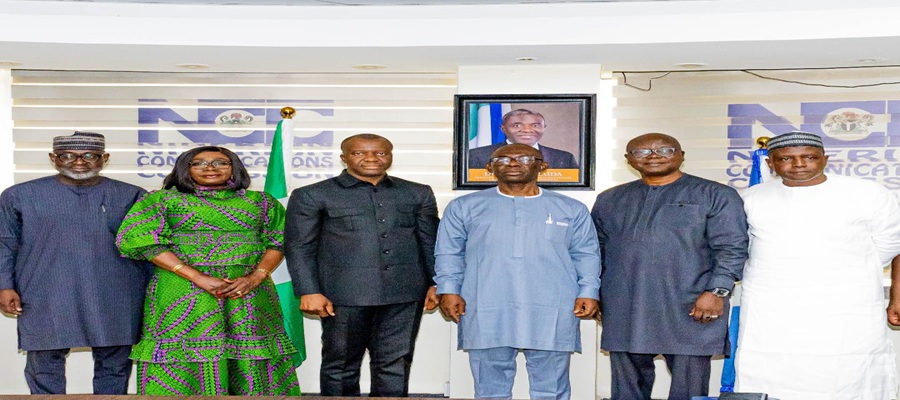

L-R – Engr. Aliyu Yusuf Aboki , Executive Secretary WATRA; Mrs Nneena Ukoa, Head Public Affairs, Nigerian Communications Commission; Hon. Clarence K. Massaquoi, Chairman Board of Commissioners, Liberia Telecommunications Authority; Kelechi Nwankwo, Director Corporate planning, strategy and Risk Management(NCC); Hon. Ben Fofana, Commissioner with oversight responsibility for Licensing and Regulation (LTA); Usman Mamman Director, Licensing & Authorization (NCC) during a courtesy visit to the Commission’s Headquarters in Abuja on 30th January, 2026.
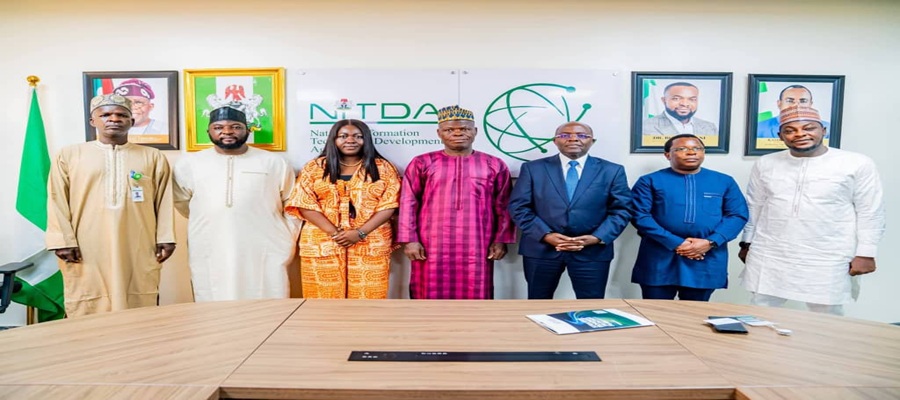
Dr. Cosmas Luckyson Zavazava, Director Telecommunication Development Bureau of the International Telecommunication Union (ITU), has paid a courtesy visit to the the National Information Technology Development Agency (NITDA) in Abuja, reinforcing growing cooperation on digital development.

NITDA
Dr. Zavazava was accompanied by the ITU Regional Director for Africa, Dr. Emmanuel Manasseh, as part of the ITU delegation.
The delegation was received on behalf of the Director General of NITDA by the Director of Corporate Planning and Strategy, Dr. Warowei Dimie, alongside other directors of the Agency.
The visit provided a platform for strategic engagement and exchange of ideas on key digital development challenges facing Nigeria, Africa, and other developing regions, with a shared focus on inclusive and sustainable ICT growth.
Speaking on behalf of the NITDA Director General, Dr. Dimie reaffirmed the Agency’s commitment to deepening collaboration with ITU, describing the organisation’s global experience as a valuable asset for transferring tested solutions and best practices to Nigeria’s local context.
He noted that digital skills and capacity building featured prominently in the discussions, as Nigeria pursues its ambitious target of achieving 70 percent digital literacy nationwide by next year, with encouraging progress recorded through partnerships with the private sector and other stakeholders.
The adoption of Nigeria’s National Digital Literacy Framework was highlighted as a major milestone, providing a structured and inclusive approach to skills development across different segments of society.
Attention was also drawn to the persistent challenge of limited connectivity in rural and underserved communities, with participants emphasising targeted interventions such as grassroots digital training and the deployment of National Youth Service Corps members as digital literacy ambassadors.
In his remarks, Dr. Zavazava outlined ITU-BDT’s mandate to bridge the digital divide, promote inclusive ICT development, strengthen regulatory frameworks, and support member states in building resilient digital infrastructure.
He noted that these priorities strongly align with Nigeria’s digital transformation aspirations, adding that ITU works across its 194 member states through regional and area offices, including its West Africa office in Dakar, Senegal, and the Africa regional office in Addis Ababa, Ethiopia.
Dr. Zavazava further highlighted ongoing collaboration with Nigeria on initiatives such as digital skills development, broadband infrastructure mapping, and cybersecurity.
He disclosed that Nigeria is among 11 sub-Saharan African countries benefiting from a €15 million ITU-European Commission project on broadband infrastructure mapping and modelling, while also participating in global cybersecurity drills organised by ITU in partnership with the United Arab Emirates, which attracted over 136 countries in the last edition.
The courtesy visit underscored the importance of sustained collaboration between international development institutions and national agencies, reaffirming the shared commitment of ITU and NITDA to leveraging ICTs for sustainable development, innovation, and inclusive socio-economic growth in Nigeria.
Telecom
Airtel Nigeria Commits to Upgrade of its Network Infrastructure for Improved Quality of Service
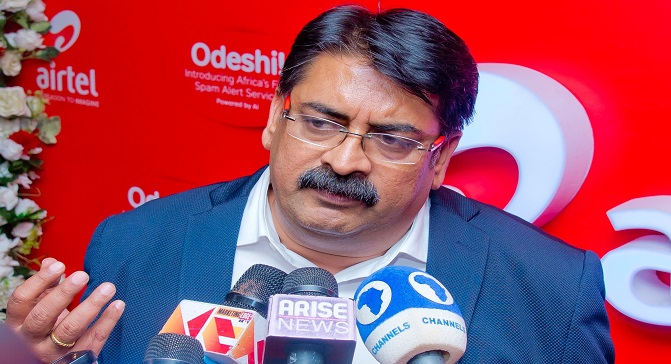
Airtel Nigeria has unveiled a robust update on a range of network, infrastructure and technology advancements that position the company at the forefront of quality of service leadership in Nigeria’s telecommunications industry.

Announced at its first media roundtable of 2026, the updates reflect sustained investments made over the past 12 to 24 months and signal an accelerated push to stay ahead of surging data demand in a rapidly digitising economy.
Speaking to senior editors and industry correspondents, Airtel Nigeria Chief Executive Officer, Dinesh Balsingh, said the company’s strategy is anchored on deliberate scale, depth and resilience.
“Over the last two years, we have invested with discipline and clarity to strengthen our network nationwide. Those investments are now translating into measurable improvements in performance, customer experience and reach, including in underserved and hard to reach communities,” he said. “In 2026, we are accelerating these upgrades because Nigeria’s data appetite is growing, and leadership in this industry will belong to those who plan ahead.”
At the core of Airtel Nigeria’s quality of service drive is the rapid expansion of its network footprint. Since December 2023, the company has increased the number of network sites by 15.5%, adding 2,242 new sites and bringing its total to nearly 16,711 nationwide. Further deployments are planned in 2026 to strengthen coverage, capacity and resilience across urban and rural locations.
Network capacity upgrades have also reached significant scale. In 2025, Airtel completed capacity enhancements on 30% of its sites, covering over 5032 sites nationwide.
Today, 99% of Airtel Nigeria’s sites deliver high-speed 4G mobile broadband, establishing the operator as a full nationwide 4G network. This year, capacity upgrades are being extended to more sites to sustain performance as data usage continues to rise.
According to Harmanpreet Singh Dhillon, Chief Technology Officer, spectrum depth and optimisation remain critical to network quality. “We have increased our 4G spectrum by 10MHz and we are actively optimising our holdings. These actions allow us to support higher data throughput, better speeds and more consistent service, especially in high-traffic areas,” he said.
Airtel Nigeria is also accelerating its 5G rollout. Over the last three months, the company has more than doubled the number of active 5G sites. The accelerated 5G upgrade happening now will connect the top 20 Nigerian cities to high-speed 5G networks, with a significant part of Airtel’s network in these cities becoming 5G-enabled in the coming year.
Beyond terrestrial infrastructure, Airtel is extending connectivity through space-based solutions. The company has established and signed partnerships with satellite providers OneWeb and Starlink, enabling enterprise-grade connectivity for businesses in remote locations, hard to reach areas and operational outposts. Recently, Airtel announced Nigeria’s first Direct-to-Cell partnership with Starlink, a breakthrough that will allow customers to remain connected while travelling through deep remote areas and enable small rural communities to access Airtel’s digital and fintech services.
The backbone supporting these services continues to expand. Airtel Nigeria has built an extensive fibre footprint across almost all states, developed through years of sustained deployment. Following the announcement to double capital expenditure last year, the company committed to expanding its fibre network by 25%, and intensive rollout activity is ongoing across cities and states. Airtel has also confirmed plans to extend its fibre footprint even further, both within major cities and between states.
A pivotal national milestone is also on the horizon. Nigeria currently relies on a single internet submarine cable landing and breakout point in Lagos. Airtel Nigeria has announced that it will launch a second internet breakout from the South of Nigeria, leveraging the 2Africa submarine cable. In partnership with 2Africa, Airtel will shortly begin carrying internet breakout traffic from Kwa Ibo in Akwa Ibom State.
“This will create a faster and alternative path for large parts of the North and South, improve resilience for the entire ecosystem. Airtel is proud to take the lead in making this happen,” Balsingh said.
Underpinning these advances is a robust IT and cloud backbone. Airtel Nigeria operates an enterprise-grade private cloud with thousands of virtual machines, managing massive storage and compute power across locations.
The infrastructure includes large GPU clusters, supporting AI-driven applications such as fraud detection, intelligent network self-healing and advanced customer analytics.
The company recently announced the upcoming launch of its hyperscaler-ready 38 megawatt data centre in Eko Atlantic. This is designed for Nigeria’s next phase of digital growth, powered by AI.
From a customer access perspective, Airtel Nigeria maintains one of the largest retail footprints in the country. Its products and services are available in over 200,000 outlets nationwide, supported by more than 4,000 exclusive shops across all local government areas and 250 flagship stores.
Balsing added that, “Quality of service today is about resilience, redundancy and intelligence, and that is what Airtel is delivering. From fibre to cloud to satellite-enabled connectivity, we are building a platform that allows Nigerian businesses to scale with confidence, regardless of location.”
He reaffirmed Airtel Nigeria’s long-term commitment to the country. “Our focus is consistent investment, disciplined execution and deep confidence in Nigeria’s future,” he said.
Aside from Singh Dhillon, other members of the Airtel Nigeria leadership on hand with subject matter expertise at the roundtable included Director, Airtel Business, Ogo Ofomata; Director, Marketing, Ismail Adeshina; Director, Information Technology, Kemi Ariyo; and Director, Corporate Communications and CSR, Femi Adeniran.

EFInA Unveils Research Fellowship Programme to Deepen Financial Inclusion Impact

Indigenous Firm Deploys 400,000 Smart Electricity Meters in 2025

CBN Expresses Concern Over Foreign Investments in Nigeria Fintechs

UBA’s Easy and Instant Account Opening Thrills Returnee

NCC Committed to Regional Digital Integration – Maida

Firm Detected a Fivefold Surge in QR Code Phishing Attacks in the Second Half of 2025

US invests $115m in counter-drone tech for World Cup security

Nigerian Terra Industries Secures $11.8m for Expansion

Firm Detected a Scam Exploiting OpenAI’s Teamwork Features

Nigeria Targeted with 4,622 Cyber-attacks Per Week in December 2025




 General News3 days ago
Globacom Donates ₦1Bn to Lagos State Security Trust Fund

 Telecom3 days ago
Airtel Nigeria Commits to Upgrade of its Network Infrastructure for Improved Quality of Service

 E-Business3 days ago
PwC Reveals AI Scaling Gap Slows Africa’s Digital Transformation

 E-Financial3 days ago
Ecobank Profit Jumps 29 Percent to N950Bn

 News3 days ago
CIoD, NIPSS Partner to Deepen Governance, Leadership Standards

 News3 days ago
NRS Chairman Outlines Ways Nigeria can Move from Potential to Economic Prosperity

 General News3 days ago
WIEG to host Nigeria’s first International Investment Summit in Lagos

 News3 days ago
Orya, Ex-NEXIM MD Jailed 490 Years for N2.4Bn Fraud