

General News
NNPC Borrows $1.5Bn to Pay Fuel Debts


Nigerian National Petroleum Corporation (NNPC) has obtained a $1.5 billion syndicated loan to help it pay debts to international fuel traders, Reuters reported Monday, quoting a senior banking source with knowledge of the deal.
The deal struck at the end of last year is seen as crucial to easing the burden on big commodity traders, who were facing the prospect of painful multimillion dollar write-offs.
The loan, provided by several Nigerian and international banks and brokered by Standard Chartered Bank Plc, will be paid back over five-and-a-half years, the news agency reported, adding that the corporation has put up 15,000 barrels per day of its oil production as collateral.
A report last year by Bloomberg stated that the state oil company and ExxonMobil Corporation, the world’s largest energy company by market value, were seeking a $1.5 billion loan for a joint venture to develop offshore oil fields in Nigeria.
Standard Chartered and South African lenders, Standard Bank Group Ltd and Nedbank Group Ltd, were among the banks reported to be involved in the deal.
It could not be ascertained whether the said loan was the same $1.5 billion five-year amortising restructuring syndicated loan the NNPC was reported to have been seeking in the last quarter of 2011, to secure from international lenders.
It had been indicated then that the deal would mark NNPC’s first foreign syndicated loan.
BNP Paribas, Standard Bank and Standard Chartered had been identified as arranging that loan.
The inability of the Federal Government to pay the corporation its $8.1 billion subsidy claims is said to be straining its ability to import petroleum products and has added to its financial burden after private companies stopped importing earlier last year.
The corporation, which used to account for about 50 per cent of Nigeria’s imports, is importing virtually all domestic petrol requirements, as private companies have shunned imports owing to delays in payment of their subsidy claims by the government.



Mark Zuckerberg’s tech empire is once again under regulatory pressure in Africa after competition authorities across 21 markets launched a formal probe into changes affecting WhatsApp’s AI ecosystem.

The Common Market for Eastern and Southern Africa (COMESA) Competition and Consumer Commission has opened an investigation into Meta Platforms over amendments made in October 2025 to the WhatsApp Business Solution Terms.
At the heart of the probe is whether the updated rules unfairly restrict third-party artificial intelligence providers from accessing the WhatsApp Business API, while preserving full integration for Meta’s own AI tools, including Meta AI.
In a notice issued by the regulator, the commission said it has “reasonable cause to suspect” that Meta may hold a dominant position in the common market and that the changes could “substantially lessen competition” by excluding rival AI service providers from what it described as a crucial digital gateway.
The investigation spans 21 member states, including Kenya, Egypt, Ethiopia, Uganda and Zambia. Stakeholders have been invited to submit feedback before 16 March 2026, with regulators emphasising that the move marks the start of a fact-finding process, not a ruling of wrongdoing.
This is not the first time Meta has faced scrutiny in Kenya and East Africa. Kenyan authorities have previously examined major digital platforms over data protection, misinformation and labour practices. In Nigeria, the data protection regulator fined Meta over privacy violations, underscoring growing African oversight of global tech firms.
Globally, the company is also navigating regulatory headwinds. The European Commission and Italy’s competition authority have reviewed Meta’s AI integrations on WhatsApp amid concerns about potential restrictions on rival chatbot providers. In the United States, Meta has faced antitrust litigation over its broader market dominance.
For Africa’s digital economy, the stakes are high as WhatsApp remains one of the continent’s most widely used platforms for communication, commerce and customer engagement. Across COMESA’s 21 markets, millions of small businesses rely on WhatsApp Business to reach customers, while startups are increasingly building AI-driven services on top of the platform.
If regulators determine that access to WhatsApp’s business interface is being restricted in favour of Meta’s own AI tools, there is genuine concern that it could limit opportunities for African developers and startups seeking to innovate in the fast-evolving AI space.

In alignment with President Bola Ahmed Tinubu’s priority areas of economic reform, digital innovation, and improved governance, the National Information Technology Development Agency (NITDA) has reiterated its commitment to supporting sub-national governments in building integrated, data-driven systems that enhance service delivery and drive sustainable growth.

This commitment was reinforced at the Future Enterprise & Data Architecture of Abia State workshop themed “One Citizen, One Identity: Unlocking Data-Driven Governance.” The high-level engagement brought together policymakers, technocrats, and development partners to chart a pathway toward a unified digital public sector anchored on interoperability and citizen-centric governance.
The workshop, organised by the state’s Ministry of Budget and Planning and declared open by Governor Alex Otti, who was represented by the Deputy Governor, Engr Ikechukwu Emetu, focused on strengthening interoperability among Ministries, Departments, and Agencies (MDAs) to enhance revenue generation and improve service delivery across the state.
Speaking during a panel session titled “Breaking Silos, Building One Government,” the Director General of NITDA, Kashifu Inuwa CCIE, who was represented by the Agency’s Director of Stakeholder Management and Partnership, Dr Aristotle Onumo, emphasised that collaboration remains the cornerstone of successful digital transformation.
“One thing that is very clear is partnership and collaboration. If you want to take advantage of collective intelligence, then partnership is the key. If you want to succeed in building a unified government system, collaboration is the way to go,” he stated.
He stressed that digital transformation is not merely about deploying technology but about transforming people and culture. According to him, resistance to change and entrenched institutional silos can undermine even the most sophisticated technological frameworks if mindset shifts are not prioritised.
“Digital transformation is as much about people as it is about process and technology. If culture resists change, it can undermine strategy at every level. We must move from control to collaboration, and from isolation to integration,” he added.
Highlighting NITDA’s strategic direction, the DG noted that the Agency’s action plan prioritises digital literacy as a foundational pillar for national development. He disclosed that NITDA is targeting 70 per cent digital literacy nationwide through structured interventions, including training 30 million Nigerians across formal and informal sectors using digital learning platforms deployed through community and institutional partnerships.
He further revealed that digital education is being integrated into school curricula at primary, secondary, and tertiary levels, while civil servants across the federal public service are undergoing digital capacity development programmes to enhance institutional efficiency and readiness for interoperable governance systems.
On interoperability, Inuwa described it as “not optional but a necessity” for achieving data integrity, efficiency, and innovation in governance. He explained that NITDA is developing a national interoperability framework and advancing Enterprise Architecture (EA) initiatives across government institutions to ensure seamless data exchange.
“When we talk about interoperability, we mean that data generated in one agency should be accessible and usable by another in a consistent and secure format, without contradiction or confusion. That is how you build one government, not multiple disconnected systems,” he explained.
He added that a robust interoperability framework would not only improve internal government efficiency but also create a platform for innovation, enabling startups and young innovators to build solutions on structured public datasets.
While commending the state’s leadership for its vision and commission, he said, “If we achieve even 80 per cent of what has been presented here, Abia will not only lead among states, but it will also become a national reference point for digital innovation.”
The workshop concluded with a renewed call for stronger federal–state collaboration, policy alignment, and sustained investment in digital capacity to ensure that the vision of “One Citizen, One Identity” translates into tangible socio-economic impact.
General News
Zinox Technologies and TD Africa Forge Strategic Partnership to Revolutionize African Tech Ecosystem

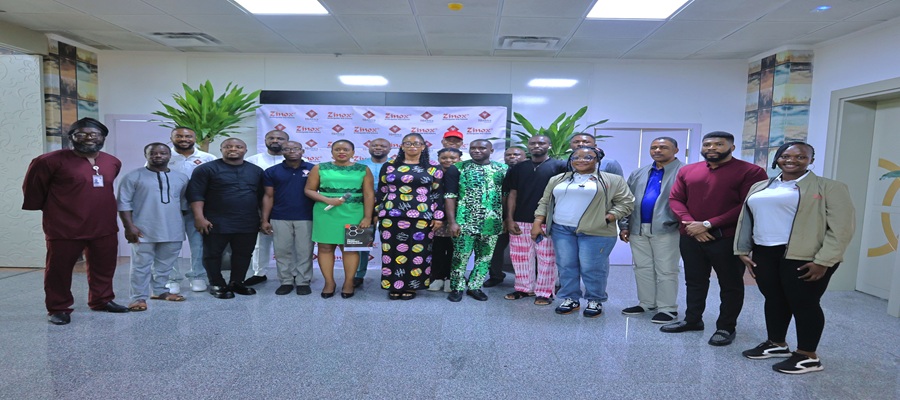
In a landmark development set to reshape Africa’s technology landscape, Zinox Technologies, the continent’s leading manufacturer of trusted technology solutions, and TD Africa, Africa’s largest technology and lifestyle distribution powerhouse, formalized a strategic partnership on Friday at an exclusive press conference attended by industry journalists, key stakeholders, and partners from both organizations.

Zinox Technologies and TD Africa
The event, held to officially announce the collaboration and address stakeholder concerns, marks a pivotal moment in the evolution of indigenous African technology, signalling a new era of continental self-reliance and technological excellence.
The partnership brings together two industry titans whose complementary strengths promise to deliver unprecedented value to the African market.
Zinox Technologies has established itself as Sub-Saharan Africa’s premier indigenous technology manufacturer, producing internationally certified devices that rival global brands while addressing Africa’s unique technological needs.
TD Africa, with its extensive distribution network spanning 43 nations in the continent and expanding, has become the preferred gateway for leading global technology brands including HP, Microsoft, Dell, and Cisco.
This alliance represents more than a business transaction; it harmonizes Zinox’s precision-engineered hardware with TD’s formidable distribution infrastructure to bridge the digital divide, deliver rugged, energy-efficient innovation to the very heart of Africa’s schools, industries, and homes.
Speaking at the event, Chioma Chimere, Coordinating Managing Director of TD Africa, articulated the strategic rationale behind the partnership with evident conviction. “Today represents a moment where Africa meets Africa,” she declared, emphasizing Zinox’s distinction as an indigenous brand that truly understands and produces to meet the unique needs of the continent.
Chimere highlighted Zinox’s comprehensive product range and their remarkable efficiency, noting that the company’s Made-for-Nigeria approach addresses challenges that foreign manufacturers often overlook.
“We are proud to partner with a brand that doesn’t just import solutions but engineers them specifically for our reality,” she added, expressing gratitude to all stakeholders for participating in this historic collaboration.
The event’s opening address set the tone for what promises to be a transformative partnership. The gathering provided partners and the public with comprehensive insights into how this alliance will enhance market access, product availability, and technological solutions across the continent.
Chioma Nwoke, Executive Director, Human Resources Head at Zinox Technologies, offered a compelling vision of the partnership’s broader implications for African technological sovereignty.
She articulated Zinox’s founding vision, to create dependable standards of technology, and traced the company’s evolution from its inception to its current position as a leader in indigenous manufacturing.
“This partnership sends a powerful signal to the market that African technology can compete, innovate, and lead,” Nwoke emphasized.
She stressed that this collaboration transcends mere commercial transactions, encompassing digital education, enterprise development, and nation-building through technology.
“Zinox will continue manufacturing global-standard products, and Africa will be sustained by partnerships like this that demonstrate our capability and commitment to technological independence,” she affirmed.
Moses Edoh, Head of Research and Development at Zinox Technologies, provided technical insights into the company’s diverse product portfolio and the philosophy driving their design approach.
He explained how Zinox, iTEC, and iPower brands compete successfully with foreign manufacturers by creating products tailored to specific customer needs.
“We were the first to produce and introduce hybrid inverters in Nigeria,” Edoh noted, “and every product in our lineup is designed to address the unique challenges Nigerians face daily.”
The Zinox product ecosystem showcases remarkable breadth and innovation. Their technology lineup features cutting-edge All-in-One Smart Boards, PCs with various specifications, tablets, desktops, monitors, and Point-of-Sale systems.
The iPower renewable energy division offers an impressive array of solutions including the Megaforce 125W, GridPro 50KW, Bijimi 30KW, Premium 11KW, Infiniti, Plus, iPower X, iPower Ascend All-in-One, Ascend, Matrix All-in-One, 3KG MPPT Solar Charge Controller, 665 Watts Bifacial Topcon Panel, various monocrystalline panels ranging from 320-550 Watts, multiple battery technologies (lithium, tubular, gel), solar street lights, and portable power banks.
The iTEC brand delivers power generating sets with 100% copper winding, while their consumer electronics range includes AI QLED Smart TVs from 33″ to 95″, microwave ovens, and rechargeable fans.
The testimonials from existing partners underscored the quality and durability of Zinox products. Engineer Anthony Anigbogu, Chief Executive Officer of Orbit Business shared his remarkable experience with an iPower hybrid inverter that served him faithfully for twelve years, only requiring replacement when he needed higher capacity. Such testimonials validate Zinox’s commitment to manufacturing products built for longevity.
Partners called for increased awareness campaigns, noting that many Nigerians continue relying on foreign brands despite having access to Nigerian-made solutions tailored to their unique needs. They pledged to actively promote these indigenous products within their networks.
With TD Africa’s expansive distribution network now channelling Zinox’s comprehensive product range, customers across the continent gain expanded access to world-class, Africa-optimized technology solutions.
Partners of both organizations stand to benefit enormously from this synergy, gaining access to innovative offerings including JOI (Just Own It) for individual consumers, TaaS (Technology as a Service) for corporate clients, and PaS (Product as a Service), among other solutions designed to make technology more accessible and affordable.
For organizations and individuals interested in exploring partnership opportunities or learning more about these innovative solutions, you can send an email to [email protected], with comprehensive information also available on their website.
This partnership represents not just a business alliance but a declaration of African technological capability, a testament that the continent can manufacture, distribute, and sustain world-class technology solutions designed by Africans, for Africans.

GSMA Launches Innovation Fund to Accelerate Green Transition Through Mobile Technology

NITDA Urges Stronger State Partnerships as Key to Digital Economy Goals @ South-South Stakeholders Forum

TAJBank Secures A1 Ratings from Agusto, Datapro

Prof. Adeyanju is Strengthening Nigeria’s Digital Backbone for a Connected Future in Two Years of Purposeful Leadership

WhatsApp Faces Regulatory Obstacles in Africa
Nigeria’s 9 Top FinTech Firms Valued at $10.6Bn in January 2026

CBN Upgrades Licences of Opay, Moniepoint, Kuda, Palmpay, Paga to National Status

Kaspersky Launches OT Calculator to Align Cybersecurity Investments with Business Goals

NITDA, NBC Explore Strategic Collaboration on Digital Transformation, Media Regulation

Accidental Billionaire Opts for Jail Instead of Returning Money Credited Him by Mistake




 News2 days ago
ABoICT Lecture 2026 to Focus on Impact of AI, IoT on Business Operational Efficiency

 General News2 days ago
Leo Stan @ 70: Blessed and Bruised by Country, Eyes Next Disruption

 General News1 day ago
Zinox Technologies and TD Africa Forge Strategic Partnership to Revolutionize African Tech Ecosystem

 Telecom1 day ago
Uwaje Pays Tribute to Leo Stan Ekeh @70

 E-Financial1 day ago
$214Bn Missing, Institutions Silent: Is Accountability Dead in Nigeria?

 Telecom1 day ago
Cyber Immunity Emerges as Shield for Nigerians Amid Rising Scams

 E-Business1 day ago
Interswitch Partners Abia to Digitise Public Hospitals

 General News1 day ago
NITDA, Abia Partner on Enterprise Architecture Reform