

Telecom
Nokia Prepares for Mobile Comeback

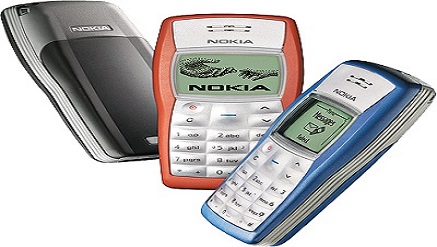
Nokia is hiring software experts, testing new products and seeking sales partners as it plots its return to the mobile phone and consumer tech arena it abandoned with the sale of its handset business.
Once the world’s biggest maker of mobile phones, the Finnish firm was wrongfooted by the rise of smartphones and eclipsed by Apple and Samsung. It sold its handset business to Microsoft in late 2013 and has since focused squarely on making telecoms network equipment.
Now Nokia boss Rajeev Suri is planning a comeback. He must wait until late 2016 before he can consider re-entering the handset business – after a non-compete deal with Microsoft expires – but preparations are underway.
The company has already dipped its toe into the consumer market; it has launched an Android tablet, the N1, which went on sale in January in China and days ago unveiled a “virtual-reality camera” – heralding it as the “rebirth of Nokia”.
It has also launched an Android app called Z Launcher, which organizes content on smartphones.
Meanwhile its technologies division has advertised on LinkedIn dozens of jobs in California, many in product development, including Android engineers specializing in the operating software Nokia mobile devices will use.
Nokia had also planned to lay off about 70 people at the division, according to a May announcement, but a company source told Reuters that the figure had since been halved.
Nokia itself is not giving much away about its preparations, beyond saying some staff at the 600-strong technologies division are working on designs for new consumer products, including phones, as well as in digital video and health.
But it will not be easy to claw its way back to relevance in the fast-changing, competitive mobile business where Apple (AAPL.O) has been scooping up nearly 90 percent of industry profits, nor for it to carve out a place in electronics.
One ace Nokia that holds is ownership of one of the mobile industry’s biggest troves of intellectual property, including patents it retained after selling its handset business.
It does not want to waste such resources, built up with tens of billions of euros of investment over the past two decades.
It will also get an injection of talent when it completes the 15.6-billion-euro ($17 billion) acquisition of Alcatel-Lucent, announced in April, in the form of Bell Labs – a U.S. research center whose scientists have won eight Nobel prizes.
It says it will not repeat the mistakes of the past of missing technology trends, being saddled with high costs, and reacting too slowly to changing consumer tastes.
To blunt such risks, it is seeking partners for “brand-licensing” deals whereby Nokia will design new phones, bearing its brand, but – in exchange for royalties – will then allow other firms to mass-manufacture, market and sell the devices.
This is stark contrast to its previous handset business which in its heyday manufactured more phones than any other company in the world and employed tens of thousands.
Suri said last month that Nokia aimed to re-enter the mobile phone business, but only through such licensing agreements. It will not fall back on the “traditional” methods, said the CEO, who took the helm last May and has turned it into a slimmed down, more profitable company. He sold off its mapping business a week ago.
Such brand-licensing deals – as Nokia has struck for the N1 tablet – are less profitable than manufacturing and selling its own products, but also less risky.
They can add a tidy sum of revenue for little investment for the company, which generates the bulk of income from selling telecoms network equipment to operators like Vodafone and T-Mobile.
“They want to be innovative and seen as a company with long-term vision in the (tech) industry and having a foot in devices plays into this impression, even if it’s not bringing massive revenue at the outset,” said Gartner analyst Sylvain Fabre.
Brand-licensing models are not new in the industry; European companies like Philips (PHG.AS) and Alcatel have made money from consumer electronics by licensing out their brand after capitulating to Asian competitors more than a decade ago.
But given the crop of newcomers like China’s Xiaomi and India’s Micromax, it may not be possible for Nokia to reproduce even the minor successes that Philips and Alcatel were able to achieve by renting out their brand.
With advances in contract manufacturing and standardization of software, components and features like touch-screens, it is also easier than ever for companies to outsource everything to produce lookalike phones.
“We only see this competitive pressure intensifying in coming years,” said CCS Insight mobile analyst Ben Wood. “Barriers to entry in the handset market are lower than ever and almost anyone can enter the smartphone market.
The strength of the Nokia brand – crucial to the success of such licensing deals – is also open to debate.
The company says its brand is recognized by four billion people. But, after being consistently ranked as one of the world’s top-five brands in the decade up to 2009 according to market researcher Interbrand, it has since nose-dived and now looks set to disappear from top 100 lists.
“A brand is quickly forgotten if it is absent from the consumer business,” said former Nokia executive Anssi Vanjoki, a professor at Finland’s Lappeenranta University of Technology.
“The brand will not help much if the product is similar to what is already being sold out there. But if there is something new and interesting to it, the old heritage may be helpful.”



Google has launched its Search Live feature globally to over 200 countries, including Nigeria, where AI Mode is available, enabling voice-and-camera conversations in users’ preferred languages.

Powered by the new multilingual Gemini 3.1 Flash Live model, it delivers natural, real-time interactions via the Google app on Android or iOS—tap the Live icon under the Search bar.
Ideal for hands-free help, users can speak queries for audio replies, follow-ups, or web links. Camera integration adds visual context, like troubleshooting a shelving unit, or pairs with Google Lens for real-world chats.
From the app or Lens, Nigerians can now explore, learn, or solve tasks instantly, boosting everyday productivity worldwide.

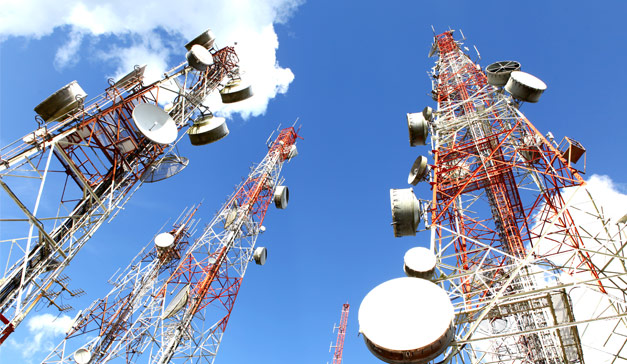
Clean and reliable power for telecom networks in Ethiopia, Liberia, and Sierra Leone will be expanded following a $45 million investment by the International Finance Corporation (IFC) in IPT PowerTech.

The investment targets countries where limited power supply continues to slow digital connectivity and broader economic participation, the institution stated earlier this week.
To enable this expansion, the IFC is providing a $45 million corporate financing package consisting of an A-loan of $27 million and $18 million in blended finance.
The blended portion is sourced from the Canada-IFC Blended Climate Finance Programme and the IDA20 Private Sector Window Blended Finance Facility.
The initiative marks the IFC’s first direct infrastructure engagement in Liberia in a decade and in Sierra Leone in six years.
It will help scale solar- and battery-based power systems that reduce reliance on diesel and support greener, more resilient telecom networks.
By improving the quality and stability of power to telecom towers, the initiative will strengthen mobile coverage and ensure that households, schools, health centres, and small businesses can depend on consistent digital services, said the IFC.
The funding supports the modernisation, operation, and maintenance of 2 235 telecom sites across the three nations. More than 90% of these are located in off-grid or weak-grid locations.
With new solar and battery systems powering these sites, mobile networks will experience fewer outages and improved service quality.
Optimising the energy mix is estimated to reduce power costs for operators by up to 30% in Liberia, 26% in Sierra Leone, and 52% in Ethiopia.
This transition is also expected to cut emissions by more than 10 624 tonnes of carbon dioxide annually. Furthermore, the partnership will promote gender inclusion by expanding opportunities for women in technical, operational, and leadership roles within the sector, says the IFC.
This agreement reflects a shared vision for a greener telecom industry and empowers the company to scale its innovative energy platforms, according to Nabil Haddad, CEO of IPT PowerTech Group.
Reliable and affordable power for telecom networks is a cornerstone of Africa’s digital transformation, said Nathalie Kouassi-Akon, IFC regional director for West Africa and the Gulf of Guinea.
Through this partnership, the institution is supporting a scalable, private sector-led solution that enables mobile operators to reach underserved and fragile communities more sustainably, added Kouassi-Akon.
The project advances the World Bank Group and African Development Bank’s Mission 300 initiative, which aims to provide electricity to 300 million Africans by 2030.

Expedier has unveiled “Expedier for Business,” an online pro-banking platform to simplify global payments, multi-currency transactions, and financial operations for expanding companies.

Kingsley Madu
The tool centralizes payments, invoicing, payroll, and treasury into one secure dashboard, tackling challenges like fragmented systems and poor visibility that hinder international scaling.
Kingsley Madu, Co-Founder and CEO of Expedier, said: “African businesses are increasingly global… Expedier for Business was built to simplify how companies manage money across borders while maintaining visibility, control, and compliance.”
Key features include customizable dashboards for payments, invoices, and workflows; support for USD, CAD, GBP, EUR, and more; virtual cards; automated payroll/invoicing; currency swaps; and real-time tracking.
Security measures cover two-factor authentication, KYC/KYB verification, and team access controls.
As cross-border trade and remote work boom in Africa, the platform aids firms dealing with international suppliers, teams, and customers. It is now available for organizations scaling globally.

NDIC Insures 99 Percent of Bank Customers

FG Shifting Focus to “Meaningful Connectivity” to Drive Inclusion – Minister

CBN Bars Chronic Loan Defaulters from Accessing Loans

Google Rolls Out Search Live AI to 200+ Countries, Including Nigeria

Breaking…..Kuda Lays Off Many Employees in Broad Restructuring

Kaspersky Discovers New Phishing Campaign Exploiting Google Tasks Notifications to Steal Corporate Credentials

Spotify’s Loud & Clear Report Reveals Over ₦60Bn Revenue for Nigerian Artists in 2025

China Threatens to Shut Nigeria’s Satellite Over $11.44m Unpaid Debt

MTN Nigeria Posts Record N1.70 Trillion Pre‑Tax Profit, Declares N20 Dividend for 2025

Madonna University Taps Tech Guru Adote for Strategic Board Role




 News2 days ago
EU Pumps €290m into Nigeria’s Digital, Health, Agri Sectors

 Telecom2 days ago
US Jury Finds Meta, Google Liable in Landmark Social Media Addiction Case

 E-Business2 days ago
5 Wealth-Building Strategies for Nigerian Women-led Businesses

 News2 days ago
Firm Shares Tips for Updating Your Digital Habits for an AI-driven World

 Telecom2 days ago
Mobile Money Transactions Accounted for $2 trillion in 2025

 E-Business2 days ago
Nigeria, Finland Sign Cybersecurity Pact

 E-Financial2 days ago
MoneyMaster Enhances App, Rewards Users with Data and Airtime Bonuses

 News1 day ago
Francis Okafor Stuns China, Emerges Second-Place Winner @ Tencent OpenClaw Hackathon