

News
Nokia Unveils Six New Phone


HMD Global, the Finnish company that operates the Nokia mobile phone business, has introduced six new smartphones, which have been streamlined into three distinct lines: the top of the range Nokia X-series, intermediate G-series and entry-level C-series.

The new models, which the company says are built to last longer, are the X20, X10, G20, G10, C20 and C10.
The new devices were introduced in line with HMD Global’s new brand identity “Love it, trust it, keep it”, as it refreshes its phone line-up to better contend with rivals.
While Nokia continues to lead the feature phone category by value, its smartphone market share falls behind competitors Huawei, Samsung and Apple.
Speaking at the Nokia virtual launch of the new models on Thursday, HMD Global CEO Florian Seiche said the company has strengthened its partnerships with retail, online and third-party operators, to make it easier for consumers to make online purchases on Nokia phones, as the COVID-19 pandemic significantly increases reliance on smartphones.
Today, consumers are able to buy Nokia phones on its Web site across 14 countries, he noted.
The company also announced its new mobile virtual network operator, HMD Mobile, which is currently only available in the UK. HMD Mobile is operated independently by HMD Global, to provide a one-stop-shop for mobile connectivity, phones and service.
“The past 12 months have no doubt been challenging, yet they also gave us a moment to pause, think and prepare for the next big step in our start-up journey,” said Seiche.
“As a Finnish company, our approach to technology and business is human-first and that is reflected in this new smartphone range. We want people to love their phones. The launch of HMD Mobile – a milestone in our journey to a holistic provider of all things mobile – amplifies this, and it is only the beginning. Nokia smartphones come with security and software updates for extra peace of mind. And we want people to keep their phones for longer, thanks to our signature durability.”
Nokia X-series
Sitting at the top of HMD’s new portfolio are the Nokia X20 and Nokia X10 devices. These mid-range smartphones, claims the company, provide an experience that outweighs their price tag.
Both are powered by the Qualcomm Snapdragon 480 5G mobile platform, which provides a global 5G connection.
The handsets come with Android 11, ZEISS Optics and artificial intelligence (AI) features that enable versatile imaging options. It has a 6.67-inch full HD display, allowing content to be viewed on a crisp screen.
The Nokia X20 comes with a 32MP front camera and 64MP quad camera on the rear. The new Dual Sight feature activates two cameras simultaneously, so that users can capture multiple sides or multiple angles of the same image or video.
It will be available in select markets from May, and comes in 6/128GB and 8/128GB configurations.
The Nokia X10 features a 48MP quad-camera with cinematic capture, and a suite of pro editing tools. It will be available in select markets globally from June, and will come in 6/64GB, 6/128GB and 4/128GB configurations.
Nokia G-series
Both phones in the G range have a three-day battery life – the longest yet on a Nokia smartphone, according to HMD Global.
The Nokia G20 is described by the company as an on-the-go creative studio that fits in the palm of the hand. It has a 48MP camera, ample storage and immersive OZO surround audio. It will be available in select markets globally starting May, and comes in 4/64GB and 4/128GB configurations.
The Nokia G10 has a triple rear camera and advanced imaging with AI-enhanced shooting modes, which are able to take shots from tricky low-light settings.
Nokia C-series
Described by HMD as ideal devices to introduce consumers to smartphones, the C-series feature 6.5-inch HD+ display, with Android 11, up to 20% faster speeds and improved security features, with quarterly security updates for two years.
The Nokia C20 includes front and rear LED flash to capture images in low-light.
The Nokia C10 is the most affordable device in the new portfolio, and has an ergonomic casing with a micro-texture finish to ensure durability.
Also speaking at the event, Janne Lehtosalo, VP of services at HMD Global, noted HMD Mobile follows the success of the brand’s global roaming solution, HMD Connect, which launched in March 2020.
The new service, which was introduced in the UK this month, will be gradually rolled out globally.
“HMD Mobile is built on the foundation of trust, simplicity and flexibility, where you only pay for the features you will use every day with no fixed-term subscriptions or premiums.”


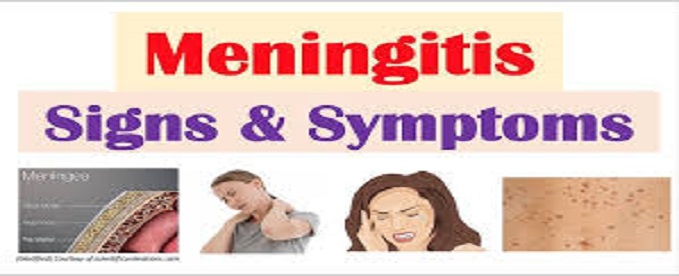
Nigeria Centre for Disease Control and Prevention (NCDC) has issued a Public Health advisory on the spread of Cerebrospinal Meningitis (CSM).

It said that the caution is particularly for states within the African Meningitis belt.
In a statement by the Corporate Communications Division of NCDC urged all Nigerians to remain vigilant and adopt preventive measures.
The statement said: “As Nigeria continues through the peak dry season months, the Nigeria Centre for Disease Control and Prevention (NCDC) alerts the public to the ongoing risk of Cerebrospinal Meningitis (CSM), particularly in states within the African meningitis belt.
“Cerebrospinal meningitis occurs more frequently between December and April, when dry, dusty conditions, overcrowding, and poor ventilation increase the risk of transmission.
“The NCDC urges all Nigerians to remain vigilant and adopt preventive measures. Surveillance and response activities remain ongoing nationwide, and laboratory testing is being conducted at the state level while national laboratory capacity is being strengthened.
It explained that Cerebrospinal meningitis is a serious infection of the protective membranes covering the brain and spinal cord.
According to NCDC the affliction is most commonly caused by bacteria, particularly Neisseria meningitidis.
“Bacterial meningitis can progress rapidly and may be fatal within hours if untreated.
“However, early diagnosis and prompt antibiotic treatment significantly improve survival and reduce complications. CSM spreads through respiratory droplets during close contact, especially in overcrowded or poorly ventilated environments.”
It said that symptoms to watch out for include sudden high fever, severe headache, and neck stiffness.
It said other symptoms may include: nausea or vomiting, sensitivity to light, confusion or altered consciousness and seizures.
For In infants and young children, NCDC said the symptoms could bulging soft spot on the head.
The Centre said that early recognition and treatment can save lives.

According to a Kaspersky report “Mobile malware evolution,” the number of Trojan banker attacks on Android smartphones increased by 56% in 2025 compared to the previous year*.

This type of malware is designed to steal user credentials for online banking, e-payment services and credit card systems. Cybercriminals commonly distribute Trojan bankers through messaging apps, as well as through malicious webpages.
The number of new Trojan banker installation packages for Android (unique APK files) also increased sharply, reaching 255,090 packages – a 271% increase over 2024. This may indicate that these tools generate substantial profit for cybercriminals.
Kaspersky experts believe threat actors will continue both to expand delivery channels and develop new Trojan variants trying to evade detection by security solutions. Among all detected Trojan bankers, the leading families were Mamont and Creduz.
“Although Trojan bankers for smartphones are the fastest-growing type of malware, we also observed another important trend: preinstalled backdoors such as Triada and Keenadu appeared more frequently compared to previous years. People purchase completely new, but infected, Android devices and may be unaware of the threat.
Once integrated into the firmware fully functional preinstalled backdoors provide attackers with unlimited control over the victims’ smartphones and tablets. As a result, all information on infected devices can be compromised.
It’s quite difficult to remove such malware. If the device is infected, we recommend users check for firmware updates. After the update, run a scan of the device with a security solution again to make sure newly installed firmware is not infected,” comments Anton Kivva, malware analyst team lead at Kaspersky.



EFCC

Police Says Victims Enable Cyber Attacks Out of Ignorance

Bank Accuses Magistrate, Lawyer of Using Fake Order to Steal N3.5m from Account

FG Launches NERD to Combat Certificate Fraud

NCDC Issues Public Advisory on Cerebrospinal Meningitis

Goodnews Naija Launches ‘Building in Nigeria’ Series on Entrepreneurs, Real Sector Builders

Dr. Cairo Ojougboh Foundation Bolsters Nigeria’s Education Drive with ₦2.7m Student Support

Kaspersky Brings more Transparency to Threat Detection with New Hunt Hub

PwC Reveals AI Scaling Gap Slows Africa’s Digital Transformation

Firm Reviews the Evolution of Phishing Threats in 2025

Kaspersky Discovers New Phishing Campaign Exploiting Google Tasks Notifications to Steal Corporate Credentials




 E-Financial2 days ago
Nigeria’s VAT Jumps 34%, CIT Soars 48% to ₦14trn in 9M’25 – NBS

 Telecom2 days ago
FG Approves GIS-enabled Digital Postcode to Tackle Logistics Gaps, Boost E-commerce
 E-Business2 days ago
Firm Enhances its Security Awareness Platform with SCORM and PDF Support

 E-Financial2 days ago
Binance Cuts Illicit Activity Exposure by 96%, Leads Global Crypto Compliance Push

 E-Financial2 days ago
NAICOM Signs MoU with BPP to Deepen Insurance Compliance in Public Procurement

 General News2 days ago
NERC Orders DisCos to Refund ₦20.33Bn Meter Costs to Customers

 Telecom2 days ago
GSMA, African Operators, Others to Launch Low-cost 4G Devices

 E-Financial1 day ago
Senate Targets Fintech Overreach, Vows Ponzi Crackdown After ₦1.3trn CBEX Scam