

General News
Nuclear Programme to Give Impetus to Nigerian Economy

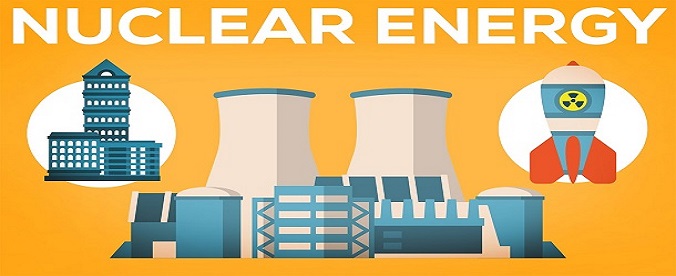
Today, unfortunately, Nigeria’s economic potential is constrained by many structural issues including; inadequate infrastructure, foreign investment obstacles and economic flexibility. In 2015-2016 the nation’s economy was hit by low oil prices due to weaker demand. The situation was aggravated due to the fact that the country highly depends on petrodollars, which account for nearly 70% of its national revenue.
The country is currently recovering from its first major recession which took place in 2016. According to the World Bank estimations, Nigeria is moving from a recession to a modest 1.2% growth rate in 2017, gaining momentum to 2.4% in 2018.
Nigeria’s economic growth is also severely constrained by insufficient electricity generation capacity, which results in a lack of a reliable and affordable energy. At the same time, Nigeria flares considerable amounts of associated gas, a by-product of offshore crude oil extraction. This flaring generates significant greenhouse gas emissions and wastes a considerable amount of energy.
The current growth in Nigeria’s economy relies largely on its oil sector, which drastically minimizes its long term sustainability. The implementation of a more diversified economic policy framework could create a more favorable environment for short-term growth and generate more sustainable growth rates in the medium- to long- terms.
One of the most positive steps toward the implementation of the country’s recovery plan was the approval of the Power Sector Recovery Program in March 2017, which promises to restore financial viability to the power sector as well as improve its record for transparency and service delivery. In 2016 the Federal Government reaffirmed its plans to introduce nuclear power to diversify the country’s energy mix and help meet the energy needs of the country.
Globally, nuclear power is considered a viable base load alternative, producing power 24/7 with very few maintenance shutdowns, which makes it the ideal source for powering industry and growing an economy. Nuclear power is also environmentally friendly, emitting far less greenhouse gases during electricity generation than coal or other fossil fuel power plants.
The construction of nuclear power plants (NPPs) in Nigeria will not only assist with the current energy crisis, but will also stimulate a great deal of investment in the country and local business. The direct and indirect economic and socio-economic benefits of NPP construction are immense.
There is a great deal of opportunity for direct localisation during the construction phase of an NPP. This includes: engineering services and the manufacture of components including pumps, valves, piping, tubing, insulation, reactor pressure vessels, pressurizers, heat exchangers and moisture separators. Construction will also provide a substantial boost to suppliers of commodities such as concrete and steel.
This entails a major boost for local manufacturers and job creation. Not to mention the business opportunities in unrelated industries as a result of the economic spinoffs, such as the needed external infrastructure in the region of the plant, accommodation for workers, hospitals, schools, agriculture as well as the retail sector (due to an influx of workers and higher salaries in the region).
The construction of Kudankulam NPP in India with the help of the Russian state owned nuclear corporation Rosatom has led to the creation of more than 10,000 jobs in the region, not to mention new jobs in equipment-manufacturing companies and other related industries. Moreover, tax proceeds from the plant go to neighboring towns and villages, making it possible to implement social projects such as the construction of schools and sports facilities. In the Czech Republic, two nuclear power plants annually allocate about USD 6 million for the development of the regional economy and infrastructure, including the food sector.
NPP construction spurs a huge chain reaction in the countries they are built, providing massive benefits (added value) to the economy. If we assume a NPP project based on 2 power units 1,2 GW each (and local industry involvement of 20-30%) on every invested dollar the nation would receive USD 1.9 as local industry income, USD 1.4 as extra taxes inflow, USD 4.3 of GDP growth.
Investing in nuclear projects stimulate cash flows to the regional and national budget that often surpass direct investments by a significant margin. The actual amount of investment depends directly on technologies involved.
A recent analysis conducted by the Nuclear Energy Institute (NEI) found that nuclear plants create some of the largest economic benefits when compared to all other generating sources, this due to their sheer size and the number of workers needed to construct and operate the plants.
According the NEI the operation of a nuclear plant requires the highest number of skilled workers when compared to any other technology and on average these jobs pay 36% more than the average salaries in the area where the plant is constructed.
New plant construction creates a direct demand for thousands of locally sourced skilled labourers, such as; welders, pipefitters, masons, carpenters, millwrights, sheet metal workers, electricians, ironworkers, heavy equipment operators and insulators, as well as engineers, project managers and construction supervisors.
There will also be thousands of indirect jobs created through localisation, including engineering services and the manufacture of components including pumps, valves, piping, tubing, insulation, reactor pressure vessels, pressurizers, heat exchangers and moisture separators.
Construction will also provide a substantial boost to suppliers of commodities such as concrete and steel. From the analysis done by the NEI it was determined that a single new nuclear power plant requires approximately 300,000 cubic metres of concrete, 66,000 tons of steel, 70 Km of piping, 500 km of electric wiring, and 130,000 electrical components.



Conoil Plc is spreading joy this Valentine season as the first group of winners in its Valentine Bonanza promotion have been announced and rewarded. Launched on February 14, the campaign continues to delight customers at participating retail outlets.

The initial raffle draw, conducted on February 21, saw fortunate customers receive ₦10,000 worth of free petrol each. The draw was carried out publicly, with media representatives present to ensure full transparency. With the promotion still ongoing, more customers have the opportunity to join in and potentially be among the next winners.
A Conoil Management spokesperson explained that the initiative is a way to show appreciation to loyal customers for their ongoing support. “Our customers have responded impressively to the bonanza, with strong participation recorded across our stations,” the spokesperson said.
The second and final phase of the promotion is now in motion. Customers who purchase at least 10 litres of petrol at any participating Conoil station remain eligible to win in the grand finale raffle.
The grand finale is set for February 28 at 12 noon. Motorists in Lagos and Ogun states are encouraged to visit Conoil outlets to collect their tickets and take part in the exciting conclusion of this Valentine celebration.

PalmPay users took to the #LoveWithPalmPay campaign to show how experiences are powered through seamless banking.

It’s the month of love and social media has been filled with couples showing affection with gifts. As digital payments become embedded in everyday life, the way relationships are planned, funded, and experienced is evolving.
Recent insights from SBM Intelligence 2025 ‘Love in the Air’ report show that despite economic pressures, most Nigerians still set aside dedicated budgets for Valentine’s Day, with the largest percentage planning to spend between N51,000 and N100,000, while less than 5% are willing to spend above N500,000.
This growing intentionality highlights the need for platforms that help people manage their money more effectively, offering features like free transfers and tools that make it easier to send, track, and preserve funds while still showing up for meaningful moments.
Through the #LoveWithPalmPay campaign, PalmPay set out to show how the platform is enabling users to plan, pay, and celebrate meaningful moments with greater ease.
During the Valentine’s season, PalmPay invited couples across Nigeria to share their stories through the #LoveWithPalmPay campaign, celebrating how digital banking supports their individual expressions of love.
The campaign saw strong participation, with many PalmPay couples submitting entries that showcased how they use the app to plan surprises, pay for outings, and stay connected through everyday transactions.
From these entries, four couples were selected, each showcasing how PalmPay has enabled fast and reliable transactions in key moments.
One video from @simply.omotoshan, one of the selected couples, captures the role of seamless payments in making their spontaneous moments possible.
She said in her entry video: “Our cutest money moment with PalmPay was when we planned our Valentine’s picnic and realized we had forgotten half of the things we needed; literally, half of everything. We rushed to the mall to get cakes, food, decorations, and all the essentials. When it was time to pay, we used PalmPay.
“The transaction was smooth, fast, and stress-free. In no time, we were done setting up our Valentine-themed picnic with everything perfectly ready. Honestly, all our experiences with PalmPay have been easy and satisfying, but this one is definitely our cutest money moment. Thank you, PalmPay.”
A testimonial from the fourth selected couple, Mohammed and his wife, reflects his excitement: “Hello PalmPay, thank you so much for selecting us as one of the winners of the #LoveWithPalmPay campaign. We truly appreciate this. My wife and I are very grateful. Thank you, PalmPay, for the love and support. We’re so happy and thankful for the N100,000 reward. We love you, PalmPay, and long live PalmPay. Thank you so much.”
Beyond the feel-good stories, the campaign reflects a broader shift: fintech is no longer just about transactions, it’s about enabling experiences. Reliable payments, fast transactions, and accessible financial tools reduce the friction that can disrupt important moments, allowing users to focus on connection rather than logistics.
From paying for dinner to managing other expenses, PalmPay continues to demonstrate how digital financial services support modern relationships, proving that in today’s economy, love is not only felt, it’s funded digitally.

KPMG has appointed Tola Adeyemi as Chief Executive Officer for KPMG one Africa, alongside the addition of Professor Olayinka David‑West and Dr. George Njenga as independent members of the Africa Governance Council (AGC).

Effective from March 2026, the appointments reinforce the firm’s leadership expertise, underscore a long‑term commitment to Africa and highlight confidence in the continent’s growth potential.
“Africa is one of the most dynamic and promising regions in the global economy, and KPMG is committed to playing a meaningful role in its growth story,” said Tola Adeyemi, incoming CEO for KPMG One Africa.
He continued: “It is a privilege to step into this role at such a pivotal moment for both KPMG and the continent. I look forward to building on our strong, connected and high‑performing base to deepen collaboration and deliver consistent quality and impact across our markets.”
KPMG is recognised globally for its commitment to quality, integrity and professional excellence, supported by a strong global network of member firms. Trust remains the foundation of the audit and accounting profession, with high standards of governance, ethics and audit quality increasingly demanded across Africa’s public and private sectors.
KPMG One Africa’s approach brings the continent closer together with strong leadership to strengthen cross-border collaboration and offer shared expertise and consistency which is business‑critical to help clients navigate complex risks and unlock sustainable growth opportunities.
Commenting on the appointment, Professor Ben Marx, Chairman of the Africa Governance Council, said: “Tola Adeyemi is exceptionally well positioned to lead KPMG One Africa. In addition to his global perspective as a member of the KPMG Global Council, he brings significant influence and credibility as a respected business leader across the continent.”
The appointments of Professor David‑West and Dr Njenga to the Africa Governance Council, which provides board level governance, further strengthens independent oversight, bringing strong academic credentials alongside deep strategic and business expertise.
“These appointments reinforce KPMG’s commitment to strong governance, accountability and leadership depth,” Marx added. “They complement our established African leadership team, in‑country managing partners and regional senior partners, further enhancing our client‑centric approach across Africa.”

Conoil Bonanza Winners Emerge

PalmPay Couples Show How Love Is Funded Digitally

KPMG Strengthens Africa Leadership to Support Long‑term Growth Across the Continent

Nigeria, EU Ink Research, Innovation Deal Worth €100Bn

esentry 2025 Report Shows Healthcare, Financial Services and Telecoms as Staging Grounds for Increased Cyberattacks in Africa

NITDA, NBC Explore Strategic Collaboration on Digital Transformation, Media Regulation

Kaspersky Launches OT Calculator to Align Cybersecurity Investments with Business Goals

Accidental Billionaire Opts for Jail Instead of Returning Money Credited Him by Mistake

Why the Future of PR Depends on Healthier Client–Agency Partnerships

Kaspersky Brings more Transparency to Threat Detection with New Hunt Hub




 E-Business2 days ago
AfDB, UNDP Launch $10Bn AI Initiative for Africa

 News3 days ago
NITDA Urges Stronger State Partnerships as Key to Digital Economy Goals @ South-South Stakeholders Forum

 Telecom3 days ago
GSMA Launches Innovation Fund to Accelerate Green Transition Through Mobile Technology

 Telecom2 days ago
Grey Expands Cross-Border Banking with USD Accounts, USDC Support

 Telecom3 days ago
Prof. Adeyanju is Strengthening Nigeria’s Digital Backbone for a Connected Future in Two Years of Purposeful Leadership

 E-Business3 days ago
Firm Identifies RenEngine Loader Distributed Through Pirated Games and Software

 E-Financial3 days ago
Fidelity Bank Launches HerFidelity Apprenticeship Programme 2.0 to Boost Women Entrepreneurship

 E-Financial3 days ago
TAJBank Secures A1 Ratings from Agusto, Datapro