

Broadcasting
Orodata Science Begins Second Cohort of ADH Community Journalism Fellowship

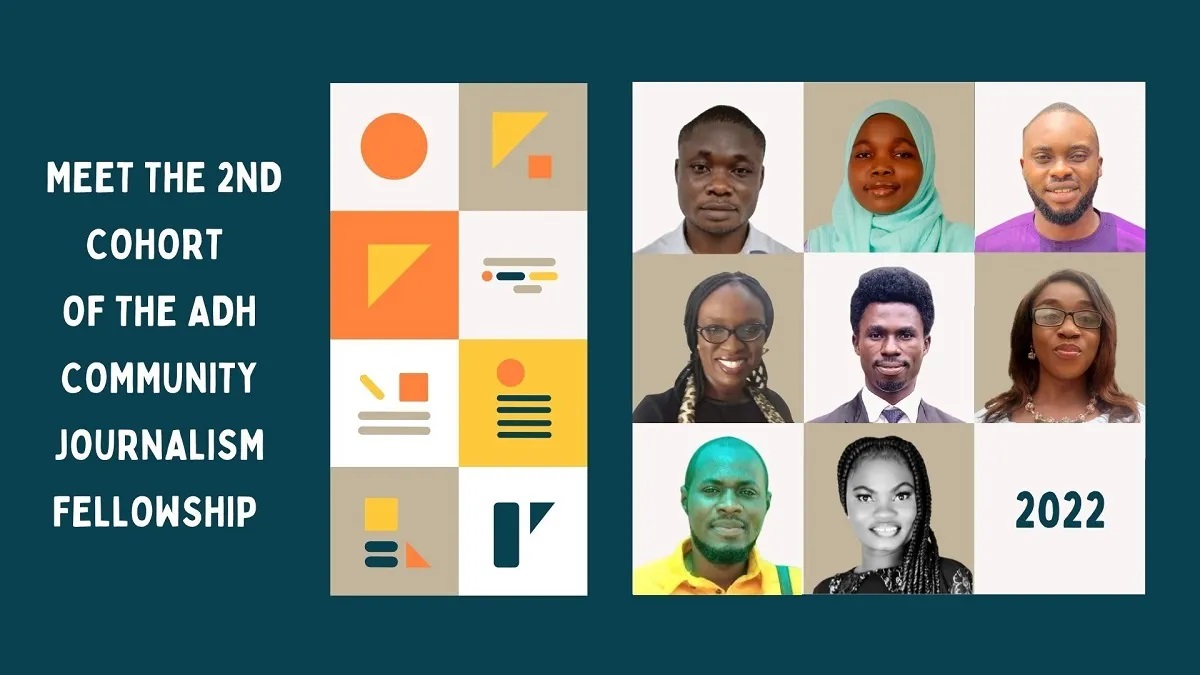
Orodata Science is thrilled to announce recipients and the start of the second cohort of the ADH Community Journalism Fellowship programme.

The 3-month program’s objective is to improve media capacity to advance news coverage of under-reported issues in local communities across Nigeria using technology, focusing on potential solutions with lasting impact on effective public service delivery, grassroots development, and improving the quality of life.
The premier fellowship is a conscientious, interactive learning and development experience empowering participants with new knowledge on Data Analytics for journalism, Geospatial analysis and remote sensing, Community project tracking and more. The fellowship also offers an opportunity for peer-to-peer learning, access to a larger network of professionals, and facilitated mentoring.
“With every cohort, the fellowship is building up the capacity of local newsrooms to report efficiently using evidence backed by data. By building the skills of these exceptional individuals who often work in constrained circumstances, we want to help enhance their work towards the strengthening of their communities,” said the Fellowship Global Lead Blaise Aboh. “With these new skills, fellows can employ new forms of digital storytelling to ensure that their stories are amplified, reach new audiences, and stay afloat long enough for decision-makers to pay attention.”
The programme’s first cohort of 8 fellows, 4 male, and 4 female, have gone on to produce great pieces of work, which today have been amplified to reach over 2 million people, and have propelled the government to act on findings.
Each cohort is selected through a rigorous process, and from a large applicant pool. Candidates pitch their story idea emphasizing how it relates to the thematic area of the programme, and decisions are made based on the pitches that meet up the program’s selection criteria. Applicants interested in participating in the 3rd cohort should get ready for another call in two months.
The ADH Community Journalism Fellowship (ACJF) is an initiative of Orodata Science as it continues to deliver on its promise to enable equitable access to information and knowledge towards solutions that impact the lives of millions. The program is supported by Africa Data Hub, a reputable and up-to-date source for data on the African continent which promotes quality access to information, and data-driven journalism to facilitate evidence-based decision-making.
Meet the ADH Community Journalism Fellows!
Fasilat Oluwuyi
Fasilat Oluwuyi is a Freelance Journalist based in Nigeria with over five years of experience working in print, and online media. Her wealth of experience spanned editing, writing, and content creation.
She is an experienced Reporter with a demonstrated history of working in the media production industry. Skilled in Magazines, Editing, Journalism, Media Relations, and Digital Media. Strong media and communication professional with a National Diploma, Higher National Diploma focused in Mass Communications from Mashood Abiola Polytechnic Abeokuta.

Blessing Oladunjoye
Blessing Oladunjoye is an award-winning journalist and Publisher of BONews Service, a development news platform that leverages technology to promote issues of women, persons with disabilities, and children.
Blessing is based in Lagos; Nigeria and her work revolves around gender and social inclusion. In March 2022, she received an Impact Award from the European Union in Nigeria, in recognition of her outstanding contributions to advancing rights and access to justice for women with disabilities, through inclusive journalism. She is one of the 2022 Solutions Journalism African Fellows of the Solutions Journalism Network where she reports initiatives that are addressing social issues.

Daniel Adaji
Daniel Adaji is a Journalist, a Researcher, and Data Analyst with The Insight. He holds a Master’s degree in Agricultural Economics from the University of Agriculture Makurdi and has attended several pieces of training and workshops related to the new media. He is a member of several professional bodies including the Nigerian Factcheckers’ Coalition. As a journalist, he has done and published several human-angle stories cutting across health, gender, climate change, agriculture, and finance. Daniel has authored and contributed to research articles both in local and international academic journals.
Daniel works on the investigation and FactCheck desk of The Insight and he has brought several innovations that have helped move the News platform beyond traditional media.

Nkechi Macaulay
Nkechi Macaulay is a seasoned multimedia journalist with over 13 years of experience from the Federal Radio Corporation of Nigeria, adolescent reproductive health rights advocate trained by Marie Stopes international with a particular focus on men’s and boys’ reproductive health rights.
She is also the founder of Boyslivesmatter Foundation, an organization designed to create awareness of the sexual abuse of Boychild and to educate boys on comprehensive sexuality education.
She is also a sexual harassment workplace trainer in the media and churches. She helps create sexual harassment policies, enabling a platform for staff to air their grievances, and offering access to seek counseling from a behavioral therapist.

Ugonna Agu
Ugonna Is a graduate of Mass Communication from Nnamdi Azikiwe University, Awka. She has been working with Radio Nigeria as a reporter for 10 years now and counting, reporting on the paramilitary, and has an interest in investigative journalism as it concerns Gender base.
She has undergone various pieces of training in both online and real-time with different media organizations including Reuters institute and the light center of journalism in America.

Patrick Obia
Patrick Obia is an investigative journalist, a photojournalist, a cinematographer, a video editor, and also an assistant editor with Cross River Watch. He has been a fellow with the Civil Media Lab, and a Bachelor’s degree holder in Mass Communication from the University of Cross River state.

NTIEDO EKOTT
Ntiedo holds a Postgraduate Diploma in Economics and a Bachelor of Science in Statistics from the University of Uyo and the University of Port Harcourt respectively.
He is a researcher with over five years of experience in data journalism, research, and project management, and a journalist at the Center for Journalism Innovation and Development (CJID), formerly Premium Times Centre for Investigative Journalism. He works at the Agricultural Development desk of the organization. He anchor’s CJID’s weekly newsletter titled “Agric Digits”, which provides a quick summary of important figures from the Nigerian agricultural sector.

Elijah Akoji
Elijah is a graduate of Mass Communication from Bayero University Kano, with over 4 years of experience in investigative reporting on open contract reporting (OCR) with the International Centre for Investigative Reporting (ICIR), Climate reporting, and also the Grassroots News Project in the North West and some part of the North East.

Elijah has been a freelance investigative journalist for a couple of media houses in Nigeria and has a focus area on reporting on budget review, procurement fraud, issues of climate change, and helping create awareness in rural and grassroots orientation.



Dr.Shaibu Husseini, the Executive Director/Chief Executive Officer of the National Film and Video Censors Board (NFVCB), has called for stronger distribution frameworks within Nigeria’s film industry to ensure that locally produced content achieves global visibility.

He urged film festivals across the country to evolve beyond networking platforms into active marketplaces where filmmakers could secure distribution deals. He stressed that festivals must attract distributors, exhibitors, streaming platforms, and marketers to create tangible opportunities for filmmakers.
Husseini made this call while delivering the keynote address at the opening ceremony of the 2026 edition of the Coal City Film Festival held in Enugu.
“Film festivals must become gateways to distribution where filmmakers leave not just with applause, but with real opportunities,” he said.
Husseini expressed personal delight at hosting the event in Enugu, his birth state, noting the city’s rich cultural heritage and longstanding contribution to Nigeria’s creative landscape.
He commended the festival organisers, particularly the Festival Director, Uche Agbo, for their resilience and commitment in sustaining the
initiative. According to him, the Coal City Film Festival has grown into a significant cultural platform and a must-attend cinematic event in South East Nigeria.
Speaking on the festival’s theme, “Local Stories, Global Screens,” Husseini emphasised the importance of authenticity in storytelling. He noted that films rooted in local realities, languages, and cultural truth often resonate more strongly with global audiences.
He cited notable Nigerian productions such as King of Boys by Kemi Adetiba, The Wedding Party by Mo Abudu, Anikulapo by Kunle Afolayan,
“Black Book” by Editi Effiong, and “Lionheart” by Genevieve Nnaji as examples of culturally grounded stories that have gained international recognition on platforms such as Netflix and at global film festivals.
While acknowledging the growth in film production across Nigeria, the NFVCB boss identified distribution as a major bottleneck in the industry. He observed that many high-quality films struggle to reach audiences both locally and internationally due to limited distribution channels.
Reaffirming the Board’s commitment to industry development, Husseini stated that the NFVCB has continued to reposition itself as a partner in progress by engaging stakeholders, improving classification processes, and promoting a balance between creative freedom and social responsibility.
However, he raised concerns over increasing non-compliance with regulatory requirements, noting that some filmmakers bypass the Board by releasing unclassified films or operating without proper licensing.
He said all films and video works must be submitted to the NFVCB for classification and registration before being released on any platform, including digital platforms such as YouTube.
“This is a legal obligation, and the Board will not hesitate to take decisive action against defaulters,” he warned, adding that regulation is essential for protecting the industry, audiences, and national values.
Looking ahead, Husseini assured stakeholders of the Board’s continued collaboration with filmmakers and festival organisers to build a structured, sustainable, and globally competitive Nigerian film industry.
He concluded by commending the organisers of the Coal City Film Festival for their vision and contribution to Nigeria’s cultural economy, urging filmmakers to continue telling authentic stories that can resonate across global screens.


Mr. Charles Ebuebu, director General of the National Broadcasting Commission (NBC), has called on Nigerian content creators to actively participate in the country’s Digital Switchover (DSO), describing the transition as a major opportunity for visibility, revenue growth, and industry collaboration.

Mr. Charles Ebuebu, DG, NBC
Speaking as Special Guest of Honour at the induction ceremony of the Electronic Media Content Owners Association of Nigeria (EMCOAN) in Lagos, Ebuebu stressed that the success of the DSO depends on engaging content to populate the nation’s new digital channels.
“Without content, the DSO’s success would be incomplete. We are urging content owners to collaborate with the Commission to ensure Nigeria’s digital future is rich, diverse, and sustainable,” he said.
The NBC boss highlighted that the upcoming FreeTV Direct-to-Home (DTH) platform, along with its mobile applications, would provide content creators with nationwide reach, advanced analytics, and brand partnership opportunities.
Nigeria’s DSO, which marks the shift from analogue to digital broadcasting, is being implemented by the NBC using the Nigcomsat satellite infrastructure. The programme aims to deliver over 100 nationwide channels and expand access to Nigerians in remote areas via hybrid decoders, addressing long-standing infrastructure and funding challenges. The project, which has experienced delays since 2012, now has strong government backing and is scheduled for launch in April 2026.
Ebuebu commended EMCOAN members for their contributions to strengthening Nigeria’s creative economy and encouraged them to leverage the opportunities offered by the DSO to promote local stories, culture, and creativity on both national and global stages.
During the ceremony, EMCOAN honoured its distinguished members, naming Wale Adenuga, MFR, as Grand Patron and Mr. Yinka Adebayo as Patron.
Prominent figures in the broadcasting content industry, including Wale Adenuga, Opa Williams, Agatha Amata, Jibe Ologeh, High Chief Emeka Ossai, Debbie Odetayo, Amina Mohammed, and Frank Elaboya, attended the event.
Representing the NBC at the event was Mr. Ralph Akpan, director of the Lagos Zone, while EMCOAN president, Mr. Adeniji Omirin, MD of ADNOM Media, urged members to fully engage in the digital switchover.

Canal+ is to cut jobs at MultiChoice as part of a sweeping restructuring plan aimed at stabilising the African pay-TV operator, following years of operational and financial pressure.

The move comes alongside a planned $115 million capital injection, underscoring the urgency of efforts to revive the business after the French media group took control.
The planned layoffs are expected to form a core element of a broader cost-cutting and efficiency drive, as Canal+ seeks to streamline MultiChoice’s operations and improve profitability.
The restructuring signals a shift toward leaner operations, with a focus on eliminating redundancies and optimising the company’s cost base.
MultiChoice has struggled in recent years with declining subscriber numbers across key African markets, weighed down by macroeconomic pressures, currency volatility, and changing consumer behaviour.
The rise of global streaming platforms has intensified competition, chipping away at the company’s traditional pay-TV dominance.
Canal+’s intervention marks a pivotal moment for MultiChoice, reflecting a more aggressive approach to repositioning the business.
By combining fresh capital with structural reforms, the new owners are aiming to both stabilise short-term performance and lay the groundwork for longer-term growth.
The $115 million injection is expected to provide immediate financial relief, supporting operations and potential strategic initiatives.
However, the accompanying job cuts highlight the depth of the challenges facing the company and the scale of transformation required to restore competitiveness.

Nigeria, Others Lose $88bn Yearly to Illicit Flows —Edun

Oracle Sacks 12,000 in India, Begins Shift to AI

CBN Says 33 Banks Raise Fresh N4.65 Trillion in Recapitalisation Exercise

NCC Insists Telcos Must Compensate Subscribers for Poor Quality of Service

NITDA Urges Joint Action to Drive Nigeria’s Digital Innovation

Spotify’s Loud & Clear Report Reveals Over ₦60Bn Revenue for Nigerian Artists in 2025

Madonna University Taps Tech Guru Adote for Strategic Board Role

China Threatens to Shut Nigeria’s Satellite Over $11.44m Unpaid Debt

FCCPC Bans Lagos ‘No Refund’ Policy, Vows Fines and Shutdowns for Traders

EFCC Arraigns Two FSDH Bank Officials Over $307k, €50k Fraud




 E-Financial2 days ago
NGX REGCO Fines 5 Firms N291m for Market Manipulation

 E-Financial2 days ago
FG Launches Cross-Border Digital Payments Report

 News2 days ago
Dangote Refinery Debunks Speculations on IPO

 News2 days ago
Descasio Launches “Give to Gain” Leadership Insights Report, Hosts Executive Brunch for Women in Leadership

 E-Financial2 days ago
Interswitch Deepens Strategic Partnership with KCB Group to Advance Digital Payments and Financial Inclusion

 News2 days ago
World Backup Day: Research Reveals 84% of Users Store Sensitive Data Digitally

 General News2 days ago
Moniepoint Launches Sixth Edition of Women in Tech Internship with “There Is Space for You” Campaign

 General News2 days ago
FG Awards N50m Each to 45 Students under S-VCG