

News
Osinbajo says FG will Create ICT Hubs Across Nigeria

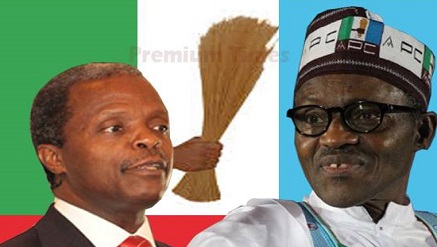
Vice President Yemi Osinbajo said that one of the cardinal objectives of Federal Government’s ‘’change agenda’’ was to create Information Communication Technology hubs across the nation.
He stated this at the signing a Memorandum of Understanding on ‘’ICT for Change Empowerment Programme’’ between the Federal Government and Huawei Technologies Co. Nig Ltd at the State House.
“We are looking at developing existing hubs and to see how we can empower those who are already working in the various ICT hubs,’’ Osinbajo said.
According to him, some of the ICT organisations were already growing into a silicon valley in Yaba, Lagos, and many people are engaged in programming and developing applications.
He said that the Federal Government would expand the scope of technology and incubate the start-ups of young people to advance ICT. He said that the development of ICT was an opportunity for people to get quick and decent jobs to enhance their lives and the economy.
He commended the group for the partnership with the government, and assured that the government would work with it to achieve success.
The vice president said that the government was creating an opportunity to ease business for entrepreneurs, adding that the country must move up in the business index by opening up the market.
He said the Federal Government would encourage not only the selling of products but also their local manufacture so that the large population in the country could occupy the middle class.
He said that it was an opportunity for China to improve on its technology transfer, being a strategic partner with the Federal Government and that the effort would lead to greater prosperity for both China and Nigeria.
Osinbajo hailed the ladies who qualified to go to China for ICT training, saying that it was the objective of the administration to advance the girl-child education and women in business because of their large population.
“If you don’t engage women in business and education, we will be shooting ourselves in the feet as women have a very great role to play in nation building.
“Chinese Ambassador has proved to us that he is not only an ambassador but a brother, because he has stuck to us very closely and has taken every opportunity to work with Nigerian government to achieve our objective,’’ he said.
He also commended Huawei technologies for the manner it was advancing technology development globally, remarking that knowledge was key ‘’and only the knowledge society will succeed’’.
The vice president said he was excited about “certain attitude the young generation has about technology’’, adding that it was time for young people to be trained to imbibe ICT and the entire technology field.
Adebayo Shittu, minister of Communications, said that the trainees would be evenly selected and urged Huawei group to increase the number of Nigerian trainers for the project to save cost of sending trainees to China.
Also, Chris Ngige, Labour and Employment minister in his remarks, said that the Chinese had blazed the trail in advancing technology in Nigeria.
Ngige described China as ‘’friends in prosperity and friends in poverty’’ as both countries were eager to lift the unemployed out of poverty. He said that the MOU would create jobs in line with government’s objectives and requested that the number of trainees be increased to accommodate more youth.
On his part, Gu Xiaojie, Chinese Ambassador to Nigeria said that based on existing cordial relations between China and Nigeria, his country would be part of the change agenda in Nigeria. He said that his country was ready to develop the economic cooperation with Nigeria through 10 key cooperation plans, including industrialization, agriculture, infrastructure, financial services, rail development and public health.


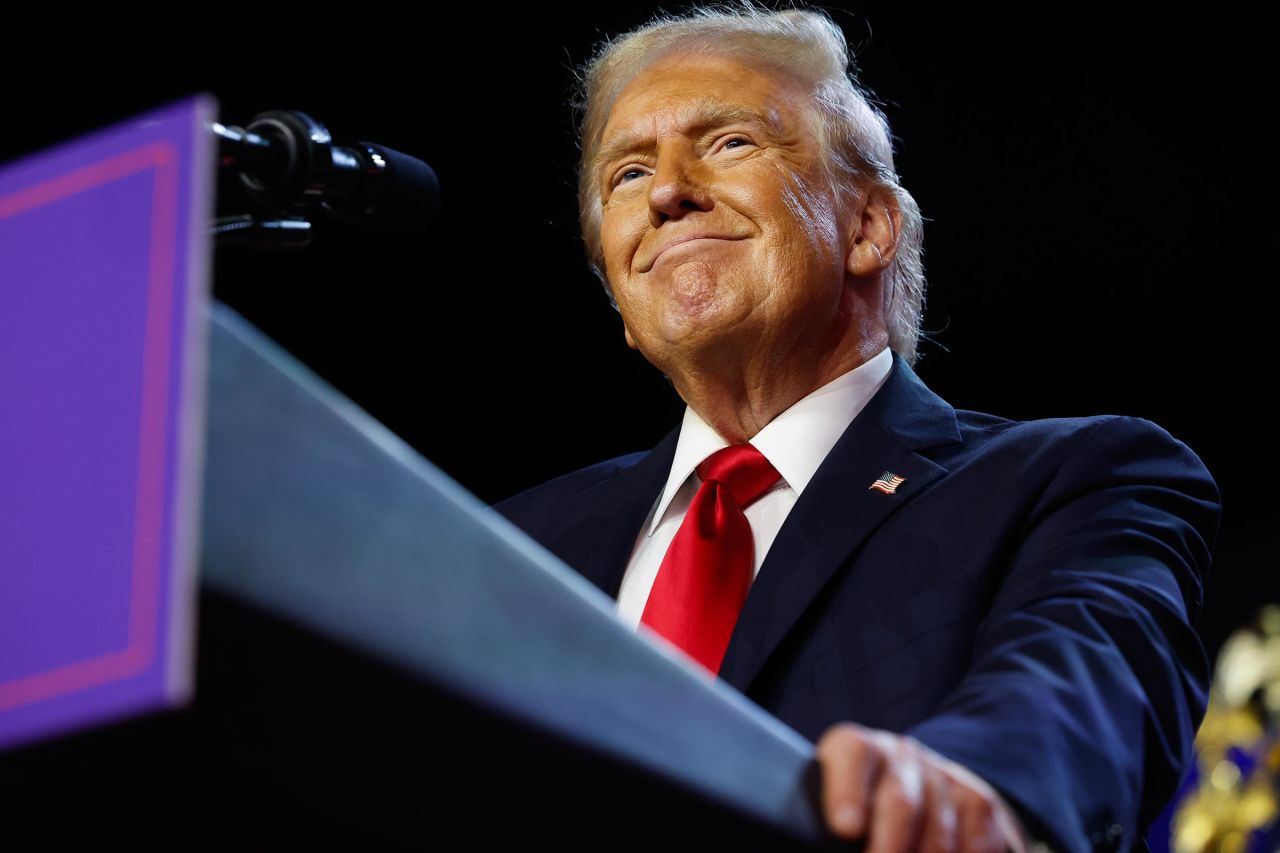
United States President Donald Trump has said he made no mistake for a video briefly shared on his official Truth Social account that depicted former President Barack Obama and former First Lady Michelle Obama as apes.

Former President Barack Obama
Speaking late Friday to reporters accompanying him aboard Air Force One, Trump insisted he made no mistake by sharing the video and does not need to apologise.
“I didn’t make a mistake,” he said.
Trump explained that he did not watch the entire clip before it was posted.
“I didn’t see the whole thing. I looked at the first part, and it was really about voter fraud in the machines, how crooked it is, how disgusting it is.
“Then I gave it to the people. Generally, they look at the whole thing. But I guess somebody didn’t,” he said.
When asked directly whether he condemned the video’s content, Trump replied, “Of course I do.”
The video, which was posted late Thursday, pushed a conspiracy theory about voting machines used during the 2020 election and included a racist depiction of the Obamas.
It remained on Trump’s Truth Social account for about 12 hours before being deleted on Friday morning, following widespread bipartisan calls for its removal.
The White House initially defended the post in an emailed statement to reporters on Friday morning by Karoline Leavitt, Press Secretary,.
She said, “This is from an internet meme video depicting President Trump as the King of the Jungle and Democrats as characters from The Lion King.”
Leavitt added, “Please stop the fake outrage and report on something today that actually matters to the American public.”
Hours after the statement was issued, the video was removed from Trump’s official Truth Social account.
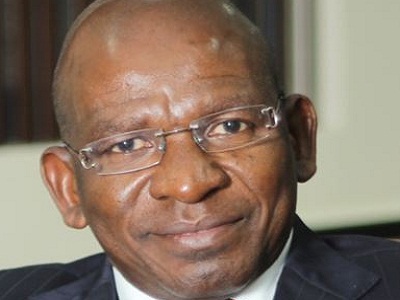
Robert Orya, former managing director, Nigerian Export-Import Bank, (NEXIM), has been sentenced to a cumulative 490 years’ imprisonment over a N2.4 billion fraud, following his conviction by a Federal Capital Territory (FCT) High Court in Abuja.

The conviction was secured by the Economic and Financial Crimes Commission (EFCC). Justice F. E. Messiri sentenced Orya to 10 years’ imprisonment on each of the 49 counts brought against him, with the sentences running cumulatively.
Orya, who headed NEXIM Bank between 2011 and 2016, was prosecuted by Samuel Ugwuegbulam, EFCC counsel.
The anti-graft agency accused him of fraudulently diverting funds belonging to the bank—charges the court held were proven beyond reasonable doubt.
Delivering judgment, Justice Messiri ruled that the prosecution successfully established its case, finding the former bank chief guilty on all 49 counts of fraud.
The conviction has been widely linked to the renewed momentum within the EFCC under Mr. Ola Olukoyede, its Chairman, whose leadership has seen a reinvigoration of the agency’s resolve to pursue high-profile corruption cases to their logical conclusion.
Since assuming office, Olukoyede has repeatedly vowed that no individual, regardless of status or past influence, would be shielded from accountability.
Under his stewardship, the EFCC has intensified the prosecution of complex financial crimes, particularly cases involving public institutions and large-scale diversion of funds.
Observers say the sentencing of a former chief executive of a government-owned bank underscores the EFCC’s determination to restore public confidence in the anti-corruption fight and sends a strong signal that financial misconduct will attract severe consequences.
The judgment is regarded as one of the most significant convictions secured against a former banking chief in recent years, reinforcing the agency’s resolve to clamp down on economic crimes within Nigeria’s financial sector.
During his tenure at NEXIM Bank, Orya was initially credited with efforts to reposition the institution to support non-oil exports and improve its financial standing after earlier setbacks.
However, his administration later became enmeshed in controversies, including allegations of loan disbursement irregularities and procedural abuses.
The case, which culminated in Thursday’s judgment, centred on findings that Orya diverted public funds estimated at N2.4 billion—offences that ultimately led to his conviction and lengthy prison sentence.

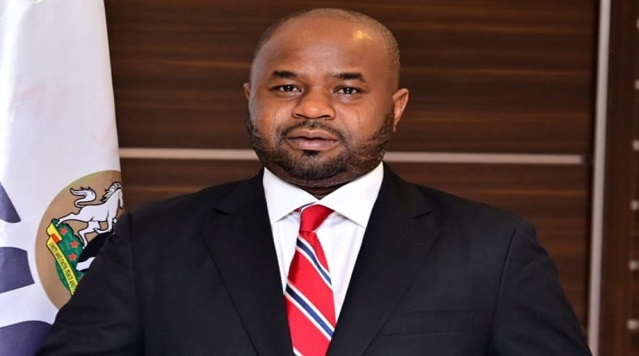
Zacch Adedeji, chairman of the Nigeria Revenue Service (NRS) has called for a paradigm shift in dependence on raw material exports to one that embrace ideas, innovation and the production of complex products as a pathway to sustainable economic growth and national prosperity.

Adedeji made the submission while delivering the maiden distinguished personality lecture of the Faculty of Administration, Obafemi Awolowo University (OAU), Ile-Ife, Osun State, on Thursday.
A statement by his Special Adviser on Media, Dare Adekanmbi, said Adedeji, in the lecture entitled, ‘From Potential to Prosperity: Export-led Economy’, stressed the need to rethink growth through the lens of complexity by not just producing more of the same stuff.
He lamented that Nigeria possesses a high-tech oil sector and low-productivity informal sector as well as lacking “the vibrant, labour-absorbing industrial base that serves as a bridge to higher complexity.”
The NRS boss stated that Nigeria witnessed stagnation in its exportation drive for three decades between 1998 to 2023, and only added six new products in its export basket list between 2008 and 2023.
“Because of our current position, the Harvard Atlas concluded that we are positioned to take advantage of very few opportunities to diversify using what we already know.”
Adedeji urged Nigeria to learn from the world by comparative study of success and failure like Vietnam, Bangladesh, Indonesia, South Africa and Brazil.
“We are not just looking at numbers in a vacuum; we are looking at the strategic choices made by nations like Vietnam, Indonesia, Bangladesh, Brazil, and South Africa over the same twenty-five-year period. While there are many ways to under perform, the path to success is remarkably consistent: it is defined by a clear strategy to build economic complexity.
“When we put these stories together, the divergence is clear. Vietnam used global trade to build a resilient, complex economy, while the others remained dependent on natural resources or a single low-tech niche.
“There are three big lessons here for us in Nigeria as we think about our roadmap. First, avoiding the resource curse is necessary, but it is not enough. You need a proactive strategy to build productive capabilities.
“Vietnam’s success came from integrating itself into Global Value Chains (GVCs). They positioned themselves as the assembly hub for the world’s electronics, importing high-tech parts and exporting finished products.
“This allowed them to “borrow” technology and management skills from abroad to build their own know-how.
“Nigeria, on the other hand, remains a supplier of raw materials to these chains, not an active participant within them. We must realise that productive capabilities are not permanent. The examples of South Africa and Brazil show us that you can actually lose your industrial edge if you are not careful. Over-reliance on the easy path of resource extraction creates economic and political incentives that crowd out the difficult, long-term work of building an industrial base.”
He added that for Nigeria, which is at an even earlier stage of development and even less diversified than these nations, the warning is stark.
“Relying solely on our natural endowments isn’t just a path to stagnation; it’s a path to regression. The global economy increasingly rewards knowledge and complexity, not just what you can dig out of the ground. If we want to move from potential to prosperity, we must stop being just a source of raw materials and start being a source of ideas, innovation, and complex products.
He added that President Bola Tinubu has already begun the difficult work of rebuilding the economy to ensure collective knowledge to innovate, produce and build a resilient economy.
“The journey from potential to prosperity is not a short one, but with the right map and the right resolve, it is a journey we can finally complete,’ he added.

Ecobank Profit Jumps 29 Percent to N950Bn

Trump Says He Made no Mistake Sharing Video Depicting Obamas as Apes

Orya, Ex-NEXIM MD Jailed 490 Years for N2.4Bn Fraud

Airtel Nigeria Commits to Upgrade of its Network Infrastructure for Improved Quality of Service

NRS Chairman Outlines Ways Nigeria can Move from Potential to Economic Prosperity

19 Nigerian Banks Meet CBN Recapitalization Targets Ahead of March Deadline

Nigerian Terra Industries Secures $11.8m for Expansion

US invests $115m in counter-drone tech for World Cup security

Firm Detected a Fivefold Surge in QR Code Phishing Attacks in the Second Half of 2025

Firm Detected a Scam Exploiting OpenAI’s Teamwork Features




 E-Financial3 days ago
Majority of Nigerians do not Trust Govt with Tax Revenue – SBM

 News3 days ago
Leadway Assurance Commences Use of Fintech in Insurance Product Distribution

 E-Business3 days ago
NDPC Commits to Balancing Data Privacy, Protection Information

 Telecom3 days ago
MoMo PSB, SMEDAN Forge Pact to Digitise Nigeria’s SMEs

 E-Financial3 days ago
Why FirstBank Wrote off N748Bn Bad Loan – Otedola

 Telecom3 days ago
MTN Ignites Teacher Revolution: 5,000 Digitally Armed for Phase Two

 E-Financial3 days ago
Unity Bank Unwraps Mobile App to Deepen Digital Banking Experience

 General News3 days ago
FG Partners World Bank, AfDB on Climate Action