

Telecom
OTT Eating Telcos Lunch, NCC Restates Neutrality


Over-the-top (OTT) services are now comfortably eating lunch of the telecommunications industry by de-layering that space.
It is not only telecommunications that is affected. Internet television over broadband fixed and mobile networks is de-stabilising existing broadcasting industries.
These services carried over the networks, delivering value to customers, but without any carrier service provider being involved in planning, selling, provisioning, or servicing them must be checked.
It cannot be right that a company providing traditional telecommunications services has to meet certain regulatory requirements, like those concerning data protection, while a company providing comparable services over the web does not.
Apart from the cries from the telcos; licensing and regulation of over-the-top services such as YouTube, Facebook, Twitter and WhatsApp Messenger can generate more money for Nigeria.
Countries like Germany are already thinking along this line and are calling for regulation of mobile instant messaging and email service providers to the same degree as telecommunications companies.
For Association of Telecommunications Operators of Nigeria (ALTON), the umbrella body of telecom operators in the country, it will mean respite.
Gbenga Adebayo, chairman, ALTON, “We are beginning to see the need for regulators to look at regulating technology instead of services.

“For example, the likes of YouTube, Facebook, Twitter, WhatsApp, Blackberry Messenger and many others are called over-the-top services that are not part of the core services for which operators are licensed.
“These over-the-top services have social, economic and security implications. If they are not licensed, it means they are not regulated, and in that case, there is no limit to the scope of what they can do. There is also no control over services and content they may provide,” he said.
Nowadays, people send messages mostly on WhatsApp and some other social media platforms than they do on the conventional SMS services.
Worldwide, there is about the activities of these modern day service providers who have been accused of “eating the lunch of the traditional operators” as they (OTT service providers) make money out of the investment and sweat of others.
But Nigerian Communications Commission (NCC) said that it has no plans to regulate OTT services.

Professor Garba Danbatta, executive vice chairman, NCC, while acknowledging the impact of disruptive technology in the sector and the challenges it poses to telcos in terms of competition for market share, encouraged network providers in Nigeria to innovate.
Human rights activists however said that though regulation can be necessary to protect users’ rights – like it is to ensure data protection – some regulatory proposals risk our right to freedom of expression and can also thwart economic, social, and cultural rights.
Nelson Ceasar Obidile urged that regulator to be mindful of right-harming policy if it decides to regulate OTT.


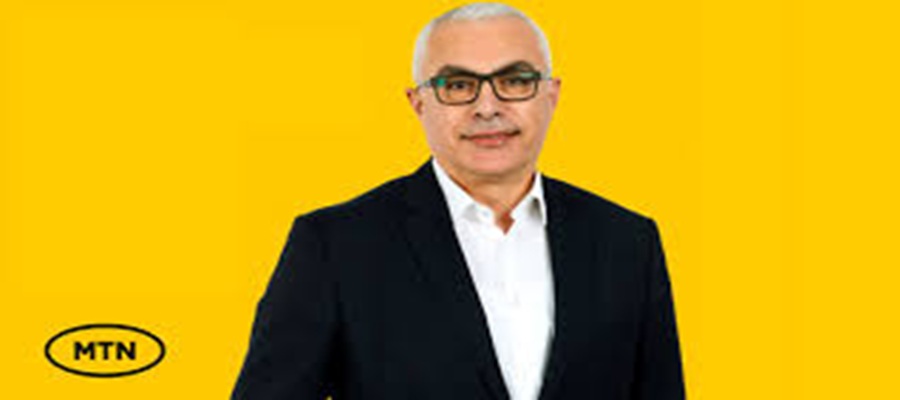
Mazen Mroue, a non-executive director at MTN Nigeria Communications Plc, has resigned effective February 27, 2026, to prioritise other responsibilities within the MTN Group, the company announced in a Nigerian Exchange Limited (NGX) filing.

MTN Nigeria
The notice, signed by company secretary Uto Ukpanah, stated: “This is to enable Mr. Mroue to focus on other priorities within MTN Group Limited. The Board wishes to express its appreciation to Mr. Mroue for his immense service to MTN Nigeria and wishes him success in his future endeavours.”
Mroue joined MTN Nigeria’s board on June 1, 2022, bringing over 28 years of telecom experience. A veteran MTN executive, he previously served as CEO of MTN Uganda and MTN Liberia, non-executive director at MTN Cyprus, and held leadership roles at MTN Ghana.
Since February 2022, he has been MTN Group’s Chief Technology and Information Officer, overseeing technology strategy and governance. Earlier, as MTN Nigeria’s COO from August 2018 to January 2022, he also sat on the MTN Nigeria Foundation board.
The exit follows MTN Nigeria’s stellar 2025 results, posting a ₦1.70 trillion profit before tax—reversing a ₦550.3 billion loss in 2024 driven by forex woes—marking one of the telco’s strongest rebounds.

Google has rolled out support for Yorùbá and Hausa languages in its AI-powered Search features—AI Overviews and AI Mode—enabling millions of Nigerians to get quick answers, summaries, and conversational web exploration in their mother tongues.

The update forms part of Google’s push to cover 13 African languages, including Afrikaans, Akan, Amharic, Kinyarwanda, Afaan Oromoo, Somali, Sesotho, Kiswahili, Setswana, Wolof, and isiZulu, selected based on high search activity across the continent.
Now, a Kano student can ask complex questions in Hausa, while an Ibadan trader seeks business tips in Yorùbá—both receiving culturally nuanced AI responses via text or voice on Android, iOS, or web.
Taiwo Kola-Ogunlade, Google’s West Africa Communications Manager, said: “Building truly global Search requires nuanced local understanding. With Gemini-powered AI, we’ve made advanced capabilities relevant in Yorùbá and Hausa, so Nigerians converse naturally with Search in their mother tongues.”
To use: Open the Google app, tap AI Mode, and query in Hausa or Yorùbá for personalised guidance—breaking language barriers and making technology reflect Nigeria’s diverse identity.
MultiChoice is closing its continental streaming platform Showmax after 11 years, notifying subscribers Thursday of the board’s decision to discontinue the service in the near future to refocus on sustainable digital offerings.

MultiChoice
The email assured no immediate disruption: “You can continue streaming as usual, and no action is required from you at this time.” Showmax, launched in South Africa in 2015 and expanded across Africa, offered movies, series, documentaries, and sports to rival Netflix and others amid rising online entertainment demand.
The shutdown follows Canal+’s approved takeover of MultiChoice last year, with the French giant offering ZAR 125 per share for remaining stakes.
The deal mandates HDP ownership boosts, local content investment, and splitting MultiChoice’s SA broadcasting arm into an independent entity to meet regulations.
MultiChoice prioritised subscribers during the transition, promising advance notice on timelines.
Showmax’s exit signals consolidation pressures in Africa’s cut-throat streaming market, where global players dominate despite local content strengths.

MultiChoice to Discontinue Showmax Streaming Platform

GCR Affirms Afreximbank’s International Scale Ratings of A, A2

SmartCash Launches ‘No Be Cho Cho Cho’ Campaign to Boost Digital Banking in Nigeria

MTN Nigeria Non-Executive Director Mazen Mroue Quits to Focus on Group Role

Google Adds Yorùbá, Hausa to AI Search, Boosting Access for Millions of Nigerians

Dr. Cairo Ojougboh Foundation Bolsters Nigeria’s Education Drive with ₦2.7m Student Support

Kaspersky Brings more Transparency to Threat Detection with New Hunt Hub

NDPC Commits to Balancing Data Privacy, Protection Information

PwC Reveals AI Scaling Gap Slows Africa’s Digital Transformation

Firm Reviews the Evolution of Phishing Threats in 2025




 E-Financial2 days ago
NRS Targets N40trillion in Tax, Royalty Revenue in 2026

 E-Financial2 days ago
SEC Revokes Registration of Kensington Agro Trading Limited

 General News2 days ago
Purple Woman 3.0 Is Back, to Empower Women in Tech this IWD 2026

 News2 days ago
EFCC Arraigns Two FSDH Bank Officials Over $307k, €50k Fraud

 Telecom2 days ago
Konga Launches ‘Berekete Sales’ with Up to 50% Discounts Across Major Categories
 E-Business2 days ago
NDPC, 60 DPAs Collaborate on Enforcing Privacy Rights in the Use of Al

 General News2 days ago
NCDC Raises Alarm over Lassa Fever Ravaging 18 States in Nigeria

 E-Financial2 days ago
Nigeria’s Net Reserves Surge 50% to $34.8bn in 2025 – CBN Governor