

Telecom
Over 50% of PR agencies in Nigeria Are Reporting Revenues Of Less Than N5 million, Nigeria PR Report 2020 Reveals


BlackHouse Media (BHM), global media and public relations agency, has announced the release of the fourth edition of its annual PR report.
Reputed as Nigeria’s first-ever Public Relations annual report, it is dedicated exclusively to chronicling data on trends, perceptions, challenges and prospects within the dynamic industry.
Since its debut five years ago, the razor-sharp Nigeria PR Report has lived to its billing as the most authoritative voice in PR measurement and evaluation in Nigeria and has supported practitioners in navigating their careers and the PR space in general. Replete with verified facts and statistics on the Public Relations industry, practitioners have deployed the resources and recommendations contained in these reports year on year to build better careers and business models, designed to enhance and deliver value to all stakeholders.
And since 2015, there have been remarkable transformations in the PR field as evidenced findings in this year’s report.
A cursory look at some of the findings from the report shows that the insights presented are prognostic at the very least, creating a framework for practitioners to successfully manoeuvre these momentous times brought about by the outbreak of the Covid-19 pandemic.
According to Adun Okupe, Lead Researcher, Compass Insights, “The Nigeria PR Report does not come at a better time than this.
“The COVID-19 pandemic has ravaged the world and now more than ever, PR agencies are having to prove their worth to their clients leaving consultancies with unanswered questions as to how to make sure that their businesses are providing the right services and the 2020 Nigeria PR Report helps to shape thoughts in this direction.”
Speaking on Nigeria PR Report 2020, Ayeni Adekunle, founder and ceo of BHM, captured the volatile nature of the year for the PR industry.
“When we planned for the 2020 Nigeria PR Report, we had no idea of how the year would turn out.
“These are very unique and interesting times as our choice to have the report focus on sustainable growth has now come into focus with the adverse effects of Coronavirus.’’
“The importance of the report to the Public Relations industry in Nigeria cannot be overemphasized. By modeling well-founded world reports such as the Holmes Report, World Development Report, Relevance Report, the Nigerian PR Report team continues to hope to create a standard global report that can easily be used for referencing details, instances and facts about the industry,” he said.
Insights from the report highlight the pedigree of some of the PR agencies in Nigeria. To be sure, 12% of Nigerian PR agencies have been in operation for five years, 19% have been in operations for more than 5 years and less than 10, whilst only 9% have been in operation for over 20 years.
In addressing the improvement made to counter gender imbalance and the need for improvement on the same, the report shows that the industry remains male-dominated with a record of 74 percent while women constitute just 26 percent of the industry.
Younger agencies under 5 years old seem to have a higher proportion of men with women comprising only 21 percent of women PR professionals working in these agencies. Older agencies that have been practicing for 11 to 20 years parade 44percent of women professionals as their staff.
This situation is not limited to Nigeria. In a report published on the PRWeek in 2019, 64% of PR professionals surveyed in 37 countries in the first Global Women in PR(GWPR) Annual Index to address issues in gender diversity believe having more women in the boardroom would improve profitability and 81 per cent said more should be done to help women get there.
Eight in ten survey respondents believe the biggest barrier to career progression was childcare and caring responsibilities.
Most of the PR agencies are within the SME band, with the 64% of respondents qualifying by the number of employees as micro-enterprises based on the number of employees as defined by The Small and Medium Enterprises Agency of Nigeria (SMEDAN). 56 per cent of PR agencies in Nigeria are reporting revenues of less than N5 million (five million naira).
Together with the new entrants into the industry corroborating this finding, it is reported that 64 per cent of the new agencies have fewer than ten employees, 14percent are small enterprises with 11- 20 employees and 22 per cent with more than 21 employees.
One of top five challenges plaguing the industry and captured in the report is attracting and retaining the right talent within the PR industry in Nigeria. 70% of the professionals within the industry have less than five years of work experience. Seasoned professionals and institutions should begin to explore establishing teaching faculty in PR management to equip new graduates seeking career opportunities in PR.
The much-anticipated Nigeria PR report 2020 is the collaborative brainwork of BHM’s research arm – BHM Research & Intelligence (BRI) in collaboration with Compass Insights, a leading Customer Engagement and Insights Company, and technology company, Plaqad.


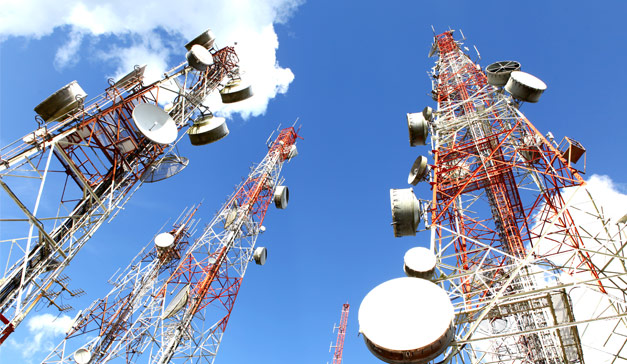
Clean and reliable power for telecom networks in Ethiopia, Liberia, and Sierra Leone will be expanded following a $45 million investment by the International Finance Corporation (IFC) in IPT PowerTech.

The investment targets countries where limited power supply continues to slow digital connectivity and broader economic participation, the institution stated earlier this week.
To enable this expansion, the IFC is providing a $45 million corporate financing package consisting of an A-loan of $27 million and $18 million in blended finance.
The blended portion is sourced from the Canada-IFC Blended Climate Finance Programme and the IDA20 Private Sector Window Blended Finance Facility.
The initiative marks the IFC’s first direct infrastructure engagement in Liberia in a decade and in Sierra Leone in six years.
It will help scale solar- and battery-based power systems that reduce reliance on diesel and support greener, more resilient telecom networks.
By improving the quality and stability of power to telecom towers, the initiative will strengthen mobile coverage and ensure that households, schools, health centres, and small businesses can depend on consistent digital services, said the IFC.
The funding supports the modernisation, operation, and maintenance of 2 235 telecom sites across the three nations. More than 90% of these are located in off-grid or weak-grid locations.
With new solar and battery systems powering these sites, mobile networks will experience fewer outages and improved service quality.
Optimising the energy mix is estimated to reduce power costs for operators by up to 30% in Liberia, 26% in Sierra Leone, and 52% in Ethiopia.
This transition is also expected to cut emissions by more than 10 624 tonnes of carbon dioxide annually. Furthermore, the partnership will promote gender inclusion by expanding opportunities for women in technical, operational, and leadership roles within the sector, says the IFC.
This agreement reflects a shared vision for a greener telecom industry and empowers the company to scale its innovative energy platforms, according to Nabil Haddad, CEO of IPT PowerTech Group.
Reliable and affordable power for telecom networks is a cornerstone of Africa’s digital transformation, said Nathalie Kouassi-Akon, IFC regional director for West Africa and the Gulf of Guinea.
Through this partnership, the institution is supporting a scalable, private sector-led solution that enables mobile operators to reach underserved and fragile communities more sustainably, added Kouassi-Akon.
The project advances the World Bank Group and African Development Bank’s Mission 300 initiative, which aims to provide electricity to 300 million Africans by 2030.

Expedier has unveiled “Expedier for Business,” an online pro-banking platform to simplify global payments, multi-currency transactions, and financial operations for expanding companies.

Kingsley Madu
The tool centralizes payments, invoicing, payroll, and treasury into one secure dashboard, tackling challenges like fragmented systems and poor visibility that hinder international scaling.
Kingsley Madu, Co-Founder and CEO of Expedier, said: “African businesses are increasingly global… Expedier for Business was built to simplify how companies manage money across borders while maintaining visibility, control, and compliance.”
Key features include customizable dashboards for payments, invoices, and workflows; support for USD, CAD, GBP, EUR, and more; virtual cards; automated payroll/invoicing; currency swaps; and real-time tracking.
Security measures cover two-factor authentication, KYC/KYB verification, and team access controls.
As cross-border trade and remote work boom in Africa, the platform aids firms dealing with international suppliers, teams, and customers. It is now available for organizations scaling globally.
Nigerian Communications Commission (NCC) has launched the Telecoms Identity Risk Management System (TIRMS) to enhance digital security and fight telecom fraud.

NCC
Dr Aminu Maida, Executive Vice Chairman, represented by Executive Commissioner Rimini Makama at an Abuja stakeholders’ forum, stressed mobile numbers (MSISDNs) as vital for banking, authentication, and services—but vulnerable to misuse via recycled, churned, or barred SIMs.
“The TIRMS Platform is a secure, regulatory-backed, cross-sectoral solution… to provide a uniform approach for managing risks relating to the integrity and utilisation of registered MSISDNs,” Maida said.
Objectives include better MSISDN access for accountability, fraud checks on dormant/suspicious numbers before service access, and proactive verification across sectors.
Proposed rules mandate 14-day churn notices, seven-day data submission to TIRMS, and blocking of fraudulent lines. Success hinges on telecoms, banks, security agencies, and others.
Maida highlighted NCC’s collaborative rulemaking for a “One Government” approach.
Cybersecurity Director Olatokunbo Oyeleye called digital trust an “operating licence” for growth: “Every mobile number in Nigeria [must] be trusted… TIRMS will safeguard users, reduce fraud, and reinforce confidence in our digital economy.”
TIRMS bridges gaps with CBN, NIMC, CAC, SEC, and PENCOM, aiming to cut fraud and boost trust.

NCC to Curb SIM Fraud, Strengthen Digital Security with New Platform

NBC Boss Urges Content Ceators to Participate in DSO

Kidnappers Now Use Banks to Collect Ransoms — Expert

CBN Says Bank Customers Won’t Lose Deposits because of Recapitalisation

Jury Finds Meta, Google Liable for Woman’s Social Media Addiction

Kaspersky Discovers New Phishing Campaign Exploiting Google Tasks Notifications to Steal Corporate Credentials

esentry 2025 Report Shows Healthcare, Financial Services and Telecoms as Staging Grounds for Increased Cyberattacks in Africa

Spotify’s Loud & Clear Report Reveals Over ₦60Bn Revenue for Nigerian Artists in 2025

MTN Nigeria Posts Record N1.70 Trillion Pre‑Tax Profit, Declares N20 Dividend for 2025

China Threatens to Shut Nigeria’s Satellite Over $11.44m Unpaid Debt




 E-Financial2 days ago
CBN Directs IMTOs to Open Naira Settlement Accounts

 Telecom2 days ago
Nigerians Lose N12.5Bn to AI-Driven Scams- PwC

 General News2 days ago
Court Remands Hacker for Allegedly Stealing N3.09Bn from FCMB

 Telecom2 days ago
Airtel Africa, Starlink Mobile Data and Messaging Testing Take off in Kenya

 E-Financial2 days ago
DLM Capital Group’s AAA-Rated Sovereign Bond-Backed Composite Notes (“SBCNS”) Strengthens Investor Confidence with Successful First Principal & Interest Payment

 E-Business2 days ago
AU Sees AI Adoption Evolving to Boost Economic Growth in Africa

 News2 days ago
Kaspersky, AFRIPOL Conduct Joint Cybersecurity Training for African law Enforcement

 Telecom2 days ago
GATEWAY Programme Opens Doors for 340,000 Nigerian Youths to Tap into $1.85trn Global Gig Economy