

E-Business
PalmPay, Jumia Partner to Launch Integration for Shoppers in Nigeria

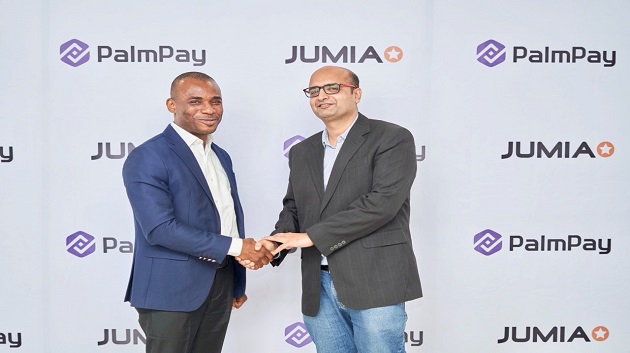
PalmPay, Africa-focused fintech operating Nigeria’s most used mobile wallet, and Jumia, Africa’s e-commerce giant, today announce a strategic partnership to enhance the digital payment ecosystem on the continent, starting with payment integrations and co-marketing efforts in Nigeria.

This partnership underscores both parties’ commitment to developing the digital payment ecosystem in Nigeria and grow the use of the cashless economy.
WIth PalmPay now available as a payment method, shoppers on Jumia will now be able to pay for their purchases with the option to check out with their PalmPay wallet, ensuring a seamless user experience and transaction reliability through the direct integration.
“We are proud to partner with Jumia as we bring together the best of fintech and e-commerce to redefine the online shopping experience,” said Sofia Zab, Chief Marketing Officer, PalmPay. “This strategic alliance aligns perfectly with our shared commitment to delivering a superior user experience and exceptional value to our customers.”
Speaking on the partnership, Sunil Natraj, CEO, Jumia Nigeria added: “At Jumia, we are dedicated to creating value for our customers by ensuring a convenient, reliable, and secure shopping experience.
“This partnership with PalmPay strengthens our commitment to enhancing the digital payments within our platform. By integrating PalmPay, we are providing more options for customers to access affordable and quality goods with the convenience of cashless transactions.”
This alliance marks the beginning of a long-term collaboration between two industry giants, aiming to drive innovation, increase convenience for consumers, and foster the adoption of digital payments across Africa.
To celebrate the launch of the partnership, PalmPay and Jumia are launching a special Christmas campaign, running from December 11th to 30th. During this period, customers who make purchases on Jumia using the PalmPay payment method will stand a chance to win exciting cash rewards. More details can be found on the brands’ respective social media pages. @palmpay_ng and @JumiaNigeria.


E-Business
Kaspersky Discovers New Phishing Campaign Exploiting Google Tasks Notifications to Steal Corporate Credentials

Kaspersky has uncovered a new phishing scheme that abuses legitimate Google Tasks notifications to trick corporate users into revealing corporate login credentials.

By leveraging Google’s trusted @google.com email domain and notification system, attackers bypass traditional email security filters and exploit users’ trust in familiar services.
In this campaign, victims receive an authentic-looking notification from Google Tasks with the subject line “You have a new task.” The message creates the illusion that the recipient’s company has adopted Google’s task management tool, pressuring them to act quickly. The notification often includes elements of urgency, such as a high-priority flag and a tight deadline, to prompt the victim’s immediate response.
Upon clicking the embedded link, users are directed to a fraudulent form disguised as an “employee verification” page, where they are asked to enter their corporate credentials under the pretense of confirming their status. These stolen credentials can then be used for unauthorised access to company systems, data theft, or further attacks.
“Google’s vast ecosystem of services gets exploited by scammers. The scheme with Google Tasks is part of a broader trend observed before and continuing into 2026, where cybercriminals misuse legitimate platforms to distribute scams and phishing.
Notifications originating from legitimate domains naturally evade many spam and phishing filters, while the social engineering aspect – making it seem like an internal company process – lowers the victim’s guard,” comments Roman Dedenok, Anti-Spam Expert at Kaspersky.
E-Business
esentry 2025 Report Shows Healthcare, Financial Services and Telecoms as Staging Grounds for Increased Cyberattacks in Africa

Cyber adversaries targeting African organisations are increasingly shifting away from opportunistic attacks toward deliberate, sector-specific campaigns aimed at the continent’s most critical digital infrastructures, according to the esentry 2025 Annual Report released by esentry, Lagos-based Africa’s leading indigenous Managed Security Service Provider (MSSP).

The report identifies healthcare, financial services, and telecommunications as the primary staging grounds for high-velocity cyberattacks, reflecting a growing focus on sectors that underpin economic stability, public welfare, and digital connectivity across Africa.
The findings are drawn from one of the largest cybersecurity datasets analysed in the region. Over the course of 2025, esentry processed more than 31 billion security events, generating 3.5 million alerts and successfully blocking over 15,000 malicious attempts. This monitoring scale shows that, while traditional financial institutions remain a core target, the threat landscape has expanded to include digital lending platforms, healthcare systems that store sensitive personal data, and telecom operators responsible for national and regional connectivity.
Within the healthcare sector, the report highlights ransomware as the most acute risk, with attackers frequently exploiting exposed Remote Desktop Protocol (RDP) services to compromise patient data and disrupt essential medical operations. In financial services, organisations are facing a surge in credential abuse, insider-related threats, and info-stealer malware designed to enable fraud and unauthorised access. Telecommunications providers are increasingly targeted by highly tailored phishing campaigns and attacks on exposed web services, which aim to harvest credentials and compromise customer data.
Commenting on the findings, Gbolabo Awelewa, Chief Business Officer at esentry, said the nature of cyber threats across Africa has evolved significantly. “The threats we are seeing today are deliberate, informed, and carefully tailored to local enterprises. Attackers are exploiting trusted access and moving quietly within networks, which makes early detection critical. Our coordinated cybersecurity model, spanning Defence, Intelligence, Offence, and Security Engineering, allows us to combine scale, speed, and deep contextual insight to detect and neutralise threats before they escalate,” Awelewa said.
A defining trend identified in the report is the shift from overt system exploitation to the abuse of legitimate access. By leveraging compromised credentials and ‘living-off-the-land’ techniques, attackers can blend into routine enterprise operations and significantly delay detection. This approach has compressed the attack lifecycle, enabling adversaries to move from initial access to full operational impact in fewer than 15 days.
To counter this acceleration, the report emphasises the importance of early detection and automated response. esentry says it currently contains low-complexity incidents in under 90 seconds, using a combination of structured threat hunting and centralised telemetry to anticipate and absorb attacker pressure rather than reacting after damage has occurred.
As African organisations continue to digitise, the esentry 2025 Annual Report positions itself as a critical reference point for understanding the continent’s evolving cyber threat environment. The report concludes that protecting Africa’s digital trust will require a shift away from fragmented security tools toward disciplined, coordinated defence frameworks, what esentry describes as a unified Phalanx formation.

The African Development Bank Group (AfDB) and the United Nations Development Programme (UNDP) have launched an ambitious $10 billion project to support the adoption of Artificial Intelligence (AI) across the continent.

The 10 Billion Initiative intends to accelerate ethical AI adoption and inclusive digital economic growth in Africa.
The initiative follows the Nairobi AI Forum, which took place earlier this month in Kenya and brought together governments, private sector leaders, development partners, and tech innovators to define pathways for impactful AI adoption.
According to the organisations, the strategy is a co-designed collaboration between the Bank Group, UNDP, and commercial partners that aims to raise up to $10 billion by 2035.
The resources will be used to create up to 40 million new jobs across the continent by 2035, through targeted investments that provide the groundwork for AI and accelerate widespread adoption in everything from entrepreneurship and regional data infrastructure to policy frameworks and skill development.
Nicholas Williams, AfDB Group ICT operations division manager, commented: “As a leading multilateral development institution, the bank is leveraging its comparative advantage to ensure Africa is not left behind in the AI era.
“The AI 10 Billion Initiative paves the way for expanded partnerships and sustained investments that will accelerate AI entrepreneurship, strengthen data and infrastructure ecosystems, and support inclusive growth across the continent.”

Kaspersky Discovers New Phishing Campaign Exploiting Google Tasks Notifications to Steal Corporate Credentials

NITDA Equips Federal Character Commission with Data Tools to Drive Public Sector Reform

Telecom Giant MTN Injects N1.0 Trillion CAPEX into Network Expansion

History is Watching: Tinubu’s Moment to Rescue Nigeria’s Stolen Future

Samsung Unveils Galaxy S26 Series, Powered by Smarter, Background AI

Kaspersky Launches OT Calculator to Align Cybersecurity Investments with Business Goals

Accidental Billionaire Opts for Jail Instead of Returning Money Credited Him by Mistake

Why the Future of PR Depends on Healthier Client–Agency Partnerships

Kaspersky Brings more Transparency to Threat Detection with New Hunt Hub

New Horizons Nigeria Breaks Ground: First to Fuse Mandarin into ICT Curriculum




 E-Business2 days ago
AfDB, UNDP Launch $10Bn AI Initiative for Africa

 Telecom2 days ago
Grey Expands Cross-Border Banking with USD Accounts, USDC Support

 News3 days ago
Obasanjo, Vanguard’s Amuka Lead Prayers for Zinox Chief Leo Stan Ekeh @70

 News2 days ago
Lotus Bank, REA Seal N100Bn Deal to Power Rural Nigeria

 News2 days ago
DG NITDA Reaffirms FG Commitment to Responsible, Inclusive AI

 General News1 day ago
KPMG Strengthens Africa Leadership to Support Long‑term Growth Across the Continent

 E-Financial2 days ago
CBN Cuts MPR by 50bps to 26.50% as Inflation Eases for 11th Month

 E-Financial2 days ago
Kuda Bank Teams Up with Lovers & Frnds for Inclusive Valentine’s R&B Bash