

General News
PMB Should Engage Private Sector Urgently to Save Nigeria- Zinox Boss


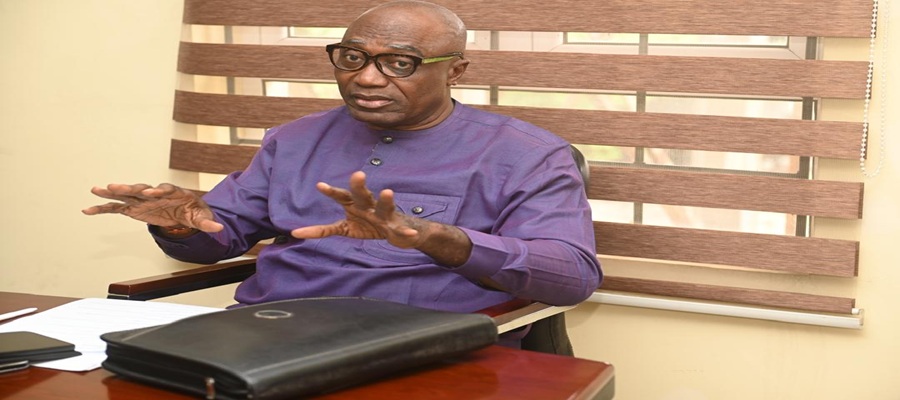
Leo Stan Ekeh is the chairman of Zinox Group. Ekeh is a serial digital entrepreneur, and a man who carries around with him an infectious passion for the Nigerian project, especially with regards to seeing the country take its rightful place in the comity of industrialized nations by leveraging on the limitless opportunities in the ICT sub-sector. Speaking to ICT journalists in Lagos, he bares his mind on a number of issues including the current economic climate, the education sector and much more. Peter ugwu was there for Nigeria CommunicationsWeek. Excerpts
ICT as a Game-Changer in a Nation’s Economic Development.
That’s correct. I have always told anyone who cared to listen that the way to go when it comes to taking Nigeria to the level of development we so urgently crave is by building a knowledge economy. In this 21st century, no one has a business being poor especially considering the proliferation of Information and Communication Technology tools and the internet which has put the world at everyone’s finger-tips.
Today, you no longer have to physically leave your environment to gain access to formal education.
With a computer and access to the internet, a variety of degrees can be acquired at your convenience. So is access to new information on business intelligence, ideas and concepts which could radically change one’s circumstances. Information is power and it is at everyone’s disposal at the speed of light these days so what business do we still have as a nation being classified as a Third World or developing country? Many years ago, I had realized that the power to liberate millions of our youths lay in the internet and associated technologies hence the decision behind our “Computerize Nigeria” project which we launched in 2001.
The idea is to provide affordable access to ICT tools and processes which, among other things, promoted the digital re-tooling of individuals, institutions and corporate entities as well as the launch of the first computer ownership scheme in Nigeria.
Imagine every Nigerian being able to own a computer which with he or she can access the internet and avail themselves of the huge well of information and intelligence that is evidently manifest therein.
Before long, you will have built a knowledge economy of highly literate and sound-thinking people who can stand on their own and take meaningful decisions in business and life which will undoubtedly rub off on the nation’s fortunes. Understandably, all these will have to go hand-in-hand with improved access to education which is the foundational basis for every developed economy
Improving Access to Education and Building the Knowledge Economy
Education is the bedrock of development, as you have rightly mentioned. While I commend the efforts of previous administrations, it is worth stating that more needs to be done to raise the dwindling standards.
Contemporary realities make it evidently imperative for the government to beam its focus on the education sector as a matter of urgency and the time is now.
The recent budget presentation made by the President which saw an increase in the allocation to education thankfully seems to have taken into cognizance the need to urgently intervene in the sector. Nevertheless, while allocating 5.5% of the budget which amounts to 396 billion and represents the largest sectoral allocation, is a big step in the right direction, more still needs to be done in expanding access to formal education for millions of our youths.
Today, many parents find it hard to support or see their children through school especially at the tertiary level owing to obvious economic challenges and the spiraling cost of access.
This is one area the government should focus on, with a view to finding means of reducing the impacts on especially indigent and economically vulnerable parents. Furthermore, the government needs to do more in the area of reviving our institutions to average standards which is not rocket science, moreso when you consider that what obtains at the moment is at best a watered-down version of what some of us were exposed to back then.
The Economy, Prevailing Downturn, Falling Price of Crude Oil, Forex
Well, I have always been an optimist. I believe the Nigerian economy can never shut down totally, by God’s grace.
However, the shocks and gaps in the economy at the moment represent our current realities and we must find creative ways to navigate this harsh economic climate. The unprecedented fall in the price of crude oil is a global phenomenon which not even the smartest economist could have predicted.
The only regret is the fact that successive governments failed to save for the present rainy day we are experiencing when prices were at their peak.
Having said that, we must always look forward. I sincerely believe that the current administration has the requisite political will and capacity to see the country through this storm and the new mindset of Nigerians to get things done properly also helps. I also believe that the organized private sector holds the key to a way out of the present quagmire.
As a matter of urgency, President Buhari should engage the private sector to save Nigeria. The three levels of the sector drives over 80% of Nigeria’s economy and certainly, we can only move forward when the government carries them along. Recall that in the run-up to last year’s elections, President Buhari met with representatives of the private sector in Lagos to present his party’s economic plans. This and other engagements certainly went a long way in contributing to his victory at the polls.
It is my considered opinion that the time is right for the President to enlist the support of the sector in finding a way out of the current economic challenges by restating the vision and focus of the government as well as its sincerity to turn around the economy, as eloquently outlined during the electioneering period. In so doing, the President can secure the support of the sector for the vision and plans of his government. For instance, by reaching out to large corporates, influential businessmen and individuals, and even some of our big churches with huge reserves abroad, the government can find a way out of the foreign exchange challenges. These establishments and individuals can lend the government through promissory notes at an interest rate of, say 1.5% per year which will be the highest anywhere in the world and repay gradually over a period of one year. The government can raise money through this means which will provide the needed foreign exchange to enable it meet the numerous commitments and also help it navigate and offset the low price of crude oil in the global market.
Government, on its own part, can reward the private sector by giving them a chance to have a say in government and by looking into some of the challenges being faced by the sector in terms of confiscation of goods by some agencies, multiple taxation from the tiers of government, unconducive business environment especially as they are the custodian of power and they should be accountable to the people who elects them to office.
I am confident that in 18 months, the current challenges will be solved and the economy will rebound.
Massive Job Cuts and Losses Being Experienced
I am sure no employer will be happy to embark on retrenchment, right-sizing or down-sizing, as the case may be. It is a reaction to the prevailing circumstances as businesses try their best to remain afloat. Government agencies are also not left out as they are also heavily involved. Down-sizing or job cuts have a huge, negative multiplier effect on the economy as it not only affects the individual who is laid off but also affects families and other dependents while creating a myriad of social problems. Statistically speaking, there are well over 23 million unemployed and under-employed Nigerians who are looking up to the government to provide employment opportunities for them.
Although little can be done by businesses but the President can appeal to large corporates and even small and medium companies to leverage on reserves by also offering some tax incentives for the next 18 months so that employees are not unnecessarily retrenched in the short term. This is the time for shareholders to cut their dividend expectation for the economy to survive because if there is no economy, we do not have a business. I frankly believe things shall turn around sooner than is being speculated.
Next Big Sector for Employment
I have been saying it in the last 20 years. It is technology, technology and technology. If past administrations invested heavily in this sector, the ICT sector would be earning more revenue than oil with solid hopes of prosperity for the majority, mostly for those from poor homes who have the brain power. Do we expect miracles from oil? The answer is no. Global statistics has shown credible trend in countries resolving their employment challenges through structured investment in the ICT sector. Is it that our leaders and their advisers are too blind to see future measureable wealth? The Devices, Software, Solution and E-commerce sector could employ well over 45 million Nigerians with solid future and could also bring a minimum revenue of $150billion every year. I am not sure what we are still waiting for to save this nation. Is it not a shame we are all waiting for oil prices to move up for the nation to survive? We are ignoring what we have control of and putting all our hopes on nature in this 21st century.
Make-up of the President’s Team
I must state here that I appreciate the calibre and quality of Ministers President Buhari has assembled to pilot the affairs of the nation. It is a very good team of seasoned men and women who can stand the test of integrity and service delivery. ]Having said this, they must be encouraged and made to work and put in their utmost best for the country to bring about the positive change Nigerians are yearning for.



In its bid to contribute its quota to the consolidation of security in Nigeria’s commercial capital, Lagos, telecommunications giant, Globacom, has thrown its weight behind the Lagos State Security Trust Fund (LSSTF) with a donation of ₦1 billion.

The generous donation was announced at a Private Sector Breakfast Meeting with CEOs, convened at the instance of the Executive Governor of Lagos State, Mr Babajide Sanwo-Olu, on Friday, January 30, 2026 and shows the company’s commitment to fostering public safety which would in turn, culminate in enhanced prosperity and social re-engineering in the state.
The donation, which is the biggest private-sector intervention from the telecommunications sector to the Fund in recent years, again shows that Globacom is a responsible, responsive and people-oriented corporate citizen.
Globacom disclosed that the intervention emphasized deeper collaboration between government and the state’s business community especially in relation to security, innovation and economic resilience—an agenda which the digital solutions company has unabashedly supported through sustained social investments.
The Executive Secretary/CEO of the Fund, Dr. Ayo Ogunsan, in his display of appreciation described Globacom’s largesse as “a powerful demonstration of corporate citizenship and a strategic investment in the stability of Lagos State,” saying since LSSTF was established to bridge funding gaps in security infrastructure, it desired voluntary contributions from corporate bodies and well-meaning collaborators.
Dr. Ogunsan promised that the ₦1 billion donation will significantly enhance the Fund’s capacity to address critical priorities for 2026, including multipurpose security helicopters and drones, Armoured Personnel Carriers (APCs), water cannons, digital communication equipment and Smart CCTV systems. These assets, he added, were germane to proactive policing, rapid response and intelligence-led operations across the state.
He therefore encouraged Lagosians to support businesses that invest in the safety and development of the state, saying, “When companies step forward to secure our environment, residents should reciprocate by patronizing them. Their support directly impacts the protection of lives, property and economic activity.”
A statement from Globacom explained that the donation was an expression of the company’s staunch belief in Nigeria’s future. “At Globacom, we see security not as a government burden alone, but as a shared responsibility. When people feel safe, enterprise grows, creativity flourishes and hope becomes practical. Our support for the LSSTF is about protecting the everyday dreams of millions of Lagosians,” he noted.
With this donation to the LSSTF, Globacom has furthered its tradition of investing directly in the conditions like safety, confidence and stability which help commerce to thrive. Consequent on the support, LSSTF is gingered to raise the bar of security thereby concretizing Lagos State’s position as Nigeria’s safest and most vibrant commercial hub.
This recent financial intervention from Globacom is in tandem with its avowed commitment to social responsibility that is practical, timely, scalable and aligned with national priorities.
The company’s interventions in the past decades have spanned relief efforts for flood-affected communities, support for displaced persons, advanced youth skills through structured training programmes, and investments in education, culture and digital inclusion.

World International Economic Group (WIEG) Nigeria has announced plans to host its inaugural International Investment Summit on Feb. 25 and 26 at the Four Points by Sheraton Hotel, Oniru, Victoria Island, Lagos.

WIEG
The summit, themed “Nigeria’s Next Frontier: Unlocking Sustainable Investments for Economic Transformation,” is aimed at connecting investment-ready Nigerian enterprises with global capital while addressing long-standing challenges facing micro, small and medium enterprises (MSMEs), cooperatives and women-led businesses.
Speaking at a pre-summit press conference on Friday at Compact Communications Ltd., GRA Ikeja, Lagos, Mr. Bassey Essien, WIEG’s Project & Event Consultant said the summit would serve as a structured platform linking policy, finance and enterprise growth.
Essien identified limited access to structured funding, poor investment readiness and weak documentation as major barriers confronting Nigerian businesses, despite the availability of domestic and international capital.
“Enterprises that succeed understand the importance of preparation. Some invest as much as N200 million in professional feasibility studies to meet the standards of banks and institutions such as the African Development Bank. That level of preparation enables access to collateral-free funding,” he said.
According to him, weak policy continuity, inadequate post-intervention monitoring and fragmented regulatory frameworks have continued to undermine business growth in the country.
“Policies often change with governments, and there is little tracking after interventions. More importantly, many businesses are not prepared in ways financiers require,” Essien noted.
He explained that the summit would convene policymakers, investors, development finance institutions and pre-screened MSMEs and SMEs operating in priority sectors, including the creative industry, agriculture, energy transition, finance and aviation.
Essien described the creative sector as a major contributor to Nigeria’s economy, accounting for about 2.5 per cent of the Gross Domestic Product, but said weak financing structures, piracy and poor intellectual property (IP) protection had limited its growth.
Highlighting the summit programme, he said Day One would feature conferences on macroeconomic issues, policy reforms and enterprise growth, while Day Two would focus on sector-specific deal-making roundtables.
“These deal rooms will be organised by sector — from aviation maintenance, repair and overhaul (MRO) to renewable energy — with lawyers, financiers and policymakers present to fast-track transactions,” he said.
Essien added that the Nigerian Investment Promotion Commission (NIPC) would be present to ensure post-event monitoring and tracking of investment deals concluded during the summit.
He disclosed that the creative economy segment would be supported through partnerships with the Association of Movie Producers of Nigeria (AMP) and financial institutions to fund viable projects in Nollywood, music and fashion.
“Intellectual property regularisation is critical. Once ideas are properly documented and protected, investors gain confidence,” he said.
On energy and aviation, Essien said the summit would spotlight renewable energy solutions to reduce dependence on generators and promote the establishment of commercial MRO facilities to curb the high cost of aircraft maintenance abroad.
He also announced the participation of B Lab Africa, a U.S.-certified organisation focused on environmental, social and governance (ESG), diversity, equity and inclusivity standards, noting that the initiative would help small businesses improve governance and access global funding.
Essien revealed that investment commitments estimated at about 500 million dollars were expected to emerge from the summit.
“This is a private-sector-led, non-partisan initiative that places no financial burden on government. It is focused on job creation, empowering women-owned enterprises and improving investor confidence through transparent and secure processes,” he said.
He urged Nigerian entrepreneurs and SMEs to prioritise proper documentation, professional advisory services and IP protection to position themselves for sustainable growth.
“We are creating a structured pathway from policy to capital to enterprise growth,” Essien added.
By Blaise Udunze
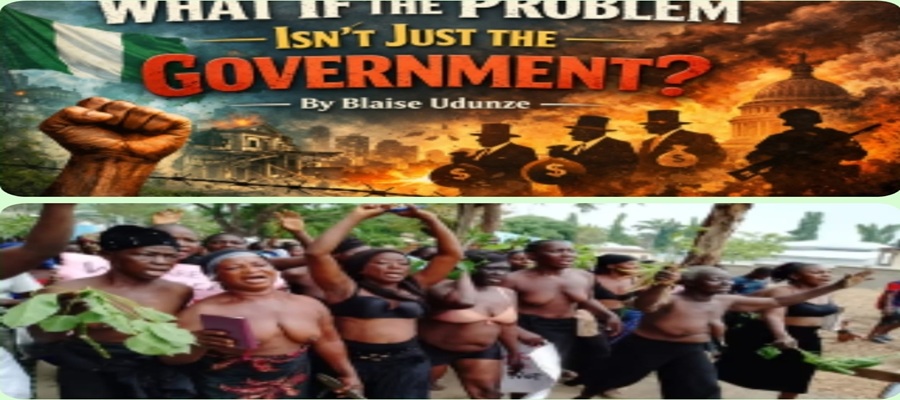
Recent reports in the media space highlighting threats of “naked protests” by market women across several states if the federal government fails to address the issue of hardship underscore the depth of hunger and poverty gripping the nation. No doubt, there is hardship in the country, of which Nigeria’s poverty crisis is often framed as the government’s failure, poor policies, weak institutions, corruption, and economic mismanagement.

From a balanced viewpoint, while these factors are undeniable, they do not tell the full story in its totality. The reality is that the majority of Nigerians, being the larger populace experiencing this challenge, will definitely oppose the ideology that poverty in Nigeria is not merely a policy problem; it is also a societal one. The underlying truth is that this is shaped by citizens’ behaviours, choices, cultural norms, and civic attitudes. This will remain a lived experience of the people until this dimension is confronted honestly; reforms will continue to yield limited results.
Nigeria’s economy has witnessed growth as inflation has decelerated, with headline inflation easing to 15.15percent and food inflation retreating to 10.84 percent, the exchange rate was stabilizing, and foreign reserves ($46.7 billion) had climbed to a seven-year peak, and despite the growth figures and ambitious government targets, millions of Nigerians remain trapped in poverty. More alarming is the recent estimates suggesting that an additional two million people could fall below the poverty line this year alone.
The intrigue is that the geographic distribution of these figures tells a deeper story, and this is more revealing than the numbers; however, there is an uneven geographical spread. Of concern here, which is troubling, is why states such as Yobe, Jigawa, Katsina, Kano, and Zamfara tend to experience or be deep in poverty when compared to other states like Lagos, Port Harcourt, Aba, Enugu, and Onitsha, which are projected to experience less poverty. This disparity raises a critical question, which calls for an urgent answer to why poverty outcomes differ so starkly within the same country, because no doubt, much of the explanation lies beyond government failures.
While governance challenges exist nationwide, the explanation extends beyond Abuja. Perhaps this is from deliberate ignorance of the people; the reality is that it lies in education, cultural practices, social norms, and individual responsibility play decisive roles in shaping economic outcomes.
One key alarming fact that has deeply entrenched poverty in many northern states, unlike other regions, is limited access to education, especially for girls, early marriage, polygamy, and large family sizes. There have been several factors that reinforce cycles of poverty by stretching limited household resources, reducing educational attainment, and limiting economic mobility, and this will continue to be a long-standing challenge or lived experience for the people if not addressed.
It is clearer that practical comparison illustrates this reality. Taking into consideration that a low-income worker in Yobe who marries four wives and raises over twenty children will inevitably struggle to provide adequate education, healthcare, and opportunities for his family, while in contrast, a similar worker in Aba is more likely to marry later, have fewer children, and invest in their education. Without much ado, over time, the children in the latter household acquire skills, productivity, and economic relevance because their parents chose to prioritise education for them, while the former remain trapped in subsistence and dependency. These differences are not subjective; they are structural and measurable.
Religion and culture further complicate the picture as record has it that Nigeria is one of the most religious countries in the world, yet religiosity often serves personal aspirations, prosperity, miracles, or divine favour rather than reinforcing civic responsibility and social ethics. Today in Nigeria, political leaders frequently reinforce this distortion and moral narrative. Only recently, it was announced that public officials in Abuja celebrate marrying off multiple children at once, some governors borrow billions to spend public funds on religious pilgrimages, while underfunding education, healthcare, and infrastructure, they send a clear message about priorities. In contrast, states that invest deliberately in education, such as Enugu with its smart school initiatives, demonstrate how leadership choices influence societal outcomes.
Still, the crisis of responsibility is not confined to any region. It is national, as proved during the discussions at Lagos State’s 12th Summit of the Association of Retired Heads of Service and Permanent Secretaries (ALARHOSPS), it was emphasized that societal progress depends not only on leadership but on citizenship behaviour. According to Professor Wusu Onipede, citizenship is defined by commitment to collective welfare, not mere residence.
The truth is not far-fetched, going by the saying that actions, positive or negative, directly impact society. What would have informed the common actions, such as stealing public assets, vandalizing infrastructure, ignoring traffic laws, or tolerating corruption, all accumulate into widespread societal harm as seen in our everyday lives. Conversely, volunteering, mentorship, and community engagement generate resilience, opportunity, and shared prosperity. With close reading, one will notice that this dynamic was captured succinctly in Professor Oluwatomi Alade’s “Triangle for Change,” which pointed to the home, the school, and the community. Parents must brace up to understand that the primary responsibility is upon them to start prioritising education, teachers who impart both knowledge and character, and communities that uphold civic values create the foundation for sustainable development because the truth is that the change does not only rest on the government. In the same manner, it will be said that neglect in any of these spheres, whether through early marriage, disregard for schooling, or normalization of polygamy, undermines national progress.
Religious institutions, as Professor Oguntola-Laguda argues, must also evolve, which means that beyond spiritual teachings, they should emphasize practical social ethics in the areas of responsibility, productivity, gender inclusion, and civic duty. In regions where harmful norms persist, faith leaders, traditional authorities, and elders possess the influence necessary to drive change, if they choose not to use it, otherwise the society will remain impoverished.
Globally, the link between social norms and poverty is well established, and norms that condone child marriage, gender exclusion, or unchecked family sizes perpetuate intergenerational deprivation. Over the period, in other countries, it is clear that economic interventions alone cannot dismantle these patterns because countries like India show that combining education incentives, political inclusion, and social protection can reduce poverty among marginalized groups. Initiatives such as Uganda’s SASA, which is a program that demonstrates that shifting attitudes toward gender and empowerment lead to improved economic outcomes. Nigeria’s poverty strategy must similarly integrate social transformation with economic reform.
None of this absolves government responsibility. Poorly sequenced reforms, rising taxes, insecurity, weak infrastructure, and inadequate social protection continue to deepen hardship. Senator David Mark of the African Democratic Congress has criticized what he terms “vicious policies” that worsen citizens’ vulnerability. Nigerians are acutely aware of these failures. What they demand is not statistics or political rhetoric, but practical policies that reduce hardship, enable productivity, and promote inclusion.
Even at this, Nigerians must take into cognisance that government action alone is insufficient. Poverty cannot be eradicated where large families are unsustainable, education is undervalued, and corruption is tolerated at the household and community levels. Individual responsibility remains the missing link. Citizens must be discreet in their timing for marriage until they can provide adequately, manage family sizes responsibly, educate all children, especially girls and reject the glorification of excess and impunity.
Insecurity further illustrates this shared responsibility. Though one will argue that the state bears the constitutional duty to protect lives and property, law and order. What about the dwellers? Communities must actively support security efforts through vigilance, information sharing, and conflict resolution. Silence in the face of crime and corruption enables disorder because independence loses meaning when citizens disengage from safeguarding their own communities.
Another critical aspect that is akin to insecurity is that economic development also falters when citizens undermine progress through dishonesty, rent-seeking, and apathy. What people fail to understand is that entrepreneurship, accountability, and cooperation are as vital as government-led job creation. The same thing can be said of cooperatives, vocational training, and local enterprise, which can deliver immediate relief and long-term sustainability. Wealthier Nigerians must focus on genuine social investment, creating opportunities, supporting education, and building institutions that outlast personal interest or individual generosity, rather than charity or wasteful spending or fueling crimes. Social responsibility must become a social norm.
One laughable misconception people harbour about independence, which must be clarified, is that it is not simply freedom from colonial rule; it is the presence of civic responsibility. It must be understood that poverty persists not only because of policy gaps but because of harmful norms, cultural practices, and neglected duties. Anyone can argue this, but the truth is that there will always be a replay of this menace kicked against because every child denied education, every early marriage, every act of corruption reinforces the cycle.
Breaking this repeating problem, known as poverty, takes several coordinated strategies working together, not just one solution. There must be an understanding that the issues are complex and interconnected; they must be addressed from different angles at the same time. For these reasons, the government must provide stable policies, infrastructure, and social protection and the citizens, in like manner, must reform behaviours that perpetuate poverty. The same must be said of the families that must prioritize education, and also the communities must reward civic engagement and innovation. Religious and cultural leaders must promote responsibility alongside faith because these are critical platforms that have the attention of the greater number of people. The policymakers at this juncture must ensure that policies not only deliver relief but also incentivize behaviours that support sustainable development.
Without too much argument, it is glaring that Nigeria’s potential is evident in states and communities that have embraced education, civic virtue, and social reform. Judging by the developments in different states, one will conclude that Lagos demonstrates how engagement and accountability improve outcomes, while Enugu shows that investing in children yields long-term dividends. Conversely, regions where harmful norms persist remain trapped, regardless of federal spending.
Without much ado, all Nigerian stakeholders must come to the terms that Nigeria’s poverty challenge cannot be reduced to government failure alone. It is a collective problem rooted in culture, norms, and personal choices because sustainable development demands both accountable leadership and responsible citizenship. The fact remains that poverty will remain an enduring shadow, irrespective of the repeated threats of “naked protests,” but until Nigerians fully embrace their role as architects, not just beneficiaries of national progress. True independence begins when citizens accept that the future of the nation rests as much in their daily choices as in public policy.
Blaise, a journalist and PR professional, writes from Lagos and can be reached via: [email protected]

Alawuba Advocates Security, Bankable Projects, Infrastructure Development to Promote South-East Vision

Ecobank Profit Jumps 29 Percent to N950Bn

Trump Says He Made no Mistake Sharing Video Depicting Obamas as Apes

Orya, Ex-NEXIM MD Jailed 490 Years for N2.4Bn Fraud

Airtel Nigeria Commits to Upgrade of its Network Infrastructure for Improved Quality of Service

19 Nigerian Banks Meet CBN Recapitalization Targets Ahead of March Deadline

Nigerian Terra Industries Secures $11.8m for Expansion

US invests $115m in counter-drone tech for World Cup security

Firm Detected a Fivefold Surge in QR Code Phishing Attacks in the Second Half of 2025

Firm Detected a Scam Exploiting OpenAI’s Teamwork Features




 General News2 days ago
Globacom Donates ₦1Bn to Lagos State Security Trust Fund

 Telecom3 days ago
MTN Guns for $2.76bn IHS Towers Buyout in African Telecom Power Grab

 E-Financial3 days ago
Incentives alone won’t win over Africa’s next billion fintech users — Kuda MFB MD
 Telecom2 days ago
Airtel Nigeria Commits to Upgrade of its Network Infrastructure for Improved Quality of Service

 Telecom3 days ago
Google Calls on Africa’s AI Trailblazers for 10th Startup Accelerator Cohort
 E-Business3 days ago
Firm Reviews the Evolution of Phishing Threats in 2025

 E-Business2 days ago
PwC Reveals AI Scaling Gap Slows Africa’s Digital Transformation

 General News3 days ago
EdTech Platform Unveils over 5,000 Self-Paced Courses for Skills, Knowledge, and Literacy