

/home/kenneth/web/nigeriacommunicationsweek.com.ng/public_html/wp-content/themes/zox-news/parts/post-single.php on line 153
">
Warning: Undefined array key 0 in /home/kenneth/web/nigeriacommunicationsweek.com.ng/public_html/wp-content/themes/zox-news/parts/post-single.php on line 153
Warning: Attempt to read property "cat_name" on null in /home/kenneth/web/nigeriacommunicationsweek.com.ng/public_html/wp-content/themes/zox-news/parts/post-single.php on line 153
PoS Transactions Hit 3.6m in 3 Months

Point of Sales (POS) Terminals, the machine used to accept cards for payment of goods and services are increasingly becoming popular as merchants in the country recorded 3.6million transactions over the electronic payment devices from January to March this year, Nigeria CommunicationsWeek has learnt.
The figure was achieved on 35, 000 active terminals registered with National Central Switch (NCS) being operated by Nigeria Inter-Bank Settlement System (NIBSS) the Payments Terminal Service Aggregator (PTSA) for the industry.
Tunde Ogungbade, managing director, Global Accelerex, a PoS terminal services provider, said that consumers have finally discovered that the use of Point of Sales (POS) terminals can help them leapfrog the obstacle waiting for cash to dispense at ATMs.
“They now better use of their time while giving them some measure of security because they don’t carry cash” he added.
Gungbade said “we observed that POS transaction value has grown exponentially by 300%, from 5.1 trillion in September 2012 to 15.3 trillion naira in September 2013. While this is impressive, there is more expected because these transactions by value and volume are behind numbers for NIP, which I can only imagine is behind cash”
Nodding in agreement, Agada Apochi, managing director, Unified Payments, also advocated the use of value added tax to encourage the use of electronic channels for payments.
According to him, government can also do a lot by creating the right incentives for adoption of e-payments. If Government offers tax incentives for e-payments, it will be an effective tool to encourage a cashless culture.
That does not mean lower tax collection by government. Rather, Government tax collection will increase. For instance, if Government were to offer 50% incentive on Value Added Tax for payments made electronically, Government tax collection could increase by several multiples. 2.5% VAT on N100 million transactions is higher than 5% VAT on transactions of N10 million. Currently, many transactions are not tracked because of cash payments and that is to the disadvantage of government.


Warning: Undefined array key 0 in /home/kenneth/web/nigeriacommunicationsweek.com.ng/public_html/wp-content/themes/zox-news/parts/post-single.php on line 493
Warning: Attempt to read property "cat_ID" on null in /home/kenneth/web/nigeriacommunicationsweek.com.ng/public_html/wp-content/themes/zox-news/parts/post-single.php on line 493

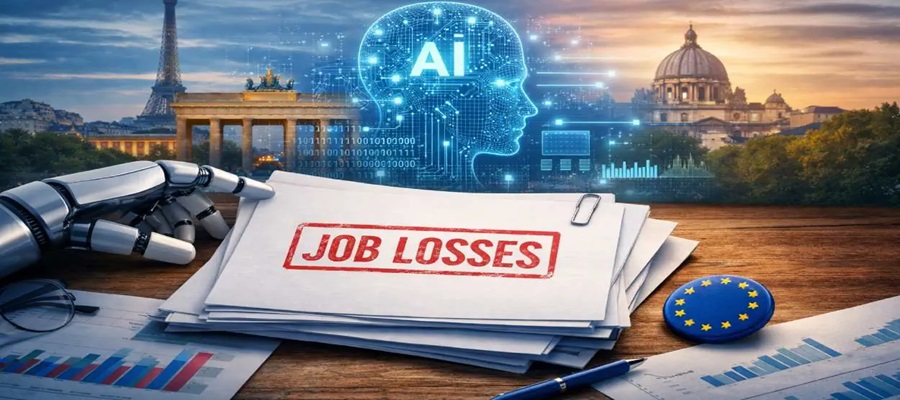
More than 45,000 jobs have been cut across the global technology sector in the first few months of 2026, according to data from RationalFX, signalling that the industry is still adjusting after a period of aggressive hiring rather than returning to a full growth phase.

“In 2025, automation, artificial intelligence, and sustained cost-discipline measures drove much of the downsizing, with entire departments restructured or eliminated in favour of leaner, AI-assisted workflows. This trend has continued full steam into 2026,” said Alan Cohen, analyst at RationalFX.
According to the report, if the current rate of redundancies is sustained, total layoffs in 2026 could surpass the 245,000 recorded in 2025.
The majority of these layoffs have been concentrated in the United States, with major companies continuing to trim their workforce despite stable core operations.
Amazon has announced approximately 16,000 job cuts this year, while Block has also reduced thousands of roles as it tightens operations and shifts focus towards artificial intelligence.
There are indications that further reductions may follow.
Meta is reportedly considering additional layoffs as it increases investment in AI infrastructure, while PayPal and Klarna are reassessing spending and hiring strategies amid ongoing uncertainty.
Established technology firms are also undergoing restructuring. Dell has reduced its workforce by around 11,000 over the past year as part of a broader reorganisation, while Salesforce has cut approximately 1,000 roles in 2026 while aligning its teams more closely with AI-driven products.
Outside the United States, layoffs have been smaller in scale but more geographically dispersed.
Australia has reported around 2,650 job cuts so far this year, followed by Sweden with roughly 1,923 and Netherlands with about 1,700.
Other markets have also been affected. Israel and India have recorded approximately 1,539 and 1,520 layoffs respectively, with Israel’s startup ecosystem particularly sensitive to tighter funding conditions, while in India, both startups and larger IT firms have reduced headcount as global client spending slows.
In Singapore, around 1,016 layoffs have been reported, reflecting a softer hiring environment across Asia’s major technology hubs, where companies are adopting a more cautious approach amid uneven demand.
Across Europe, job cuts have been comparatively limited but still noticeable.
The United Kingdom has recorded around 1,000 layoffs, while Czech Republic and Germany have seen smaller reductions.
The broader trend suggests that technology companies are shifting towards leaner operations and more defined priorities following years of expansion. Increasing investment in automation and artificial intelligence is also reshaping the types of roles in demand.
For employees, the impact is becoming increasingly visible, with hiring slowing and becoming more selective. While opportunities remain, companies are taking a more measured approach to recruitment compared to the rapid expansion seen in previous years.
Further credit… .storyboard18.com

Central Bank of Nigeria (CBN) has been named Central Bank of the Year 2026 by an awards committee in London.

The award recognises the bank’s major reforms that helped stabilise Nigeria’s economy and improve investor confidence.
The award is part of the 13th annual Central Banking Awards. It highlights how the CBN helped turn around Nigeria’s economy, which was close to crisis in 2023.
At that time, Nigeria faced serious problems such as high inflation, a weak currency, low foreign reserves, and about $7 billion in unpaid foreign exchange obligations.
There was also a big gap between official and black-market exchange rates.
After Olayemi Cardoso was appointed governor in October 2023 by Bola Ahmed Tinubu, the CBN introduced strong reforms. These reforms focused on proper monetary policies, transparency, and market-based systems.
One major change was in the foreign exchange system.
The CBN removed multiple exchange rates and introduced a “willing-buyer, willing-seller” system. This made the market more transparent and reduced manipulation.
The bank also cleared old foreign exchange debts owed to sectors like aviation and manufacturing.
This helped restore trust in the economy. By late 2025, the gap between official and black-market exchange rates dropped to less than 2%.
Nigeria’s foreign reserves also improved, rising to $46.7 billion by November 2025 the highest level in almost seven years.
This was due to better foreign exchange inflows, stronger exports, and renewed investor confidence.
The International Monetary Fund praised these reforms, saying they improved the foreign exchange market and made pricing more reliable.
Inflation, which peaked at 34.8% in December 2024, dropped to 15.1% by January 2026. The CBN achieved this by raising interest rates and carefully managing the economy.
The bank also improved its internal operations. It stopped some programmes that were increasing money supply and causing inflation.
It strengthened its systems, improved compliance, and introduced digital tools, including artificial intelligence.
In the banking sector, the CBN introduced new rules requiring banks to increase their capital. This is expected to make the financial system stronger.
Nigeria also improved its fight against financial crimes. In 2025, the country was removed from a global watchlist for money laundering after improving its monitoring systems.
These reforms boosted Nigeria’s global image. Credit rating agencies upgraded the country’s outlook, and investor interest increased. Nigeria’s 2025 Eurobond attracted more than five times the expected subscriptions.
Although progress has been made, the CBN says challenges still remain, such as maintaining low inflation and completing banking reforms.
Overall, the award shows that Nigeria is regaining its position in the global financial system, thanks to strong policies and reforms by the CBN.

Elon Musk, a billionaire internet entrepreneur, was held responsible by a federal jury in San Francisco for deceiving Twitter shareholders during his contentious $44 billion takeover of the social media site.

Elon Musk
Following a three-week trial in a federal court in California, the verdict was handed out on Friday.
It found that Musk had made false and misleading representations in tweets that were posted in May 2022.
The jury concluded that at a crucial point in the purchase process, these remarks caused Twitter’s share price to decline.
Investor Giuseppe Pampena filed the action on behalf of stockholders who sold their Twitter stock between mid-May and early October 2022, a time when Musk’s commitment to closing the purchase was questionable.
Jurors determined that Musk violated US securities laws prohibiting deceptive statements capable of influencing market prices.
Legal representatives for the plaintiffs estimate potential damages at approximately $2.6 billion, exposing Musk to a significant financial penalty if the ruling is upheld.
In order to give Musk leverage to renegotiate the purchase price or back out of the transaction, plaintiffs contended that the statements were meant to lower Twitter’s valuation.
Musk finished the transaction in October 2022 after Twitter filed a lawsuit to enforce the arrangement, despite early attempts to end it. Later, he changed the platform’s name to X.
The ruling has been disputed by Musk’s legal team, which has confirmed plans to appeal and described it as a temporary setback.
For Musk, who has won a number of well-known court cases, the decision represents a rare setback.
Meanwhile, he was cleared in a separate defamation case in Texas and had also won a similar shareholder lawsuit in 2023 related to his 2018 tweets about taking Tesla private.

Tech Firms Sack over 45,000 so Far in 2026

CBN Wins Central Bank of the Year Title @13th Global Awards

Jury Finds Elon Musk Liable for Misleading Twitter Investors

FG Taps Quest Merchant Bank for Advisory on 90,000km Fibre Project

TEF-Backed Entrepreneurs Generate $4.2Bn, Create 1.5m Jobs across Africa

Kaspersky Discovers New Phishing Campaign Exploiting Google Tasks Notifications to Steal Corporate Credentials

esentry 2025 Report Shows Healthcare, Financial Services and Telecoms as Staging Grounds for Increased Cyberattacks in Africa

AfDB, UNDP Launch $10Bn AI Initiative for Africa

MultiChoice Suspends Yearly DStv Price Hike as Canal+ Pushes Growth

MTN Nigeria Posts Record N1.70 Trillion Pre‑Tax Profit, Declares N20 Dividend for 2025




 News2 days ago
African Tech Start-ups to Receive $46m of Speedinvest Africa Fund

 Telecom2 days ago
Court Bans Kenyan Telcos from Recycling SIM Cards

 E-Financial2 days ago
Providus Bank Fully Meets CBN Capital Requirement, Sets Record Straight

 E-Financial2 days ago
UBA UK, BII Sign Letter of Intent to Slash Africa’s $80Bn Trade Finance Gap

 Telecom2 days ago
Binance Earn: Simple Way to Earn Rewards on Idle Crypto Holdings

 News2 days ago
UK, Nigeria Unveil Three-Year Plan to Combat Immigration Crime

 News2 days ago
U.S. Charges Three in $2.5 Billion Plot to Smuggle Nvidia AI Chips to China

 General News2 days ago
Court Jails ‘Colonel’, ‘Major’ of Global Money-Laundering Ring