

News
Power Supply to Nigerian Households Down to 37%- NOI report


Power supply to Nigerian households in fourth quarter 2016 (4Q2016) declined as only an average of 37 percent reported improvement in power supply, as revealed in aggregated power poll results released by NOIPolls for the second half of 2016 (July to December 2016) covering Q3 and Q4.
This represents a significant 9-point decline when compared to the third quarter (Q3) of 2016 at 46 percent.
According to the report, Nigerians experienced the highest improvement in power supply in Q3 (46 percent) and this was possibly as a result of the adequate water reserves in the nation’s water dams within this period (the peak of the rainy season) used to power the Hydro Generating Plants since Nigeria’s Kainji, Shiroro and Jebba hydro plants rely on water to generate electricity.
A view of the individual months covered in this period revealed a constant downward trend observed from the month of October to December 2016 and the month of December accounted for the lowest (27 percent) improvement in power supply in the second half of 2016.
Similarly, analysis of the monthly average cumulative hours of power supply experienced by Nigerian households nationwide for the months of August and September 2016 each stood at 10.6 hours daily, representing the highest daily cumulative hours of power supply within the six-month period while the quarterly nationwide average daily cumulative power supply to Nigerian households in Q3, 2016 stood at 9.9 hours.
It is pertinent to note that although these daily average hours of cumulative availability of power were not near an acceptable standard of 24 hours’ daily supply, it was perceived to be a little better than the results obtained in Q1, Q2 and Q4, 2016 with the quarterly nationwide average daily cumulative power supply of 8.8 hours, 6 hours and 9.6 hours respectively.
These current results were in line with the power industry statistics obtained from the National Electric System Operation (SO) which showed that electricity generation improved step by step in the third and fourth quarter of the year across the country as power generation hovered above 4,000MW, contrary to around 2,500 to 3,000 megawatts in the second quarter.
Nonetheless, more still needs to be done to find a pragmatic solution to issues militating against power generation, transmission and distribution as anything short of this is capable of affecting development in the county.
Lastly, the power insufficiency in the country is of great concern and calls for immediate action to address this persistent problem. Nigerians are not oblivious of the tremendous efforts of the Federal Government of Nigeria at salvaging the Nigerian economy, but without fixing the power sector, those efforts would be futile. This is because constant electricity supply is pivotal to achieving socio-economic development and as a nation that craves immense development in this regard; more needs to be done. These are some of the key findings from the aggregated power sector poll conducted by NOIPolls over a period of six months (July to December 2016).
Survey Findings- Nationwide Monthly Tracking of Power Supply
Analysis of findings from the monthly tracking of power supply over a period of six months, precisely from July to December 2016, revealed that 53 percent of Nigerians experienced more power supply in the month of September. However, a constant downward trend was observed from the month of October to December 2016 and the month of December accounted for the lowest (27 percent) in power supply in the second half of 2016.
Subsequently, quarterly analysis of results revealed that Q3, 2016 recorded the highest average improvement in power supply nationwide with 46 percent and this figure represents a significant 9-point decline when compared to Q4, 2016.
This implies that most Nigerians experienced less power supply in their household in the fourth quarter (Q4) than in the third quarter (Q3) of 2016.
An overall analysis of 2016 showed that Nigerians experienced the highest improvement (46 percent) in power supply in Q3. On the other hand, Nigerians experienced the lowest (17 percent) power supply in Q2 and this represents a huge 29-point difference between the two quarters.
Further analysis of the monthly average cumulative hours of power supply experienced by Nigerian households nationwide for the months of August and September 2016 each stood at 10.6 hours daily and they both represent the highest daily cumulative hours of power supply within the six months period. On the contrary, the lowest daily cumulative hours of power supply was observed in the months of July 2016 at 8.6 hours, according to NOI Polls report.


Entrepreneurs backed by the Tony Elumelu Foundation (TEF) have generated more than $4.2 billion in cumulative revenue since the organisation began its grant programme in 2015, according to Somachi Chris-Asoluka, chief executive officer of the foundation.

Chris-Asoluka, revealed this during a virtual media briefing, where she also stated that over $100 million has been distributed to nearly 24,000 young entrepreneurs across Africa.
She noted that the beneficiaries of the programme have gone on to create about 1.5 million jobs, both directly and indirectly, across various sectors of the continent’s economy.
The performance, she said, has strengthened the resolve of the foundation and its partners to scale up financial support for emerging businesses.
Chris-Asoluka emphasised that the foundation’s interventions are anchored on the conviction that entrepreneurship is central to reducing poverty and reshaping Africa’s economic future.
She explained that selected participants receive a $5,000 seed capital grant, in addition to structured business training and mentorship designed to help them either expand existing enterprises or establish new ones.
Highlighting operational challenges faced by entrepreneurs, she identified inadequate electricity supply as a major constraint.
According to her, many small businesses spend as much as 60 per cent of their earnings on alternative power solutions, including generators and inverters.
To mitigate this challenge, she disclosed that Tony Elumelu, TEF founder, alongside the foundation’s leadership, has been engaging governments across Africa on the urgent need to improve power infrastructure.
She further stated that investments by programme beneficiaries cut across critical sectors such as agriculture, artificial intelligence, manufacturing, and technology innovation.
Chris-Asoluka also announced that the foundation’s 2026 cohort of entrepreneurs will be formally unveiled by Elumelu in Abuja.


A new financial operations platform, Morney, has officially launched in Nigeria to help businesses face growing pressure to digitise their finance processes as the country’s shift towards electronic invoicing.

Developed by Morzoe Technologies Inc. and introduced locally through its partner, BuySimply Services Limited, the platform is designed to help organisations streamline and automate financial workflows.
Speaking at the launch, Head of Growth at BuySimply, ‘Mide Olubi, said many Nigerian organisations still depend on fragmented systems such as emails and spreadsheets to manage expenses, supplier invoices and payments.
According to him, this approach often results in inefficiencies, delayed processes, weak oversight and a higher risk of errors.
He noted that Nigeria’s increasing adoption of electronic invoicing and tax digitisation frameworks is accelerating the need for structured and transparent financial systems. Businesses, he said, must move away from manual processes and adopt platforms that provide clear visibility into financial operations.
Morney integrates payments, procurement, expenses and invoicing into a single system, enabling finance teams to automate approvals, monitor transactions in real time and maintain accurate records.
The platform also supports supplier onboarding and invoice processing, helping organisations better manage operational spending.
The company revealed that businesses across sectors such as FMCG, manufacturing, energy, banking and telecommunications are already adopting the solution to improve efficiency and strengthen financial control.
It added that the partnership with BuySimply reflects a broader trend of digital transformation, as organisations respond to evolving regulatory requirements and the demand for more efficient financial management systems.
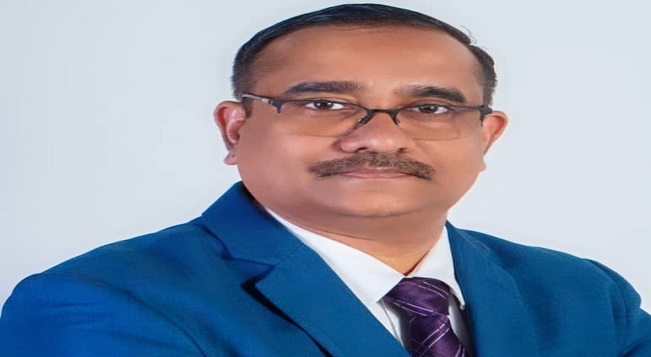
Dr Krishnan Ranganath (Krish) to Lead UniCloud Africa in Continental Digital Infrastructure Push
UniCloud Africa Limited, the premier pan-African cloud platform dedicated to advancing the continent’s digital sovereignty, has announced the appointment of Dr. Krishnan Ranganath as its Chief Executive Officer.

Dr. Krish, a seasoned industry leader known for building and scaling digital infrastructure while maintaining rigorous operational excellence, steps into the role as UniCloud Africa accelerates its mission to redefine the continent’s digital landscape.
The appointment coincides with the groundbreaking launch and immediate availability of UniCloud Africa’s enterprise-grade Sovereign Cloud and Artificial Intelligence (AI) infrastructure across six key markets: Nigeria, Ghana, South Africa, Zambia, Senegal, and Mozambique, even as it plans to launch in Kenya, Tanzania, DRC, Uganda, Ethiopia and Côte d’Ivoire as part of further continental expansion.
Operating under the mission of “One Cloud, One Africa,” UniCloud Africa provides governments and enterprises with a world-class, fully compliant sovereign cloud alternative to high-latency offshore providers,ensuring a robust, scalable foundation tailored to Africa’s unique environmental and economic needs.
“UniCloud sits at the epicentre of Africa’s cloud evolution. We are committed to deploying 100% sovereign infrastructure across the continent. My focus is on driving high-growth partnerships and scaling the next generation of resilient, sustainable cloud infrastructure to accelerate the evolution of the African digital ecosystem,” said Dr. Krish, CEO of UniCloud Africa Limited.
He disclosed that his focus at UniCloud Africa is on driving high-growth partnerships and scaling the next generation of resilient, sustainable cloud infrastructure, and will deploy GPUs in certain economies based on market potential and need.
While admitting that the challenges from AI integration to the green energy transition are immense, Dr Krish believes that the opportunities are greater. “I am eager to collaborate with our partners and customers to redefine the digital frontier and accelerate the evolution of the African digital ecosystem,” he added.
Ladi Okuneye, Co-founder and outgoing CEO (who remains as a director on the board) remarked: “As we enter this new chapter of growth, I am confident that Dr Krish’s extensive experience in the African digital landscape will add immense value. His technical depth and regional insight make him the ideal leader to drive UniCloud Africa forward.”
Before he was appointed CEO of UniCloud Africa, Dr. Krish was, until last month, the Regional Executive – West Africa at the Africa Data Centres (ADC).

Tech Firms Sack over 45,000 so Far in 2026

CBN Wins Central Bank of the Year Title @13th Global Awards

Jury Finds Elon Musk Liable for Misleading Twitter Investors

FG Taps Quest Merchant Bank for Advisory on 90,000km Fibre Project

TEF-Backed Entrepreneurs Generate $4.2Bn, Create 1.5m Jobs across Africa

Kaspersky Discovers New Phishing Campaign Exploiting Google Tasks Notifications to Steal Corporate Credentials

esentry 2025 Report Shows Healthcare, Financial Services and Telecoms as Staging Grounds for Increased Cyberattacks in Africa

AfDB, UNDP Launch $10Bn AI Initiative for Africa

MultiChoice Suspends Yearly DStv Price Hike as Canal+ Pushes Growth

MTN Nigeria Posts Record N1.70 Trillion Pre‑Tax Profit, Declares N20 Dividend for 2025




 News2 days ago
African Tech Start-ups to Receive $46m of Speedinvest Africa Fund

 Telecom2 days ago
Court Bans Kenyan Telcos from Recycling SIM Cards

 E-Financial2 days ago
Providus Bank Fully Meets CBN Capital Requirement, Sets Record Straight

 Telecom2 days ago
Binance Earn: Simple Way to Earn Rewards on Idle Crypto Holdings

 E-Financial2 days ago
UBA UK, BII Sign Letter of Intent to Slash Africa’s $80Bn Trade Finance Gap

 News2 days ago
UK, Nigeria Unveil Three-Year Plan to Combat Immigration Crime

 General News2 days ago
Court Jails ‘Colonel’, ‘Major’ of Global Money-Laundering Ring

 News2 days ago
U.S. Charges Three in $2.5 Billion Plot to Smuggle Nvidia AI Chips to China