

General News
Ramadan: Muslim Faithful Bank on Konga for Nourishment, Personal Care Needs


As Muslims in Nigeria join millions around the world in observing the holy month of Ramadan, Konga, Nigeria’s leading composite e-commerce giant, has emerged a prime destination for the fulfilment of their nourishment and personal care requirements.

Ramadan is the ninth month of the Islamic calendar observed by Muslims worldwide as a month of fasting, prayer, reflection and community.
With adherents expected to fast between dawn and dusk in a mood of introspection, communal prayer and reading of the Quran, the physical demands of the taxing period often take a toll, necessitating the importance of personal care and proper nourishment during meal times. Consequently, findings indicate that Konga has been identified as the preferred source for food items, groceries, beverages/refreshments and other essentials for the Ramadan season.
The foregoing is justified by the carefully curated array of product categories and packages available on www.konga.com for the season, all at highly discounted prices. Among these are the aptly named Sahur and Iftar packages, Groceries, Juices/Drinks, Personal Care, Fashion, Under 10k Shop, Under 20k Shop and Ramadan Special.
Under Sahur, widely known as the meal consumed early in the morning by Muslims before fasting or before dawn, Konga has put together a wide variety of food items such as bags of rice, noodles, pasta, cereals, beverages, cooking oil and wheat flour, among others.
For Iftar, traditionally regarded as the fast-breaking evening meal in Ramadan, Konga is offering shoppers an assorted package featuring grains, seeds, fruits and nuts including grapes, dates and processed dates powder, apples, almonds, cashew nuts, clove seeds, garri flour, instant soup packs, rice, quinoa, etc.
Under Groceries, Muslim faithful and other shoppers are treated to a vast array of products cutting across beverages, cereals and breakfast food, soups and canned goods and much more. For Juices/Drinks, Konga provides a long list ranging from bottled water, malt drinks, assorted non-alcoholic drinks, fruit wines, juices and healthy drinks, etc.
With the Under 10k Shop and Under 20k Shop, shoppers who visit the Konga platform can access a suite of products and items across categories priced at less than N10,000 and N20,000 respectively. On offer in the Personal Care package is a combination of beauty and health care products to help shoppers cope with the arduous fasting season by keeping their skin, bodies and minds refreshed.
On its part, Fashion has a package featuring male and female items such as turban and turban caps, fabrics, footwear, shawls/scarves, handbags, hijabs, jilbabs, abaya, etc. For Ramadan Special, Konga has isolated key items required for the season such as large and pocket prayer mats and rugs, Islamic Electric Incense burners, Islamic artworks, canvas frames, prayer kettles, a variety of Islamic literature and books, pendants and much more.
A month-long event, the season is expected to give way to the holiday of Eid al-Fitr which marks the end of Ramadan.


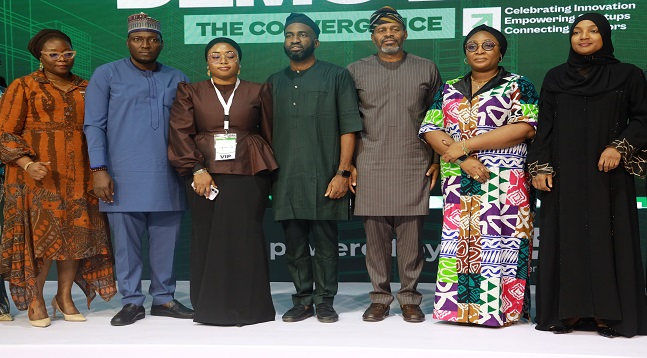
IHS Nigeria, part of the IHS Holding Limited (NYSE: IHS) (“IHS Towers”) group, one of the largest independent owners, operators, and developers of shared communications infrastructure in the world by tower count, has partnered with the Ilorin Innovation Hub to host the maiden edition of its Demo Day at the state-of-the-art facility in Ilorin, Kwara State.

The event, themed “The Convergence,” is designed to spotlight 19 emerging startups that have participated in the Hub’s accelerator and incubation programs, and invite them to pitch their solutions to investors, venture capital funds, corporate partners, and the media.
The Ilorin Innovation Hub, a partnership between the Kwara State Government and IHS Nigeria, began operations in February 2025 with programs managed by Co-creation Hub and Future Africa.
The Demo Day presents an opportunity to take stock and assess how the Ilorin Innovation Hub is helping to nurture and bring to life groundbreaking ideas and solutions supporting economic resilience and addressing real-world societal challenges. The event is expected to help unlock funding opportunities, foster strategic collaborations, and amplify visibility for these startups that are developing solutions across critical sectors including agriculture, health-tech, green energy, lifestyle, and digital services.
Beyond the startup showcase, the Demo Day highlights Kwara State’s continued commitment to driving digital innovation and entrepreneurship, and IHS Nigeria’s commitment to bridging the digital divide and deepening the digital economy in Nigeria.
Mohamad Darwish, CEO, IHS Nigeria, commented, “We believe innovation and digital technology are powerful drivers of economic growth and sustainable development. This is why we partnered with the Kwara State Government on the Ilorin Innovation Hub. It is impressive and very fulfilling to see the diverse portfolio of ideas and solutions showcased today from the hub within a year of the commencement of operations.
This speaks to the depth of creativity among Nigerians and what is possible when they are equipped and supported. Today’s event makes me proud of our investment in the space and underscores IHS Nigeria’s continued commitment to supporting technology, entrepreneurship, and digital innovation in Nigeria.”
Temi Kolawole, Managing Director, Ilorin Innovation Hub, commented, “Today, we showcase 19 startups that have shown that when you combine talent with the right support, the results speak for themselves. The Ilorin Innovation Hub exists to ensure that geography is never a barrier to building something extraordinary, and this Demo Day is proof that we are on the right track.”

At the International Submarine Cable Resilience Summit 2026 in Porto, Portugal, one theme stood out across discussions involving infrastructure operators, regulators, financiers, and global institutions: resilience is no longer a technical concern—it is an economic one. For West Africa, this conversation is not theoretical.

It is immediate and consequential. The region, with a combined GDP of over $800 billion, is undergoing rapid digital transformation. Its digital economy—spanning fintech, e-commerce, digital services, and connectivity—has been estimated to contribute between $100 billion and $150 billion in economic activity annually, with strong growth prospects.
Across the region, digital platforms are helping to overcome long-standing infrastructure constraints, boost productivity, attract investment, and create jobs. But this transformation rests on a fragile foundation. In March 2024, a series of submarine cable disruptions along the West African coast exposed a critical vulnerability at the heart of this emerging digital economy.
For several hours—and in some cases days—connectivity was degraded across multiple countries. Banking systems slowed, digital platforms experienced outages, and businesses reliant on cloud infrastructure faced significant operational disruption. The incident was not unprecedented. According to the International Cable Protection Committee, most submarine cable faults globally result from fishing activity, anchoring, or natural seabed movement. What made the West African disruption different was its scale. Multiple cables serving the region were affected simultaneously, sharply reducing available bandwidth and overwhelming existing redundancy.
The lesson was immediate: capacity is not resilience.
West Africa is served by several major international systems, including West Africa Cable System (WACS), Africa Coast to Europe (ACE), and MainOne Cable. These systems collectively provide significant international capacity. Yet their routing patterns and landing configurations meant that a single disruption could affect multiple systems at once. In the aftermath, internet traffic in affected countries fell sharply—by some estimates more than 50 percent—while latency increased and service quality deteriorated. Restoration timelines varied, but in some cases took several days, highlighting both physical repair constraints and administrative bottlenecks. For policymakers and investors, the implications are clear. Submarine cables are not simply telecommunications infrastructure. They are foundational to economic activity.
More than 95 percent of global internet traffic travels through submarine cables—a statistic consistently emphasised by the International Telecommunication Union. In West Africa, where digital adoption is accelerating rapidly, the reliability of these systems is directly linked to economic performance. Outages translate into lost transactions, reduced productivity, and weakened investor confidence. At the Porto Summit, I reflected that this discussion is particularly important for West Africa, where the digital economy is emerging as a powerful driver of growth—helping to overcome physical infrastructure gaps while creating new pathways for inclusion and opportunity. But without resilient connectivity, that momentum cannot be sustained. Historically, resilience has been treated as a secondary consideration—something addressed after deployment rather than embedded at the point of investment. That approach is no longer tenable.
Across global discussions, including those involving the World Bank, there is growing recognition that digital infrastructure must be approached through the lens of long-term risk and sustainability. Resilience shapes risk premiums, insurance costs, and financing decisions. Where it is poorly defined, it is treated as an additional cost. Where it is clearly linked to reduced downtime and operational continuity, it becomes a value proposition—one that can unlock capital. For underserved regions, this distinction is critical.
The challenge is not simply to build more cables, but to build systems that are financeable, durable, and regionally coherent. The 2024 disruptions also exposed a structural mismatch. Submarine cable networks are regional in operation, but governance remains largely national. Permitting processes differ.
Emergency response procedures are not harmonised. Cable protection regimes vary in enforcement. This fragmentation introduces risk. When outages occur, delays in customs clearance, port access, and inter-agency coordination can extend repair timelines. For investors, these uncertainties translate directly into higher cost of capital.
Addressing this requires a shift in perspective. Submarine cable resilience must be treated as a regional public good, supported by coordinated policy frameworks. In West Africa, this has reinforced the importance of regulatory alignment through WATRA, which brings together telecommunications regulators from 16 member states. The focus is not centralisation, but coordination—ensuring that critical aspects of resilience are addressed consistently across jurisdictions.
This includes:
- Streamlined and predictable landing and permitting processes
- Stronger cable protection frameworks aligned with international best practice
- Pre-agreed emergency protocols for repair operations
- Improved data sharing on outages and restoration timelines
These are not technical fixes. They are regulatory interventions with economic consequences.
Equally important is the need to embed resilience at the design stage of new investments. This means prioritising true route diversity, avoiding correlated risk, and aligning regulatory approvals with resilience objectives. West Africa’s experience is not unique. Similar vulnerabilities exist across emerging markets and small states.
What is changing is the recognition that resilience is central to the economics of connectivity. For West Africa, the stakes are particularly high. The region’s digital economy is expanding rapidly, driven by fintech, mobile broadband, and digital entrepreneurship. These sectors depend on infrastructure that remains largely invisible—until it fails.
Submarine cable repairs in the region are inherently costly. A single repair is typically estimated at around $1.5–2 million, with vessel mobilisation from distant bases such as Cape Town accounting for a significant share of the expense. In more complex cases—particularly where multiple cables are affected—costs can rise to as much as $8 million. Limited availability of specialised repair vessels in Africa further compounds the challenge, contributing to longer restoration timelines compared to global benchmarks.
The 2024 disruptions were a stress test. They exposed weaknesses, but also created momentum for reform. If resilience is embedded into policy, design, and financing frameworks, West Africa can build a more robust foundation for digital growth.
What is often overlooked is that resilience is not only about infrastructure—it is about livelihoods. It is what allows a 24-year-old graduate running a furniture business on Instagram in Lagos to continue fulfilling orders without interruption. It is what enables a small-scale grocery distributor in Surulere, relying on digital payments, to keep transactions flowing even when networks are under strain.
At a larger scale, banks processing millions of daily transactions, logistics companies coordinating cross-border supply chains, and telecom operators delivering data services all depend on uninterrupted connectivity. When resilience fails, the cost of downtime is immediate—lost revenue, disrupted trade, and weakened confidence. Resilience, in other words, connects the informal trader, the small business owner, and the multinational enterprise in the same economic chain.
What distinguishes the West African context is that, for many participants in this economy, disruptions translate directly into lost income with limited buffers. Unlike more mature markets, where redundancies and institutional safeguards can cushion short-term shocks, much of the region’s digital economy operates in real time, with little margin for interruption. Resilience therefore does not simply protect submarine cables—it underpins economic continuity.

AfriStakes has launched a new capital platform in Nigeria aimed at linking African small- and medium-scale enterprises with a broad range of investors in a move to address persistent funding gaps across the continent.

In a statement, the firm said the platform would improve capital allocation by bridging the disconnect between available funds, investment-ready businesses, and viable opportunities.
The launch comes as many African businesses continue to face funding constraints despite the availability of capital within the financial system.
AfriStakes said structural barriers have limited access to funding, even as capital remains concentrated in traditional instruments such as fixed deposits, equities, and managed funds.
The platform enables businesses and investors to connect directly by creating profiles, listing funding needs, and identifying suitable investment partners.
According to the company, businesses can upload key documents and showcase their funding requirements, while investors can outline their interests and financial capacity.
Founder of AfriStakes, Henry Adebisi, said the initiative was designed to tackle inefficiencies on both sides of the investment market.
“In Africa, businesses suffer from low access to capital while investors suffer from low access to investable opportunities. With AfriStakes, we ensure businesses are properly prepared and positioned for investment, while investors gain the clarity and confidence needed to deploy capital effectively,” Adebisi said.
The company noted that a major challenge for many SMEs is not a lack of value but poor investment readiness, which affects their ability to attract funding.
AfriStakes said it addresses this gap by providing a structured framework that helps businesses present financial information, develop investment narratives, and prepare realistic projections.
The platform also offers support services such as due diligence, deal structuring, and preparation of investor-facing materials.
It added that the platform would facilitate capital inflow from local and international investors, including individuals, angel investors, diaspora investors, entrepreneurs, and institutional players.
Adebisi said the platform would promote efficient capital flow into businesses driving economic growth across Africa.
“Our vision is to build a system where capital flows more efficiently into real businesses that drive economic change. By positioning both businesses and investors for success, we enable stronger investment decisions and more impactful economic outcomes,” he said.
AfriStakes said it supports multiple funding pathways, including debt financing, equity investment, partnerships, and acquisitions.
The company added that the platform would promote transparency, inclusivity, and structured investment processes across the African business landscape, adding that the initiative positions AfriStakes as a key player in addressing the continent’s financing challenges by creating a bridge between capital and opportunity.

FG Carpets W/Bank, Denies Alleged Diversion of Federation Revenue

Lagos Unveils Cybersecurity Guidelines to Tackle Rising Digital Threats

FG Borrows N100Bn from Unclaimed Dividends, Dormant Bank Accounts

CitiTrust Heads to Appeal Court over Alleged Ponzi Scheme

IHS Nigeria, Ilorin Innovation Hub Showcase 19 High Growth Startups

NBC Boss Urges Content Ceators to Participate in DSO

NITDA Takes Over National Digital Architecture System

DLM SPV PLC Lists ₦9.00bn AAA-Rated Medium-Term Notes on FMDQ Exchange, Sets Benchmark in Corporate Bond Market

FG Shifting Focus to “Meaningful Connectivity” to Drive Inclusion – Minister

Jury Finds Meta, Google Liable for Woman’s Social Media Addiction




 Telecom2 days ago
Airtel Nigeria Suspends Airtime and Data Credit Services

 E-Financial2 days ago
Court Suspends Enforcement of FCCPC’s Reform on Loan Apps

 Telecom2 days ago
FCCPC Denies Banning Airtime Borrowing, Blames Cartel for Misinformation

 E-Financial2 days ago
FG Rules Out Borrowing from IMF’s $50Bn Support Fund

 E-Financial2 days ago
CBN Introduces Overnight Financing Rate to Compete with US, EU

 General News2 days ago
AfriStakes Unveils Platform to Connect SMEs with Investors

 News2 days ago
NITDA, CAC Activate Cybersecurity Measures Amid System Concerns

 General News2 days ago
Nigeria’s Human Capital Key to Global Competitiveness – NITDA DG