

Telecom
Regulating Local Content is Transforming Nigeria’s Economy – DG NITDA


Mallam Kashifu Inuwa Abdullahi, Director General of National Information Technology Development Agency (NITDA), has said that regulating indigenous content development and adoption is one of the strategic pillars that is transforming Nigeria’s economy, as well as putting the country on the right to tract in achieving Digital Economy.
Abdullahi said this at an online webinar on Local Content Policy in the ICT Sector with the theme:”Local Content Policy in the ICT Sector as key to Achieving Objectives of the Digital Economy in Nigeria”organised by Centre for Information Technology and Development (CITAD) in collaboration with NITDA and Speedstar.
He stated that in August, 2020, NITDA updated the Guidelines for Nigerian Content Development in ICT to align with the two issued executive orders 003 and 005, which led to enforcing compliance with all local content policy in IT projects through the Agency’s IT project clearance mandate.
“Through our modest efforts we have transformed the landscape and stimulated demand for made in Nigeria ICT products and services.
“Our policies have increased the consumption of local hardware in an unprecedented manner from annual sale of 113,814 in 2015 to 414, 510 in 2018 and 364,376 in 2019.
“We also facilitated patronage of indigenous software, amounting to over 3 billion naira through our regulatory local content guidelines and IT clearance,” he said.
He added that Local Content Policy in the ICT sector under the purview of the Agency has played a crucial role in increasing the consumption of local content, placing policies on the use of local content items in the various Ministries, Departments and Agencies (MDAs) across the country.
“The Administration of President Muhammadu Buhari, has given a special priority to diversification through strengthening of our indigenous content and local production with the motive to boost the boost the Nation’s Gross Domestic Product (GDP).
“In 2015 the country’s economy was down due to the fall in oil price crash, a team of experts was setup to develop policy for the government to diversify our economy, which gave birth to Economic Recovery and Growth Plan (ERGP) 2017 – 2020.
“The Economic Recovery and Growth Plan (ERGP) is a Medium Term Plan for 2017 – 2020, for the purpose of restoring economic growth, building a globally competitive economy and accelerating inclusive growth by investing in our people the nation’s most priceless assets. The policy also identified Information and Communication Technology (ICT) as the key enabler, he added.
The NITDA boss said that the Federal Government of Nigeria issued two executive orders 003 in May, 2017 to support procurements of local content products and services by Ministries Departments and Agencies (MDAs), while Executive Order 005 was issued in February, 2018 to promote Nigerian content in planning, execution of projects and contracts in science engineering and technology respectively.
“Digital Economy is the fastest growing economy in Nigeria and the World in general. To sustain and consolidate the growth we need to ignite innovation and entrepreneurship in the digital space.
“Most of our initiatives today are innovation ecosystem centric that will help us to come up with ideas that will create values in Digital space,” he emphasized.
He further stated that guidelines for Nigerian Content Development in ICT require Multinational Companies (MNCs) operating in Nigeria to submit a annual report on local content development activities.
According to him, assessment of the 2018-2019 Local Content Development Reports submitted by 9 MNCs indicates that a total of 663 Nigerians are employed by the MNCs and also, about 2,033 direct and indirect jobs were created through the MNCs activities.
The DG added that it also supported 88 Nigerian Startups, trained 28,773 Nigerians on emerging technologies, 58,892 Girls/Women trained in ICT, about 1,354,988 Nigerians were trained in Digital Skills, 71,289 ICT Scholarship Programs for Nigerians, 519,313 Nigerians were trained in ICT Professional Development.
“To sustain and consolidate on these achievements, the government rolled out Nigeria Economic Sustainability Plan and in line with the sustainability plan our Ministry under the leadership of Dr Isa Ali Ibrahim Pantami, Minister of Communications and Digital Economy, sought the President’s approval to re-designate and expand the mandate of our Ministry to cover digital economy.
“This request was graciously approved and the Minister formulated the National Digital Economy Policy for Digital Nigeria. The minister has issued more than a dozen policies to support the implementation of the Digital economy.
“Digital economy is mainly driven by rapid business innovation, using digital technology to deliver new customer value proposition, new business model, new organizational structure, new customer experience, operational excellence and enhanced products and services. This cannot be achieved in isolation; we need innovation ecosystem.
“It is obvious that innovation is not evenly distributed globally but there is something common among all innovative countries. They all have a strong innovation ecosystem.
“To build a vibrant innovation ecosystem in Nigeria, we have keyed into MIT program call REAP – Regional Entrepreneurship Acceleration Program. REAP is a global capstone initiative that provides opportunity for communities to engage with MIT in an evidence-based and practical approach to strengthen innovation ecosystem. This centre will serve as a platform for the MIT-REAP initiative,” he said
Abdullahi pointed out that COVID-19 has impacted lives in an unprecedented way, many aspects of lives – work, education, economy, entertainment, have moved online.
According to data compiled by Visual Capitalist, in a single internet minute in 2020, consumer spend more than 1m USD, over 42 million messages shared via WhatsApp, more than 1.4 million people make video or voice call, over 150,000 messages shared on Facebook, more than 319 new accounts created on Twitter, LinkedIn users apply for over 69,000 jobs, more than 6,500 packages shipped by Amazon, and over 200,000 people participate in Zoom meetings.


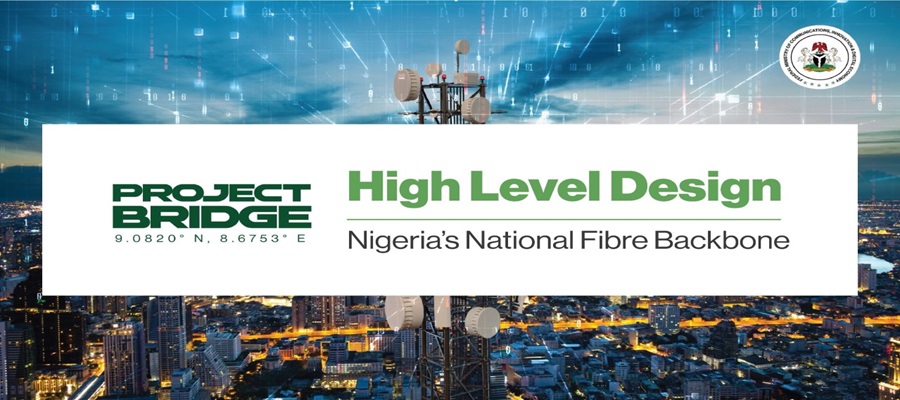
Quest Merchant Bank has been appointed as Transaction Advisor for Project BRIDGE, a broadband infrastructure initiative of the Federal Ministry of Communications, Innovation and Digital Economy (FMCIDE), led by Bosun Tijani, the minister.

Project BRIDGE, short for Broadband Infrastructure Development for Digital Economy, is designed to deepen Nigeria’s digital backbone through the deployment of about 90,000 kilometres of open-access fibre-optic cables nationwide.
The initiative is expected to boost broadband penetration, strengthen connectivity and drive inclusive economic growth.
Under the mandate, Quest Merchant Bank will work with the ministry and the Project Implementation Unit to structure the project’s financial and commercial framework.
This includes developing bankable investment models, engaging investors and designing a public-private partnership structure to ensure efficient execution and sustainability.
Afolabi Olorode, acting managing director, described the project as a critical intervention for Nigeria’s digital economy.
“Project BRIDGE represents a critical step in strengthening Nigeria’s digital backbone and unlocking the immense opportunities within the country’s digital economy. We are honoured to partner with the FMCIDE under the leadership of Honourable Minister, Dr Bosun Tijani on this important initiative,” he said.
He added that the bank would leverage its expertise in infrastructure finance to develop “a robust and investable framework that will attract private capital and support long-term national development.”
Also speaking, Yetunde Falore, head of Investment Banking at Quest Merchant Bank, said the project comes at a defining moment for Nigeria’s digital economy.
“Nigeria’s digital economy is entering a defining phase, and infrastructure initiatives such as Project BRIDGE will play a central role in expanding connectivity, deepening digital inclusion, and supporting sustainable economic growth,” she stated.
Falore noted that the bank would focus on ensuring the timely and efficient delivery of the project in its advisory role.
The initiative aligns with the Renewed Hope agenda of President Bola Ahmed Tinubu, which prioritises digital infrastructure expansion and private sector participation in critical national assets.

Kenya’s High Court has ruled that mobile phone numbers are not disposable assets, but constitutionally protected digital identifiers, striking at the core of a long-standing industry practice of arbitrarily reassigning inactive SIM cards without the owners’ consent.

In a landmark decision that could reshape telecom regulation and digital identity frameworks across Africa, sitting at Milimani Law Courts in Nairobi, Justice Lawrence Mugambi declared that reassigning a phone number without the original owner’s consent violates the right to privacy.
The ruling effectively elevates a SIM card into the same legal category as personal data tied to an individual’s private life.
At the heart of the ruling is Article 31 of the Constitution, which safeguards citizens from unnecessary disclosure of private information and interference with communications.
The court found that in today’s digital economy, a registered mobile number functions as a critical gateway to sensitive personal data, linking users to mobile money platforms like M-PESA, banking systems, email accounts, and social media profiles.
“When mobile digital identity is lost through reallocation or recycling without interrogating the reasons behind inactivity, it creates an avenue for unauthorised disclosure of delicate information,” the judgment stated.
The case, brought by Erastus Ngura Odhiambo, petitioner and former prisoner, challenged the routine telecoms practice of deactivating SIM cards after prolonged inactivity and reassigning them to new users.
Odhiambo lost access to his mobile phone number due to inactivity while serving his lengthy sentence.
He argued that the practice exposes individuals to serious risks, including misdirected financial transactions, intercepted one-time passwords, and unintended access to private communications.
The court agreed, highlighting how recycled numbers can result in strangers receiving confidential messages, authentication codes, and even being added to private messaging groups, effectively inheriting fragments of another person’s digital life.
Justice Mugambi also criticised the rigidity of SIM deactivation policies, calling them “arbitrary” for failing to consider legitimate reasons for inactivity such as incarceration, studying in restricted environments, or living abroad.
“Incarceration does not strip an individual of their constitutional rights to privacy and identity,” he noted.
For telecom operators, including Safaricom, the ruling introduces a significant compliance burden. The court outlined three strict conditions before any number can be reassigned.
Telcos must obtain informed and verifiable consent from the original owner, issue a public notice and conduct traceability efforts over a reasonable period.
More importantly, the court further directed that telecoms firms must implement technical safeguards to prevent data exposure to the new user.
The Office of the Attorney General has been given six months to translate these directives into enforceable regulations.
Binance Earn offers cryptocurrency users an accessible way to generate rewards on idle digital assets without active trading or constant market monitoring.

Binance Earn
As the crypto market matures, more holders seek productive uses for their assets rather than leaving them dormant in wallets. Binance addresses this through Binance Earn, where users allocate supported cryptocurrencies to various reward products for automatic yield generation.
The platform emphasises simplicity with a “set-and-forget” model: users select assets, pick a product, and rewards accrue passively in the background. This appeals especially to long-term holders aiming to enhance portfolio value over time without day-to-day involvement.
Binance Earn provides flexible options for instant liquidity access alongside fixed-term products for defined commitments, catering to diverse strategies and risk appetites.
“We’re seeing growing interest across Africa in ways to make crypto holdings more productive without active trading,” said Larry Cooke, Africa Head of Legal at Binance. “Simple, ‘set-and-forget’ solutions are becoming increasingly relevant as more users take a longer-term approach to digital assets.”
The feature reflects shifting user behaviour towards holding and gradual growth amid volatile markets, where reward rates fluctuate based on conditions, liquidity, and structures.
Users must assess risks and alignment with personal goals, as crypto remains volatile. Binance Earn positions itself as a key tool in Africa’s rising digital asset adoption, enabling hands-off participation in the ecosystem.

Tech Firms Sack over 45,000 so Far in 2026

CBN Wins Central Bank of the Year Title @13th Global Awards

Jury Finds Elon Musk Liable for Misleading Twitter Investors

FG Taps Quest Merchant Bank for Advisory on 90,000km Fibre Project

TEF-Backed Entrepreneurs Generate $4.2Bn, Create 1.5m Jobs across Africa

Kaspersky Discovers New Phishing Campaign Exploiting Google Tasks Notifications to Steal Corporate Credentials

esentry 2025 Report Shows Healthcare, Financial Services and Telecoms as Staging Grounds for Increased Cyberattacks in Africa

AfDB, UNDP Launch $10Bn AI Initiative for Africa

MultiChoice Suspends Yearly DStv Price Hike as Canal+ Pushes Growth

MTN Nigeria Posts Record N1.70 Trillion Pre‑Tax Profit, Declares N20 Dividend for 2025




 News2 days ago
African Tech Start-ups to Receive $46m of Speedinvest Africa Fund

 Telecom2 days ago
Court Bans Kenyan Telcos from Recycling SIM Cards

 E-Financial2 days ago
Providus Bank Fully Meets CBN Capital Requirement, Sets Record Straight

 E-Financial2 days ago
UBA UK, BII Sign Letter of Intent to Slash Africa’s $80Bn Trade Finance Gap

 Telecom2 days ago
Binance Earn: Simple Way to Earn Rewards on Idle Crypto Holdings

 News2 days ago
UK, Nigeria Unveil Three-Year Plan to Combat Immigration Crime

 News2 days ago
U.S. Charges Three in $2.5 Billion Plot to Smuggle Nvidia AI Chips to China

 General News2 days ago
Court Jails ‘Colonel’, ‘Major’ of Global Money-Laundering Ring