

E-Business
Rocket Internet to Launch 10 Start-ups in 2015


Rocket Internet, the global e-commerce investor, expects to launch at least another 10 start-ups in 2015 and said it would work more closely with Facebook (FB.O) on advertising.
Rocket Internet, whose shares have had a bumpy ride since listing last month, said its 12 most successful companies saw average growth in gross merchandise volume — a measure of sales made through online marketplaces — of 104 percent in the six months to June 30.
It also announced a global agreement with Facebook, which will involve the U.S. company helping Rocket with advertising strategy and automation of ads and giving it access to tests of new advertising features.
Rocket Internet shares, which have rebounded to above the offer price of 42.50 euros after positive broker notes in recent days, were up 0.2 percent at 47.92 euros as at yesterday.
Investors who bought shares in Europe’s largest tech listing since 2000 were hoping to ride a wave of euphoria which culminated in Alibaba’s (BABA.N) bumper New York flotation.
However, the shares came under pressure over concerns about how long it might take the Rocket start-ups to turn a profit.
Among Rocket’s top performers were Russian fashion site Lamoda and Indian online store Jabong, which saw first-half revenue grow 112 percent and 187 percent respectively.
Founded in 2007 by brothers Oliver, Alexander and Marc Samwer, Rocket has set up dozens of e-commerce and online marketplaces for everything from taxis to meal deliveries, aiming to replicate the success of Amazon (AMZN.O) and Alibaba in new markets like Africa, Latin America and Russia.
Oliver Samwer, chief executive said the new businesses were on track towards profitability, reiterating his view that e-commerce start-ups take six to nine years to break even.
“Our opportunity is huge and our journey has just begun,” he told a media conference call.
Overall, the 12 top companies, while still-loss-making, saw an average rise of 12 percentage points in the margin on their average earnings before interest, taxation, depreciation and amortisation (EBITDA) compared with the figure for 2013.
Rocket expects to launch another three companies in 2014, bringing the total for the year to 10, and then start at least another 10 start-ups in 2015.


Nigeria has taken a major step toward strengthening its digital governance framework as the National Information Technology Development Agency (NITDA) officially assumes control of the Nigeria Government Enterprise Architecture (NGEA) infrastructure.

The handover ceremony held in Abuja, marks the culmination of a high-level partnership with the Korea International Cooperation Agency (KOICA).
This transition signals a shift from fragmented IT projects to a unified, disciplined approach to national digital investment.
The NGEA initiative forms a core part of the e-Government Masterplan 2.0 (Ne-GMP 2.0), aimed at establishing a unified and structured approach to managing government IT investments and digital resources.
The framework is designed to ensure that technology deployment across public institutions aligns with national priorities while improving efficiency and accountability.
With the system now operational, government agencies are expected to adopt more integrated digital processes, allowing seamless data sharing and interoperability.
This is anticipated to reduce duplication, strengthen risk management, and translate policy objectives into measurable digital outcomes.
Over the past two and a half years, Nigerian technical experts worked closely with their Korean counterparts to develop the architecture framework, create reference models, and execute pilot programmes in key institutions.
These include the National Identity Management Commission, Nigeria Customs Service, Nigeria Immigration Service, and NITDA.
Officials say the NGEA represents a shift from fragmented digital efforts to a more coordinated, citizen-focused system.
The infrastructure is hosted by Galaxy Backbone Limited, providing a secure and reliable platform for nationwide deployment.
Looking ahead, NITDA is expected to work with government stakeholders to expand and sustain the system, while the Federal Ministry of Communications, Innovation and Digital Economy will provide policy guidance to ensure its adoption across the country.
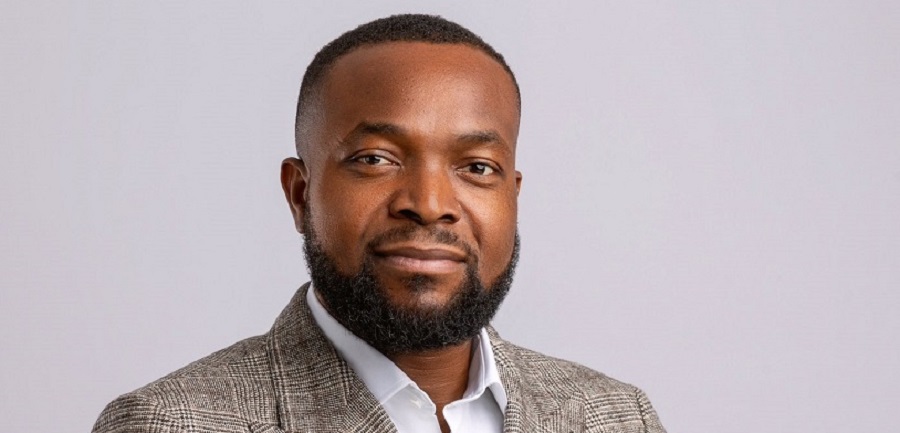
Bosun Tijani, minister of Communications, Innovation and Digital Economy, has said the government is shifting focus from expanding access to ensuring “meaningful connectivity” that drives economic growth and inclusion.

Bosun Tijani, minister of Communications, Innovation and Digital Economy
The minister made the statement on Friday while addressing stakeholders at the inauguration of board members of the Universal Service Provision Fund (USPF) in Abuja.
He said that although Nigeria had made significant progress since the introduction of GSM services, millions of people, particularly in rural and underserved communities, remain either unconnected or unable to fully benefit from digital services.
Dr Tijani highlighted ongoing investments in digital infrastructure, including plans to deploy 90,000 kilometres of fibre optic network and nearly 4,000 telecom towers nationwide.
He said initiatives under the USPF had improved access through projects such as rural connectivity and digital facilities in schools but stressed that the next phase must prioritise effective usage.
“It is not enough to connect a community. We must ensure that schools can teach with digital tools and that small businesses can access market opportunities,” he said, citing a pilot project in the Kura community where connectivity has enhanced access to communication, education and healthcare.
Aminu Maida, executive vice chairman, Nigerian Communications Commission (NCC) also called for a shift towards meaningful connectivity, noting that while data usage had grown significantly, it remained concentrated in urban areas.
According to him, recent data shows that telecom usage has increased by about 160% over the past two years, largely driven by urban demand.
“When we drill down, we see that a lot of that growth is actually in urban centres. So, the gap between those who are not connected or not meaningfully connected is growing,” he said.
Dr Maida added that the trend underscored the need for the USPF board to intensify efforts to bridge both access and usage gaps across the country.
Both officials emphasised the importance of collaboration, sustainable investment models and improved digital literacy to ensure that connectivity translates into real economic benefits for Nigerians.

A jury in Los Angeles has found technology companies, Meta and Google liable for contributing to a young woman’s social media addiction, in a case being described as a landmark ruling.

The 20-year-old woman, identified only as Kaley, argued that she became addicted to Google’s YouTube and Meta’s Instagram from an early age due to their attention-driven design features.
According to her testimony, she began using YouTube at the age of six after downloading the app on her iPod Touch to watch videos about lip gloss and online games.
Kaley told the court that she joined Instagram at nine, bypassing parental restrictions put in place by her mother, and spent extended periods on social media.
The trial, which lasted about a month, with arguments and evidence from both sides.
Jurors also heard testimony from Mark Zuckerberg, chief executive, Meta and Adam Mosseri, Instagram head.
However, Neal Mohan, YouTube chief executive, did not testify.
The jury found that the companies were negligent in the design of their platforms and failed to adequately warn users about potential harms. Meta and Google were ordered to pay the woman $3 million in damages.
Jurors also recommended additional punitive damages, including $900,000 against YouTube and $2.1 million against Meta, according to company spokespersons.
The jury apportioned 70 per cent of the responsibility to Meta and 30 per cent to YouTube.
Kaley was present in the courtroom when the verdict was delivered, alongside parents of other teenagers who say they were harmed by social media use. Both companies said they plan to appeal the decision.
“We respectfully disagree with the verdict and will appeal. Teen mental health is profoundly complex and cannot be linked to a single app. We will continue to defend ourselves vigorously as every case is different, and we remain confident in our record of protecting teens online”, a Meta spokesperson said.
José Castañeda, Google spokesperson, said the case misunderstands YouTube, which is a responsibly built streaming platform, not a social media site.

Anti Graft Agencies Raise Alarm over Rising Crypto-Linked Financial Crimes

NITDA Takes Over National Digital Architecture System

NDIC Insures 99 Percent of Bank Customers

FG Shifting Focus to “Meaningful Connectivity” to Drive Inclusion – Minister

CBN Bars Chronic Loan Defaulters from Accessing Loans

Spotify’s Loud & Clear Report Reveals Over ₦60Bn Revenue for Nigerian Artists in 2025

Madonna University Taps Tech Guru Adote for Strategic Board Role

China Threatens to Shut Nigeria’s Satellite Over $11.44m Unpaid Debt

MTN Nigeria Posts Record N1.70 Trillion Pre‑Tax Profit, Declares N20 Dividend for 2025

Jumia Tech Week 2026 Begins with Tech Deals on Smartphones, Electronics, and Everyday Technology




 General News2 days ago
NCC to Curb SIM Fraud, Strengthen Digital Security with New Platform

 Broadcasting2 days ago
NBC Boss Urges Content Ceators to Participate in DSO

 General News2 days ago
Kidnappers Now Use Banks to Collect Ransoms — Expert

 E-Financial2 days ago
CBN Says Bank Customers Won’t Lose Deposits because of Recapitalisation

 E-Financial2 days ago
Breaking…..Kuda Lays Off Many Employees in Broad Restructuring

 E-Business2 days ago
Jury Finds Meta, Google Liable for Woman’s Social Media Addiction

 News2 days ago
Francis Okafor Stuns China, Emerges Second-Place Winner @ Tencent OpenClaw Hackathon

 Telecom2 days ago
IFC Invests $45m to Green African Telecom Sites