

E-Financial
Sanusi Explodes, Says President Jonathan Surrounded by Fraudsters

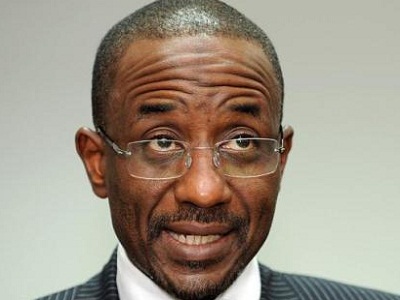
Mallam Sanusi Lamido Sanusi , the sacked governor of the Central Bank of Nigeria (CBN), on Sunday, described President Goodluck Jonathan, who removed him from office, as a simple man trying to do well, but being undermined by incompetent and fraudulent aides.
Sanusi, it will be recalled, was suspended by President Jonathan on Thursday, last week, over alleged financial misconduct, a move seen by many analysts as politically motivated.
In an interview with AFP in Lagos, Sanusi said many of the people advising Jonathan were sycophants, who did not speak frankly or honestly about the extent of corruption in government.
“When you sit with President Jonathan himself, he appears a nice and simple person who is trying to do his best.
But only a few governments too would have tolerated the defiance Sanusi applied to his brief.
The CBN governor wrote the President accusing the Nigerian National Petroleum Corporation (NNPC) of not remitting $49.8 billion (about three times the nation’s annual budget) to the Federation Account.
He later blamed CBN’s Reserve Department for misleading him and told a Senate committee investigating the allegations that he had apologised privately to those his letter indicted, but there are indications that NNPC’s accounts are untidy.
Sanusi’s garrulousness was legendary. In 2010, he told the media at the World Bank meeting in Washington that all arrested bank managing directors would be jailed. He asked the media to quote him.
The cases were in court and it was improbable he knew the verdict.
Those who fear Sanusi’s sack could rock the economy do not consider the consequences of his utterances that were out of character with a holder of his office.
Suggestions that Sanusi was sacked for fighting corruption, however, taint whatever the Presidency intends to achieve, though records show Sanusi ran CBN like his fiefdom.
Sanusi learnt of his removal from office while in Niger, on Thursday and immediately returned to Lagos, where agents from the Directorate of State Services (DSS) seized his passport.
On Friday, he secured a temporary protective order from the Federal High Court in Lagos, barring Nigerian intelligence agents from the DSS or police from arresting him.
“I thought taking away my passport was the beginning of infringement on my fundamental human rights,” Sanusi told AFP, explaining why he had already sought court protection.
While no charges had been filed against him, Sanusi said he was prepared for whatever attacks may come.
“That we are here today means that I have taken the decision that I will face the consequences of whatever I do.
“If I am sacrificed in whatever way, my freedom or my life… if it does lead to better accountability it will be well worth it,” he said.


Central Bank of Nigeria (CBN) has assured Nigerians that the ongoing banking sector recapitalisation exercise will not affect customer deposits, insisting that the financial system remains stable and fully secure.

The apex bank gave the reassurance amid growing public anxiety and misinformation ahead of the March 31, 2026, deadline set for banks to meet new capital requirements.
In a series of advisories issued via its official communication channels, the CBN emphasised that the deadline applies strictly to banks and not to customers, stressing that there is no cause for panic.
“The deadline is a timeline for banks, not customers,” the bank stated, adding that routine banking activities would continue without disruption.
Addressing widespread fears over the safety of deposits, the CBN said all customer funds remain protected, urging Nigerians not to engage in panic withdrawals or close their accounts.
“Your accounts and funds are unaffected. Banking products and services continue as normal,” the bank said, reiterating that recapitalisation is designed to strengthen, not weaken, financial institutions.
The regulator further dismissed claims circulating on social media suggesting that banks could freeze accounts as part of the exercise, describing such reports as false and misleading.
“No, this is false. Banks will not freeze customer accounts. Please ignore unverified social media rumours,” the CBN said.
The recapitalisation programme, according to the apex bank, is a routine regulatory measure aimed at increasing banks’ capital base to enhance resilience, improve risk absorption capacity, and position the sector to better support economic growth.
On concerns that recapitalisation could lead to higher banking charges or reduced access to services, the CBN maintained that there would be no adverse impact on customers.

Federal government has announced that it is ramping up efforts with the 36 state governments to participate in the $500 million World Bank-assisted loan facility under the HOPE Governance Programme.

This was disclosed in a statement on Thursday by Joe Mutah, spokesperson for the scheme.
Commenting on the program, Dr Deborah Odoh, permanent secretary of the Federal Ministry of Budget and Economic Planning, stated that the ministry is collaborating closely with the Federal Ministry of Finance to ensure that all 36 states of the Federation sign the Subsidiary Loan Agreement that would enable them to participate in and benefit from the World Bank-assisted HOPE Governance Program.
Odoh made these remarks in Abuja on Wednesday when she received the HOPE Governance Team from the World Bank on a courtesy visit to her office.
“We have been strategizing with the Federal Ministry of Finance with the involvement of our Honourable Minister Sen. Abubakar Atiku Bagudu. We will put in extra efforts to make it happen even faster given the time constraints. We have a timeline drawn up recently to achieve this,” she said.
The permanent secretary pledged to provide all the necessary institutional support to ensure that HOPE Governance delivers significant impact across the country.
“I’m glad we are having this meeting, which is long overdue, and certainly we are here all the time. We expect to see more tangible results and impact shortly,” she said.
Ikechukwu Nweje, leader, World Bank Task Team, HOPE Governance Programme, had earlier appealed to the permanent secretary to utilize all available channels within the Ministry to engage state governments and secure the signing of the Agreement, thereby enabling them to access funds under the Program upon verification of the Disbursement-Linked Results.
“However you can help us to fast track these processes, this will really be appreciated to get this program up and running in terms of disbursement,” he said.
He stressed that governance remains a key challenge to improved service delivery in the basic education and primary healthcare sectors, which is why the federal government, in collaboration with the World Bank, has initiated the HOPE Governance Program to address the issue.
“If the governance part fails, we will continue to have the same problems we are having on the sectoral side. That is why the ministers prioritized governance because they found out that governance is the issue in the two sectors that will help to unlock the ability to deliver results,” he stated.
Earlier, Dr. Assad Hassan, national coordinator of the HOPE Governance Programme, stated that the meeting was convened with the World Bank to apprise the Permanent Secretary of the milestones recorded and the challenges encountered in the implementation of the program so far.

MoneyMaster Payment Service Bank has introduced a refreshed mobile banking experience designed to make purchasing airtime and data more convenient and straightforward for customers.

As part of the rollout, customers will enjoy added value on their transactions. Airtime purchases on the Glo network come with a 100 percent bonus, while data purchases attract a 10 percent bonus, giving users amazing rewards on each purchase.
With this revamp, the app is now much easier to use, especially for airtime purchases. From selecting accounts to choosing amounts, the process is more seamless, with clearer options and fewer steps. Data plans are now neatly organized into categories such as daily, weekly, and monthly, making it easier for users to find what they need without endless scrolling.
Beyond the improved layout, customers now have more flexibility in how they recharge. Lower airtime denominations have been introduced, giving users the freedom to choose amounts that better suit their needs, while navigation has been adjusted to be quicker and more intuitive.
Speaking on the update, the bank’s Head of Business, Tajudeen Omokhide, explained that the goal is to make payments as simple and seamless as possible. According to him, customers expect speed, clarity, and affordability, and these improvements are part of the bank’s ongoing effort to meet those expectations. He also encouraged both existing and new users to get the latest version of the app.
These updates are a testament to MoneyMaster’s broader mission of developing practical, relevant products for everyday life. Promoted by Globacom and licensed by the Central Bank of Nigeria, the bank offers mobile wallets, savings accounts, individual current accounts, and business banking services.
MoneyMaster continues to position itself as a flexible, customer-centric platform, enabling over 4,000 individual and business billers to manage payments, access financial services, and stay connected with ease.

NCC to Curb SIM Fraud, Strengthen Digital Security with New Platform

NBC Boss Urges Content Ceators to Participate in DSO

Kidnappers Now Use Banks to Collect Ransoms — Expert

CBN Says Bank Customers Won’t Lose Deposits because of Recapitalisation

Jury Finds Meta, Google Liable for Woman’s Social Media Addiction

Kaspersky Discovers New Phishing Campaign Exploiting Google Tasks Notifications to Steal Corporate Credentials

esentry 2025 Report Shows Healthcare, Financial Services and Telecoms as Staging Grounds for Increased Cyberattacks in Africa

Spotify’s Loud & Clear Report Reveals Over ₦60Bn Revenue for Nigerian Artists in 2025

MTN Nigeria Posts Record N1.70 Trillion Pre‑Tax Profit, Declares N20 Dividend for 2025

China Threatens to Shut Nigeria’s Satellite Over $11.44m Unpaid Debt




 E-Financial2 days ago
CBN Directs IMTOs to Open Naira Settlement Accounts

 Telecom2 days ago
Nigerians Lose N12.5Bn to AI-Driven Scams- PwC

 General News2 days ago
Court Remands Hacker for Allegedly Stealing N3.09Bn from FCMB

 Telecom2 days ago
Airtel Africa, Starlink Mobile Data and Messaging Testing Take off in Kenya

 E-Financial2 days ago
DLM Capital Group’s AAA-Rated Sovereign Bond-Backed Composite Notes (“SBCNS”) Strengthens Investor Confidence with Successful First Principal & Interest Payment

 E-Business2 days ago
AU Sees AI Adoption Evolving to Boost Economic Growth in Africa

 Telecom2 days ago
GATEWAY Programme Opens Doors for 340,000 Nigerian Youths to Tap into $1.85trn Global Gig Economy

 News2 days ago
Kaspersky, AFRIPOL Conduct Joint Cybersecurity Training for African law Enforcement