

E-Financial
Sanusi Warns against $30Bn Loan, Says Buhari ‘s Govt Lacks Ideas

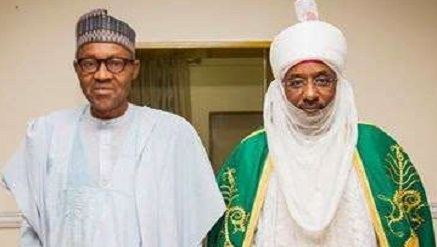
Alhaji Sanusi Lamido Sanusi, Emir of Kano, has flayed President Muhammadu Buhari’s administration for the way Nigeria is being run and warned of grave consequences of borrowing $30 billion from external sources.
Sanusi who was also former governor of Central Bank of Nigeria (CBN) described Buhari‘s administration as lacking the right policies to fix Nigeria’s economy.
He according to him, even if the Senate approved the loan, no foreign nation or financial institution would be willing to grant the country such a loan.
Sanusi stated this in Abuja, in his paper titled: “A plan to restore confidence, direction and growth,” during a policy dialogue organised by an economic think tank, the Savannah Centre for Diplomacy, Democracy and Development.
He said the CBN is “illegally” lending to federal government, adding that tthe problem of the current government is not having the right policies to fix the current economic woes.”
The ex-CBN governor argued that for a country that has five exchange rates, it would be difficult for a $30bn loan request to sail through.
He said since the country’s foreign exchange lacked credibility, the Federal Government should embrace private sector investments as a means of pushing the economy out of recession.
Sanusi also said oil alone could not help Nigeria out of the current economic situation because it would “never make Nigeria rich.”
He said, “I can tell you for free, if the Senate today approves that we can borrow $30bn, honestly, no one will lend to us. It should be approved and I will like to see how you will go to the international market with an economy that has five exchange rates.
“There is one rate for petroleum marketers, there is inter-bank rate, there is another for money market operators such as Western Union, MoneyGram, there is bureau de change rate and there is a special rate that you get when you call the CBN for a transaction.
“So who will lend you money when they don’t know your exact reserve and exchange rate? I want to see who will lend you money when the Niger Delta bombing of oil facilities is there, when the main source of the loan repayment is oil.”
Sanusi further said the country’s population had increased by over 40 million people since 2015, saying that unfortunately, the government had found it hard to increase capital expenditure.
He also warned on the continuous dependence on the Chinese government, saying that imports from China had scrapped the nation’s local industry.
“We trust China too much. We need to be very careful. They are killing our textile and other industries and yet they are selling to us,” he said.
He urged the government to reduce its debt service through greater loan concessionary.
He said the country had in the past 15 years been borrowing money to pay salaries and fuel subsidy, adding that there was a possibility that the country would keep borrowing in the next 15 years, as previous loans were not channelled into health, power or other infrastructural development.
Sanusi also said the June 2016 forex reform should be implemented to unite the market through a single transparent rate rather than creating four new rates.
“The Senate should support tax incentives and other benefits to encourage the private sector,” he added.
Sanusi, who further noted that the CBN’s lending to the government since Buhari came into power had spiked from about N1.5tn to over N4.5tn, added, “The CBN-FGN relationship is no longer independent. In fact, one could argue that their relationship has become unhealthy.
“CBN’s claims on the FGN now top N4.7tn — equal to almost 50 per cent of the FGN’s total domestic debt. This is a clear violation of the Central Bank Act of 2007 (Section 38.2) which caps advances to the FGN at five per cent of last year’s revenues. Has CBN become the government’s lender of last or first resort?”
“Nigeria produces one barrel of oil for 80 Nigerians; Saudi Arabia produces one for three Saudis,” he said, noting that growth in any economy should be driven by “consumption, investment and net export.”


Incorporated Trustees of the Data Privacy Lawyers Association (DPLA), a group of legal experts and data privacy advocates and Etisang Solomon have filed a fundamental rights enforcement suit at the Federal High Court, Kaduna Judicial Division, against the Central Bank of Nigeria (CBN).

The suit, officially stamped by the court on April 8, 2026, seeks to nullify a CBN circular that restricts bank customers to a single lifetime amendment of phone numbers linked to their Bank Verification Numbers (BVN).
The circular titled “Addendum to the Revised Regulatory Framework for Bank Verification Number (BVN) Operations and Watchlist for the Nigerian Banking Industry,” was issued by the apex bank on March 12, 2026.
According to the provisions of clause (c) in that document, any amendment to phone numbers linked to a BVN shall be allowed only once, with the new provisions set to take effect from May 1, 2026.
Reacting to the CBN directive, legal experts and data privacy advocates argue that this timeline and the restriction itself violate multiple provisions of the 1999 constitution and the Nigeria Data Protection Act (NDPA).
They are seeking nine reliefs from the court, including declarations that the circular violates section 37 of the constitution regarding the right to privacy, Section 24(1)(e) and 34(1)(c) of the NDPA, along with orders nullifying the impugned clause, a perpetual injunction restraining the CBN from enforcing it, and a mandamus directing the CBN to review and amend the circular.
In an affidavit sworn on behalf of the applicants, Christopher Yange highlighted the practical dangers of the policy, noting that telecommunications providers frequently recycle, deactivate, or reassign numbers that have been lost or stolen.
He cited a report from the Foundation for Investigative Journalism (FIJ) to demonstrate that phone numbers are not static assets.
Furthermore, the legal experts and data privacy advocates also contend that if a customer’s number is compromised after their single permitted update, they would be permanently barred from correcting their financial records, leaving sensitive data such as transaction alerts and One-Time Passwords (OTPs) vulnerable to interception by third parties.
Olumide Babalola, Emmanuel Okpara, and Frank Ijege of Olumide Babalola LP, applicants’ counsel, in a detailed written address spanning over 12 pages, framed the case around three core legal issues.
They argued on the first issue that a phone number associated with a BVN transcends basic administrative data, serving instead as a vital conduit for financial security, including transaction notifications, OTPs, and authentication protocols.
To bolster this claim, they pointed to several legal precedents.
Among these was the 2021 Court of Appeal ruling in Digital Rights Lawyers Initiative v National Identity Management Commission (NIMC), which affirmed that constitutional privacy rights encompass the safeguarding of personal data.
Additionally, they referenced the 2025 decision in Omotayo versus Airtel Networks, where the Court of Appeal reiterated that the privacy of telecommunications and call records is protected under the constitution.
On the second issue,they argued that by permitting only a single update, the CBN essentially grants itself a permanent power of veto over a citizen’s right to correct their data, a move that directly contradicts the clear language of the law.
To support this claim, they referenced the 2024 High Court of Lagos ruling in Rebecca Temitope Bonje versus Guaranty Trust Bank Plc, which upheld the legal requirement for data precision and the right to rectification as mandated by the NDPA.
Concerning the third legal point, the applicants argued that the single-amendment restriction serves as a rigid, all-encompassing mandate.
They noted that it fails to consider valid circumstances like the loss or physical damage of a SIM card, switching service providers, the recycling of phone numbers, or moving to a new line for personal safety.
The legal team maintained that the apex bank could achieve its anti-fraud objectives through less restrictive measures, such as advanced identity checks, multi-factor authentication, or short-term account freezes for security verification, without compromising the fundamental rights of bank customers.
The affidavit further claims the CBN’s directive lacks good faith, citing a lack of public evidence or regulatory impact assessments.
It also highlights a failure to consult stakeholders across the banking, telecom, and data protection sectors, the absence of a structured appeal process for device loss or errors, and a general lack of alignment with the NDPA.
The lawsuit, pursues several key reliefs: a declaration that the circular is unconstitutional and breaches the NDPA; the nullification of clause (c) of the addendum; and a perpetual injunction against the phone number amendment limit.
Furthermore, it seeks a mandamus to compel the CBN to revise the circular in line with constitutional and data accuracy standards, alongside an order for the bank to implement a flexible and verifiable update framework.

Presidential Fiscal Policy and Tax Reforms Committee (PFPTRC) has dismissed reports claiming that Taiwo Oyedele, minister of State for Finance, admitted errors in Nigeria’s new tax laws.

Taiwo Oyedele, minister of State for Finance,
In a statement posted on Sunday via Oyedele’s X handle, the committee described the reports as “misleading” and a misrepresentation of the minister’s comments.
“Our attention has been drawn to misleading media reports claiming that the Honourable Minister of State for Finance, Mr. Taiwo Oyedele has ‘finally admitted errors in the new tax laws.’
“These publications misrepresent the Minister’s statements, falsely alleging that he urged Nigerians to await the outcome of a ‘legislative probe’, a process that has long been concluded and the gazetted copies certified by the National Assembly published since early January 2026,” the statement said.
It warned that such narratives could distort public understanding of the reforms.
The committee said the minister, while speaking at a fireside chat during the Nigerian Bar Association Section on Legal Practice conference in Lagos, highlighted early gains from the tax reforms.
According to the statement, these include an increase in the number of informal businesses seeking registration with the Corporate Affairs Commission, as well as a rise in the number of registered taxpayers from about 10 million to over 100 million nationwide.
It attributed the outcomes to provisions in the new tax laws, including exemptions for small companies and low-income earners, as well as tax relief on essential goods and services.
“These impressive results stem from the robust design and progressive nature of the new laws,” the committee said, listing measures such as exemptions on food, education, healthcare, transportation and rent, as well as the introduction of a Tax Ombud to protect taxpayers’ rights.
The committee noted that Oyedele also acknowledged that no law is perfect and emphasised the need for continuous stakeholder engagement to address any gaps through future amendments.
“He, however, emphasized that no law is perfect. Therefore, ongoing stakeholder engagement is essential to identify and address any errors or gaps for appropriate legislative updates through Finance Bills as part of a continuous improvement process,” the statement said.
It urged the public to disregard what it described as sensational reports and rely on official sources for accurate information.
“We urge members of the public to disregard sensational headlines and twisted narratives and rely exclusively on official sources and credible media organisations for accurate information regarding the tax reform and other government policies,” the committee added.
E-Financial
Quest Merchant Bank Unveils New Brand Identity, Signalling Next Phase of Strategic Growth


Quest Merchant Bank Limited has unveiled its new brand identity, marking a significant step in the Bank’s ongoing evolution following its recent name change.

The refreshed identity reflects the Bank’s strategic direction as it deepens its role as a trusted partner to institutions and investors, providing insight-driven financial solutions and a disciplined approach to supporting long-term value creation.
With a strong legacy of execution and a deep understanding of key sectors, the Bank continues to differentiate itself through measured decision-making, strong risk management, and the ability to navigate increasingly complex market environments. The new identity brings these qualities into sharper focus, while signalling a renewed emphasis on growth, innovation, and relevance in a changing financial landscape.
Quest Merchant Bank remains focused on supporting clients across their growth journey, helping to unlock opportunities, structure transactions effectively, and provide the clarity required to make confident financial decisions in dynamic conditions.
Commenting on the development, the Ag. Managing Director/CEO, Afolabi Olorode, stated: “Our new brand identity represents an important step in our journey as Quest Merchant Bank. It reflects both who we are and where we are headed, an institution grounded in experience yet firmly focused on the future. As we continue to evolve, our priority remains to provide our clients with the clarity, confidence, and strategic support they need to achieve their long-term objectives.”
The refreshed identity will be progressively reflected across the Bank’s touchpoints, aligning its visual presence with its strategic ambition and ongoing investments in innovation, digital transformation, and service delivery.
Quest Merchant Bank remains focused on reinforcing its position as a leading merchant bank, trusted by institutions and investors to unlock value and deliver sustainable financial outcomes.

Meta Files Appeal over $25,000 Damages Awarded to Falana

Teenager Hacks Celebrities Whatsapps, Sells Adult Content in Delta

FG Unveils ePharmacy Platform to Regulate Digital Pharmaceutical Services

Elon Musk Accuses South Africa of Racism over Starlink Licence Block

SERAP Asks Tinubu to Probe Alleged N2.9Bn Fraud In NIGCOMSAT, NNRA

Spotify’s Loud & Clear Report Reveals Over ₦60Bn Revenue for Nigerian Artists in 2025

Kuda MFB Increases Kuda for Her Business Grants to ₦10 Million

Canal+ to Cut Jobs as Part Sweeping Restructuring

Nigeria tops global rankings for USDT, USDC ownership

NBC Boss Urges Content Ceators to Participate in DSO




 Broadcasting3 days ago
FG to Gift Nigerians over 100 Free TV Channels from May 15

 E-Financial3 days ago
CBN Dismisses Polaris Bank Liquidation Claim

 E-Financial3 days ago
AfDB Okays $200m for Nigeria’s Digital Backbone, Others

 General News3 days ago
FG New Approves Biometric Passenger Verification System for Airports Security

 E-Financial3 days ago
Nigeria’s Growth under Threat as Poverty Deepens, World Bank Warns

 General News3 days ago
Breaking Barriers: Cassava Technologies Expands Digital Access Across Africa

 News3 days ago
Experts Reveal a Steady Decline of High-severity Incidents Over the Years

 E-Business3 days ago
NESREA, ACMTI, Others Launch Carbon Utilisation Initiative in Nigeria