

E-Business
Sophos Acquires SurfRight for $31.8m

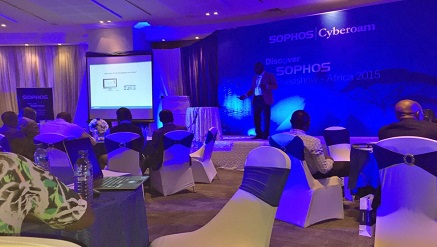
Sophos, a global leader in network and endpoint security, today announced the acquisition of SurfRight, an innovator in signature-less next-generation endpoint threat detection and response (ETDR) and advanced threat prevention.
Based in Hengelo, the Netherlands, SurfRight has developed a portfolio of technologies that prevent, detect and remediate zero-day and sophisticated attacks by interrupting malware and advanced persistent threat (APT) vectors.
Sophos acquired SurfRight for a cash consideration of $31.8 million and will retain all SurfRight employees and the company’s office in Hengelo. SurfRight CEO Mark Loman will join the Sophos Enduser Security Group, reporting to Dan Schiappa.
SurfRight’s real time anti-exploit technology focuses on detecting and preventing the memory manipulations and abuses that allow malicious code to run in the first place.
Generic prevention of exploits at this early stage in the attack chain is a key enhancement to endpoint security mechanisms and can help thwart malicious code in the processor and memory.
The portfolio also includes anti-espionage technology and enhanced protection against ransomware attacks such as CryptoLocker.
Sophos is recognized as a leader in endpoint protection today, with a growing set of next-generation technologies such as behavior-based analytics, Malicious Traffic Detection that monitors attempted outbound connections to known bad URLs, and Application Reputation which leverages a crowd-sourced big data warehouse managed by SophosLabs to determine whether a downloaded file is known to be good or bad and prompts the user to take appropriate action.
This acquisition will further strengthen Sophos’ leading endpoint protection technology, by adding complementary new defense tactics, delivered either on premise or in the cloud.
“SurfRight is a growing, profitable business with an established customer base and proven security capabilities. The team has engineered powerful, innovative next generation endpoint technologies that provide multiple advanced protection and mitigation elements, and yet are simple to use,” commented Kris Hagerman, CEO at Sophos.
Hagerman added, “SurfRight’s products embody the same product vision we have at Sophos – that even the most advanced IT security products should be simple to deploy and manage by organizations of any size. We are excited to welcome SurfRight to Sophos and look forward to introducing the benefits of this leading-edge technology to our global customer and partner base.”
Sophos said in a statement made available to Nigeria CommunicationsWeek that the Company will immediately work to integrate the SurfRight technology into its line of endpoint security solutions.
Once the integration work has been completed, Sophos will make the technology acquired from SurfRight available via its global network of more than 15,000 channel partners.
“Sophos offers SurfRight the opportunity to be part of a high-growth industry leader with a world-class channel and specialized product development teams to accelerate the delivery of our technology into IT organizations of all sizes,” said Mark Loman, CEO at SurfRight.
“We built this new technology from the ground up to address every vector of an APT attack in an auto-responding, coordinated manner, thus enhancing the speed of detection and response. SurfRight’s unique next generation endpoint security software complements Sophos’ offerings and delivers advanced security capabilities to better protect businesses worldwide,” the CEO added.
SurfRight’s technology will also further enhance the effectiveness of Sophos’ synchronized security strategy, in which multiple components of security protection, including network security and endpoint security, actively and continuously communicate with each other.
This innovative approach leads to faster threat detection and a dramatic reduction in the time and resources required to investigate and address security incidents.
“The team at SurfRight has developed cutting-edge technology that interrupts and mitigates even custom-made malware and exploits unknown to traditional antivirus or network-based intrusion detection systems,” commented Dan Schiappa, senior vice president of Enduser Security at Sophos.
“We recently announced the first delivery of our synchronized security strategy with the next generation XG Series Firewall, and this enhancement to our next generation endpoint solutions further strengthens the ‘better together’ approach as a key advantage for our customers.”
Sophos will continue development and support for SurfRight’s existing product line including its popular HitmanPro malware scanning and removal tools, used by more than 20 million users worldwide.
More than 100 million users in 150 countries rely on Sophos’ complete security solutions as the best protection against complex threats and data loss.
Simple to deploy, manage and use, Sophos’ award-winning encryption, endpoint security, Web, email, mobile and network security solutions are backed by SophosLabs – a global network of threat intelligence centers. Sophos is headquartered in Oxford, UK, and is publicly traded on the London Stock Exchange under the symbol “SOPH.”


Federal government has inaugurated the Electronic Pharmacy Regulation Platform (E-Pharmacy) to enhance the safety of online healthcare services.

Pic credit….healthreporters.info
The platform, championed by the Pharmacy Council of Nigeria (PCN), is designed to regulate digital pharmaceutical services and improve public health outcomes.
Inaugurating the platform, Prof. Ali Pate, coordinating minister of Health and Social Welfare, said the initiative signified Nigeria’s commitment to building a world-class regulatory environment.
Pate noted that pharmacy regulation had faced significant challenges for over three decades but expressed optimism that the new platform would strengthen oversight and accountability.
He said the initiative would enable evidence-based monitoring of pharmaceutical practices while supporting innovation and investment in the health sector.
“This launch is a testament to our collective commitment to advancing technology in the service of health, safety and human dignity.
“It is a decisive step to ensure that pharmaceutical practice in Nigeria aligns with national and global health priorities, reflecting the realities of the 21st century.
“It enables the country to adopt evidence-based approaches to monitoring and protecting public health while supporting innovation and investment,” he said.
The minister added that the platform would help establish a safe, accessible and well-regulated national e-pharmacy ecosystem driven by digital technology.
Earlier, Alhaji Ibrahim Ahmed, registrar/chief executive officer of PCN, said the need to regulate online pharmacy operations became more urgent during the COVID-19 pandemic.
Ahmed said the pandemic accelerated the adoption of digital tools and e-commerce in healthcare, exposing longstanding inefficiencies in pharmaceutical supply chains, particularly in Africa and Nigeria.
“This has led to the increasing adoption of digitised distribution of essential medicines through cost-effective and technology-enabled models.
“For decades, PCN has regulated pharmacy education, training, practice and business in Nigeria. However, as the world shifts towards digital solutions, access to medicines has evolved.
“The Electronic Pharmacy Regulations 2026 provide a comprehensive legal and technical framework for the registration, licensing, operation and oversight of digital pharmaceutical services,” he said.
He added that the framework would ensure that ethical standards and patient safety are not compromised in the delivery of online pharmaceutical services.


Olugbenga Agboola, CEO, Flutterwave, has announced plans to establish Anambra State as the company’s hub for Nigeria’s South East, leveraging a fresh banking license from the Central Bank of Nigeria (CBN) to boost local fintech and businesses.

Flutterwave
Agboola made the disclosure yesterday in Awka during a meeting with Anambra tech community leaders, hosted alongside Dr. Stanley Uzochukwu, CEO, Stanel Group and proprietor, Delborough Hotel.
He highlighted Flutterwave’s status as Africa’s leading payment system, born in Nigeria, with infrastructure powering companies nationwide.
“We want Anambra to be our hub for the entire South East,” Agboola said. “We’ll deploy our systems, fees, infrastructure, and POS terminals to every small business and large firm here, making our services the top consumer choice.”
Agboola pledged a massive impact program for Anambra entrepreneurs to foster global platforms from the state, enabled by the new license for faster growth.
For a decade, Flutterwave has facilitated payments, but now aims to empower South East businesses through partnerships, POS access, loans, and value for SMEs.
“We’re partnering on a huge impact program launching soon—impacting the tech community with technology, financing, and lending to create more millionaires from this city,” he added.

The National Environmental Standards and Regulations Enforcement Agency (NESREA), in collaboration with the Africa Carbon Management Technology & Innovation (ACMTI) and the Clean Energy Ministerial Carbon Capture, Utilisation and Storage Initiative (CEM-CCUS), has launched a Carbon Capture, Utilisation and Storage (CCUS) Initiative Platform in Nigeria.

Speaking at the launch in Port Harcourt, Rivers State, Prof. Innocent Barikor, the Director-General of NESREA, described the project as a major milestone in Nigeria’s journey toward environmental sustainability, climate resilience, and industrial transformation.
Barikor explained that the CCUS solution provides an economically viable pathway for industrial decarbonisation by enabling the capture, storage, and utilisation of carbon in sectors such as beverage production, cement manufacturing, chemicals and fuels, enhanced oil recovery, and agriculture.
“We need to reduce carbon in the atmosphere to acceptable levels. Its utilisation offers opportunities to capture and store carbon and deploy it for industrial purposes. We are building a circular economy—turning environmental challenges into economic opportunities in line with regulatory provisions,” he said.
He noted that the CCUS Platform is a collaborative ecosystem designed to bring together key stakeholders, including government institutions, industry leaders, academia, technology developers, development partners, and investors.
Also speaking, the Vice-Chancellor of the University of Port Harcourt, Prof. Owunari Georgewill, commended NESREA for the initiative, describing it as a practical mechanism for coordination, innovation, and action toward Nigeria’s 2035 climate targets and broader energy transition goals.
He added that the university is well-positioned to host the CCUS initiative, noting that its Energy Technology Institute has developed credible expertise in energy transition-related fields critical to the success of CCUS in Nigeria.
On his part, the Coordinator of ACMTI and Facilitator of the Carbon Technology Innovation Platform (CTIP), Dr. Richard Victor Osu, said the vision is to position Nigeria as a regional leader in carbon management technologies while contributing meaningfully to Africa’s climate commitments and global decarbonisation efforts.
Osu explained that Port Harcourt was selected due to its potential as a CCUS hub, adding that the platform will focus on advancing research and innovation, building technical capacity, promoting public-private partnerships, attracting investment, and fostering collaboration with international research and technology partners.
Juho Lipponen of the CEM-CCUS Initiative assured that the organisation would support Nigeria in prioritising CCUS in clean energy discussions, strengthening carbon management deployment programmes, boosting partnerships, facilitating financing solutions, and promoting positive narratives around carbon utilisation.
The event attracted participants from the United States, France, Brazil, Canada, the United Arab Emirates, and the United Kingdom, who shared insights on the initiative.
Also in attendance were representatives of the National Oil Spill Detection and Response Agency (NOSDRA), the National Council on Climate Change (NCCC), the Nigeria Upstream Petroleum Regulatory Commission (NUPRC), the Rivers State Ministry of Environment, as well as private sector stakeholders and development partners.

Meta Files Appeal over $25,000 Damages Awarded to Falana

Teenager Hacks Celebrities Whatsapps, Sells Adult Content in Delta

FG Unveils ePharmacy Platform to Regulate Digital Pharmaceutical Services

Elon Musk Accuses South Africa of Racism over Starlink Licence Block

SERAP Asks Tinubu to Probe Alleged N2.9Bn Fraud In NIGCOMSAT, NNRA

Spotify’s Loud & Clear Report Reveals Over ₦60Bn Revenue for Nigerian Artists in 2025

Kuda MFB Increases Kuda for Her Business Grants to ₦10 Million

Canal+ to Cut Jobs as Part Sweeping Restructuring

Nigeria tops global rankings for USDT, USDC ownership

NBC Boss Urges Content Ceators to Participate in DSO




 Broadcasting2 days ago
FG to Gift Nigerians over 100 Free TV Channels from May 15

 E-Financial2 days ago
AfDB Okays $200m for Nigeria’s Digital Backbone, Others

 E-Financial2 days ago
CBN Dismisses Polaris Bank Liquidation Claim

 General News2 days ago
FG New Approves Biometric Passenger Verification System for Airports Security

 E-Financial2 days ago
Nigeria’s Growth under Threat as Poverty Deepens, World Bank Warns

 News2 days ago
Experts Reveal a Steady Decline of High-severity Incidents Over the Years

 E-Business2 days ago
NESREA, ACMTI, Others Launch Carbon Utilisation Initiative in Nigeria

 General News2 days ago
STBMAN, NBC Bicker over Alleged Due Process Breaches