

E-Business
Sophos Unveils XGS Series Firewall Appliance with Industry-Best TLS Inspection

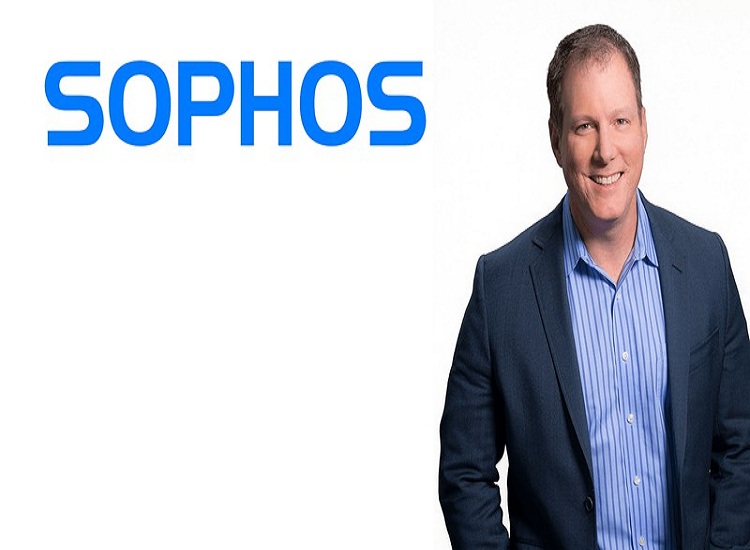
Sophos, a global leader in next-generation cybersecurity, today unveiled new XGS Series firewall appliances with unrivaled performance and advanced protection against cyberattacks. The new appliances feature industry-best Transport Layer Security (TLS) inspection, including native support for TLS 1.3, that is up to five times faster than other models available on the market today.

Dan Schiappa, chief product officer at Sophos, said, “Sophos Firewall XGS Series appliances represent the most significant hardware upgrade that we have ever released and introduce unmatched detection, protection and speed.
“Security teams can no longer afford to overlook encrypted traffic for fear of breaking something or hurting performance – there’s too much at risk.
“We’ve completely redesigned the Sophos Firewall hardware to handle the modern encrypted internet.
“Security teams now have the ability to easily inspect encrypted traffic and shine light on what was once a black hole, and they can confidently do so without compromising on performance.”
Cybercriminals Increasingly Using TLS to Avoid Detection
Sophos today also published new research, “Nearly Half of Malware Now Use TLS to Conceal Communications,” identifying a surge in cybercriminals using TLS in their attacks. The increasingly popular tactic is used by adversaries to encrypt and encapsulate the content of malicious communications to avoid detection as they carry out attacks.
In fact, 45% of malware detected by Sophos from January through March 2021 used TLS to conceal malicious communications. That’s a staggering rise from the 23% Sophos reported in early 2020.
Sophos has also seen an increase in the use of TLS to carry out ransomware attacks in the past year, particularly with manually-deployed ransomware. The majority of malicious TLS traffic that Sophos has detected includes initial-compromise malware, such as loaders, droppers and document-based installers like BazarLoader, GoDrop and ZLoader.
“TLS has undoubtably changed the privacy of internet communications for the better, but for all the good it’s done, it’s also made it much easier for attackers to download and install malicious modules and exfiltrate stolen data – right under the noses of IT security teams and most security technologies,” said Schiappa.
“Attackers are taking advantage of TLS-protected web and cloud services for malware delivery and for command and control. Their initial compromise malware is simply the advance guard for major attacks, as they’re setting up camp for the heavy artillery that follows, like ransomware.”
Accelerating Threat Protection
Powered by Sophos Firewall’s Xstream architecture, XGS Series appliances deliver the industry’s best zero-day threat protection, identifying and stopping the most advanced known and potential threats – including ransomware.
Protection is fueled by powerful threat intelligence, available only through SophosLabs Intelix and based on petabytes of SophosLabs threat data. Suspicious files are safely detonated in SophosLabs Intelix virtual environments as well as subjected to in-depth static analysis for additional detection coverage and intelligence gathering.
New Xstream flow processors within the appliances automatically accelerate trusted traffic, such as software as a service (SaaS), software-defined wide-area network (SD-WAN) and cloud applications, providing maximum headroom for traffic requiring TLS and deep packet inspection.
This greatly reduces latency and improves overall performance for important business applications, particularly those using real-time data.
The Xstream flow processors are software programmable, allowing Sophos to offload additional traffic in the future. The flexibility to enhance and adapt connectivity on the hardware itself further protects customers’ hardware investment.

Sophos provides unique and intuitive dashboard visibility of TLS traffic and inspection issues, and security administrators can add exceptions for problematic streams with one click. Performance is also optimized out of the box with an extensive set of rules that are updated and maintained by SophosLabs to exclude safe traffic from inspection.
Sophos Firewall XGS Series appliances and firmware are easily managed on the cloud-based Sophos Central platform alongside Sophos’ entire portfolio of next-generation cybersecurity solutions. Solutions share threat intelligence and automatically respond to security incidents through Sophos’ unique synchronized security approach. Integration with Sophos Managed Threat Response (MTR) further boosts protection with human analysis for 24/7 fully managed threat detection and response.
Availability
Sophos Firewall XGS Series desktop and most 1U rackmount appliances are available for immediate purchase exclusively through Sophos’ global channel of partners and managed service providers (MSPs). These models are ideally suited for small, medium and distributed organizations as an all-in-one network security solution with a strong price to performance ratio and diverse add-on connectivity options.
Additional models designed for enterprise edge environments requiring maximum throughput for more complex network configurations will be available in the coming weeks. Simplified licensing includes bundled protection with enhanced support.
What Analysts and Channel Partners Say
“Firewall appliances are evolving to secure newer use cases, including cloud and the sudden shift to a growing remote workforce,” said Frank Dickson, program vice president at IDC. “The elegance of Sophos Firewall’s Xstream dual processor architecture approach is its ability to accelerate trusted traffic from so-called ‘elephant flows’— large media streams, VoIP traffic and even cloud applications — to then leverage the general purpose CPU to perform appropriate resource-intensive processes, such as deep packet inspection and TLS inspection. The result is an adaptable network appliance designed to provide protection while meeting changing and accelerating business demands across a variety of use cases.”
“The new XGS Series firewall appliances are screaming fast with rock solid, unbreakable stability. We captured an immediate increase in performance that doubled our throughput, which completely blew us away. Sophos Firewall has always been industry best, but the XGS Series appliances are revolutionary and beyond compare with cutting-edge innovation that’s years ahead of other offerings,” said Sam Heard, president at Data Integrity Services.
“Sophos Firewall provides the protection our customers need as they increasingly move business critical applications to the cloud and adopt zero trust technologies. It’s a win-win for channel partners, who further benefit with tremendous growth opportunities to cross and up-sell across the entire suite of Sophos solutions and services.”
“Sophos is raising the bar and pushing the cybersecurity industry forward at warp speed with its new XGS Series appliances, which are nothing short of amazing,” said Karen Greer, CEO at Secure Content Technologies.
“Appliance installation is incredibly simple, and within minutes I could hear our technician yelling through the wall, ‘wow, this is fast!’ Sophos Firewall is effortlessly managed on Sophos Central, making it exponentially easier to secure and manage diverse and complex customer environments.
“Knowing that Sophos Firewall automatically shares threat intelligence with other solutions on the platform through Sophos’ synchronized security heartbeat feature is game changing, giving us complete confidence and peace of mind that our customers are protected – even the most evasive threats don’t stand a chance at getting by.”


Corporate Affairs Commission (CAC) has raised alarm over a cybersecurity incident involving unauthorised access to parts of its information systems, urging users to update their login credentials as a precaution.

In a public notice yesterday, CAC, informed stakeholders that the Commission is currently reviewing the breach and assessing its potential impact.
According to the Commission, response protocols have been activated, with containment measures already in place to safeguard affected systems.
The CAC stated that it is working closely with the National Information Technology Development Agency (NITDA) and other relevant government agencies and partners to determine the scope of the incident and prevent further compromise.
“Appropriate containment measures have been implemented, and additional safeguards are in place,” the Commission stated, while advising users to monitor activities on the CAC portal and remain cautious of unsolicited communications that may arise from the breach.
Reports online claim that as many as 25 million documents may have been exfiltrated from the Commission’s infrastructure.
The claims, attributed to a cybercrime-tracking account, have not been independently verified, and the CAC has not confirmed the figures or identified any perpetrators.
The development has raised fresh concerns over the security of Nigeria’s corporate registry, particularly given the Commission’s increasing reliance on digital systems.
In February 2026, the CAC disclosed that it processes up to 10,000 business registration requests daily, following the deployment of artificial intelligence across its service delivery platforms.
It also handles an average of 5,000 customer enquiries each day via emails and call centres.
Despite the breach, the Commission reaffirmed its commitment to maintaining the integrity and security of its systems, assuring stakeholders that updates will be provided as investigations progress.

By Eric Gumbo, MBS
The writer is a partner at G&A Advocates LLP, a firm with two decades of experience advising on infrastructure, capital markets, and regulatory law across East Africa.

In 1961, John F. Kennedy promised the American people something that, by any rational measure, should have been impossible: that the United States would land a man on the moon and return him safely to earth before the decade was out.
The technology did not yet exist. What existed was the decision to begin. Six decades later, that decision is still paying forward.
On April 1, 2026, NASA’s Artemis II lifted off from Kennedy Space Center in Florida, carrying four astronauts on a ten-day journey around the moon, the first crewed lunar mission in over fifty years.
It was a test flight, one rung on a ladder that future missions will continue to climb. The greatest national achievements are rarely completed in a single term. They are built incrementally, passed from one generation to the next.
Kenya is at a similar moment today. Having spent two decades advising on infrastructure and regulatory frameworks across East Africa, I have seen the pattern repeat: the countries that succeed are not those with the most resources at the outset.
They are the ones that build the strongest legal and institutional foundations beneath their ambitions. The Sovereign Wealth Fund framework is Kenya beginning to do exactly that.
The Draft Sovereign Wealth Fund Bill proposes to gather revenues from oil, minerals, privatisations, and strategic investments into a single disciplined framework. Its three purposes are clear: stabilise revenues when commodity prices fall, finance critical infrastructure, and preserve savings for future generations.
With oil reserves estimated at 560 million barrels and resource revenues projected to exceed $1.5 billion annually, Kenya is not a poor country imagining wealth. It is a resourced country deciding whether to spend that wealth on today or invest it in tomorrow.
“A sovereign wealth fund is not a savings account. It is a declaration that we believe our country’s best days are ahead, and that we intend to fund them.”
The wise farmer does not eat all the seed after the harvest. She saves enough for the next planting season, because what she holds today is not just food. It is the future.
Those entrusted with managing this fund must act not as owners, but as caretakers. Nigeria’s oil revenues once promised national transformation; five decades later, the Niger Delta remains among the most underdeveloped regions on the continent, a cautionary tale written in squandered windfalls and weak institutions.
The Santiago Principles, which the draft bill aligns with, exist precisely to prevent that story from repeating. Auditors, parliament, civil society, and the media must be empowered to scrutinise this fund as its guardians, not as obstacles to it.
Kenya is not venturing into unknown territory. Botswana built the Pula Fund from diamond revenues and transformed one of Africa’s smallest economies into one of its most stable. Ghana’s Petroleum Funds have cushioned oil shocks and preserved a heritage for future generations.
Both succeeded not because they struck lucky, but because they built the governance architecture to protect what they found.
From M-Pesa to the 2010 Constitution, Kenya has a documented history of building things others eventually copy. The Sovereign Wealth Fund is the next chapter.
But it must be written with discipline and institutional independence that outlasts any single administration. Visible returns, better hospitals, more schools, jobs funded by resource revenues rather than donor goodwill, are what will determine whether ordinary Kenyans trust this fund across generations.
When we extract minerals from Kenyan soil today, coal from Kitui, rare earth elements from Kwale, gold from Migori, we are drawing down on a balance sheet that does not belong to us alone. It belongs to the Kenyan who will be born twenty years from now, who never had a vote in how we used her inheritance.
As Xi Jinping has put it: “We must act on the responsibility to our ancestors, our generation, and those yet to come.” The Sovereign Wealth Fund is how Kenya answers that responsibility. Not with words, but with architecture that lasts.
Nigeria needs some 480,000 data protection officers (DPOs), to develop, implement, and oversee organizations’ data privacy strategy to ensure compliance with laws like the GDPR and the Nigeria Data Protection Act (NDPA).

Currently only about 10,000 individuals possess the necessary certification highlighting a major skills gap, according Vincent Olatunji, national commissioner, Nigeria Data Protection Commission (NDPC).
Olatunji spoke on Monday at the second edition of its Data Protection Officers training and certification programme in Abuja and Lagos.
He said that the NDPC has domesticated the certification of data protection officers (DPOs) to address the widening gap in certified DPOs, despite steady growth in the number of trained professionals over the past three years.
“At the moment, we have about 10,000 certified DPOs to work in that space. The gap of about 480,000 still exists,” he said.
The shortfall reflects rising demand for data privacy skills as more businesses, government agencies and digital platforms process personal data under the Nigeria Data Protection Act.
Olatunji said the number of certified DPOs has grown from fewer than 1,000 three years ago to over 10,000, while more than 27,000 professionals now operate within Nigeria’s wider data protection ecosystem.
He said the commission is scaling up training and certification efforts to close the gap and position Nigeria as a leading source of data protection talent in Africa.
“Our goal is to make Nigeria the go-to country when it comes to sourcing qualified data protection officers in Africa,” he said, adding that the certification meets global standards.
The NDPC said expanding the talent pool could also support job creation and strengthen trust in Nigeria’s digital economy.
Tolu Fadipe, head of research and development at the commission, said data protection is becoming critical as the country moves deeper into digital systems and emerging technologies.
“As we move towards a digital economy, data becomes central and protecting that data is essential,” she said.
Adeola Sopade, lead trainer, said participants in the programme would be trained on global best practices, including data protection principles, compliance requirements and handling user data requests.
The training also includes practical exposure and internships with organisations to improve job readiness.
Participants said the programme offers opportunities for young Nigerians to build careers in technology and prepare for emerging fields such as artificial intelligence.

Lagos Targets Vulnerable Residents in Expanded Social Register

CBN Proposes 30-Member Mediation Panel for Loan Disputes

CAC Urges Users to Secure Accounts after Cyberattack Scare

NCDC Predicts Cholera Outbreak in 10 States as Heavy Rains Loom

NDIC Seeks Court Nods to Liquidate 89 Failed Banks

Kuda MFB Increases Kuda for Her Business Grants to ₦10 Million

Canal+ to Cut Jobs as Part Sweeping Restructuring

Nigeria tops global rankings for USDT, USDC ownership

NBC Boss Urges Content Ceators to Participate in DSO

NITDA Takes Over National Digital Architecture System




 E-Financial3 days ago
Fidelity Surges Ahead in Recapitalisation Drive with ₦564bn Capital

 General News2 days ago
Guinness Nigeria Surpasses ₦1Trillion Market Capitalisation, Signalling Strong Investor Confidence and Sustained Value Creation

 Telecom3 days ago
AfDB Grants Project BRIDGE $200m Facility for Nationwide Internet Access

 Telecom3 days ago
Qualcomm Unveils Startup Selection for Qualcomm Make in Africa 2026

 E-Financial3 days ago
Digital “Pickpockets” Compromise Over a Million Banking Accounts – Kaspersky

 Telecom3 days ago
Nigeria Seeks Stronger Digital Sovereignty, National Software Infrastructure

 E-Financial3 days ago
EFCC Warns Banks against Loans without Credible Collateral

 E-Business3 days ago
Nigeria Needs Some 480,000 Local DPOs for Data Protection