

General News
Stakeholders Seek Better Export Policy

Stakeholders in the export sector have called on government to expedite action and enforce policies towards resuscitating the failing non-oil export industry
The call was made by discussants at a forum tagged “KVL Export Round Table”, which was held in Lagos. They cited poor export incentives and poor infrastructure as some of the challenges limiting the growth of the non-oil export sector. It challenged the government to diversify the economy as the country cannot grow economically if it continues to rely on revenue from oil trade.
The discussants also identified the lack of domestic competitiveness, adequate information and documentation, and the undue liberalization of the economy which facilitates dumping of products made from Asian and other advanced economies into the Nigerian market, as some of the challenges facing the non-oil export sector.
The moderator of the discussion forum, Mr. Femi Boyede, managing director, Koinonia Ventures Limited, made a strong case for the diversification of the economy and for the government to make policies that will revive the non-oil sector as there was no future in oil – generated revenue.
“Our dependency on oil-revenue has badly affected our psyche and it is killing the non-oil export industry. Today, we are calling on the government to go back to the drawing board and review policies and practices that are not favourable to the exporter and also to apply a national export strategy which will inculcate the export culture in the country” Boyede said.
Speaking at the event, Niyi Oyemade, the Lagos State commissioner for Commerce and Industry, described the forum as timely intervention in the face of economic degradation and falling oil price. The commissioner added that such a forum would be helpful in guiding government policies.
Also at the forum were Mrs. Evelyn Obidike, Principal Manager, Market and Product Development, NEPC; Mr. Akin Adeoya, Publisher, M2 Magazine and Mr. Mu’azu MH. Ruma, Senior Manager, NEPZA, Lagos



Latest data report from the Nigeria Inter-Bank Settlement System (NIBSS) has pegged Nigeria’s Bank Verification Number (BVN) Database at 67.8 million registrations (27.97% of the country’s population) following a steady growth streak over the last five years.

NIBBS, which manages the BVN infrastructure for Nigeria’s financial ecosystem, revealed that BVN registrations jumped from 63.5 million in 2024 to 67.8 million by the end of 2025, representing a 4.3 million increase in a year.
The latest NIBBS data reveals a consistent upward trend across the last five years, supporting the rhetoric that the Bank Verification Number has become a major protocol for accessing financial services in the country. The enrollment figures over the last five years, according to NIBBS, are as follows.
The increase represents an estimated 6.8 per cent year-on-year growth between 2024 and 2025, one of the highest leaps over the last 5 years.
The Driving Force Behind the Increased BVN Enrollment
Analysts pinpoint the Central Bank of Nigeria’s policies and enforcement procedures as the primary driver of the five-year upward trend in BVN enrollment.
Some of the most efficient CBN policies behind the surge include the directive to restrict or freeze bank accounts lacking both a BVN and a National Identification Number (NIN), effective from April 2024.
The directive caused a stir, prompting many Nigerians to register for BVN to maintain uninterrupted financial services.
The introduction of the Non-Resident Bank Verification Number (NRBVN) initiative enabled Nigerians living abroad to obtain a BVN remotely, eliminating the need to be physically present in Nigeria.
The NRBVN programme was a game-changer, bringing the weight of the Nigerian diaspora to the fore. Its successful integration served as a significant milestone in efforts to deepen financial inclusion and formally integrate the Nigerian diaspora into the country’s financial ecosystem.

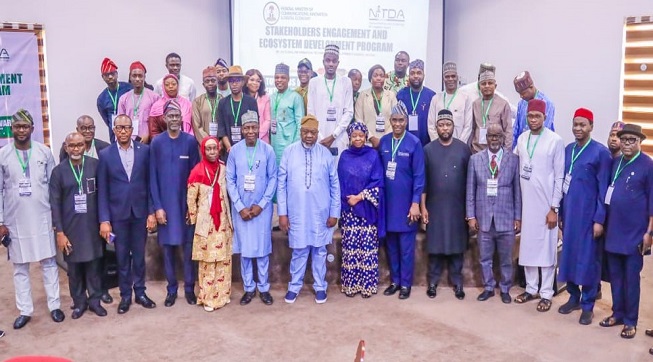
The Director General of the National Information Technology Development Agency (NITDA), Kashifu Inuwa, has called for stronger collaboration among stakeholders to unlock opportunities in Nigeria’s digital economy and accelerate national development.

Inuwa made the call at a NITDA-States IT Stakeholders’ Engagement and Ecosystem Development programme themed “Creating Opportunities, Breaking Boundaries: Towards Digitalization and Entrepreneurial Evolution.” in Abuja
Speaking at the event, the NITDA boss, represented by Mr Ajayi Babajide, Director Zonal Office Coordination, said Nigeria’s economy Africa’s largest by Gross Domestic Product (GDP) is at a critical juncture that requires urgent diversification, noting that the digital economy presents a strategic pathway to sustainable growth, job creation, and inclusive development.
He explained that in today’s interconnected world, digitalisation has become a key driver of economic transformation, offering unprecedented access to knowledge and creating opportunities for developing nations to compete globally.
According to him, the technology sector remains one of the fastest growing and most impactful segments of the global economy, stressing the need for Nigeria to position itself to fully harness its potential.
Inuwa reaffirmed NITDA’s mandate to drive and coordinate digital innovation across the country, adding that the agency is focused on creating an enabling environment that empowers all sectors, including underserved communities, to contribute meaningfully to the economy.
He highlighted the implementation of the agency’s Strategic Roadmap and Action Plan (SRAP 2.0), designed to deliver life-transforming opportunities and strengthen Nigeria’s digital ecosystem. He also pointed to the National Digital Literacy Framework (NDLF), which aims to equip citizens across various sectors with the digital skills required to thrive in a rapidly evolving economy.
The DG disclosed that NITDA has established over 100 IT centres nationwide and provided infrastructure to support digital learning and skills acquisition. However, he emphasised that sustaining and expanding these initiatives would require deeper collaboration with stakeholders.
He called for stronger partnerships among government at all levels, the private sector, academia, and civil society, noting that innovation thrives in an ecosystem supported by effective policies, access to funding, and enabling regulations.
Inuwa also stressed the importance of investing in innovation hubs and incubators to nurture startups from ideation to market readiness, enabling them to compete favourably on the global stage.
On entrepreneurship, he noted that NITDA has continued to support innovation through its special purpose vehicles, including the Office for Nigerian Digital Innovation (ONDI) and the National Centre for Artificial Intelligence and Robotics (NCAIR), which provide incubation, acceleration, and training programmes for startups and young innovators.
He observed that Nigeria’s innovation ecosystem has attracted significant investments and produced globally recognised startups, including unicorns, but said more efforts are needed to sustain the momentum.
Inuwa further noted that digitalisation holds immense potential for economic diversification, job creation, and inclusive growth, but warned that these opportunities must be deliberately harnessed through robust policies, legal frameworks, and strong institutional support.
He said the engagement provided a platform for stakeholders to exchange ideas, co-create solutions, and align strategies for the effective rollout of digital initiatives across states in line with SRAP 2.0.
The NITDA boss reiterated the agency’s commitment to fostering partnerships and providing the necessary support to drive Nigeria’s digital transformation, expressing confidence that collective efforts would deliver lasting impact.
He urged participants to remain committed to building a future where innovation thrives, opportunities are accessible, and Nigeria’s digital economy reaches its full potential.
In his earlier keynote address, the Permanent Secretary, Ministry of Innovation, Science and Technology Kogi State, Pharm. Eric Monday, explained that the state’s digital strategy is focused on applying technology to critical sectors, particularly healthcare, where efforts are underway to improve data management and expand service coverage. He added that similar interventions are being extended to works and environmental management.
He noted that outcomes from previous stakeholder engagements had helped shape actionable plans, stressing the importance of collaboration in achieving sustainable progress.
“Our goal is to learn from others while also sharing our experiences. The knowledge gained from engagements like this will help us strengthen our systems, create opportunities for our youth, and support skills development,” he said.
Highlighting ongoing projects, he disclosed that a skills acquisition centre, supported by development partners, is nearing completion and will soon be equipped to train young people in relevant digital skills.
Monday further revealed that the state is expanding its partnerships beyond Nigeria, including collaborations with Chinese organisations, to build a robust innovation ecosystem and open up new economic opportunities.
Describing Kogi as a “land of opportunity,” the official said the government is committed to leveraging its strategic position as the Confluence State to attract investment and promote growth.
Other dignitaries who delivered remarks at the event included the Permanent Secretary, Ministry of Science and Technology, Nasarawa State, Mr. Damina John, as well as the Executive Director, Commercial and Industry Development at the North Central Development Commission (NCDC), Mrs. Aisha Rufai.

His Excellency Governor Dapo Abiodun, The Governor of Ogun State, has said that the state is on course to establish direct air links to the United Kingdom, following plans by Air Peace to commence flights from the Gateway International Airport to London this summer.

Abiodun, who spoke after an inspection of the airport alongside Air Peace Chairman, Allen Onyema, said the move reflects growing investor confidence in the state’s aviation infrastructure and economic direction.
According to him, the planned operations to Heathrow Airport and London Gatwick Airport will open up Ogun State to increased trade, tourism and business travel, while easing pressure on existing international gateways.
“This airport was conceived to serve our people and support economic growth. What we are seeing now is that vision taking shape,” the governor said.
He added that cargo activities had already commenced at the airport, with projections indicating up to 50 cargo flights between April and year-end, a development expected to support exporters and manufacturers within Ogun and neighbouring states.
The Governor the state noted that discussions with multiple international and regional operators were ongoing, positioning the airport as a viable alternative for passenger and cargo movement in the Southwest.
Onyema, in his remarks, said Air Peace decided to key into the project after assessing the quality of infrastructure at the facility.
“This is one of the best-equipped airports in Sub-Saharan Africa. We will deploy our Boeing 777 aircraft for the London route because the runway and facilities can support it,” he said.
The inspection followed the recent commissioning of the airport by President Bola Ahmed Tinubu. With the planned London operations and growing cargo traffic, Abiodun expressed confidence that Gateway International Airport would strengthen Ogun State’s position as a key economic hub in Nigeria.

NIBSS Says 28 Percent of Nigerians have Registered for BVN

NITDA DG Urges Stronger Collaboration to Drive Nigeria’s Digital Economy

Ogun Set for Direct London Flights as Gateway Airport Gains Momentum

Airtel Becomes World’s Second Largest Telco as Global Customer Base Surpasses 650 Million

Nigeria Cyberattacks: Stronger Collaboration as a Panacea

Spotify’s Loud & Clear Report Reveals Over ₦60Bn Revenue for Nigerian Artists in 2025

Madonna University Taps Tech Guru Adote for Strategic Board Role

China Threatens to Shut Nigeria’s Satellite Over $11.44m Unpaid Debt

Healthcare Under Attack: Why Cybersecurity is Now Critical Care

Why JustMarkets Is a Strong Choice for Gold Trading




 E-Financial3 days ago
N4.65 Trillion in the Vault, but is the Real Economy Locked Out?

 General News3 days ago
Union Bank Looted: How Former Directors Gambled with Billions and Nearly Destroyed a National Bank

 E-Business1 day ago
FG to Strengthen Cybersecurity Coordination as NDPC Probes Alleged Data Breach

 Telecom1 day ago
Compensation for Poor Service Quality is Automatic- NCC

 General News1 day ago
Tinubu Approves N3.3 Trillion Payment Plan to Boost Power Supply

 Telecom1 day ago
FG Moves to Strengthen Cybersecurity Coordination as NDPC Probes Alleged Data Breach

 E-Business1 day ago
Offset Communications Slams N50m Suit against Qore Technologies for Alleged Copyright Infringement

 General News1 day ago
SERAP Sues CCB over Electoral Act, New Tax law