

E-Business
Stemming The Tide Of Cyberbullying


In spite of the significant improvement benefits associated with these innovations, there are still some fears that hss come with the emergence of the internet.
One of the adverse effects that has emerged with the coming of the internet is cyberbullying. This is a serious trend that has brought fears inti the hearts of parents, the world over.
Studies have shown that cyberbullying is the greatest fear of parents when their kids make use of the internet.
This is true, when you consider the growing prevalence of digital technologies in schools.
The Internet, smartphones and tablets are now the primary tools in the exhibition of bullying behavior.
With the unlimited access to the internet through smart devices by of teens and kids of this present age, the negative surge of cyberbullying is believed to have surpassed kidnapping as the number one fear globally.
In simple terms, cyberbullying occurs when someone appears to be tormenting, threatening, harassing, or embarrassing a young person, using smart devices or technologies.
In other words, cyberbullying comes in different forms, such as harassment, flaming, masquerading, etc.
Some ways in which cyberbullies operate include creating fake profiles of someone or impersonating another person with the negative intent of harming someone’s reputation.
In some other cases, you share a private photo or a private message with someone, and you see that confidential stuff being spread all over the internet. From where the leak came from, you do not know.
Why Cyberbullying Should Be Fought
It is necessary for us to fight cyber bullying yo a standstill to avert the negative implications of this surge are enormous.
Just think of the physical bullying, for instance, your kid goes to school everyday, and he is being bullied.
You realize that such kid becomes reluctant to go to school again, whenever he remembers that one teacher or another student who is a bully is waiting to harrass him in school.
Besides being unwilling to go to school again, such child is psychologically troubled. The emotional and psychological effects of cyberbullying are similar to those of real-life bullying.
Aside from this, such a kid can experience negative physical and mental health issues.
Kids who are bullied are more likely to experience depression, anxiety, feelings of sadness, loneliness, changes in sleep and eating patterns, etc.
Studies also show that adults who were bullied as a youth were three times more likely to have suicidal thoughts or inclinations.
According to findings from the “2016 Norton Cyber Security Insights Report: Family Edition, “nearly 57 percent of parents choose to check their child’s browser history, 46 percent only allow access to certain websites, 48 percent allow internet access only with parental supervision”.
“A concern for many parents is that cyberbullying doesn’t stop when their child leaves school as long as your child is connected to a device, a bully can connect to them,” said Ritesh Chopra, Country Manager, Norton by Symantec.
“Nearly one in three parents of children ages 12-17 agree that bullying is a more serious concern than other dangers, including domestic terrorism, car accidents, and suicide”, according to a national survey commissioned by Care.com.
What Parents Should Do
Interestingly, when a child is in trouble, the parents are usually the last to be aware. Kids find it tough to open up to their parents when they are bullied online.
Some of them fear that revealing to their parents about their situation will exacerbate the issue. It, therefore, becomes a herculean task for parents to protect their children if you don’t understand the problem in the first instance.
In this wise, therefore, below are some tips that parents should adopted in preventing the surge of cyberbullying.
Monitor Your Kids Activities Online
It is pertinent for you to know what your kids are doing online. Most of the time, some of these kids spend time on social media such as Facebook, so you need, as a parent, have an understanding of how various social networking websites work.
You can sometimes ask your children for their Facebook status updates, profile pages or Facebook wall. From there, you can have an idea of what is going on.
Build Trust Between You and Your Kids
It does not help at all, to be harsh to your children in situations that requires being relaxed and gentle.
When you are known for being harsh, your kids become too scared to open up to you on issues like cyberbullying when they find themselves entangled with it online.
You should always make them feel very relaxed and try ti have discussions regularly with your children about online issues. You need to let them have confidence in you by telling them to come to you for help if anything is wrong with them.
Let your kids understand the risks associated with the internet. Discuss rules for online safety and Internet use with them. Set time limits of how long they should spend on social media or the internet for them and ensure that they follow it to the letter.
Avoid Blaming your Child for Falling Victim of Cyberbullying
When your child is bullied online, relax abd do not raise to much dust by blaming your child.
At that point, what your child needs is for you to be supportive and as show understanding. You need to investigate to figure out how long this has been happening and ensure that you work together with your kid to devise a solution to stem it instead of blaming your child.
Conclusion
Apart from knowing what your kid is doing online, you need to also let your kid in on that good old advice that as you are careful of dealing with strangers in real life, so also, they must be careful dealing with strangers online.


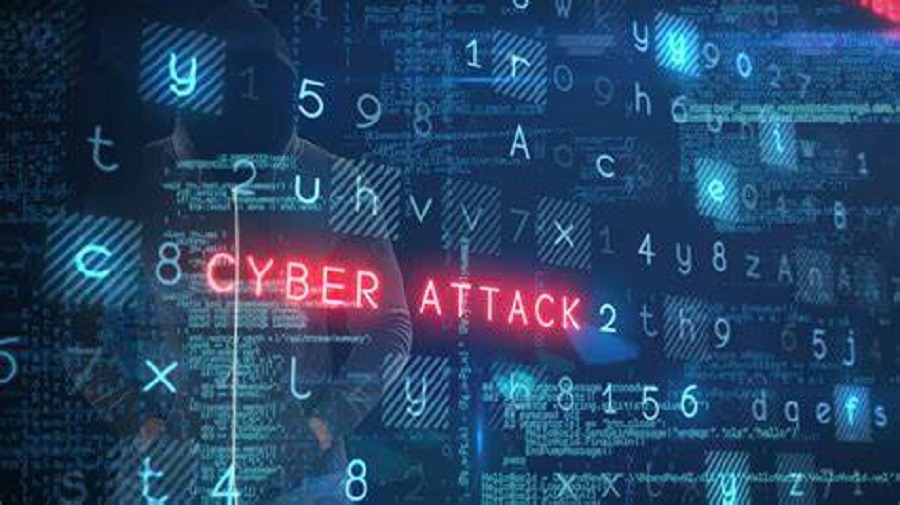
Corporate Affairs Commission (CAC) has raised alarm over a cybersecurity incident involving unauthorised access to parts of its information systems, urging users to update their login credentials as a precaution.

In a public notice yesterday, CAC, informed stakeholders that the Commission is currently reviewing the breach and assessing its potential impact.
According to the Commission, response protocols have been activated, with containment measures already in place to safeguard affected systems.
The CAC stated that it is working closely with the National Information Technology Development Agency (NITDA) and other relevant government agencies and partners to determine the scope of the incident and prevent further compromise.
“Appropriate containment measures have been implemented, and additional safeguards are in place,” the Commission stated, while advising users to monitor activities on the CAC portal and remain cautious of unsolicited communications that may arise from the breach.
Reports online claim that as many as 25 million documents may have been exfiltrated from the Commission’s infrastructure.
The claims, attributed to a cybercrime-tracking account, have not been independently verified, and the CAC has not confirmed the figures or identified any perpetrators.
The development has raised fresh concerns over the security of Nigeria’s corporate registry, particularly given the Commission’s increasing reliance on digital systems.
In February 2026, the CAC disclosed that it processes up to 10,000 business registration requests daily, following the deployment of artificial intelligence across its service delivery platforms.
It also handles an average of 5,000 customer enquiries each day via emails and call centres.
Despite the breach, the Commission reaffirmed its commitment to maintaining the integrity and security of its systems, assuring stakeholders that updates will be provided as investigations progress.


By Eric Gumbo, MBS
The writer is a partner at G&A Advocates LLP, a firm with two decades of experience advising on infrastructure, capital markets, and regulatory law across East Africa.

In 1961, John F. Kennedy promised the American people something that, by any rational measure, should have been impossible: that the United States would land a man on the moon and return him safely to earth before the decade was out.
The technology did not yet exist. What existed was the decision to begin. Six decades later, that decision is still paying forward.
On April 1, 2026, NASA’s Artemis II lifted off from Kennedy Space Center in Florida, carrying four astronauts on a ten-day journey around the moon, the first crewed lunar mission in over fifty years.
It was a test flight, one rung on a ladder that future missions will continue to climb. The greatest national achievements are rarely completed in a single term. They are built incrementally, passed from one generation to the next.
Kenya is at a similar moment today. Having spent two decades advising on infrastructure and regulatory frameworks across East Africa, I have seen the pattern repeat: the countries that succeed are not those with the most resources at the outset.
They are the ones that build the strongest legal and institutional foundations beneath their ambitions. The Sovereign Wealth Fund framework is Kenya beginning to do exactly that.
The Draft Sovereign Wealth Fund Bill proposes to gather revenues from oil, minerals, privatisations, and strategic investments into a single disciplined framework. Its three purposes are clear: stabilise revenues when commodity prices fall, finance critical infrastructure, and preserve savings for future generations.
With oil reserves estimated at 560 million barrels and resource revenues projected to exceed $1.5 billion annually, Kenya is not a poor country imagining wealth. It is a resourced country deciding whether to spend that wealth on today or invest it in tomorrow.
“A sovereign wealth fund is not a savings account. It is a declaration that we believe our country’s best days are ahead, and that we intend to fund them.”
The wise farmer does not eat all the seed after the harvest. She saves enough for the next planting season, because what she holds today is not just food. It is the future.
Those entrusted with managing this fund must act not as owners, but as caretakers. Nigeria’s oil revenues once promised national transformation; five decades later, the Niger Delta remains among the most underdeveloped regions on the continent, a cautionary tale written in squandered windfalls and weak institutions.
The Santiago Principles, which the draft bill aligns with, exist precisely to prevent that story from repeating. Auditors, parliament, civil society, and the media must be empowered to scrutinise this fund as its guardians, not as obstacles to it.
Kenya is not venturing into unknown territory. Botswana built the Pula Fund from diamond revenues and transformed one of Africa’s smallest economies into one of its most stable. Ghana’s Petroleum Funds have cushioned oil shocks and preserved a heritage for future generations.
Both succeeded not because they struck lucky, but because they built the governance architecture to protect what they found.
From M-Pesa to the 2010 Constitution, Kenya has a documented history of building things others eventually copy. The Sovereign Wealth Fund is the next chapter.
But it must be written with discipline and institutional independence that outlasts any single administration. Visible returns, better hospitals, more schools, jobs funded by resource revenues rather than donor goodwill, are what will determine whether ordinary Kenyans trust this fund across generations.
When we extract minerals from Kenyan soil today, coal from Kitui, rare earth elements from Kwale, gold from Migori, we are drawing down on a balance sheet that does not belong to us alone. It belongs to the Kenyan who will be born twenty years from now, who never had a vote in how we used her inheritance.
As Xi Jinping has put it: “We must act on the responsibility to our ancestors, our generation, and those yet to come.” The Sovereign Wealth Fund is how Kenya answers that responsibility. Not with words, but with architecture that lasts.

Nigeria needs some 480,000 data protection officers (DPOs), to develop, implement, and oversee organizations’ data privacy strategy to ensure compliance with laws like the GDPR and the Nigeria Data Protection Act (NDPA).

Currently only about 10,000 individuals possess the necessary certification highlighting a major skills gap, according Vincent Olatunji, national commissioner, Nigeria Data Protection Commission (NDPC).
Olatunji spoke on Monday at the second edition of its Data Protection Officers training and certification programme in Abuja and Lagos.
He said that the NDPC has domesticated the certification of data protection officers (DPOs) to address the widening gap in certified DPOs, despite steady growth in the number of trained professionals over the past three years.
“At the moment, we have about 10,000 certified DPOs to work in that space. The gap of about 480,000 still exists,” he said.
The shortfall reflects rising demand for data privacy skills as more businesses, government agencies and digital platforms process personal data under the Nigeria Data Protection Act.
Olatunji said the number of certified DPOs has grown from fewer than 1,000 three years ago to over 10,000, while more than 27,000 professionals now operate within Nigeria’s wider data protection ecosystem.
He said the commission is scaling up training and certification efforts to close the gap and position Nigeria as a leading source of data protection talent in Africa.
“Our goal is to make Nigeria the go-to country when it comes to sourcing qualified data protection officers in Africa,” he said, adding that the certification meets global standards.
The NDPC said expanding the talent pool could also support job creation and strengthen trust in Nigeria’s digital economy.
Tolu Fadipe, head of research and development at the commission, said data protection is becoming critical as the country moves deeper into digital systems and emerging technologies.
“As we move towards a digital economy, data becomes central and protecting that data is essential,” she said.
Adeola Sopade, lead trainer, said participants in the programme would be trained on global best practices, including data protection principles, compliance requirements and handling user data requests.
The training also includes practical exposure and internships with organisations to improve job readiness.
Participants said the programme offers opportunities for young Nigerians to build careers in technology and prepare for emerging fields such as artificial intelligence.

Lagos Targets Vulnerable Residents in Expanded Social Register

CBN Proposes 30-Member Mediation Panel for Loan Disputes

CAC Urges Users to Secure Accounts after Cyberattack Scare

NCDC Predicts Cholera Outbreak in 10 States as Heavy Rains Loom

NDIC Seeks Court Nods to Liquidate 89 Failed Banks

Kuda MFB Increases Kuda for Her Business Grants to ₦10 Million

Canal+ to Cut Jobs as Part Sweeping Restructuring

Nigeria tops global rankings for USDT, USDC ownership

NBC Boss Urges Content Ceators to Participate in DSO

NITDA Takes Over National Digital Architecture System




 E-Financial2 days ago
Fidelity Surges Ahead in Recapitalisation Drive with ₦564bn Capital

 General News1 day ago
Guinness Nigeria Surpasses ₦1Trillion Market Capitalisation, Signalling Strong Investor Confidence and Sustained Value Creation

 Telecom2 days ago
Qualcomm Unveils Startup Selection for Qualcomm Make in Africa 2026

 Telecom2 days ago
AfDB Grants Project BRIDGE $200m Facility for Nationwide Internet Access

 E-Financial2 days ago
Digital “Pickpockets” Compromise Over a Million Banking Accounts – Kaspersky

 Telecom2 days ago
Nigeria Seeks Stronger Digital Sovereignty, National Software Infrastructure

 E-Financial2 days ago
EFCC Warns Banks against Loans without Credible Collateral

 General News2 days ago
Air Traffic Controllers Raise Safety Concerns over Failing Systems, Worsening Welfare