

General News
Strangest African Deliveries of 2013


DHL Express has released its annual list of quirky, strange and speedy delivery requests for 2013 which ranged from delivering nine gorillas across two continents, to transporting the Webb Ellis trophy and a specific heart internal defibrillator.
In addition to these global shipments, a few more interesting packages which were delivered closer to home have come to light and are worth mentioning.
According to Sumesh Rahavendra, head of Marketing for DHL Express Sub-Saharan Africa (SSA), within the SSA region there has been an increase in strange food delivery requests with each passing year. He says that it is now becoming an increasingly interesting exercise to pin-point which deliveries stand out above the rest.
“One unique shipment to mention is a 32kg consignment of Haggis which was moved from the UK to Tanzania for an event. The Scottish delicacy was swiftly transported through customs and delivered in time for the prestigious event.”
Rahavendra said that in Kenya, live human eyes are transported on a regular basis. ”Understandably, the corneas have an extremely short life span and are therefore highly perishable, which possess a significant challenge to us.
“What adds to the complexity is the fact that the recipient is booked and prepped for surgery while the cornea is in transit. The successes of these deliveries rely on prior customs releases, dedicated delivery vehicles and a passionate team of certified international specialists on the ground. When there is no margin for error and the result could affect another person’s opportunity for sight, every stop is pulled out from pick-up to delivery.”
Another unusual personal delivery was for a customer who shipped his laundry from the United Kingdom to a Southern African country….for dry cleaning.
For many people, a wedding is one of the most important and special days of their life, and the price of one’s happiness on ‘the big day’ is immeasurable, said Rahavendra.
“In light of this, 1.7 tons of fresh flowers were sent from Johannesburg to Douala in Cameroon for such an occasion. This personal request came from a customer whose two sons were getting married on the same day. Fast forward a few short hours, and a splendor of colour was delivered to the event in time for the all important nuptials.”
He said that on the conservation front, an interesting delivery in Kenya included the transport of butterfly larvae.
“Any delay in the transport process would result in the premature hatching of the butterflies, from which they would not have survived. Following a similar operational process as the transport of the corneas previously mentioned, another successful, yet another unique delivery was completed.
“From election ballots to presidential documents, DHL Express is trusted to pick up and deliver shipments as fast as possible around the world on a scheduled Express Network. The customer is at the center of everything we do and it is this customer centricity that drives us to deliver two million packages across the globe on a daily basis, no matter how unique the package might be. Although sometimes challenging and stressful, such requests certainly help bring a smile to our faces on a busy day”, concluded Rahavendra.


General News
Court Fines Lafarge Africa N2m for Using Ex-Employee’s Name, Details Online after Dismissal


National Industrial Court of Nigeria in Lagos has ordered Lafarge Africa Plc to pay N2 million in damages to a former employee after finding that the company unlawfully retained and continued using his personal data years after his exit.

In a judgment delivered on February 17, 2026, in Suit No. NICN/LA/60/2022, Justice Ikechi Gerald Nweneka ruled that the cement manufacturer breached the claimant’s right to privacy by listing his name and contact details in official purchase orders long after his employment ended.
Mr. Kehinde Adeniyi Johnson, claimant, had approached the court in February 2022, alleging that although he left the company in November 2019, his name, personal email address and phone number remained attached to Lafarge’s.
He sought multiple declarations and N50 million in general and aggravated damages, arguing that the continued use of his identity amounted to unlawful usage, fraudulent misrepresentation and emotional distress.
According to court filings, Johnson told the court that he kept receiving calls, emails and WhatsApp messages from suppliers and logistics agents regarding consignments intended for Lafarge.
He recounted an incident involving a shipment from India: after being contacted by a dispatcher, he accepted delivery but was denied access to company premises upon arrival.
He later alleged that he was attacked by armed robbers in the aftermath, blaming the exposure created by the company’s continued use of his identity.
Lafarge denied liability, attributing the issue to a system malfunction. The company maintained that it deactivated Johnson’s official email and server access upon his departure and notified relevant suppliers of his disengagement.
It also challenged the court’s jurisdiction, arguing that claims relating to tort and emotional distress fell outside the court’s scope.
In addressing preliminary objections, Justice Nweneka dismissed the company’s challenge to the admissibility of emails and WhatsApp messages tendered as evidence, holding that the communications were not hearsay since they involved the claimant and company representatives.
On jurisdiction, the court held that the dispute stemmed directly from the employment relationship and therefore fell within its competence.
It further clarified that the suit was not brought under the Fundamental Rights Enforcement Procedure Rules, making it properly instituted before the court.
After reviewing the evidence, the judge found that Lafarge continued to use Johnson’s name and telephone number in purchase orders well after his exit, thereby violating the Nigeria Data Protection Act and Section 37 of the 1999 Constitution, which guarantees the right to privacy.
he court also upheld the claim for intentional infliction of emotional distress, describing the company’s conduct as reckless, particularly after it had been formally notified by the claimant’s solicitors.
However, several other claims including those relating to human dignity, tortious interference, indemnification and aggravated damages were dismissed for lack of proof or improper framing.
In awarding N2 million in damages, the judge cited statutory limits under the data protection law and the principle of proportionality.
The court further directed Lafarge to permanently erase the claimant’s personal data from its servers, applications and procurement systems, and to deactivate any pre-generated codes bearing his name.


Mark Zuckerberg’s tech empire is once again under regulatory pressure in Africa after competition authorities across 21 markets launched a formal probe into changes affecting WhatsApp’s AI ecosystem.

The Common Market for Eastern and Southern Africa (COMESA) Competition and Consumer Commission has opened an investigation into Meta Platforms over amendments made in October 2025 to the WhatsApp Business Solution Terms.
At the heart of the probe is whether the updated rules unfairly restrict third-party artificial intelligence providers from accessing the WhatsApp Business API, while preserving full integration for Meta’s own AI tools, including Meta AI.
In a notice issued by the regulator, the commission said it has “reasonable cause to suspect” that Meta may hold a dominant position in the common market and that the changes could “substantially lessen competition” by excluding rival AI service providers from what it described as a crucial digital gateway.
The investigation spans 21 member states, including Kenya, Egypt, Ethiopia, Uganda and Zambia. Stakeholders have been invited to submit feedback before 16 March 2026, with regulators emphasising that the move marks the start of a fact-finding process, not a ruling of wrongdoing.
This is not the first time Meta has faced scrutiny in Kenya and East Africa. Kenyan authorities have previously examined major digital platforms over data protection, misinformation and labour practices. In Nigeria, the data protection regulator fined Meta over privacy violations, underscoring growing African oversight of global tech firms.
Globally, the company is also navigating regulatory headwinds. The European Commission and Italy’s competition authority have reviewed Meta’s AI integrations on WhatsApp amid concerns about potential restrictions on rival chatbot providers. In the United States, Meta has faced antitrust litigation over its broader market dominance.
For Africa’s digital economy, the stakes are high as WhatsApp remains one of the continent’s most widely used platforms for communication, commerce and customer engagement. Across COMESA’s 21 markets, millions of small businesses rely on WhatsApp Business to reach customers, while startups are increasingly building AI-driven services on top of the platform.
If regulators determine that access to WhatsApp’s business interface is being restricted in favour of Meta’s own AI tools, there is genuine concern that it could limit opportunities for African developers and startups seeking to innovate in the fast-evolving AI space.
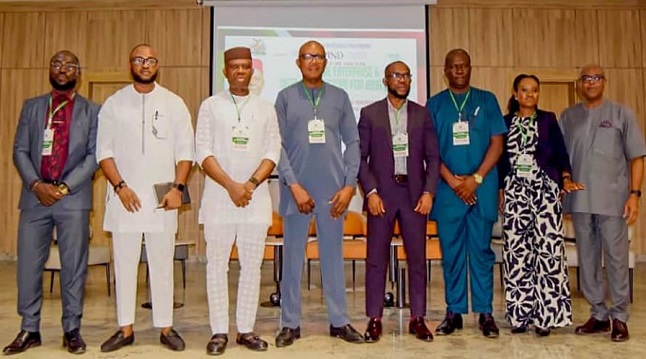
In alignment with President Bola Ahmed Tinubu’s priority areas of economic reform, digital innovation, and improved governance, the National Information Technology Development Agency (NITDA) has reiterated its commitment to supporting sub-national governments in building integrated, data-driven systems that enhance service delivery and drive sustainable growth.

This commitment was reinforced at the Future Enterprise & Data Architecture of Abia State workshop themed “One Citizen, One Identity: Unlocking Data-Driven Governance.” The high-level engagement brought together policymakers, technocrats, and development partners to chart a pathway toward a unified digital public sector anchored on interoperability and citizen-centric governance.
The workshop, organised by the state’s Ministry of Budget and Planning and declared open by Governor Alex Otti, who was represented by the Deputy Governor, Engr Ikechukwu Emetu, focused on strengthening interoperability among Ministries, Departments, and Agencies (MDAs) to enhance revenue generation and improve service delivery across the state.
Speaking during a panel session titled “Breaking Silos, Building One Government,” the Director General of NITDA, Kashifu Inuwa CCIE, who was represented by the Agency’s Director of Stakeholder Management and Partnership, Dr Aristotle Onumo, emphasised that collaboration remains the cornerstone of successful digital transformation.
“One thing that is very clear is partnership and collaboration. If you want to take advantage of collective intelligence, then partnership is the key. If you want to succeed in building a unified government system, collaboration is the way to go,” he stated.
He stressed that digital transformation is not merely about deploying technology but about transforming people and culture. According to him, resistance to change and entrenched institutional silos can undermine even the most sophisticated technological frameworks if mindset shifts are not prioritised.
“Digital transformation is as much about people as it is about process and technology. If culture resists change, it can undermine strategy at every level. We must move from control to collaboration, and from isolation to integration,” he added.
Highlighting NITDA’s strategic direction, the DG noted that the Agency’s action plan prioritises digital literacy as a foundational pillar for national development. He disclosed that NITDA is targeting 70 per cent digital literacy nationwide through structured interventions, including training 30 million Nigerians across formal and informal sectors using digital learning platforms deployed through community and institutional partnerships.
He further revealed that digital education is being integrated into school curricula at primary, secondary, and tertiary levels, while civil servants across the federal public service are undergoing digital capacity development programmes to enhance institutional efficiency and readiness for interoperable governance systems.
On interoperability, Inuwa described it as “not optional but a necessity” for achieving data integrity, efficiency, and innovation in governance. He explained that NITDA is developing a national interoperability framework and advancing Enterprise Architecture (EA) initiatives across government institutions to ensure seamless data exchange.
“When we talk about interoperability, we mean that data generated in one agency should be accessible and usable by another in a consistent and secure format, without contradiction or confusion. That is how you build one government, not multiple disconnected systems,” he explained.
He added that a robust interoperability framework would not only improve internal government efficiency but also create a platform for innovation, enabling startups and young innovators to build solutions on structured public datasets.
While commending the state’s leadership for its vision and commission, he said, “If we achieve even 80 per cent of what has been presented here, Abia will not only lead among states, but it will also become a national reference point for digital innovation.”
The workshop concluded with a renewed call for stronger federal–state collaboration, policy alignment, and sustained investment in digital capacity to ensure that the vision of “One Citizen, One Identity” translates into tangible socio-economic impact.

Retiree Slams N50m Suit against over Alleged Privacy Breach, Unauthorized Accounts

Court Fines Lafarge Africa N2m for Using Ex-Employee’s Name, Details Online after Dismissal

GSMA Launches Innovation Fund to Accelerate Green Transition Through Mobile Technology

NITDA Urges Stronger State Partnerships as Key to Digital Economy Goals @ South-South Stakeholders Forum

TAJBank Secures A1 Ratings from Agusto, Datapro
Nigeria’s 9 Top FinTech Firms Valued at $10.6Bn in January 2026

CBN Upgrades Licences of Opay, Moniepoint, Kuda, Palmpay, Paga to National Status

Kaspersky Launches OT Calculator to Align Cybersecurity Investments with Business Goals

NITDA, NBC Explore Strategic Collaboration on Digital Transformation, Media Regulation

Accidental Billionaire Opts for Jail Instead of Returning Money Credited Him by Mistake




 News2 days ago
ABoICT Lecture 2026 to Focus on Impact of AI, IoT on Business Operational Efficiency

 General News2 days ago
Leo Stan @ 70: Blessed and Bruised by Country, Eyes Next Disruption

 General News2 days ago
Zinox Technologies and TD Africa Forge Strategic Partnership to Revolutionize African Tech Ecosystem

 Telecom2 days ago
Uwaje Pays Tribute to Leo Stan Ekeh @70

 E-Financial1 day ago
$214Bn Missing, Institutions Silent: Is Accountability Dead in Nigeria?

 General News1 day ago
NITDA, Abia Partner on Enterprise Architecture Reform

 Telecom1 day ago
Cyber Immunity Emerges as Shield for Nigerians Amid Rising Scams

 E-Business1 day ago
Interswitch Partners Abia to Digitise Public Hospitals