

News
UK-Africa Investment Summit to showcase Investment in both Nigeria & UK

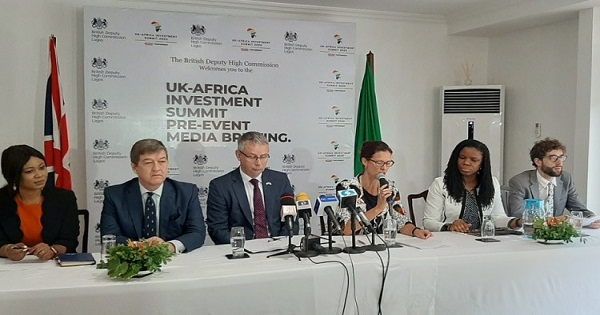
The United Kingdom Government will on Monday, 20 January 2020, host the inaugural UK-Africa Investment Summit in London geared towards a long-term partnerships that will deliver more investment and jobs in people and business in both Nigeria and the UK.
This Summit will bring together British and African businesses to harness the huge potential of the continent when it comes to trade – including through infrastructure, agriculture, enterprise and technology. It will create new lasting partnerships to deliver more investment, jobs and growth to benefit people and businesses across Africa and the UK.
Hosted by UK Prime Minister Boris Johnson, the Summit is a great opportunity to highlight and discuss trade and investment relations for both the UK and Nigeria. Other African countries will also be looking to promote their investment offers.
Nigeria will play a critical role in the success of the Summit. President Buhari is set to head the Nigerian delegation and will receive special treatment, befitting his status as President of Africa’s most populous country and biggest economy.
At the Summit, the Nigerian delegation will have the chance to engage investors on business environment issues and to emphasise Nigeria’s commitment to continuing to improve conditions for doing business, as recognised in its steady climb up the World Bank’s Doing Business index from 146th to 131st in last October’s report.
The British Prime Minister will meet with President Buhari, who will also attend a reception hosted by Their Royal Highnesses The Duke and Duchess of Cambridge.
In advance of the Summit, the UK Government through the Department for International Development worked with the Nigeria Investment Promotion Commission (NIPC) to develop a new Nigeria Investment Guide, which will be launched at the Summit. The guide, trailed today, will help investors understand the opportunities and find out about the organisations, processes and services in place to help make the most of them.
Harriet Thompson – British Deputy High Commissioner in Lagos, “The UK-Africa Investment Summit is a major opportunity to support growth, development and job creation in Nigeria, including HE President Buhari’s commitment to expanding agriculture and manufacturing.”
“Nigeria will be highly visible: the only country to participate in every AIS event, and Nigeria’s companies will be out in force: one in seven of the African companies attending will be Nigerian.
“Every session of the Summit will feature Nigerian participants. We want them to come back with new partnerships that will boost investment and create jobs and sustainable economic growth in Nigeria.
“This is a prime opportunity for Nigeria to make its pitch to quality British companies and investors, demonstrating not only the scale and breadth of commercial opportunities here in Nigeria, but also Government’s commitment to improving the business environment. Global competition for investment is fierce. Nigeria will need to compete for its share, addressing those areas that businesses still find a challenge, such as customs and tax procedures.
“The UK Government stands ready to assist, and to bring our companies here to be part of the growth story we want to see. That’s ultimately the goal of the Summit: to attract investors for the mutual benefit of Nigeria and the UK.”
Chris Pycroft – Head of Department for International Development in Nigeria, “This is the time for Nigeria – All eyes are on the Summit. Bringing together British and African businesses, governments, entrepreneurs and innovators is a massive step in unlocking Africa’s potential.
“We can create new lasting partnerships that will deliver more investment, more jobs and more growth – that’s good for people and businesses – and good for Nigeria”
Yewande Sadiku- Executive Secretary/CEO Nigeria Investment Promotion Commission, “The UK is a country of strategic investments and we consider the relationship of utmost importance, and our delegation to the UK-Africa Investment Summit reflects that much. The summit will be an opportunity for UK businesses to get a sense of the opportunities in the Nigerian market.
The Nigerian Investment Guide will give investors the feel of what matters in setting up a business in Nigeria. We hope this will encourage even more British businesses to invest here – creating jobs for Nigerians and supporting both our economies”
Speaking on his visit to Kenya last weekend, the International Development Secretary, Alok Sharma
said: “I am in Africa to see how British and African businesses are working together to drive jobs and growth across the continent.
“Africa has eight of the 15 fastest growing economies in the world but currently receives less than 4% of foreign direct investment. There are fantastic opportunities for UK businesses to work alongside, invest in and partner with African nations.
“My visit comes ahead of the UK-Africa Investment Summit in London on January 20, where we will bring together UK and African businesses, African leaders, international institutions and young entrepreneurs to drive the investment Africa needs to flourish.I look forward to seeing many of you there.”



Nigeria and the European Union have inked a scientific and technology deal that grants access to about €100 billion in research and innovation funding for scientists, start-ups, and public institutions.

The agreement is a significant boost to the country’s tech environment, providing new prospects for research, innovation, and start-up growth.
The arrangement was signed in Abuja by Gautier Mignot, head of the EU delegation to Nigeria and ECOWAS, and Kingsley Udeh, Nigeria’s minister of innovation, research, and technology.
After more than two decades without a formal framework, the agreement transfers cooperation from informal to structured, large-scale collaboration.
The European Commission’s Horizon Europe programme, the world’s largest public research budget, is at the heart of the deal, which will bring together Nigerian researchers and firms to work on cross-border projects in health, agriculture, climate, food systems, and new technologies.
Udeh stated that the relationship puts Nigeria as a continental powerhouse for science and enterprise, with an emphasis on translating research into commercially viable products and assisting startups in scaling into global players.
Gautier Mignot noted that Nigerian organisations are already active in several Horizon-backed and global health research projects, but the new pact provides a legal and political framework to significantly expand participation, funding access and visibility.
To ensure delivery, both parties created a Joint Science and Technical Cooperation Committee to drive implementation and track measurable outcomes.
Beyond academia, the agreement aims to support innovators, boost university–industry collaboration, and help more Nigerian tech firms compete globally, strengthening Nigeria’s position as a leading startup hub in Africa.

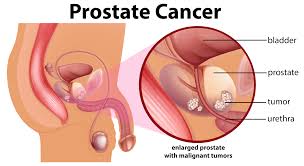
Microplastics have now been found inside most prostate cancer tumors — and at strikingly higher levels than in healthy tissue.

A new study reports that tiny plastic particles were present in nine out of 10 men diagnosed with prostate cancer.
Researchers also found that these fragments appeared in greater amounts inside cancerous tumors than in nearby noncancerous prostate tissue.
The investigation was conducted at NYU Langone Health, including its Perlmutter Cancer Center and Center for the Investigation of Environmental Hazards.
Scientists set out to examine whether exposure to microplastics could play a role in the development of prostate cancer, which the American Cancer Society identifies as the most common cancer affecting American men.
Plastic used in food containers, packaging, cosmetics, and other everyday products can break down into microscopic pieces when heated, worn down, or chemically altered.
These particles can be swallowed, inhaled from the air, or absorbed through the skin. Previous research has detected microplastics throughout the human body, including in major organs, bodily fluids, and even the placenta.
Despite their widespread presence, scientists still do not fully understand their health effects.
For this study, researchers analyzed prostate tissue samples from 10 patients undergoing surgery to remove the prostate gland. Microplastic particles were identified in 90% of tumor samples and in 70% of noncancerous samples.
Notably, tumor tissue contained significantly more plastic.
On average, cancerous samples had about 2.5 times the concentration found in healthy prostate tissue (about 40 micrograms of plastic per gram of tissue compared with 16 micrograms per gram).
“Our pilot study provides important evidence that microplastic exposure may be a risk factor for prostate cancer,” said study lead author Stacy Loeb, MD, a professor in the NYU Grossman School of Medicine’s Departments of Urology and Population Health.
Loeb explained that while earlier studies had hinted at links between microplastics and conditions such as heart disease and dementia, there had been little direct research connecting them to prostate cancer.
The findings will be presented on February 26 at the American Society of Clinical Oncology’s Genitourinary Cancers Symposium.
According to Loeb, this is the first study conducted in the West to measure microplastic levels in prostate tumors and directly compare them with levels in noncancerous prostate tissue.
To carry out the analysis, scientists first examined the tissue visually. They then used specialized instruments to measure the quantity, chemical makeup, and structural characteristics of microplastic particles. The team focused on 12 of the most commonly produced plastic molecules.
Because plastic is widely used in medical and laboratory tools, the researchers took extra precautions to prevent contamination. They replaced plastic equipment with alternatives made from aluminum, cotton, and other nonplastic materials. All testing took place in controlled, clean rooms specifically designed for microplastic analysis.
“By uncovering yet another potential health concern posed by plastic, our findings highlight the need for stricter regulatory measures to limit the public’s exposure to these substances, which are everywhere in the environment,” said study senior author Vittorio Albergamo, PhD.
Albergamo, an assistant professor in the NYU Grossman School of Medicine’s Department of Pediatrics, said the next step is to determine how microplastics behave inside the body and whether they contribute directly to cancer development. One theory the team plans to investigate is whether these particles trigger a persistent immune response (inflammation) in prostate tissue.
Over time, chronic inflammation can damage cells and lead to genetic changes that allow cancer to form.
Albergamo emphasized that the study involved a small number of patients and that larger studies will be necessary to confirm the results.
According to the Centers for Disease Control and Prevention, about one in eight men in the U.S. will be diagnosed with prostate cancer during their lifetime.
Meeting: American Society of Clinical Oncology’s Genitourinary Cancers Symposium
The research was funded by the U.S. Department of Defense.
In addition to Loeb and Albergamo, the NYU Langone research team included Leonardo Trasande, MD, MPP; Trevor Johnson, PhD; Fang-Ming Deng, MD, PhD; Mark Strong, DO; David Wise, MD, PhD; José Alemán, MD, PhD; Zixuan Mo, BS; Mariana Rangel Camacho, BS; Nataliya Byrne, BA; Tatiana Sanchez Nolasco, MPH; Adrian Rivera, MPH; William Huang, MD; Herbert Lepor, MD; Wei Phin Tan, MD; and James Wysock, MD.
Samir Taneja, MD, of Northwell Health in New York City also contributed to the study.
Loeb has consulted for pharmaceutical company Astellas, digital health company Savor Health, and men’s health organization Movember, and has received research support from Endo USA Inc. She also participated in advisory boards for Endo USA, Blue Earth Diagnostics, Pfizer, Sumitomo Pharma, and Doceree. Wysock has consulted for medical equipment manufacturers Edap — Focal One, and URO-1 Medical. Wise is a paid consultant for Pfizer, Bayer, K36, OncoC4, AstraZeneca, and Janssen Pharmaceuticals, and is an expert witness for Exxon Mobil. None of these activities are related to the current study. NYU Langone Health is managing the terms and conditions of these relationships in accordance with its policies and procedures.
Credit…..scitechdaily.com

Lotus bank has strengthened its push for inclusive and sustainable development through a strategic partnership with the Rural Electrification Agency (REA) to widen access to renewable energy solutions in underserved communities nationwide.

The collaboration was formalised on Monday in Abuja with the signing of a Memorandum of Understanding (MoU), under which LOTUS Bank will make available up to N100 billion in accessible financing to certified Renewable Energy Service Companies (RESCOs). The funding is expected to ease capital constraints that have slowed the pace of off-grid electrification projects across rural Nigeria.
Speaking at the signing ceremony, Managing Director/Chief Executive Officer of LOTUS Bank, Dr. Isiaka Ajani-Lawal, described the partnership as a practical demonstration of the Bank’s founding philosophy.
“LOTUS Bank was established to redefine the impact that financial institutions can have on the society we serve – not simply through financing, but through partnership, empowerment, and shared prosperity,” he said.
Ajani-Lawal stressed that the initiative aligns with the Bank’s broader mission of deploying ethical, non-interest finance to address pressing national development priorities.
“Our involvement with REA and the DARES program underscores our commitment to supporting sustainable development goals, while driving financial inclusion across Nigeria. We believe non-interest finance must go beyond innovation — it must deliver tangible socio-economic value to all segments of society,” Ajani-Lawal assured.
On his part, REA Managing Director/Chief Executive Officer, Abba Abubakar Aliyu, underscored the urgency of tackling financing gaps confronting renewable energy developers, particularly in the off-grid segment.
“While Nigeria has made strides in expanding energy access, financing remains a key constraint for RESCOs. Collaborations like this are essential in unlocking private sector investment and delivering sustainable energy solutions at scale,” Aliyu said.
Industry observers note that the partnership is poised to accelerate clean energy deployment, reduce financing bottlenecks, and catalyse private sector participation in Nigeria’s electrification drive.
It also aligns with the country’s National Electrification Strategy and Implementation Plan (NESIP) and advances Sustainable Development Goal 7 (SDG7), which seeks to ensure access to affordable, reliable and clean energy for all.
Since commencing operations in 2021, LOTUS Bank has carved a niche as a non-interest lender focused on financial inclusion. The Bank has rolled out innovative products tailored to individuals, women, youth and micro, small and medium enterprises (MSMEs), while investing in digital platforms to broaden access to ethical banking services across urban and rural communities.
Its interventions span community empowerment initiatives, corporate social responsibility programmes, and financial literacy campaigns designed to deepen understanding and adoption of non-interest banking principles.
In recognition of its expanding footprint in ethical finance, LOTUS Bank was recently named “Best Ethical and Financial Inclusion Bank of the Year” at the 2025 BusinessDay BAFI Awards, further cementing its reputation as a leading advocate of impact-driven banking in Nigeria.

Conoil Bonanza Winners Emerge

PalmPay Couples Show How Love Is Funded Digitally

KPMG Strengthens Africa Leadership to Support Long‑term Growth Across the Continent

Nigeria, EU Ink Research, Innovation Deal Worth €100Bn

esentry 2025 Report Shows Healthcare, Financial Services and Telecoms as Staging Grounds for Increased Cyberattacks in Africa

NITDA, NBC Explore Strategic Collaboration on Digital Transformation, Media Regulation

Kaspersky Launches OT Calculator to Align Cybersecurity Investments with Business Goals

Accidental Billionaire Opts for Jail Instead of Returning Money Credited Him by Mistake

Why the Future of PR Depends on Healthier Client–Agency Partnerships

Kaspersky Brings more Transparency to Threat Detection with New Hunt Hub




 E-Business2 days ago
AfDB, UNDP Launch $10Bn AI Initiative for Africa

 News3 days ago
NITDA Urges Stronger State Partnerships as Key to Digital Economy Goals @ South-South Stakeholders Forum

 Telecom3 days ago
GSMA Launches Innovation Fund to Accelerate Green Transition Through Mobile Technology

 Telecom2 days ago
Grey Expands Cross-Border Banking with USD Accounts, USDC Support

 Telecom3 days ago
Prof. Adeyanju is Strengthening Nigeria’s Digital Backbone for a Connected Future in Two Years of Purposeful Leadership

 E-Business3 days ago
Firm Identifies RenEngine Loader Distributed Through Pirated Games and Software

 E-Financial3 days ago
Fidelity Bank Launches HerFidelity Apprenticeship Programme 2.0 to Boost Women Entrepreneurship

 E-Financial3 days ago
TAJBank Secures A1 Ratings from Agusto, Datapro