

General News
UK, EFCC Probe Govs, Ministers

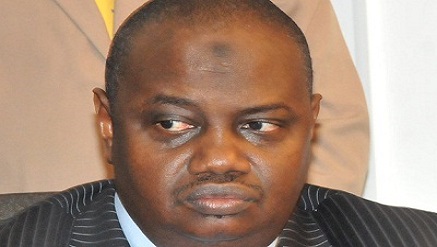
Ibrahim Larmorde, chairman, Economic and Financial Crimes Commission (EFCC) has said that the commission and the United Kingdom’s Metropolitan Police are investigating some serving and former governors, ministers, heads of service of the federation, and federal lawmakers.
Lamorde, made the comment while playing host to the Metropolitan Police Special Crime and Operations Unit led by Detective Chief Inspector Jonathan Benton in Abuja, on Monday.
He said that the operatives of the EFCC and the Met Police were investigating the serving and former public office holders for money laundering and looting of public treasury.
Lamorde refused to disclose the identities and the total number of the public office holders on the watch list of the commission and the Met Police on the premise that the investigation was jointly carried out by the EFCC and the UK Police.
He said the affected current and former public office holders would be arrested and their identities revealed after the commission must have concluded investigation into their cases.
He said, “You are also very much aware that the Metropolitan Police Proceeds of Corruption Unit is the unit that assisted us in the case of DSP Alamieyeseigha in the past, Joshua Dariye, and of course the big one that everybody is aware of, James Ibori, who is currently serving a jail term in the United Kingdom.
“In a few months’ time, there is also going to be a confiscation proceedings in respect of the assets of James Ibori in the United Kingdom which of course we have been working assiduously to make sure it will be successful.
“In respect of some of the new cases we have embarked upon, we are investigating some sitting state governors, some ministers that are serving, also ministers that have left office, some former heads of service of the federation and members of the National Assembly.
“We will never mention names, since it’s a joint investigation that we are doing, and you know unlike what we do here where some of our people here wants sensationalism, that’s not the way it works with them.
“The investigation has to be conducted properly first, it is when the matter is ready to go to court that publicities are given to individual cases; for the time being they are here, we are reviewing those investigations and when we are ready to go to court then names and these cases will be properly mentioned.”
Lamorde said that investigations into the cases against the public office holders would take some time to conclude just like the Ibori case which took up to six to seven years of investigation before he was arraigned in court.
Larmorde warned that any public office holder who got involved in the theft of public funds would not go free.
He said that the commission had put in place the machinery to track those stealing and taking such loot outside the country.
“…We cannot be in a hurry, the most important thing is that people should know that a lot is going on, and any person, either a man or woman, occupying public office, who decides to put her hand or his hand in government coffers to steal, would not have any hiding place.
“Whether you take the money outside this country or not, there is machinery in place to trace this money and also bring such individuals to justice,” Lamorde added
He commended the Met Police for complementing the efforts of the commission to discourage people from stealing public funds in the country.
Larmorde added that the UK had also ensured that assets bought with stolen money were returned to the Nigerian government.
He said some assets that had been confiscated by the UK would soon be returned to the country.
The leader of the Met Police Delegation, Benton, assured Nigerians of the readiness of the UK Police to support the EFCC as London remained one of the major destinations of people embarking on holidays and those who wanted to buy houses.
He said, “The International Financial Centre in London do play a part in the way money worked, the way money is flown and the way money is moved and where people like to buy houses and where they spent their holidays and some chose school.”
Lamorde also spoke on the state of the ongoing cases against some former governors in the country.
He complained about the criminal justice system that created room for lawyers to embark on deliberate measures to delay cases involving influential politicians.
The EFCC boss stated, “Abubakar Audu was charged to court in 2006; we started in Lokoja, we went to Supreme Court three times with him, for everything they will put an application that they don’t like the judge,. the judge is biased, but if you say no, then go to the Court of Appeal, then Supreme Court, we are now at the Federal High Court in Abuja.
“In the case of Saminu Turaki, we had to obtain a bench warrant. Currently he is a wanted person because he has refused to show up for trial. We started here in Abuja, they contested jurisdiction; the trial was taken to Dutse. In the case of Jolly Nyame, we are still at the High Court in Abuja with him, and he is still contesting.
“In the case of Joshua Dariye, we have been in court and he has been a senator. The man in Ekiti, we were in court with him and he is now elected governor of Ekiti State again.
“I think we have to look at the criminal justice system in this country, it is not a question of arrest of the individuals; we have arrested people, we have charged them to court, 2006 to date is how many years? And yet we are still at the preliminary level because these people can afford good lawyers that will continue to prolong the trial.
“Please, continue to monitor the trial in court, because if journalists are there, a judge will think twice before granting some applications, he will think that people are watching me, and my decisions will be reported.
“It is time for all of us as a country to look at the criminal justice system so we can address some of these shortcomings and deal with them.”



Latest data report from the Nigeria Inter-Bank Settlement System (NIBSS) has pegged Nigeria’s Bank Verification Number (BVN) Database at 67.8 million registrations (27.97% of the country’s population) following a steady growth streak over the last five years.

NIBBS, which manages the BVN infrastructure for Nigeria’s financial ecosystem, revealed that BVN registrations jumped from 63.5 million in 2024 to 67.8 million by the end of 2025, representing a 4.3 million increase in a year.
The latest NIBBS data reveals a consistent upward trend across the last five years, supporting the rhetoric that the Bank Verification Number has become a major protocol for accessing financial services in the country. The enrollment figures over the last five years, according to NIBBS, are as follows.
The increase represents an estimated 6.8 per cent year-on-year growth between 2024 and 2025, one of the highest leaps over the last 5 years.
The Driving Force Behind the Increased BVN Enrollment
Analysts pinpoint the Central Bank of Nigeria’s policies and enforcement procedures as the primary driver of the five-year upward trend in BVN enrollment.
Some of the most efficient CBN policies behind the surge include the directive to restrict or freeze bank accounts lacking both a BVN and a National Identification Number (NIN), effective from April 2024.
The directive caused a stir, prompting many Nigerians to register for BVN to maintain uninterrupted financial services.
The introduction of the Non-Resident Bank Verification Number (NRBVN) initiative enabled Nigerians living abroad to obtain a BVN remotely, eliminating the need to be physically present in Nigeria.
The NRBVN programme was a game-changer, bringing the weight of the Nigerian diaspora to the fore. Its successful integration served as a significant milestone in efforts to deepen financial inclusion and formally integrate the Nigerian diaspora into the country’s financial ecosystem.

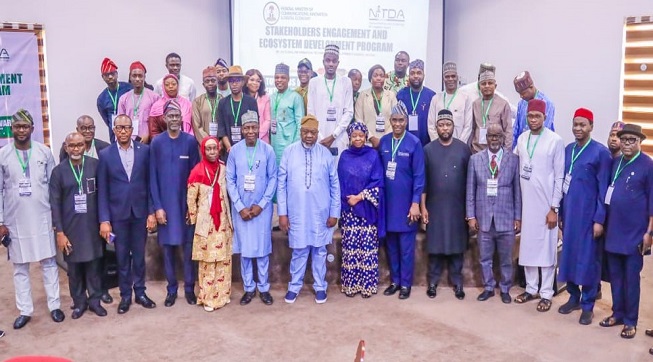
The Director General of the National Information Technology Development Agency (NITDA), Kashifu Inuwa, has called for stronger collaboration among stakeholders to unlock opportunities in Nigeria’s digital economy and accelerate national development.

Inuwa made the call at a NITDA-States IT Stakeholders’ Engagement and Ecosystem Development programme themed “Creating Opportunities, Breaking Boundaries: Towards Digitalization and Entrepreneurial Evolution.” in Abuja
Speaking at the event, the NITDA boss, represented by Mr Ajayi Babajide, Director Zonal Office Coordination, said Nigeria’s economy Africa’s largest by Gross Domestic Product (GDP) is at a critical juncture that requires urgent diversification, noting that the digital economy presents a strategic pathway to sustainable growth, job creation, and inclusive development.
He explained that in today’s interconnected world, digitalisation has become a key driver of economic transformation, offering unprecedented access to knowledge and creating opportunities for developing nations to compete globally.
According to him, the technology sector remains one of the fastest growing and most impactful segments of the global economy, stressing the need for Nigeria to position itself to fully harness its potential.
Inuwa reaffirmed NITDA’s mandate to drive and coordinate digital innovation across the country, adding that the agency is focused on creating an enabling environment that empowers all sectors, including underserved communities, to contribute meaningfully to the economy.
He highlighted the implementation of the agency’s Strategic Roadmap and Action Plan (SRAP 2.0), designed to deliver life-transforming opportunities and strengthen Nigeria’s digital ecosystem. He also pointed to the National Digital Literacy Framework (NDLF), which aims to equip citizens across various sectors with the digital skills required to thrive in a rapidly evolving economy.
The DG disclosed that NITDA has established over 100 IT centres nationwide and provided infrastructure to support digital learning and skills acquisition. However, he emphasised that sustaining and expanding these initiatives would require deeper collaboration with stakeholders.
He called for stronger partnerships among government at all levels, the private sector, academia, and civil society, noting that innovation thrives in an ecosystem supported by effective policies, access to funding, and enabling regulations.
Inuwa also stressed the importance of investing in innovation hubs and incubators to nurture startups from ideation to market readiness, enabling them to compete favourably on the global stage.
On entrepreneurship, he noted that NITDA has continued to support innovation through its special purpose vehicles, including the Office for Nigerian Digital Innovation (ONDI) and the National Centre for Artificial Intelligence and Robotics (NCAIR), which provide incubation, acceleration, and training programmes for startups and young innovators.
He observed that Nigeria’s innovation ecosystem has attracted significant investments and produced globally recognised startups, including unicorns, but said more efforts are needed to sustain the momentum.
Inuwa further noted that digitalisation holds immense potential for economic diversification, job creation, and inclusive growth, but warned that these opportunities must be deliberately harnessed through robust policies, legal frameworks, and strong institutional support.
He said the engagement provided a platform for stakeholders to exchange ideas, co-create solutions, and align strategies for the effective rollout of digital initiatives across states in line with SRAP 2.0.
The NITDA boss reiterated the agency’s commitment to fostering partnerships and providing the necessary support to drive Nigeria’s digital transformation, expressing confidence that collective efforts would deliver lasting impact.
He urged participants to remain committed to building a future where innovation thrives, opportunities are accessible, and Nigeria’s digital economy reaches its full potential.
In his earlier keynote address, the Permanent Secretary, Ministry of Innovation, Science and Technology Kogi State, Pharm. Eric Monday, explained that the state’s digital strategy is focused on applying technology to critical sectors, particularly healthcare, where efforts are underway to improve data management and expand service coverage. He added that similar interventions are being extended to works and environmental management.
He noted that outcomes from previous stakeholder engagements had helped shape actionable plans, stressing the importance of collaboration in achieving sustainable progress.
“Our goal is to learn from others while also sharing our experiences. The knowledge gained from engagements like this will help us strengthen our systems, create opportunities for our youth, and support skills development,” he said.
Highlighting ongoing projects, he disclosed that a skills acquisition centre, supported by development partners, is nearing completion and will soon be equipped to train young people in relevant digital skills.
Monday further revealed that the state is expanding its partnerships beyond Nigeria, including collaborations with Chinese organisations, to build a robust innovation ecosystem and open up new economic opportunities.
Describing Kogi as a “land of opportunity,” the official said the government is committed to leveraging its strategic position as the Confluence State to attract investment and promote growth.
Other dignitaries who delivered remarks at the event included the Permanent Secretary, Ministry of Science and Technology, Nasarawa State, Mr. Damina John, as well as the Executive Director, Commercial and Industry Development at the North Central Development Commission (NCDC), Mrs. Aisha Rufai.
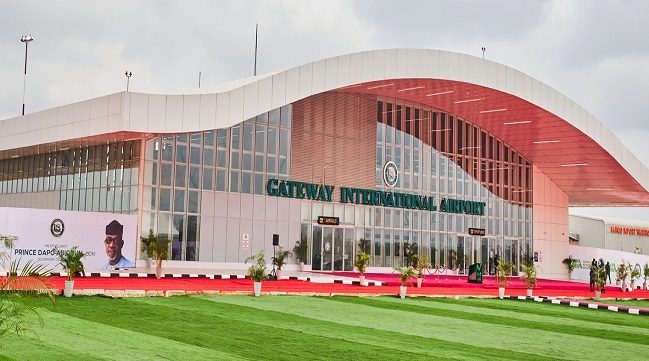
His Excellency Governor Dapo Abiodun, The Governor of Ogun State, has said that the state is on course to establish direct air links to the United Kingdom, following plans by Air Peace to commence flights from the Gateway International Airport to London this summer.

Abiodun, who spoke after an inspection of the airport alongside Air Peace Chairman, Allen Onyema, said the move reflects growing investor confidence in the state’s aviation infrastructure and economic direction.
According to him, the planned operations to Heathrow Airport and London Gatwick Airport will open up Ogun State to increased trade, tourism and business travel, while easing pressure on existing international gateways.
“This airport was conceived to serve our people and support economic growth. What we are seeing now is that vision taking shape,” the governor said.
He added that cargo activities had already commenced at the airport, with projections indicating up to 50 cargo flights between April and year-end, a development expected to support exporters and manufacturers within Ogun and neighbouring states.
The Governor the state noted that discussions with multiple international and regional operators were ongoing, positioning the airport as a viable alternative for passenger and cargo movement in the Southwest.
Onyema, in his remarks, said Air Peace decided to key into the project after assessing the quality of infrastructure at the facility.
“This is one of the best-equipped airports in Sub-Saharan Africa. We will deploy our Boeing 777 aircraft for the London route because the runway and facilities can support it,” he said.
The inspection followed the recent commissioning of the airport by President Bola Ahmed Tinubu. With the planned London operations and growing cargo traffic, Abiodun expressed confidence that Gateway International Airport would strengthen Ogun State’s position as a key economic hub in Nigeria.

NIBSS Says 28 Percent of Nigerians have Registered for BVN

NITDA DG Urges Stronger Collaboration to Drive Nigeria’s Digital Economy

Ogun Set for Direct London Flights as Gateway Airport Gains Momentum

Airtel Becomes World’s Second Largest Telco as Global Customer Base Surpasses 650 Million

Nigeria Cyberattacks: Stronger Collaboration as a Panacea

Spotify’s Loud & Clear Report Reveals Over ₦60Bn Revenue for Nigerian Artists in 2025

Madonna University Taps Tech Guru Adote for Strategic Board Role

China Threatens to Shut Nigeria’s Satellite Over $11.44m Unpaid Debt

Healthcare Under Attack: Why Cybersecurity is Now Critical Care

Why JustMarkets Is a Strong Choice for Gold Trading




 General News3 days ago
Union Bank Looted: How Former Directors Gambled with Billions and Nearly Destroyed a National Bank

 E-Financial3 days ago
N4.65 Trillion in the Vault, but is the Real Economy Locked Out?

 E-Business1 day ago
FG to Strengthen Cybersecurity Coordination as NDPC Probes Alleged Data Breach

 Telecom1 day ago
Compensation for Poor Service Quality is Automatic- NCC

 General News1 day ago
Tinubu Approves N3.3 Trillion Payment Plan to Boost Power Supply

 E-Business1 day ago
Offset Communications Slams N50m Suit against Qore Technologies for Alleged Copyright Infringement

 Telecom1 day ago
FG Moves to Strengthen Cybersecurity Coordination as NDPC Probes Alleged Data Breach

 General News1 day ago
SERAP Sues CCB over Electoral Act, New Tax law