

News
UK Newspaper Links Samantha Lewthwaite, White Widow to Abuja Bombing


Samantha Lewthwaite, white widow, may be the terror mastermind behind a horrific attack in Abuja, capital of Nigeria yesterday which left 80 dead and hundreds wounded, according to Daily Star, UK based newspaper.
Lewthwaite, also known as Sherafiyah Lewthwaite, is the widow of 7/7 suicide bomber Germaine Lindsay and one of the world’s most wanted terrorism suspects.
On Monday, a huge explosion ripped through a busy bus station in the capital, Abuja, during the peak rush-hour.
The enormous blast destroyed 40 buses and left a sickening trail of death and destruction as fuel tanks on nearby vehicles also exploded amid the heat of the blast.
According to Daily Star, while nobody has officially claimed responsibility, security sources fear the bombing may have been a revenge attack for the death of al-Shabaab terror chief Makaburi, aka Sheikh Abubakar Shariff Ahmed – Lewthwaite’s mentor – just two weeks ago.
Lewthwaite is an alleged member of the Somali radical Islamic militant group Al-Shabaab.
She has been accused of orchestrating grenade attacks at non-Muslim places of worship, and is believed to have been behind an attack on those watching football in a bar in Mombasa during Euro 2012.
The infamous widow of 7/7 bomber Germaine Lindsay, is on the run in Africa with three children.
The daughter of a British Army soldier, she is already on Interpol’s Most Wanted list in connection with seven murders as well as the siege of the Westgate shopping mall in Nairobi, Kenya in September last year which left 67 dead and nearly 200 injured.
She was known to be ‘extremely close’ to Makaburi, who coordinated the Westgate atrocity.
According to Daily Star, a senior security source said agents across Africa were on high alert after the assassination of Makaburi – reportedly by the UK and US funded Kenyan Anti-Terror Police Unit (ATPU) 14 days ago.
The source said: “Makaburi was always believed to be at the very top of the hierarchy of terror organisation al-Shabaab.
“Intelligence suggests he introduced Samantha Lewthwaite to many influential figures within the al-Shabaab network. He guided her on her path to Jihad.
“His murder was seen as yet another act of war.”
The source added that Lewthwaite and her associates “wanted revenge”.
Lewthwaite, 30, is believed to be in Nigeria, Kenya or Somalia, where Islamist terror networks are closely linked, making it far easier for her to evade detection than in Europe.
The world’s most wanted woman was reportedly caught at a checkpoint in Nigeria just six months ago – but managed to bribe her way to freedom.
It is thought she commands enormous loyalty and power as a white convert, female jihadist, having proved her worth in previous attacks.
As both a mother and widow of a 7/7 bomber, she also provides the groups with invaluable propaganda.
Local police have linked today’s bombing to the Boko Haram terrorist network, which has been threatening to attack the Nigerian capital.
Last year Boko Haram boasted of’merging’ with both al-Shabaab AND Al-Qaeda to form a pan-African terror super-network.
Together, the groups control a vast, arid area known as ‘Sahelistan’ – thousands of miles of sub-Saharan land which stretches from Senegal in west Africa to Somalia in the east.
This ‘ungovernable’ terrain has become a sanctuary for Islamist militants plotting atrocities in Africa and across the world.
The commander of the U.S. military’s Africa Command General Carter Ham said the groups now share money, explosives and even train together.
He said: “Each of those three organisations is by itself a dangerous and worrisome threat.
“What really concerns me is that they are coordinating and synchronising their efforts.
“That is a real problem for us and for African security in general.”
The White Widow, who has been on the run since January 2012, got her grim nickname after husband Germaine Lindsay blew up a London Tube train in the 7/7 bombings in 2005. Fifty six people were killed and more than 700 injured.
Interpol has issued a rare ‘Red Notice’ for the White Widow’s arrest.
Lewthwaite, from Aylesbury, Buckinghamshire, is believed to have widely used the alias ‘Natalie Webb’ and travelled on a forged South African passport. She is now officially being hunted by 190 countries and is one of the most wanted international fugitives in the world.
Police seized her laptop in 2011 and found detailed plans of how to build bombs and evidence she was planning multiple terrorist attacks both in Africa and the West.
She has also been linked to grenade attacks at non-Muslim places of worship in Africa and a terrorist attack on western football fans watching Euro 2012 in the Jericho bar in Mombasa.
Head of Interpol Ronald Noble said: “There is a global ‘tripwire’ for this fugitive.
“All 190 member countries are aware of the danger posed by this woman, not just across the region but also worldwide.”


Google and UpSkill Universe, Sub-Saharan Africa’s leading AI and business skills training partner, have announced a major redesign of the Google Hustle Academy programme.

For the first time, the free training initiative is open to everyone, not just business owners. The new curriculum is focused on equipping individuals and entrepreneurs with practical AI skills.
Small businesses are the engine of Africa’s economy, creating over 80% of jobs on the continent. To help them grow, the Hustle Academy was launched in 2022, providing bootcamp-style training on business strategy, digital skills, AI, and leadership. The program has since trained over 18,000 SMEs, with many reporting increased revenue and job creation.
Now, as AI reshapes the job market, the program is evolving. The 2026 edition is built for anyone in Sub-Saharan Africa, including employees, students, and jobseekers, who wants to use AI to advance their career.
To meet the needs of a diverse audience, the new format includes short, 60-minute webinars and more immersive, high-impact bootcamps. These sessions are laser-focused on putting AI to work immediately in areas like digital commerce, marketing, and growth strategy.
Speaking about the academy, Gori Yahaya, Founder & CEO UpSkill Universe said “The 2026 Hustle Academy is designed to close the AI Skills gap with hands-on training that is short, focused, and immediately useful. AI is reshaping how businesses win and how careers are built, right across this continent.
“We’re excited to renew our partnership, now in its fifth year with Google, combining their global AI leadership with our deep regional AI expertise. The next wave of AI leaders will come from this continent. We are making sure they are ready.”
The Hustle Academy initiative has strengthened digital competitiveness across emerging African economies by enabling SMEs to move beyond AI awareness to practical implementation, positioning them for sustained growth in an increasingly AI-driven business environment.
“We believe that the future of Africa’s digital economy lies in the hands of individuals and entrepreneurs alike. Our new strategy focuses on scaling reach by training individuals in the latest AI-centered tools and techniques,” said a Google representative.

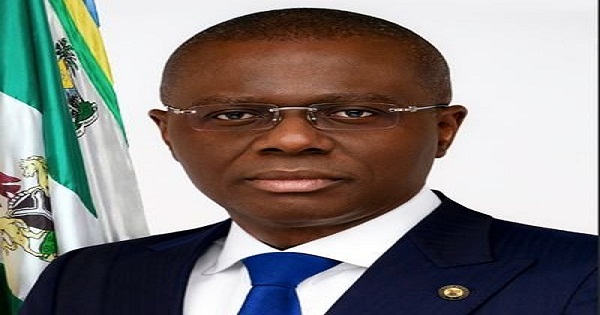
Lagos State has dragged 45 individuals and firms, including Bi-Courtney Aviation, DAAR Communications and Leaders & Company, to revenue court for tax debts running into billions of naira.

Lagos Govt
Bi-Courtney, operators of Murtala Muhammed Airport Terminal Two, faces N38.7 million claim; DAAR, behind Africa Independent Television, owes N22.4 million; ThisDay publishers Leaders & Company allegedly skip N67.1 million.
GMT Energy Resources tops corporates at N145.8 million, followed by Sheriff Deputies at N132.1 million; others like Heyden Petroleum, AA Rescue, BRT operator Primero also listed.
Individuals owe N13.5 million to N35 million each.
Attorney-General Lawal Pedro said suits followed ignored notices, aiming to enforce laws and fund infrastructure.
More defendants: IENG Nigeria, James Fisher, V Care Diagnostics, Venture Garden, Saro Africa, Barry Callebaut, Native Media, First Consulting, Eyowo Payments.
Compliant taxpayers post-notice escaped prosecution; defaulters risk penalties, interest, jail.
Pedro urged prompt filings and payments.


National Agency for Food and Drug Administration and Control (NAFDAC) has alerted Nigerians on counterfeit and unregistered Cerelac Mixed Fruits and Wheat products being sold in Lagos.

NAFDAC said Nestle Nigeria, the genuine Marketing Authorisation Holder of the product, received a complaint of suspected counterfeit purportedly manufactured by Nestlé Spain, bearing Batch Code 308002910.
It said that Nestle Nigeria reported that the complainant described that the counterfeit product emitted an odour suggestive of possible contact with fuel.
NAFDAC said that preliminary review of the product by Nestle Nigeria indicated that it had expired, in spite of the container displaying an expiry date of 10-2026, which suggested that the date coding had been tampered with (revalidated).
Nestle Cerelac Mixed Fruits and Wheat is a nutritious infant cereal, designed to be a delicious first food for infants.
NAFDAC said that its post-marketing surveillance’s directorate officers in Lagos conducted a surveillance visit to Maxland Shopping Centre, 193 Ago Palace, Okota, where the product was purchased by the complainant.
It added that the suspected counterfeit and unregistered Cerelac were found on sale at the premises and subsequently mopped up, while Nestle assisted in identifying the distinguishing features between registered and unregistered product.
According to the regulatory agency, Nestle revealed that the unregistered product used a hyphen (-) to separate the day from the year, while the registered product used a slash (/) to separate the day from the year.
“It is important to note that Nestle Nigeria is not aware of the channels through which the products are supplied into the country.
“Healthcare professionals and consumers are advised to report any suspicion of the sale of substandard and falsified regulated products to the nearest NAFDAC office, call 0800-162-3322, or send an email to [email protected],” NAFDAC said.
The agency warned that counterfeit formula often lacked essential nutrients, vitamins and minerals, leading to stunted growth or developmental issues.
It said that such formula might also contain contaminants that might lead to severe health consequences to infants or even death.
NAFDAC reiterated its commitment to safeguarding public health adding that it would continue surveillance activities to ensure the quality, safety, and efficacy of all NAFDAC-regulated products circulating in Nigeria.
It said that all zonal directors of the agency and state coordinators had been directed to carry out surveillance and mop up the revalidated product, if found within the zones and states.
The agency urged distributors, retailers, healthcare professionals, and caregivers to exercise caution and vigilance within the supply chain, to avoid the distribution, sale, and use of fake products.

See Key Changes in BVN Rule from May 1 by CBN

INEC Warns Broadcasters against Misinformation ahead of 2027 Polls

Paga Group Rejigs Leadership as Oviosu, Founder Becomes Group CEO

Reputation: The Real Currency Powering Fintechs

Jumia Expands Nationwide Footprint, Deepens Reach Across Underserved Nigerian Cities

Spotify’s Loud & Clear Report Reveals Over ₦60Bn Revenue for Nigerian Artists in 2025

China Threatens to Shut Nigeria’s Satellite Over $11.44m Unpaid Debt

Why JustMarkets Is a Strong Choice for Gold Trading

Kuda MFB Increases Kuda for Her Business Grants to ₦10 Million

Canal+ to Cut Jobs as Part Sweeping Restructuring




 E-Business2 days ago
Nigeria Cyberattacks: Stronger Collaboration as a Panacea

 Telecom2 days ago
Airtel Becomes World’s Second Largest Telco as Global Customer Base Surpasses 650 Million

 General News2 days ago
NIBSS Says 28 Percent of Nigerians have Registered for BVN

 Telecom2 days ago
From Import Dependency to Local Capacity: Nigeria’s Tech Manufacturing Journey

 E-Business2 days ago
CBN Slams Custodian Investment with N419m Fines over Rule Breaches

 General News2 days ago
NITDA DG Urges Stronger Collaboration to Drive Nigeria’s Digital Economy

 General News2 days ago
Ogun Set for Direct London Flights as Gateway Airport Gains Momentum

 News2 days ago
Lagos Govt Drags Top Firms to Court Over Billion-Naira Tax Debts