

Broadcasting
UNILAG TV Goes Live

University of Lagos Akoka, Yaba, Lagos, has launched the first campus television station, expected to deepen campus journalism.
Its broadcast is not only restricted to Nigeria, but across West Africa.
It is called UNILAG TV, which aims towards the creation of premier local, national and international contents from all sectors to educate, inform and entertain Nigerians.
The station is part of the university’s efforts to achieve excellence and creating a better Nigeria where young ones can thrive and reach for the sky.
The launch, which took place at the Senate building of the institution, was a gathering of academics, students, media managers and others of like minds, who were pleased to be a part of a unique project – UNILAG TV.
It has since commenced test transmission on January 17 on StarTimes digital broadcasting platform, channel 184.
Professor Oluwatoyin Ogundipe, Vice Chancellor, said it has been the dream of the institution to have a campus TV after it pioneered Campus Radio Broadcasting in Nigeria on December 14, 2004.
According to Ogundipe, Nigeria’s president, Muhammadu Buhari, approved the institution’s TV license on Thursday, November 9, 2017, noting, “To see to the actualisation of the noble dream of having a functioning TV station, I constituted the University of Lagos Multi-Media Ventures Board in April 2018 to mid-wife the speedy actualisation of the project. I am happy that the dream has been actualised.
UNILAG TV will fly on the platform of StarTimes on Channel 184 with state-of-the-art equipment and technical facilities in place.
“The TV station would deliver premier local, national and international news as they unfold and become a trusted news source by being impartial, creative, factual, credible, timely, and innovative. Our team of world-class professionals would inject fresh ideas and energies that would take broadcasting to the next level in Nigeria.”
He further said that the TV station would serve as a reference point in sports, documentaries, quality entertainment, and instrument of educational advancement, stating, “Most importantly, the TV station will have a time belt for our Distance Learning Teaching Packages to serve as an instructional facility for our Distance Learning students.
The station would also promote the culture of our immediate communities by regularly highlighting the ideas, languages, customs, folklores and social behaviours of our immediate communities in line with the provision of National Broadcasting Commission’s (NBC) Codes.
“Just as teaching hospitals are indispensable to those studying medicine, while laboratories are useful to students of natural and applied sciences, TV is strategic to students of journalism, broadcasting, advertising, marketing, creative art, languages, electronics engineering and computer science in the acquisition of technical skills before graduation.
The TV channel would be deployed to keep our students and wider communities informed of developments in the university through the dedication of one hour to UNILAG news.”
Ogundipe, however, commended Buhari for the confidence reposed in the institution and his kind gesture. He also praised members of management board and team who had who worked tirelessly to ensure the realisation of the dream for UNILAG TV.
Professor Muyiwa Falaye, chairman UNILAG Media Ventures said the institution chose StarTimes platform for the TV station because it is still a start up and it is better to start at a point where progress can be made to avoid making mistakes.
“We got our best incentives and best conditions for start ups from StarTimes,” he said. “The demands for other platform are enormous. Also, the markets we intend to serve are those, which can afford the subscription to StarTimes, which is quite affordable. Our performance will be great by the time viewers tune in to UNILAG TV on January 17. I want to assure the VC and the community that the TV will be run professionally and we can only do this if we get assistance from management and the community. We will be guided by NBC codes; we are not going to engage in running other people’s programmes without license. We are producing local contents and in the next one-year we will have 60 per cent local contents that would come from our students and staff.”
Falaye noted that a few weeks back, the institution placed advert for presenters for UNILAG TV amongst staff and students, noting that over 400 applications were received.
“We eventually shortlisted to about 10 people who would commence work in addition to those who have been there since the inception of the TV station,” he informed.
“We have some of the best TV studios and facilities in Nigeria; even the big stations that have visited us have acknowledged that fact and the level of our preparation to commence transmission is amazing.
We are set to become an active player in the market and other stations should be ready for a challenge, as UNILAG TV would give them a run for their money. We are going to challenge the existing order in the TV market.”
He, however, advised Nigerians, who do not have StarTimes decoder to get one, saying it is not expensive and even students could afford to subscribe.
“Also, you can get StarTimes mobile app to watch UNILAG TV anywhere in the world,” he added. “Though what we have now is transitional within Lagos, we are streaming within Lagos for now and maybe in future we would extend beyond Lagos. We have also embarked on aggressive staff training for them to be ready and competitive in the modern day market, as it is quite challenging. As we commence transmission, viewers would see that we may just be starting work, but we will be working hard.”


Mr. Charles Ebuebu, director General of the National Broadcasting Commission (NBC), has called on Nigerian content creators to actively participate in the country’s Digital Switchover (DSO), describing the transition as a major opportunity for visibility, revenue growth, and industry collaboration.

Mr. Charles Ebuebu, DG, NBC
Speaking as Special Guest of Honour at the induction ceremony of the Electronic Media Content Owners Association of Nigeria (EMCOAN) in Lagos, Ebuebu stressed that the success of the DSO depends on engaging content to populate the nation’s new digital channels.
“Without content, the DSO’s success would be incomplete. We are urging content owners to collaborate with the Commission to ensure Nigeria’s digital future is rich, diverse, and sustainable,” he said.
The NBC boss highlighted that the upcoming FreeTV Direct-to-Home (DTH) platform, along with its mobile applications, would provide content creators with nationwide reach, advanced analytics, and brand partnership opportunities.
Nigeria’s DSO, which marks the shift from analogue to digital broadcasting, is being implemented by the NBC using the Nigcomsat satellite infrastructure. The programme aims to deliver over 100 nationwide channels and expand access to Nigerians in remote areas via hybrid decoders, addressing long-standing infrastructure and funding challenges. The project, which has experienced delays since 2012, now has strong government backing and is scheduled for launch in April 2026.
Ebuebu commended EMCOAN members for their contributions to strengthening Nigeria’s creative economy and encouraged them to leverage the opportunities offered by the DSO to promote local stories, culture, and creativity on both national and global stages.
During the ceremony, EMCOAN honoured its distinguished members, naming Wale Adenuga, MFR, as Grand Patron and Mr. Yinka Adebayo as Patron.
Prominent figures in the broadcasting content industry, including Wale Adenuga, Opa Williams, Agatha Amata, Jibe Ologeh, High Chief Emeka Ossai, Debbie Odetayo, Amina Mohammed, and Frank Elaboya, attended the event.
Representing the NBC at the event was Mr. Ralph Akpan, director of the Lagos Zone, while EMCOAN president, Mr. Adeniji Omirin, MD of ADNOM Media, urged members to fully engage in the digital switchover.
Canal+ is to cut jobs at MultiChoice as part of a sweeping restructuring plan aimed at stabilising the African pay-TV operator, following years of operational and financial pressure.

The move comes alongside a planned $115 million capital injection, underscoring the urgency of efforts to revive the business after the French media group took control.
The planned layoffs are expected to form a core element of a broader cost-cutting and efficiency drive, as Canal+ seeks to streamline MultiChoice’s operations and improve profitability.
The restructuring signals a shift toward leaner operations, with a focus on eliminating redundancies and optimising the company’s cost base.
MultiChoice has struggled in recent years with declining subscriber numbers across key African markets, weighed down by macroeconomic pressures, currency volatility, and changing consumer behaviour.
The rise of global streaming platforms has intensified competition, chipping away at the company’s traditional pay-TV dominance.
Canal+’s intervention marks a pivotal moment for MultiChoice, reflecting a more aggressive approach to repositioning the business.
By combining fresh capital with structural reforms, the new owners are aiming to both stabilise short-term performance and lay the groundwork for longer-term growth.
The $115 million injection is expected to provide immediate financial relief, supporting operations and potential strategic initiatives.
However, the accompanying job cuts highlight the depth of the challenges facing the company and the scale of transformation required to restore competitiveness.

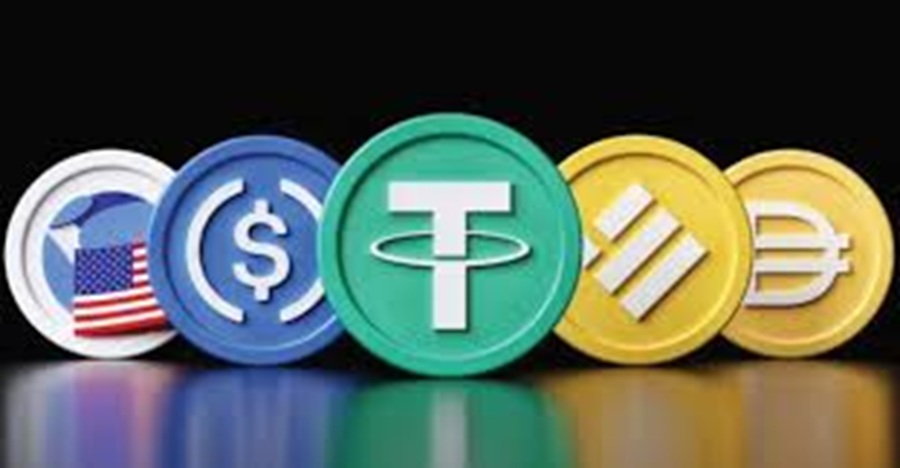
Nigeria has ranked first globally in the ownership of the two largest stablecoins, Tether (USDT) and USD Coin (USDC), reflecting the country’s growing reliance on dollar-linked digital assets.

USDT, USDC
Stablecoins such as USDT and USDC are designed to maintain a fixed value against the U.S. dollar, allowing users to store money digitally while avoiding the price volatility associated with cryptocurrencies like Bitcoin.
According to the 2026 Stablecoin Utility Report released by BVNK, about 59 percent of Nigerian crypto users hold USDT, while 48 percent own USDC, giving the country the highest combined ownership rate among all nations surveyed.
The report placed Nigeria ahead of several major economies, including Australia and India, highlighting the country’s strong adoption of dollar-denominated digital assets. Australia ranked second with 34 percent USDT ownership and 29 percent USDC, while India placed third with 30 percent USDT and 27 percent USDC holdings.
The study also examined adoption levels across other regions. Countries such as Colombia and Singapore showed strong usage of both stablecoins, while adoption levels were also notable in South Africa and the United States.
Other markets included in the analysis were Philippines, Thailand and Argentina, where stablecoin ownership has also increased significantly. Among European economies, the report said France and Germany showed moderate levels of adoption, while Latin American markets such as Mexico and Brazil recorded smaller but growing usage rates.
The United Kingdom also appeared in the ranking with modest levels of stablecoin ownership. The report noted that USDT ownership exceeds USDC in many countries, including Nigeria, Australia, India, Singapore, the Philippines, Thailand, Argentina and France.
However, USDC is often viewed as a more compliance-focused stablecoin because of its stronger transparency and regulatory alignment. In some markets, including South Africa, Colombia, Germany and Brazil, the report found that USDC adoption slightly exceeds USDT.
More broadly, the data suggests that stablecoin adoption is being driven largely by emerging economies rather than advanced financial markets. According to the report, countries such as Nigeria, Argentina and the Philippines are among the biggest users of stablecoins, where people increasingly rely on dollar-pegged digital assets to protect savings from currency volatility and facilitate cross-border payments.

Breaking…..Kuda Lays Off Many Employees in Broad Restructuring

NCC to Curb SIM Fraud, Strengthen Digital Security with New Platform

NBC Boss Urges Content Ceators to Participate in DSO

Kidnappers Now Use Banks to Collect Ransoms — Expert

CBN Says Bank Customers Won’t Lose Deposits because of Recapitalisation

Kaspersky Discovers New Phishing Campaign Exploiting Google Tasks Notifications to Steal Corporate Credentials

esentry 2025 Report Shows Healthcare, Financial Services and Telecoms as Staging Grounds for Increased Cyberattacks in Africa

Spotify’s Loud & Clear Report Reveals Over ₦60Bn Revenue for Nigerian Artists in 2025

MTN Nigeria Posts Record N1.70 Trillion Pre‑Tax Profit, Declares N20 Dividend for 2025

China Threatens to Shut Nigeria’s Satellite Over $11.44m Unpaid Debt




 E-Financial3 days ago
CBN Directs IMTOs to Open Naira Settlement Accounts

 Telecom3 days ago
Nigerians Lose N12.5Bn to AI-Driven Scams- PwC

 General News3 days ago
Court Remands Hacker for Allegedly Stealing N3.09Bn from FCMB

 Telecom3 days ago
Airtel Africa, Starlink Mobile Data and Messaging Testing Take off in Kenya

 E-Financial3 days ago
DLM Capital Group’s AAA-Rated Sovereign Bond-Backed Composite Notes (“SBCNS”) Strengthens Investor Confidence with Successful First Principal & Interest Payment

 E-Business3 days ago
AU Sees AI Adoption Evolving to Boost Economic Growth in Africa

 News3 days ago
Kaspersky, AFRIPOL Conduct Joint Cybersecurity Training for African law Enforcement

 Telecom3 days ago
GATEWAY Programme Opens Doors for 340,000 Nigerian Youths to Tap into $1.85trn Global Gig Economy