

General News
Union Threatens to Picket Heritage Bank over Sack of Workers

Association of Senior Staff of Banks, Insurance and Financial Institutions (ASSBIFI) has threatened to deploy all networks to mobilise affiliate trade unions and workers to picket Heritage Bank’s head office over alleged wrongful disengagement and refusal to settle severance benefits of over 30 exited workers.

Olusoji Oluwole, national president of ASSBIFI, decried the unfair labour practices being perpetuated against workers employed by the lender.
Addressing a press conference, he expressed fears about the safety of affiliated unions’ salaries and Nigerians, who have their salaries and savings domiciled in the bank, especially on alleged recent publications that have put the health of the bank to question.
He alleged that since new management took over, there has been a series of unfair labour practices on the vulnerable workers and consistently abused the relationship built over the years despite overtures made by the union deploying social dialogue and its non-adversarial policy.
Oluwole alleged the sack of 30 workers, who are members of ASSBIFI, including its principal national officer in May, without due process.
According to him, “This action is an outright violation of Section 20 of the Labour Act, Cap L1, LFN 2004, the ASSBIFI industry-wide collective agreement, and the ILO Convention 158 on Termination of Employment.”
Despite moves by the union to demand justice for the workers, he alleged the bank insisted on terminating the employment of the workers based on their company policy, without negotiation or dialogue with the union as provided by law.
He alleged that after three months, the union requested the bank to supply the details of payments and settlements of severance benefits paid to the disengaged employees as claimed, but the bank has not been able to produce the documents.
Stating that the employees have served the bank for periods covering between five and 25 years, Oluwole said: “Heritage Bank asked the workers to go home empty-handed. This is exploitation and injustice of the worst order. It is wrong, unjust, and insensitive and we strongly object to this slavery.
“ASSBIFI shall not hesitate to deploy all its networks and contracts to mobilise affiliate trade unions and Nigerian workers towards protecting the rights and privileges of our members in this institution,” he added.
However, efforts to reach the media team of Heritage Bank proved abortive as calls placed were not responded to.


Federal Competition and Consumer Protection Commission (FCCPC) has warned Lagos traders against enforcing the unlawful “no return, no refund” policy, declaring it illegal under the Federal Competition and Consumer Protection Act (FCCPA) 2018.

FCCPC
Dr Olubunmi Otti, FCCPC Southwest Zonal Coordinator, issued the directive during the inauguration of new executives of the Phone and Allied Products Dealers Association (PAPDA) on Wednesday, stressing consumer education as the strongest defence against market exploitation.
“There is no such thing as ‘no return, no refund’. If a product does not fulfil its intended purpose, the consumer has the right to return it,” Otti declared, adding the commission mediates complaints for refunds, replacements, or exchanges.
Non-compliant businesses face fines, product withdrawals, seizures, prosecutions, or shutdowns. Otti noted thousands of monthly complaints via the FCCPC portal in the Southwest alone, with sensitisation expanding to Alaba Market and Trade Fair Complex.
She urged consumers: “When your rights are violated, do not just say, ‘You give it to God.’ Bring your complaints to the FCCPC. The law empowers us to protect you,” while calling for traders’ collective responsibility to ensure quality products and services.


African Development Bank Group (AfDB) has approved a €6.5 million investment in the Saviu II venture capital fund to boost technology start-ups across Francophone West and Central Africa.

The Bank Group will contribute €4.5 million as equity investment and an additional €2 million as a first-loss hedging tranche on behalf of the European Commission under the Boost Africa Programme.
The investment is expected to strengthen early-stage financing for innovative businesses with strong technological and digital components, particularly in French-speaking countries.
Saviu II, the second investment vehicle managed by Saviu Partners, plans to invest between €500,000 and €3 million in about 20 seed-stage or early institutional fundraising start-ups. The fund will primarily target B2B technology-oriented companies with scalable models.
At least 60 per cent of the fund’s commitments will focus on French-speaking countries in West and Central Africa, including Côte d’Ivoire, Cameroon, Benin, Senegal, Togo, Burkina Faso and Mali.
The fund may also co-invest in promising East African technology firms seeking expansion into Francophone markets.
In addition, Saviu II will dedicate a special funding envelope for pre-seed investments, mainly through minority equity stakes, often in collaboration with incubators, venture studios and other ecosystem partners.
Industry observers say the AfDB’s backing is expected to de-risk early-stage investment and crowd in more private capital into Africa’s growing digital economy.
Saviu Partners previously launched Saviu I in 2018 with a capitalization of €10 million.
The first fund invested in 12 start-ups, mainly based in French-speaking West Africa, offering not just funding but hands-on support in business development, recruitment, international expansion and fundraising.
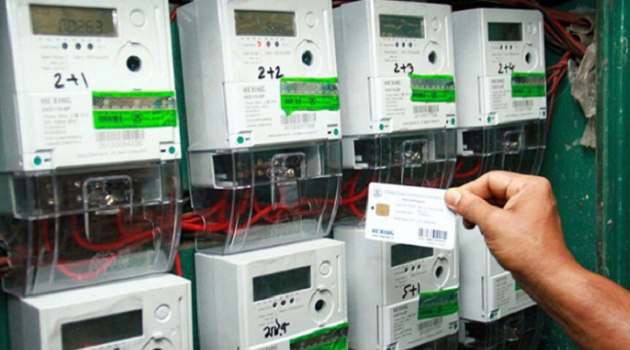
Nigerian Electricity Regulatory Commission (NERC) has ruled in favor of electricity consumers, directing distribution companies (DisCos) to refund ₦20.33 billion in outstanding costs for meters bought under the Meter Asset Provider (MAP) framework.

NERC
Signed on February 27, 2026, by Musiliu Oseni, chairman,NERC and Dafe Akpeneye, commissioner Order No. NERC/2026/025 amends a 2023 directive.
It requires DisCos to disburse the funds via energy credits over 12 months starting March 1, 2026, addressing years of slow refunds.
As of December 31, 2025, DisCos owed this amount due to delays in reimbursing prepaid customers who funded their own meters.
DisCos must automate credits for the full MAP meter cost upon activation, disbursed monthly over 120 months based on the customer’s tariff—credits cannot offset legacy debts.
Prepaid customers will receive a monthly token by the 4th day equivalent to the reimbursement value; for arrears, they’ll get two tokens per month.
Postpaid customers will see a distinct credit line on bills subtracted from totals, with two line items monthly for arrears.
NERC mandates monthly reports on reimbursement values using an approved template, plus dedicated email channels for complaints with resolution status included.
The order aims to end delays, improve notifications, and boost sector trust. DisCos must accelerate arrears recovery over 12 months without further excuses.
This follows NERC’s February 2026 compliance review, amid ongoing power sector challenges highlighted by Power Minister Adebayo Adelabu.

MultiChoice to Discontinue Showmax Streaming Platform

GCR Affirms Afreximbank’s International Scale Ratings of A, A2

SmartCash Launches ‘No Be Cho Cho Cho’ Campaign to Boost Digital Banking in Nigeria

MTN Nigeria Non-Executive Director Mazen Mroue Quits to Focus on Group Role

Google Adds Yorùbá, Hausa to AI Search, Boosting Access for Millions of Nigerians

Dr. Cairo Ojougboh Foundation Bolsters Nigeria’s Education Drive with ₦2.7m Student Support

Kaspersky Brings more Transparency to Threat Detection with New Hunt Hub

NDPC Commits to Balancing Data Privacy, Protection Information

PwC Reveals AI Scaling Gap Slows Africa’s Digital Transformation

Firm Reviews the Evolution of Phishing Threats in 2025




 E-Financial2 days ago
NRS Targets N40trillion in Tax, Royalty Revenue in 2026

 E-Financial2 days ago
SEC Revokes Registration of Kensington Agro Trading Limited

 General News2 days ago
Purple Woman 3.0 Is Back, to Empower Women in Tech this IWD 2026

 News2 days ago
EFCC Arraigns Two FSDH Bank Officials Over $307k, €50k Fraud

 Telecom2 days ago
Konga Launches ‘Berekete Sales’ with Up to 50% Discounts Across Major Categories
 E-Business2 days ago
NDPC, 60 DPAs Collaborate on Enforcing Privacy Rights in the Use of Al

 General News2 days ago
NCDC Raises Alarm over Lassa Fever Ravaging 18 States in Nigeria

 E-Financial2 days ago
Nigeria’s Net Reserves Surge 50% to $34.8bn in 2025 – CBN Governor